A soldier from the 6th Infantry Division performs guard duty at the Demilitarized Zone (DMZ) while wearing night-vision equipment. Central front of the DMZ in Cheorwon-gun, Gangwon-do, during the summer of the 65th anniversary of the armistice. July 24, 2018. [Photo = Yonhap News]
The Ministry of National Defense recently announced a proposed revision to the Military Unit Management Regulations. It includes provisions that allow commanders the discretion to waive night watch duties in units equipped with alternative verification systems like CCTVs and patrols. The proposal also introduces a mandatory advance notice system for barrack inspections, designates separate hours for physical training, and specifies criteria for restricting the display of photos of dishonored commanders.
Rigorous security and surveillance are fundamental principles for maintaining an army and an absolute necessity for survival, regardless of the battlefield. Yet, this policy, which allows battalion-level commanders the discretion to replace traditional barrack night watch duties with CCTVs and patrols, raises questions about the military's relaxed attitude and whether it truly realizes it stands on the front line of national security.
Even teenagers on a voluntary camping trip keep watch
Throughout history, failures in guard operations have not been mere mistakes; they have been catastrophic disasters leading directly to national collapse and total annihilation. There is no need to even recall the countless instances of night raids in world military history.
The tragic scenario where an entire garrison is caught off guard by an enemy raid—leaving soldiers defenseless and slaughtered in a single night—is the most stern lesson warned by military history from ancient times to the modern day. The basic tenet of military doctrine is that a commander who fails in guard operations is unforgivable.
Night watch is not merely a cumbersome task of staying awake and killing time at night. In peacetime, night watch duty is clearly an extension of guard operation training in preparation for wartime.
During sleeping hours from 10 p.m. until the next morning, it serves as a critical unit management function and night adaptation training, monitoring for external intrusions, preventing emergencies like fires or theft, and observing the hygiene and health status of soldiers in real-time.
Through this process, soldiers deployed in two-person teams learn the responsibility of protecting their comrades and develop the night surveillance instincts and tactical alertness needed to respond immediately in an emergency.
The Ministry of National Defense argues that modernized security systems and CCTV can sufficiently replace these duties. Certainly, technological advancement should enhance the efficiency of defense systems. However, mechanical equipment and screens cannot fully replace human senses and on-site responsiveness.
If we rely solely on cameras—which inevitably have blind spots—and control room monitors, and consequently allow an enemy infiltration or fail to detect an unexpected fire, the responsibility will manifest as a void in national security. Have we already forgotten the painful truth shown in history that a failure in guard operations equals the annihilation of the army and defeat in war?
The raison d'être of the military is to protect the lives of the people
Even more concerning is the direction of other clauses in this amendment, most notably the mandate for commanders or duty officers to provide advance notice when conducting barrack inspections.
While the stated purpose is to guarantee soldiers' right to rest and privacy, the essence of a military—in both peace and war—lies in the discipline and tension required to prepare for unpredictable emergencies.
Unannounced inspections without prior notice are the minimum safety measure for maintaining military discipline and order. If one must even request permission before conducting an inspection, how can we control the lethargy and complacency that might become rampant within the military?
The amendment's provisions, such as setting aside separate time for physical training, represent the right direction for improving soldiers' welfare and rights. However, the protection of welfare and human rights must never lead to the weakening of the military's inherent combat capability or a slackening of security posture.
The military exists solely to deter enemy provocations and protect the nation and the lives of its people. Eroding the guard operation system—the foundation of a soldier's survival and the bastion of national security—in the name of convenience and efficiency is a classic case of putting the cart before the horse.
The Ministry of National Defense should reconsider this amendment from square one, questioning whether they are dismantling the basics of security under the guise of soldier convenience. In actual combat, a failure in security means death and annihilation. In security matters, "locking the stable door after the horse has bolted" is not a viable option.

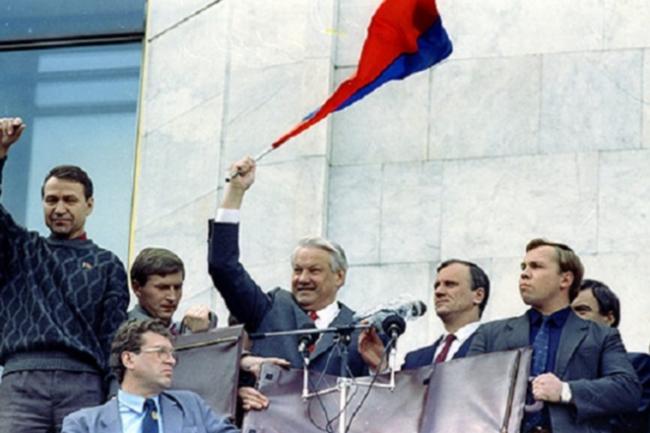 [Songsan Column | 80-Year History of the Pro-North Korean Left] ㉛ 1991: The Dissolution of the Soviet Union
On August 22, 1991, Russian President Boris Yeltsin waves the Russian tricolor flag, calling for resistance against the coup forces. On December 26, 1991, the Soviet Union (USSR), the world’s m
[Songsan Column | 80-Year History of the Pro-North Korean Left] ㉛ 1991: The Dissolution of the Soviet Union
On August 22, 1991, Russian President Boris Yeltsin waves the Russian tricolor flag, calling for resistance against the coup forces. On December 26, 1991, the Soviet Union (USSR), the world’s m
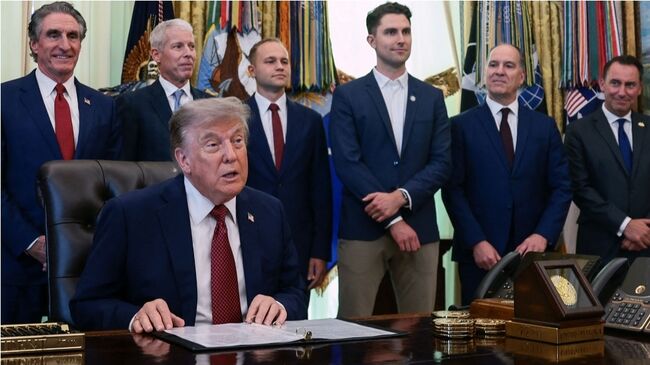 Trump: "Talks with Iran are underway... preparations for airstrikes are also complete"
President Donald Trump delivers remarks on U.S. nuclear innovation in the Oval Office at the White House in Washington, D.C., on July 24, 2026. (Reuters/Evelyn Hockstein)U.S. President Donald Trump st
Trump: "Talks with Iran are underway... preparations for airstrikes are also complete"
President Donald Trump delivers remarks on U.S. nuclear innovation in the Oval Office at the White House in Washington, D.C., on July 24, 2026. (Reuters/Evelyn Hockstein)U.S. President Donald Trump st
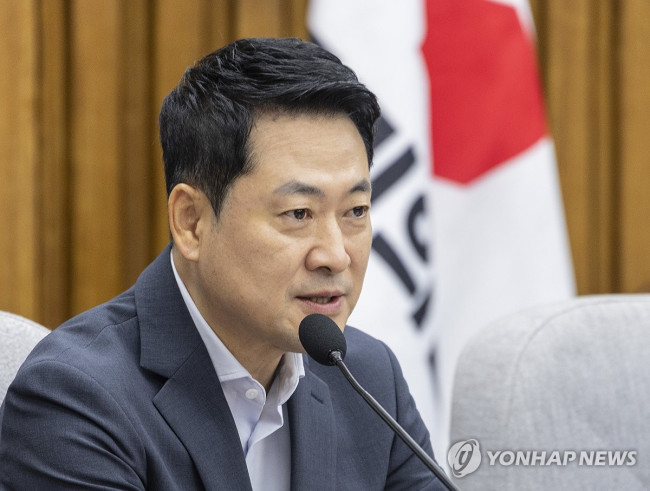 Jang Dong-hyeok to visit Gimhae and Daegu today… to attend a rally condemning the infringement of voting rights
People Power Party leader Jang Dong-hyeok speaks out against government real estate policy at the party's Real Estate Policy Normalization Forum held at the National Assembly on the 24th. [Yonhap News
Jang Dong-hyeok to visit Gimhae and Daegu today… to attend a rally condemning the infringement of voting rights
People Power Party leader Jang Dong-hyeok speaks out against government real estate policy at the party's Real Estate Policy Normalization Forum held at the National Assembly on the 24th. [Yonhap News
 Court Rules: "Chey Tae-won to Pay Roh Soh-yeong 944 Billion Won"... Daily Interest of 130 Million Won
On the 24th, during the remand trial for the property division lawsuit between SK Group Chairman Chey Tae-won and Art Center Nabi Director Roh Soh-yeong held at the Seoul High Court in Seocho-gu, the
Court Rules: "Chey Tae-won to Pay Roh Soh-yeong 944 Billion Won"... Daily Interest of 130 Million Won
On the 24th, during the remand trial for the property division lawsuit between SK Group Chairman Chey Tae-won and Art Center Nabi Director Roh Soh-yeong held at the Seoul High Court in Seocho-gu, the
 FT "South Korean companies flush with cash from 'AI boom' eye U.S. M&A"
Samsung Electronics logo [Reuters=Yonhap News File Photo]South Korean companies, flush with cash from the artificial intelligence (AI) boom, are acquiring U.S. firms to circumvent tariffs expected und
FT "South Korean companies flush with cash from 'AI boom' eye U.S. M&A"
Samsung Electronics logo [Reuters=Yonhap News File Photo]South Korean companies, flush with cash from the artificial intelligence (AI) boom, are acquiring U.S. firms to circumvent tariffs expected und
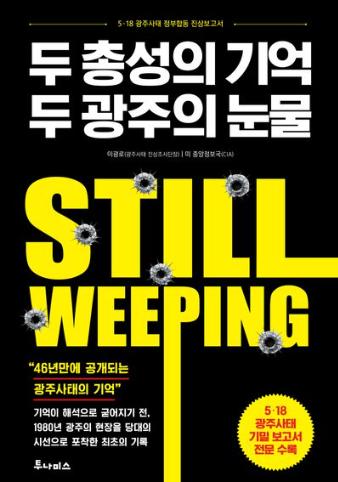 [New Book] Approaching the Truth of Gwangju… ‘The Memory of Two Gunshots, the Tears of Two Gwangjus’
Memories of the 5·18 Democratization Movement have long remained scattered, failing to converge into a single, unified meaning. The new book, "Memories of Two Gunshots, Tears of Two Gwangjus," brings
[New Book] Approaching the Truth of Gwangju… ‘The Memory of Two Gunshots, the Tears of Two Gwangjus’
Memories of the 5·18 Democratization Movement have long remained scattered, failing to converge into a single, unified meaning. The new book, "Memories of Two Gunshots, Tears of Two Gwangjus," brings
 [Byun Jong-pil Column] Investigative Authority for Supplementary Inquiries: For Whom Are We Abolishing It?
"Is it truly reasonable from the perspective of the public to abolish prosecutors' supplementary investigation powers based on the simple catchphrase of 'reforming the politically motivated prosecutio
[Byun Jong-pil Column] Investigative Authority for Supplementary Inquiries: For Whom Are We Abolishing It?
"Is it truly reasonable from the perspective of the public to abolish prosecutors' supplementary investigation powers based on the simple catchphrase of 'reforming the politically motivated prosecutio
 [Photo] Evidence of Election Fraud Flooding U.S. Media… Trump Had 2.7 Million Votes Stolen
 [Video] U.S. Semiquincentennial Air Show... 'Art in the Sky' streaks across New York
 [Editorial Cartoon] A Draconian Law That Undermines Freedom of Expression

 List
List