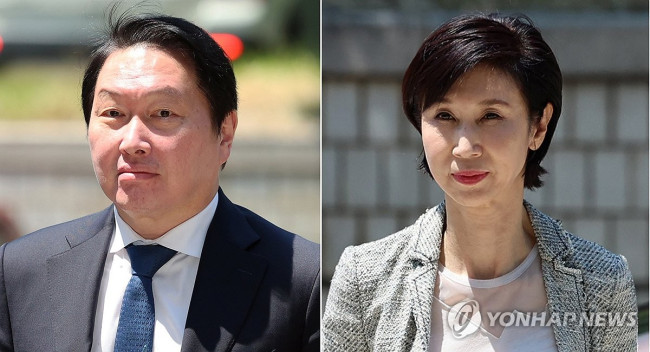
 On the 24th, during the remand trial for the property division lawsuit between SK Group Chairman Chey Tae-won and Art Center Nabi Director Roh Soh-yeong held at the Seoul High Court in Seocho-gu, the court ruled that Chairman Chey must pay 944 billion won to Director Roh. Pictured are Chairman Chey and Director Roh attending the second mediation hearing on the 15th of last month. [Yonhap News file photo]
A remand trial ruling has been issued, ordering SK Group Chairman Chey Tae-won (65) to pay 944 billion won to Art Center Nabi Director Roh Soh-yeong (65) as a property division settlement.
The Seoul High Court's 1st Family Affairs Division (Presiding Judge Lee Sang-joo) delivered the verdict on the afternoon of the 24th during the remand trial hearing for the couple's property division lawsuit.
The court also ordered Chairman Chey to pay 5% annual interest on the delayed payment from the day after the ruling becomes final until the full amount is settled.
This amounts to 47.2 billion won per year, or approximately 130 million won per day.
The property division ratio was set at one-third for Director Roh and two-thirds for Chairman Chey.
The court determined that the SK shares held by Chairman Chey are subject to property division.
In doing so, it rejected the argument from Chairman Chey’s side that the SK shares constitute "separate property" formed through inheritance and gifting, and therefore should be exempt from division.
Instead, the court concluded that Director Roh also contributed to the formation, maintenance, and increase in value of these shares.
The court explained, "During the marriage, the value of the shares increased significantly due to Chairman Chey’s management activities, and Director Roh’s contributions through domestic affairs, child-rearing, and external activities for the SK Group played a part in this."
The base date for calculating the value of the shares subject to division was set as April 16, 2024, the date the hearings for the fact-finding stage (the appellate trial) of the divorce lawsuit concluded.
This follows Supreme Court precedent stating that when property division is requested after a court-ordered divorce is finalized, the assets and amounts subject to division are determined based on the date the hearings for the fact-finding stage of the divorce lawsuit concluded.
Director Roh’s side had argued that the calculation should be based on the 26th of last month, the date the hearings for the remand trial concluded. Between those two dates, SK's stock price more than quintupled.
The court noted, "Although the stock price of SK rose significantly between the conclusion of the appellate trial hearings and the conclusion of the remand trial hearings, it cannot be concluded that Chairman Chey’s managerial contributions had no influence on this."
It further remarked, "Stock prices are highly volatile, and listed stocks are cashable assets that can be liquidated at any time. It is difficult to conclude that failing to share the profits or losses from the disposal of shares after the finalization of a divorce between parties whose marital relationship has been dissolved would be consistent with the purpose of the property division system, which is the fair settlement and distribution of joint marital assets."
However, the court added, "In order to achieve a fair distribution of the joint marital property, we have taken into account the fact that the stock price rose significantly when determining the property division ratio."
![[그래픽] 최태원-노소영 이혼·재산분할 재판 결과](/data/cheditor4/2607/GYH2026072400060004402_P2.jpg) [Graphic] Results of the Chey Tae-won - Roh Soh-yeong Divorce and Property Division Trial [Seoul=Yonhap News]
[Graphic] Results of the Chey Tae-won - Roh Soh-yeong Divorce and Property Division Trial [Seoul=Yonhap News]
Regarding the specific calculation of the property division ratio, the court explained, "We took into account the assets held at the time of the marriage, the circumstances under which the joint marital property was acquired, the degree of contribution by both parties to the formation and maintenance of the joint property, and the duration of the marriage."
The court also considered that Chairman Chey’s SK shares account for a large portion of the joint marital property and that his managerial contributions played a role in the increase in share value.
However, in accordance with the intent of the Supreme Court's ruling last October, the court stated that even if 30 billion won in "slush funds" from Director Roh’s father, the late former President Roh Tae-woo, had been transferred to SK, it could not be viewed as a contribution by Director Roh.
Additionally, shares that Chairman Chey gifted to relatives as part of maintaining management control and business activities before the breakdown of the marital relationship were excluded from the assets subject to division.
The court ordered the property division payment to be made in cash.
The court explained, "Considering that the SK shares held by Chairman Chey serve as the basis for the company's management or controlling power, and taking into account the ownership, form, acquisition circumstances, and usage status of the assets subject to division, we have determined that Chairman Chey should pay the shortfall in Director Roh’s share according to the property division ratio in cash."
Following the ruling, a representative for Chairman Chey told reporters, "The divorce was finalized by the Supreme Court ruling last year after a nearly 20-year process of dissolving the marriage, and today the remand trial verdict on property division was delivered. Chairman Chey deeply regrets causing concern to many people throughout this process."
The representative added, "We will express our specific position on the ruling after a thorough review of the judgment document."
Director Roh’s legal representative left the court without providing a separate statement regarding the verdict.
If either party disagrees with today's ruling, they may file a final appeal to the Supreme Court.
However, since the remand trial ruling followed the established intent of the Supreme Court's previous decision, observers suggest it is unlikely the conclusion will change in a further appeal.
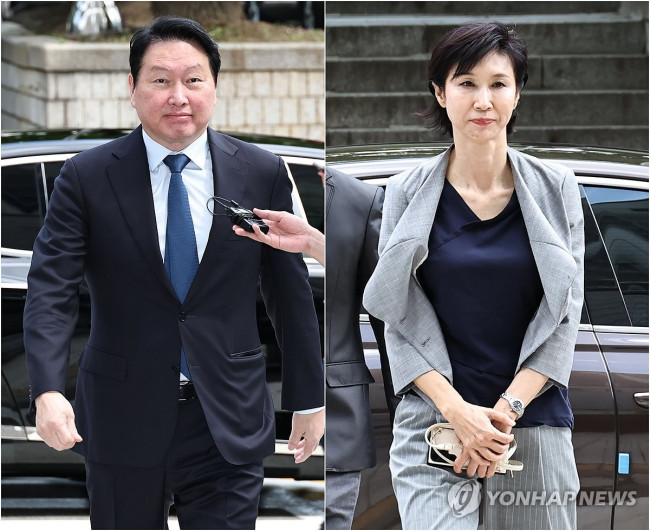 On the 24th, during the remand trial for the property division lawsuit between SK Group Chairman Chey Tae-won and Art Center Nabi Director Roh Soh-yeong held at the Seoul High Court in Seocho-gu, the court ruled that Chairman Chey must pay 944 billion won to Director Roh. Pictured are Chairman Chey and Director Roh attending the hearing on the 26th of last month. [Yonhap News file photo]
Today's ruling comes nine years after the couple's legal battle began when Chairman Chey filed for divorce mediation in July 2017.
Chairman Chey and Director Roh married in September 1988 and have three children, but have been embroiled in a grueling legal battle since Chairman Chey’s initial divorce mediation request in 2017.
The first-instance court for the divorce trial viewed the SK shares as Chairman Chey’s separate property, ordering him to pay Director Roh 100 million won in alimony and 66.5 billion won in cash for property division.
In May 2024, the second-instance court significantly increased the amount to 2 billion won in alimony and 1.3808 trillion won in property division.
The court had determined that since the late President Roh Tae-woo’s "30 billion won in slush funds" and Director Roh’s contributions played a part in the growth of the SK Group, the SK shares were also subject to property division.
However, last October, the Supreme Court remanded the case for re-trial, ruling that because the former president’s slush funds were illegal, they could not be considered a contribution by Director Roh to the property division even if they had been funneled into SK.
The second-instance court’s decision to set alimony at 2 billion won was finalized at that time, leaving only the property division to be addressed in the remand trial.

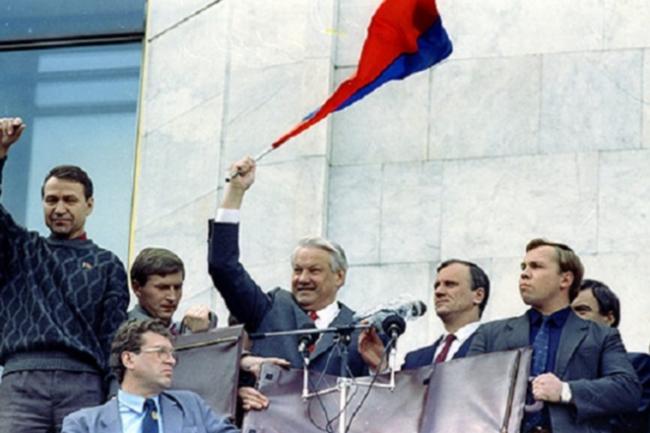 [Songsan Column | 80-Year History of the Pro-North Korean Left] ㉛ 1991: The Dissolution of the Soviet Union
On August 22, 1991, Russian President Boris Yeltsin waves the Russian tricolor flag, calling for resistance against the coup forces. On December 26, 1991, the Soviet Union (USSR), the world’s m
[Songsan Column | 80-Year History of the Pro-North Korean Left] ㉛ 1991: The Dissolution of the Soviet Union
On August 22, 1991, Russian President Boris Yeltsin waves the Russian tricolor flag, calling for resistance against the coup forces. On December 26, 1991, the Soviet Union (USSR), the world’s m
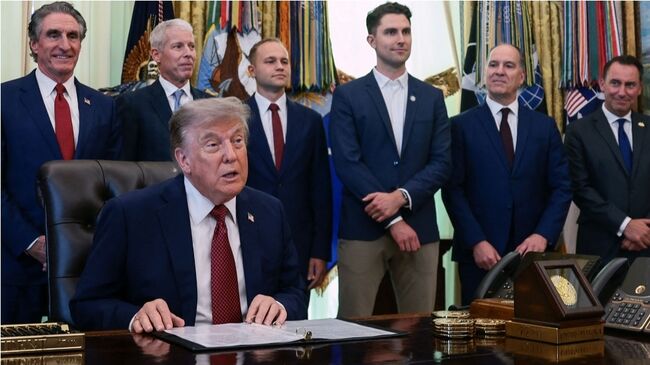 Trump: "Talks with Iran are underway... preparations for airstrikes are also complete"
President Donald Trump delivers remarks on U.S. nuclear innovation in the Oval Office at the White House in Washington, D.C., on July 24, 2026. (Reuters/Evelyn Hockstein)U.S. President Donald Trump st
Trump: "Talks with Iran are underway... preparations for airstrikes are also complete"
President Donald Trump delivers remarks on U.S. nuclear innovation in the Oval Office at the White House in Washington, D.C., on July 24, 2026. (Reuters/Evelyn Hockstein)U.S. President Donald Trump st
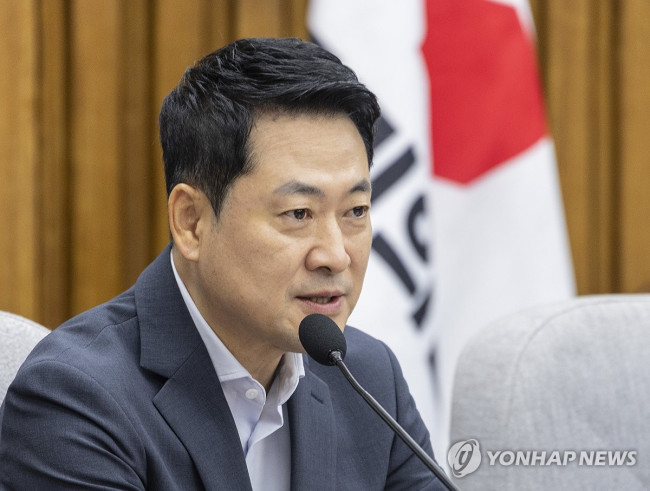 Jang Dong-hyeok to visit Gimhae and Daegu today… to attend a rally condemning the infringement of voting rights
People Power Party leader Jang Dong-hyeok speaks out against government real estate policy at the party's Real Estate Policy Normalization Forum held at the National Assembly on the 24th. [Yonhap News
Jang Dong-hyeok to visit Gimhae and Daegu today… to attend a rally condemning the infringement of voting rights
People Power Party leader Jang Dong-hyeok speaks out against government real estate policy at the party's Real Estate Policy Normalization Forum held at the National Assembly on the 24th. [Yonhap News
 FT "South Korean companies flush with cash from 'AI boom' eye U.S. M&A"
Samsung Electronics logo [Reuters=Yonhap News File Photo]South Korean companies, flush with cash from the artificial intelligence (AI) boom, are acquiring U.S. firms to circumvent tariffs expected und
FT "South Korean companies flush with cash from 'AI boom' eye U.S. M&A"
Samsung Electronics logo [Reuters=Yonhap News File Photo]South Korean companies, flush with cash from the artificial intelligence (AI) boom, are acquiring U.S. firms to circumvent tariffs expected und
 [New Book] Approaching the Truth of Gwangju… ‘The Memory of Two Gunshots, the Tears of Two Gwangjus’
Memories of the 5·18 Democratization Movement have long remained scattered, failing to converge into a single, unified meaning. The new book, "Memories of Two Gunshots, Tears of Two Gwangjus," brings
[New Book] Approaching the Truth of Gwangju… ‘The Memory of Two Gunshots, the Tears of Two Gwangjus’
Memories of the 5·18 Democratization Movement have long remained scattered, failing to converge into a single, unified meaning. The new book, "Memories of Two Gunshots, Tears of Two Gwangjus," brings
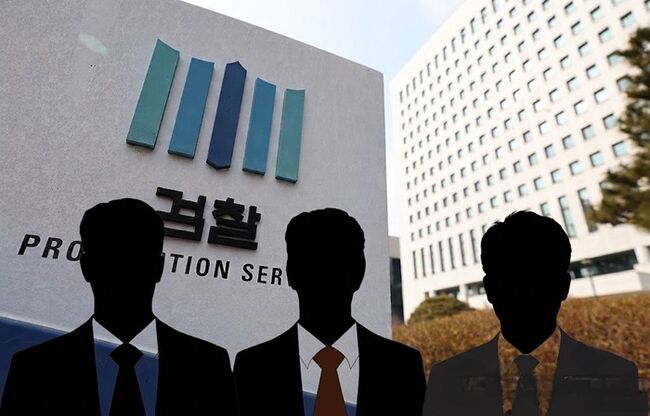 [Byun Jong-pil Column] Investigative Authority for Supplementary Inquiries: For Whom Are We Abolishing It?
"Is it truly reasonable from the perspective of the public to abolish prosecutors' supplementary investigation powers based on the simple catchphrase of 'reforming the politically motivated prosecutio
[Byun Jong-pil Column] Investigative Authority for Supplementary Inquiries: For Whom Are We Abolishing It?
"Is it truly reasonable from the perspective of the public to abolish prosecutors' supplementary investigation powers based on the simple catchphrase of 'reforming the politically motivated prosecutio
 [Photo] Evidence of Election Fraud Flooding U.S. Media… Trump Had 2.7 Million Votes Stolen
 [Video] U.S. Semiquincentennial Air Show... 'Art in the Sky' streaks across New York
 [Editorial Cartoon] A Draconian Law That Undermines Freedom of Expression

 List
List