An Iranian road devastated by US airstrikes [AFP=Yonhap News]
Hostilities between the United States and Iran are intensifying, falling into a vicious cycle of retribution and retaliation. With mounting speculation that a full-scale war is imminent, the security situation in the Middle East has become increasingly volatile as both sides cross each other's "red lines."
The two countries' memorandum of understanding (MOU) to end hostilities began to erode after Iran, insisting on its control over the Strait of Hormuz, used a drone to attack a merchant vessel passing through the area on the 25th of last month (local time), prompting the U.S. to conduct airstrikes against Iran the following day.
A "tit-for-tat" cycle of retaliation and counter-retaliation ensued. After Iran fired on merchant ships in the Strait of Hormuz again on the 7th, the U.S. Central Command carried out airstrikes against Iran, describing the move as "punishment." Since then, sporadic attacks and counter-attacks have continued.
On the 12th, when a rumored back-channel deal to end hostilities fell through at the last minute, Iran declared the closure of the Strait of Hormuz. In response, the U.S. launched airstrikes against Iran for eight consecutive days, and Iran, not to be outdone, attacked U.S. military bases across the Middle East.
The death and disappearance of three U.S. service members at a base in Jordan on the 17th served as fuel to the already spreading fire. This incident marked the first U.S. military fatalities since the ceasefire and the first time that direct Iranian attacks resulted in U.S. casualties.
While the reality is that Iran has suffered far more casualties, the U.S. fatalities have drawn significant attention because they increase the likelihood that the U.S., which possesses military superiority, will lean toward war rather than negotiation.
U.S. Central Command stated that the previous day's strikes were intended to "swiftly punish the Iranian Islamic Revolutionary Guard Corps (IRGC) for attacking U.S. service members." It is reasonable to analyze that the term "punishment" used by the U.S. military was laced with fury.
Secretary of Defense Pete Hegseth vowed in a social media post, "Their sacrifice will only strengthen our resolve."
As both countries become mired in this cycle of retaliatory strikes, the New York Times (NYT) reported on the 19th that "the remainder of the MOU has completely crumbled," while CNN stated definitively that "the ceasefire between the U.S. and Iran has effectively collapsed."
Consequently, U.S. media outlets are raising concerns that "the possibility of a return to full-scale war is growing" (AP) and that "the U.S. and Iran are closer to a larger war" (NYT).
In particular, there is talk that if full-scale war resumes, unlike at the onset of hostilities, the conflict could evolve to target not only military facilities but also civilian infrastructure, causing devastating damage.
The Wall Street Journal (WSJ) predicted that President Donald Trump's "restraint is being put to the test" and that it "could trigger a cycle of escalation." The Associated Press (AP) observed that the U.S. and Iran "are crossing each other's red lines."
Indeed, since the U.S. and Iran entered this phase of an "escalatory cycle," it has been reported that the U.S. has struck Iranian infrastructure considered civilian, such as bridges and desalination plants.
President Trump has threatened to attack not only bridges but also power plants if Iran does not reach an agreement this week. With little expectation of Iran returning to the negotiating table at this moment, it is a warning of an extreme measure: cutting off electricity as a means of pressure following the ceasefire.
Iran is equally crossing red lines, targeting the desalination facilities of U.S. allies in the water-scarce Middle East. It has also warned that merchant vessels that do not comply with its control will not be safe in the Strait of Hormuz.
Iran has expanded the scope of its attacks to virtually the entire Middle East, including Qatar, the UAE, Kuwait, Bahrain, Oman, Saudi Arabia, Jordan, and Iraq. It also appears ready to attempt to block the Red Sea shipping lanes using its proxy forces, the Houthi rebels.
The possibility also remains that the U.S., in response, could seize Kharg Island—Iran's economic lifeline—or launch a ground war by supporting Kurdish rebels. In such a scenario, the war would enter an entirely new phase.
The Associated Press noted that if the U.S. were to attempt to occupy islands around the Strait of Hormuz or Kharg Island, as suggested by President Trump, it would require significant additional naval power and tens of thousands of ground troops.
The WSJ analyzed that one of the reasons both sides, which had previously refrained from resuming full-scale war, are no longer hesitating to use force is a diplomatic attempt to break the stalemate in the peace negotiations.
However, it assessed that in this process, the blocking of the Strait of Hormuz—through which 20% of the world's oil supply passes—would inevitably draw oil inventories down to dangerous levels and drive oil prices to uncontrollable heights.
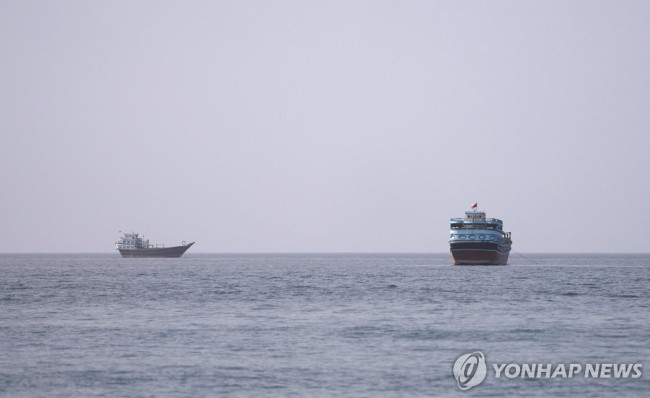 Rising tension in Hormuz [Reuters=Yonhap News]

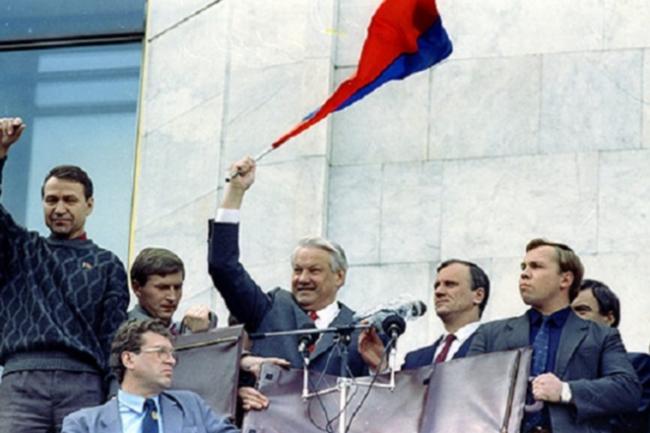 [Songsan Column | 80-Year History of the Pro-North Korean Left] ㉛ 1991: The Dissolution of the Soviet Union
On August 22, 1991, Russian President Boris Yeltsin waves the Russian tricolor flag, calling for resistance against the coup forces. On December 26, 1991, the Soviet Union (USSR), once the world’s m
[Songsan Column | 80-Year History of the Pro-North Korean Left] ㉛ 1991: The Dissolution of the Soviet Union
On August 22, 1991, Russian President Boris Yeltsin waves the Russian tricolor flag, calling for resistance against the coup forces. On December 26, 1991, the Soviet Union (USSR), once the world’s m
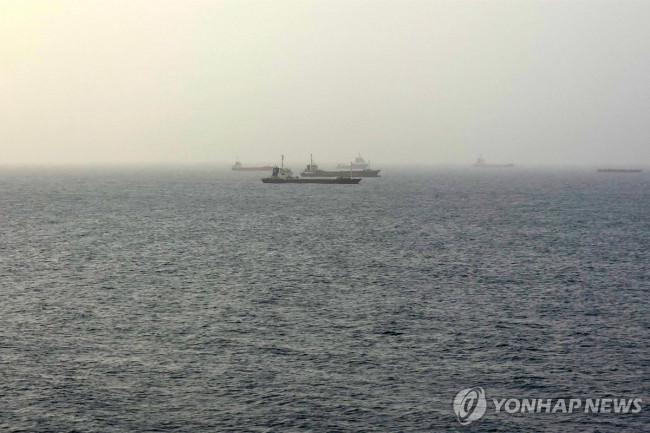 U.S. Military: "Iran maritime blockade remains in effect… 2 vessels neutralized, 12 forced to change course"
Gulf of Oman [AFP=Yonhap News]The U.S. military announced on the 25th (local time) that it is maintaining a full maritime blockade against Iran.U.S. Central Command (CENTCOM), which oversees the Middl
U.S. Military: "Iran maritime blockade remains in effect… 2 vessels neutralized, 12 forced to change course"
Gulf of Oman [AFP=Yonhap News]The U.S. military announced on the 25th (local time) that it is maintaining a full maritime blockade against Iran.U.S. Central Command (CENTCOM), which oversees the Middl
 Jang Dong-hyeok suggests unifying slogans, asking, "Is there anyone left who still denies these were rigged or flawed elections?"
People Power Party Representative Jang Dong-hyeok speaks in Daegu on the 25th. [Maeil Shinmun YouTube Video GIF]As the sweat and tears shed by patriotic citizens on the asphalt over the past decade ha
Jang Dong-hyeok suggests unifying slogans, asking, "Is there anyone left who still denies these were rigged or flawed elections?"
People Power Party Representative Jang Dong-hyeok speaks in Daegu on the 25th. [Maeil Shinmun YouTube Video GIF]As the sweat and tears shed by patriotic citizens on the asphalt over the past decade ha
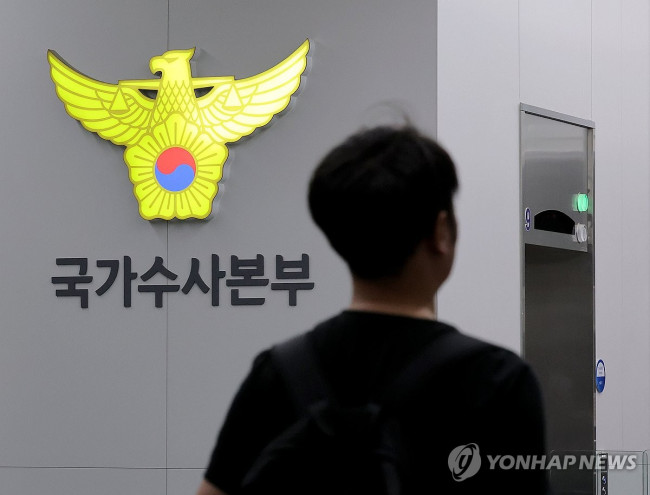 "Cannot Trust Police Investigations": Objections Double in 4 Years… 34,000 Cases in First Half of This Year
Police officials walk past the lobby of the National Office of Investigation (NOI) as the special investigation team looking into the Jang Yoon-gi case conducts a raid at the National Police Agency he
"Cannot Trust Police Investigations": Objections Double in 4 Years… 34,000 Cases in First Half of This Year
Police officials walk past the lobby of the National Office of Investigation (NOI) as the special investigation team looking into the Jang Yoon-gi case conducts a raid at the National Police Agency he
 Starbucks' 'Aero-cano', first launched in Korea, sells 5.5 million cups in 5 months
Starbucks Aerocano [Courtesy of Starbucks Korea. Yonhap News file photo] Starbucks Korea announced that its "Aerocano," which debuted in South Korea—a world first—on February 26, has surpasse
Starbucks' 'Aero-cano', first launched in Korea, sells 5.5 million cups in 5 months
Starbucks Aerocano [Courtesy of Starbucks Korea. Yonhap News file photo] Starbucks Korea announced that its "Aerocano," which debuted in South Korea—a world first—on February 26, has surpasse
 [New Book] Approaching the Truth of Gwangju… ‘The Memory of Two Gunshots, The Tears of Two Gwangjus’
For a long time, the memory of the May 18 Gwangju Democratization Movement has remained fragmented, never converging into a singular meaning. The new book, Memories of Two Gunshots, Tears of Two Gwang
[New Book] Approaching the Truth of Gwangju… ‘The Memory of Two Gunshots, The Tears of Two Gwangjus’
For a long time, the memory of the May 18 Gwangju Democratization Movement has remained fragmented, never converging into a singular meaning. The new book, Memories of Two Gunshots, Tears of Two Gwang
 [Writer Park Joo-hyun’s Column] The ‘Controversy Over Recommended Summer Reading Lists’ Caused by Blind Idolatry
The cover of the full audio recording file of the so-called "sister-in-law profanity" call, released in 2021 by the pro-Moon Jae-in group "Awakened Citizens' Solidarity Party." [Source: Awakened Citiz
[Writer Park Joo-hyun’s Column] The ‘Controversy Over Recommended Summer Reading Lists’ Caused by Blind Idolatry
The cover of the full audio recording file of the so-called "sister-in-law profanity" call, released in 2021 by the pro-Moon Jae-in group "Awakened Citizens' Solidarity Party." [Source: Awakened Citiz
 [Photo] Evidence of Election Fraud Flooding U.S. Media… Trump Had 2.7 Million Votes Stolen
 [Video] U.S. Semiquincentennial Air Show... 'Art in the Sky' streaks across New York
 [Editorial Cartoon] A Draconian Law That Undermines Freedom of Expression

 List
List