- Discovered During Underground Borehole Investigation at Seogwipo The Deoreum: "A New Clue to Volcanic Activity History"
 Schematic diagram of the Deodeoreum lava dome [Provided by Jeju Special Self-Governing Province, resale and DB prohibited]
Traces of an ancient lava dome comparable in scale to Sanbangsan Mountain have been discovered beneath Deodeoreum, an oreum (volcanic cone) in Seogwipo, Jeju.
On the 20th, the Hallasan Research Institute under Jeju’s World Heritage Office announced that it had confirmed the existence of a massive trachyte lava dome during a deep-borehole survey near Deodeoreum in Sangye-dong, Seogwipo.
The research team conducted the survey at a borehole located approximately 200 meters northeast of the peak of Deodeoreum. They confirmed that trachyte—the same rock type that forms Deodeoreum—is continuously distributed throughout a 221-meter section, from 109 meters underground down to the current drilling depth of 330 meters.
By integrating the borehole data with the topography of Deodeoreum, the researchers explained that the lava dome is estimated to be at least 360 meters in scale, extending from a minimum elevation of -132 meters to the peak at 228.4 meters above sea level.
This raises the possibility that Deodeoreum, which currently stands only 48 meters high (relative height of 48m, altitude of 228.4m), was once a massive lava dome comparable to Sanbangsan Mountain (relative height of 345m, altitude of 395m), which was later covered by lava flows over a long period, resulting in its present appearance.
Relative height refers to the difference in elevation between the peak of a mountain or oreum and the surrounding ground level, while altitude indicates the height above the average sea level.
The research team further stated that because the lower boundary of the trachyte body has not yet been identified at the current depth of 330 meters, the actual scale of the volcanic body may be even larger.
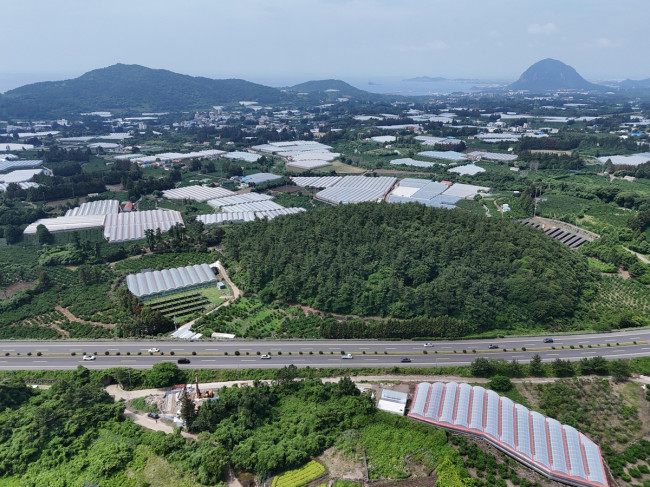 Deodeoreum, which stands 48 meters above ground level [Provided by Jeju Special Self-Governing Province, resale and DB prohibited]
The World Heritage Office plans to clarify the formation relationship between volcanic bodies in southwestern Jeju, such as Deodeoreum and Sanbangsan, through precise analysis and dating of rock samples.
The research team stated, "Through this investigation, we have confirmed for the first time that a massive trachyte volcanic body is hidden beneath Deodeoreum, which appears to be just a small oreum on the surface," adding, "This is a significant achievement that demonstrates that the history of volcanic activity in Jeju is far more complex and three-dimensional than what is visible on the surface today."
They further noted, "Drill cores are invaluable research assets that record volcanic activity beneath Jeju, and once lost, they are difficult to recover. This investigation is a clear example of how critical borehole data is to uncovering the history of volcanic activity in Jeju."
A borehole survey involves drilling deep into the ground to directly examine underground rocks and strata.
The Hallasan Research Institute of Jeju’s World Heritage Office is currently conducting a research project titled 'Establishing a Geological Map of the Entire Jeju Region' from 2025 to 2028.
This year, the team is documenting and collecting/analyzing rock samples from lava layers obtained from drill cores acquired from 13 deep boreholes across the province that were drilled for groundwater development and observation. [Yonhap News]
What do you think of this article?

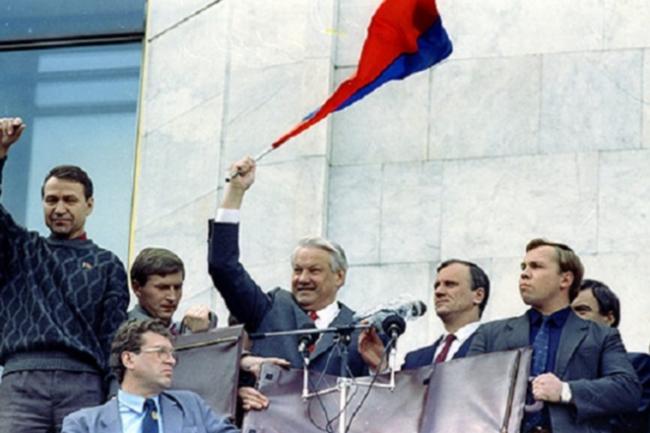 [Songsan Column | 80-Year History of the Pro-North Korean Left] ㉛ 1991: The Dissolution of the Soviet Union
On August 22, 1991, Russian President Boris Yeltsin waves the Russian tricolor flag, calling for resistance against the coup forces. On December 26, 1991, the Soviet Union (USSR), once the world’s m
[Songsan Column | 80-Year History of the Pro-North Korean Left] ㉛ 1991: The Dissolution of the Soviet Union
On August 22, 1991, Russian President Boris Yeltsin waves the Russian tricolor flag, calling for resistance against the coup forces. On December 26, 1991, the Soviet Union (USSR), once the world’s m
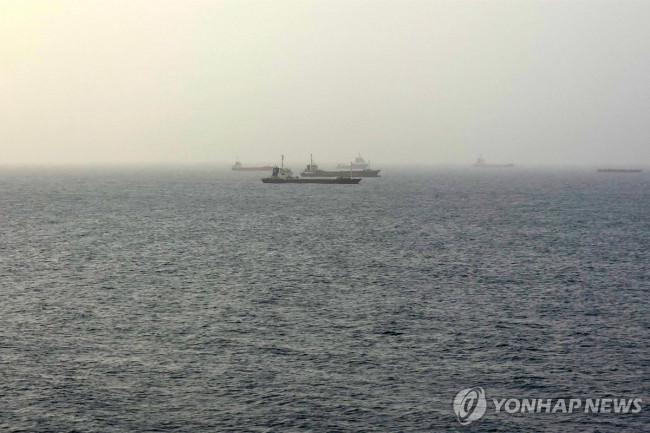 U.S. Military: "Iran maritime blockade remains in effect… 2 vessels neutralized, 12 forced to change course"
Gulf of Oman [AFP=Yonhap News]The U.S. military announced on the 25th (local time) that it is maintaining a full maritime blockade against Iran.U.S. Central Command (CENTCOM), which oversees the Middl
U.S. Military: "Iran maritime blockade remains in effect… 2 vessels neutralized, 12 forced to change course"
Gulf of Oman [AFP=Yonhap News]The U.S. military announced on the 25th (local time) that it is maintaining a full maritime blockade against Iran.U.S. Central Command (CENTCOM), which oversees the Middl
 Jang Dong-hyeok suggests unifying slogans, asking, "Is there anyone left who still denies these were rigged or flawed elections?"
People Power Party Representative Jang Dong-hyeok speaks in Daegu on the 25th. [Maeil Shinmun YouTube Video GIF]As the sweat and tears shed by patriotic citizens on the asphalt over the past decade ha
Jang Dong-hyeok suggests unifying slogans, asking, "Is there anyone left who still denies these were rigged or flawed elections?"
People Power Party Representative Jang Dong-hyeok speaks in Daegu on the 25th. [Maeil Shinmun YouTube Video GIF]As the sweat and tears shed by patriotic citizens on the asphalt over the past decade ha
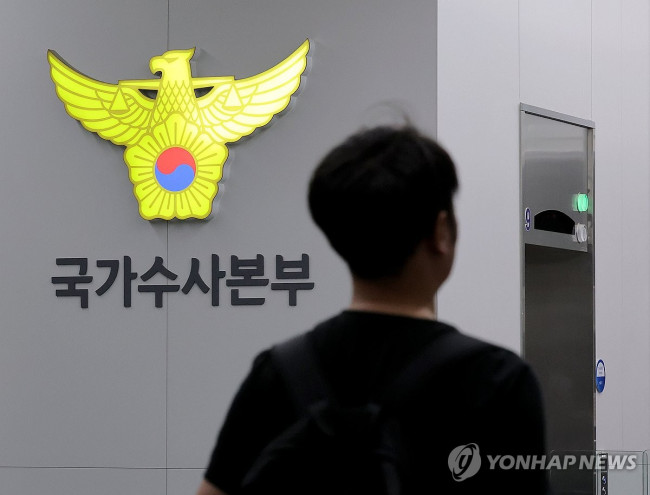 "Cannot Trust Police Investigations": Objections Double in 4 Years… 34,000 Cases in First Half of This Year
Police officials walk past the lobby of the National Office of Investigation (NOI) as the special investigation team looking into the Jang Yoon-gi case conducts a raid at the National Police Agency he
"Cannot Trust Police Investigations": Objections Double in 4 Years… 34,000 Cases in First Half of This Year
Police officials walk past the lobby of the National Office of Investigation (NOI) as the special investigation team looking into the Jang Yoon-gi case conducts a raid at the National Police Agency he
 Starbucks' 'Aero-cano', first launched in Korea, sells 5.5 million cups in 5 months
Starbucks Aerocano [Courtesy of Starbucks Korea. Yonhap News file photo] Starbucks Korea announced that its "Aerocano," which debuted in South Korea—a world first—on February 26, has surpasse
Starbucks' 'Aero-cano', first launched in Korea, sells 5.5 million cups in 5 months
Starbucks Aerocano [Courtesy of Starbucks Korea. Yonhap News file photo] Starbucks Korea announced that its "Aerocano," which debuted in South Korea—a world first—on February 26, has surpasse
 [New Book] Approaching the Truth of Gwangju… ‘The Memory of Two Gunshots, The Tears of Two Gwangjus’
For a long time, the memory of the May 18 Gwangju Democratization Movement has remained fragmented, never converging into a singular meaning. The new book, Memories of Two Gunshots, Tears of Two Gwang
[New Book] Approaching the Truth of Gwangju… ‘The Memory of Two Gunshots, The Tears of Two Gwangjus’
For a long time, the memory of the May 18 Gwangju Democratization Movement has remained fragmented, never converging into a singular meaning. The new book, Memories of Two Gunshots, Tears of Two Gwang
 [Writer Park Joo-hyun’s Column] The ‘Controversy Over Recommended Summer Reading Lists’ Caused by Blind Idolatry
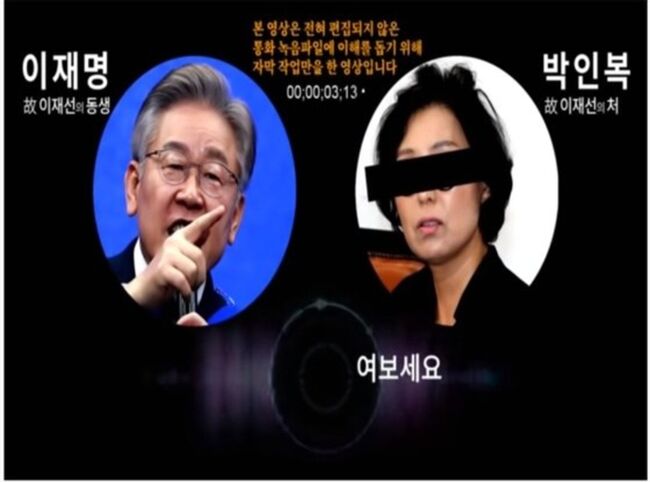
The cover of the full audio recording file of the so-called "sister-in-law profanity" call, released in 2021 by the pro-Moon Jae-in group "Awakened Citizens' Solidarity Party." [Source: Awakened Citiz
[Writer Park Joo-hyun’s Column] The ‘Controversy Over Recommended Summer Reading Lists’ Caused by Blind Idolatry
The cover of the full audio recording file of the so-called "sister-in-law profanity" call, released in 2021 by the pro-Moon Jae-in group "Awakened Citizens' Solidarity Party." [Source: Awakened Citiz
 [Photo] Evidence of Election Fraud Flooding U.S. Media… Trump Had 2.7 Million Votes Stolen
 [Video] U.S. Semiquincentennial Air Show... 'Art in the Sky' streaks across New York
 [Editorial Cartoon] A Draconian Law That Undermines Freedom of Expression

 List
List