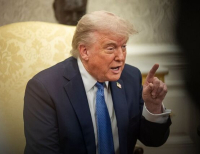
U.S. President Donald Trump [Photo=White House]
Voices are growing louder within the United States, particularly among the Republican Party, calling for the total cancellation and suspension of visas for Chinese students.
On the 21st (local time), the influential U.S. media outlet Newsweek reported that as allegations of Chinese interference in U.S. elections and cyber espionage—recently disclosed by President Donald Trump—have emerged as major political issues, the pressure to impose immigration sanctions on China for national security reasons is expanding into the realm of visas.
Rep. Luna Sends Letter to Secretary of State Rubio… Demands Immediate Suspension of F-1 and J-1 Visas
Representative Anna Paulina Luna (Republican, Florida) sent a letter to Secretary of State Marco Rubio, strongly urging the immediate suspension and cancellation of all F-1 (student) and J-1 (exchange visitor) visas currently held by Chinese nationals enrolled in U.S. higher education institutions. She also demanded an immediate halt to the issuance of new student visas currently under review.
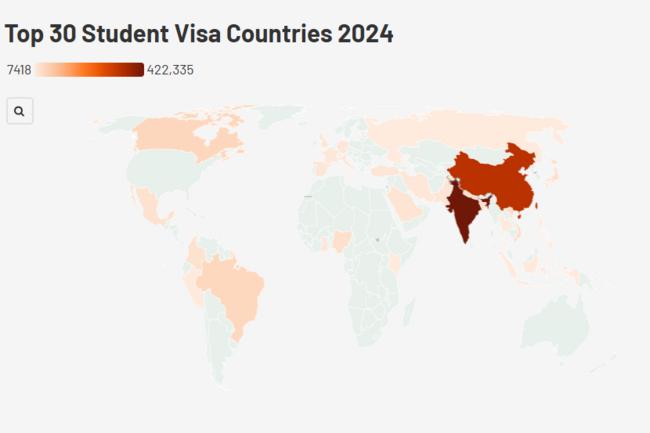 There are currently 265,919 Chinese students enrolled in U.S. universities. This is the second-largest group in the U.S., following India. [Graphic=Open Doors]
According to the latest Open Doors report on international educational exchange, there are currently 265,919 Chinese students enrolled in U.S. universities. This represents the second-largest contingent in the country after India. If Rep. Luna's demands are realized, over 260,000 Chinese international students would be directly affected.
In her letter, Rep. Luna stated, "The student visa system could be abused by the Chinese Communist Party (CCP) as a potential pathway for influence operations targeting U.S. democratic institutions," arguing that American universities remain vulnerable to foreign intelligence operations.
Trump: "China Obtained 200 Million Voter Records"
This call for action comes shortly after President Trump cited recently declassified intelligence, alleging that "the Chinese government conducted the largest cyber espionage campaign in history, including the illegal acquisition of 220 million sensitive voter records from the 2020 election cycle." A 2021 assessment by U.S. intelligence agencies also concluded that China did not alter the 2020 presidential election results.
Beijing immediately refuted these claims, calling them "baseless and intended to smear China." Nevertheless, the demand for visa crackdowns from hardline anti-China lawmakers within the Republican Party is gaining significant momentum.
Representative Riley Moore is pushing for the 'CCP Visa Revocation Act,' which would entirely ban the issuance of student visas to Chinese nationals, stating, "We cannot allow our enemies to be trained to destroy us." Representative Mary Miller also used social media to highlight China’s threats to national security and called for the termination of student visas.
Administrative Steps Toward Immigration Restrictions Amid Expected Backlash from Academia
It remains unclear whether the administration will actually take the extreme step of revoking all visas for Chinese students. Because Chinese students contribute approximately $14.6 billion (about 20 trillion KRW) annually to the U.S. economy, a total revocation could have significant repercussions for U.S. universities, local economies, business organizations, and diplomatic relations.
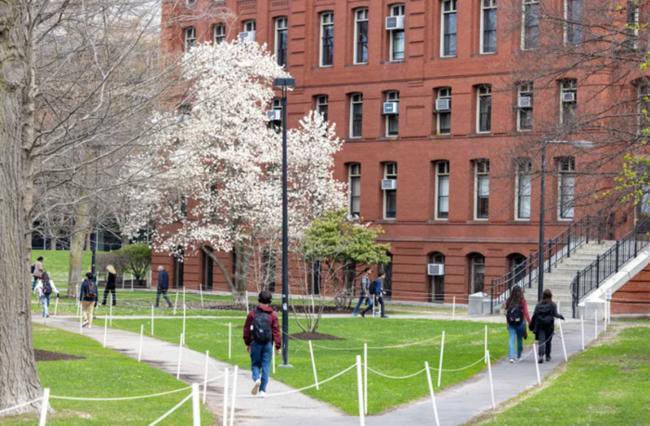 Harvard University campus in Cambridge, Massachusetts. [Getty Images=Newsweek]
However, restrictions on student stays are becoming visible. The Department of Homeland Security recently finalized a plan to abolish the existing 'duration of status' policy—which applied to F, J, and I visa holders—and replace it with fixed stay limits. Consequently, international students will now require separate approval from U.S. Citizenship and Immigration Services (USCIS) to extend their stay.
Separately, the U.S. Department of Justice and the Department of Education have launched investigations into whether China-based financial support programs at institutions like Harvard University violate federal anti-discrimination laws, further increasing pressure on China-related academic and scholarship initiatives.
Reporter Lim Yo-hee

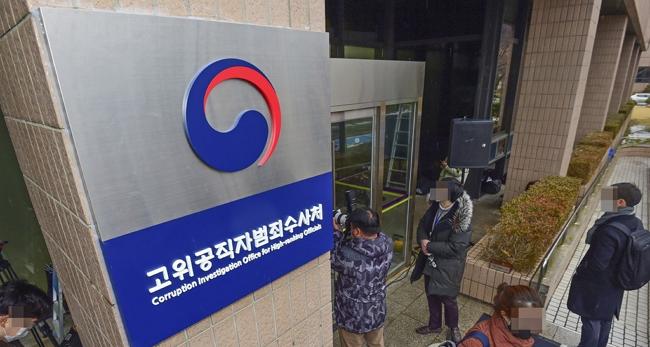 [Issue Commentary] “Who Checks the CIO?”… The Paradox of Prohibiting Direct Supplementary Investigations by the Public Prosecutor’s Office
The signboard of the Corruption Investigation Office for High-ranking Officials (CIO) at the Government Complex Gwacheon [Yonhap News file photo] Ahead of the abolition of the Prosecutors' Office and
[Issue Commentary] “Who Checks the CIO?”… The Paradox of Prohibiting Direct Supplementary Investigations by the Public Prosecutor’s Office
The signboard of the Corruption Investigation Office for High-ranking Officials (CIO) at the Government Complex Gwacheon [Yonhap News file photo] Ahead of the abolition of the Prosecutors' Office and
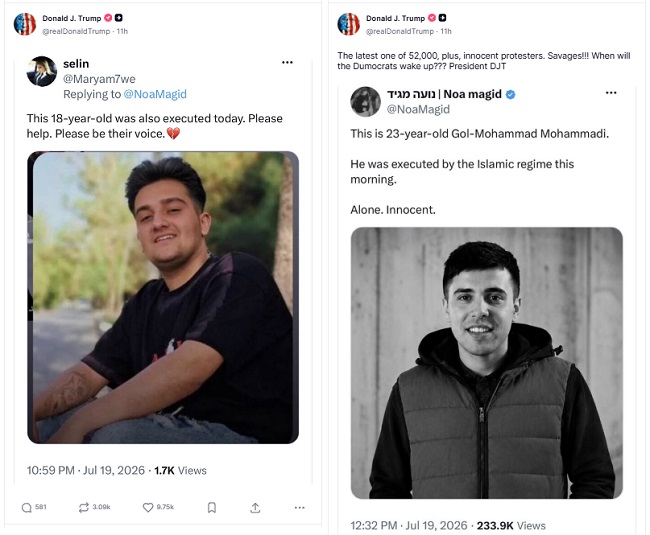 Trump’s bombshell tweet: “Iranian regime has slaughtered 52,000 protesters”
U.S. President Donald Trump shared a post regarding Iranian youths massacred by the Iranian dictatorship, stating that the number of innocent victims has reached 52,000. [Captured from President Trump
Trump’s bombshell tweet: “Iranian regime has slaughtered 52,000 protesters”
U.S. President Donald Trump shared a post regarding Iranian youths massacred by the Iranian dictatorship, stating that the number of innocent victims has reached 52,000. [Captured from President Trump
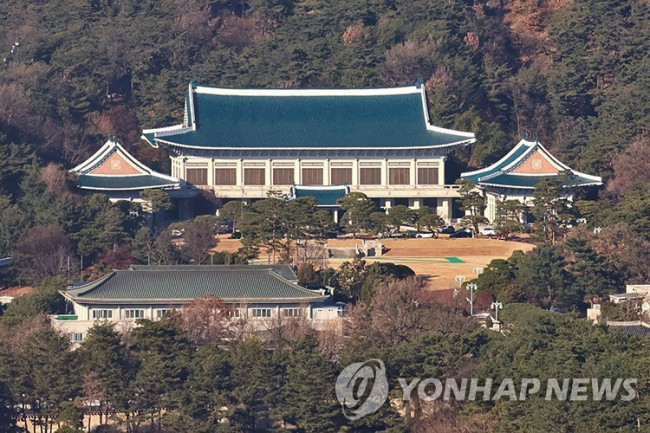 Blue House: "We will respect any conclusion on the right to request supplementary investigations... A prompt decision is needed to minimize confusion."
The Blue House [Photo by Lee Jung-hoon] 2025.12.8Regarding the issue of the prosecution's supplementary investigative authority, the Blue House stated on the 21st, "The decision on whether to abolish
Blue House: "We will respect any conclusion on the right to request supplementary investigations... A prompt decision is needed to minimize confusion."
The Blue House [Photo by Lee Jung-hoon] 2025.12.8Regarding the issue of the prosecution's supplementary investigative authority, the Blue House stated on the 21st, "The decision on whether to abolish
 Heavy rainfall overnight triggers flood of damage reports in Asan and Cheonan… 8 rescued
Road flooded by heavy rain [Yonhap News file photo]As of the early hours of the 22nd, heavy rainfall has caused consecutive damage in the Asan and Cheonan areas of South Chungcheong Province, includin
Heavy rainfall overnight triggers flood of damage reports in Asan and Cheonan… 8 rescued
Road flooded by heavy rain [Yonhap News file photo]As of the early hours of the 22nd, heavy rainfall has caused consecutive damage in the Asan and Cheonan areas of South Chungcheong Province, includin
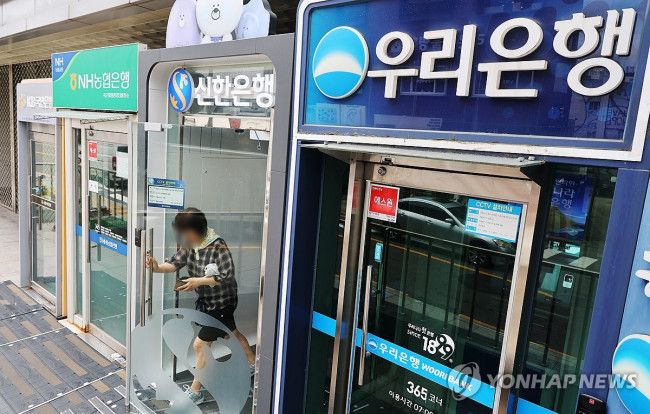 Due to 'Debt-to-Invest' Trend, Major 5 Banks Exceed Other Loan Targets by 2.4 Trillion Won… Tightening Mortgage Loans
An automated teller machine (ATM) at a commercial bank in Seoul on the 19th. [Yonhap News] It has been found that "other loans" at the five major commercial banks (KB Kookmin, Shinhan, Hana, Woor
Due to 'Debt-to-Invest' Trend, Major 5 Banks Exceed Other Loan Targets by 2.4 Trillion Won… Tightening Mortgage Loans
An automated teller machine (ATM) at a commercial bank in Seoul on the 19th. [Yonhap News] It has been found that "other loans" at the five major commercial banks (KB Kookmin, Shinhan, Hana, Woor
 [Exhibition] Lee Jung-a Solo Exhibition ‘Palimpsest of Multiple Perceptions’ Held at Gallery Naeil
Gallery Naeil in Jongno-gu, Seoul, will host artist Lee Jung-ah's solo exhibition, "Palimpsest of Multiple Perceptions," from the 24th of this month to August 5th. Artist Lee Jung-ah has co
[Exhibition] Lee Jung-a Solo Exhibition ‘Palimpsest of Multiple Perceptions’ Held at Gallery Naeil
Gallery Naeil in Jongno-gu, Seoul, will host artist Lee Jung-ah's solo exhibition, "Palimpsest of Multiple Perceptions," from the 24th of this month to August 5th. Artist Lee Jung-ah has co
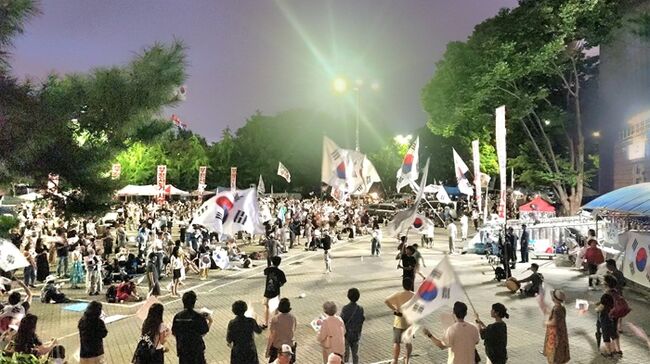 [Kim Jae-soo Column] "What is the ruling party so afraid of?"... The reason why the opposition-recommended special counsel must be implemented
"Members of the National Assembly, can you not hear the calls for 'reruns of fraudulent elections and manual counting of same-day ballots' that have been echoing at Olympic Park for nearly two months?
[Kim Jae-soo Column] "What is the ruling party so afraid of?"... The reason why the opposition-recommended special counsel must be implemented
"Members of the National Assembly, can you not hear the calls for 'reruns of fraudulent elections and manual counting of same-day ballots' that have been echoing at Olympic Park for nearly two months?
 [Photo] Evidence of Election Fraud Flooding U.S. Media… Trump Had 2.7 Million Votes Stolen
 [Video] U.S. Semiquincentennial Air Show... 'Art in the Sky' streaks across New York
 [Editorial Cartoon] A Draconian Law That Undermines Freedom of Expression

 List
List