Hanmin High School, located in Paju, Gyeonggi Province. Established in 2014 as a general private high school to provide educational stability for the children of military personnel who frequently relocate. [Photo = Hanmin High School]
It is a strange country. A school that performs well should be supported, and a school with problems should be reformed. This is common sense, even for an elementary school student. Yet, the Republic of Korea is currently heading in the opposite direction. There is a move to forcibly convert Hanmin High School, which was established for the children of military personnel, into a public school.
Why? The government talks about public nature. It talks about operational stability. However, the question the public is asking first is different: What on earth was the problem with Hanmin High School?
Hanmin High School is not a failed institution. On the contrary, it is a rare success story. It was founded to help the children of soldiers who struggled to continue their education due to frequent transfers and relocations, and despite its short history, it has achieved some of the best college admission results in the country. It has consistently produced outstanding talent for Seoul National University, medical, dental, and pharmacy schools, science and technology institutions like KAIST, as well as the Military, Naval, and Air Force Academies.
If that is the case, the state's duty is clear: to learn from why it succeeded and to help it develop further. Instead, the government is choosing the exact opposite path. It is insisting on changing the operational structure.
Policies always entail costs. Therefore, the public has the right to ask: "What will improve compared to the present if the current system is changed?" The government has yet to provide an answer that the public finds convincing.
What is even more noteworthy is the consistency of the policy logic. The school remains the same, yet the assessment has changed. This leads the public to wonder if it is not the school, but the standards of the policy that have changed.
Hanmin High School was created for military families stationed across the country. Yet, it is claimed that the school can maintain its current nationwide recruitment and educational system even after converting to a public school.
The public cannot help but ask again: Is that actually possible under the current laws and regulations? If it is possible, it is the responsibility of the government promoting this policy to first explain the legal basis; if it is impossible, it must explain what exactly they intend to change and how.
Even more difficult to understand is the change in attitude of the official leading this policy. The August issue of Monthly Chosun reported that while Minister of National Defense Ahn Gyu-back previously sympathized with the purpose of Hanmin High School's establishment, he now views the school as "the foundation for a second 12.3 insurrection" since taking office. If this report is true, the public is compelled to raise an even greater question.
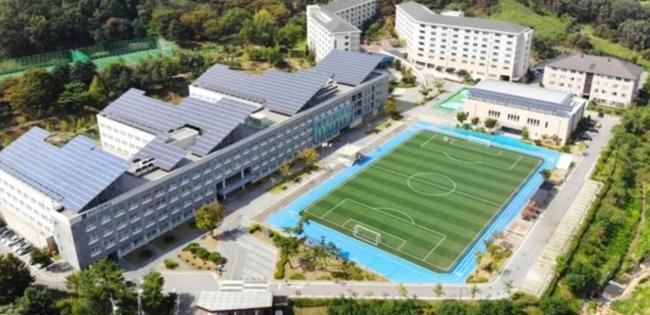 Hanmin High School, located in Paju, Gyeonggi Province. Established in 2014 as a general private high school to provide educational stability for the children of military personnel who frequently relocate. [Photo = Hanmin High School]
Has the school changed? Or has the political perspective viewing the school changed? This question is by no means trivial.
Some media outlets, including Monthly Chosun, are raising questions about whether political judgment has played a role in the push for this public conversion. Such concerns should not be dismissed as mere political bickering. The government must respond to the questions raised by the public with objective evidence and logic.
Is it not natural for the public to ask why this issue was brought up now, amid piled-up public livelihood concerns, especially when it follows the transfer of the National Intelligence Service’s anti-communist investigative authority—which those sympathetic to the North fear most—to the police, the dismantling of the Defense Security Support Command, and the disparagement of the Korea Military Academy?
Democracy does not fear questions. Instead, democracy weakens the moment it begins to block them.
The reason the public is suspicious is simple. It is because there is an attempt to change a model that has already been proven successful. If the government truly intends to strengthen education for military families, it should first explain how to further leverage the existing strengths. Yet, the first thing they presented was a change in the operational system.
Policies are judged by results, not by justifications. If Hanmin High School is faithfully fulfilling its founding purpose of educating the children of military personnel, any change that carries the potential to undermine that purpose must undergo even stricter scrutiny.
The state should not just say that it respects soldiers. The sincerity of that respect is shown by how it protects the educational environment for the children of those soldiers.
The government should not tell the public to "just trust us," but should "prove why it must be changed." That is the duty of those driving policy in a democratic nation.
The school has not changed; the administration has. Thus, the public should not suspect the school, but instead, first ask why the policy standards have changed.
Power becomes healthy when it is questioned, and the public protects its freedom when it asks questions. That is the most basic principle that liberal democracy has taught us.
The Hanmin High School controversy is no longer just a matter of the survival of a single school. It is a litmus test that reveals what the state is trying to protect and what it is trying to change. And so, the public now asks: Who on earth is afraid of Hanmin High School?

◆ Jung Sung-hong
Chairman of Hanmi Ilbo
Former National Intelligence Service Official

 [Songsan Column | 80-Year History of the Pro-North Korean Left] ㉛ 1991: The Dissolution of the Soviet Union
On August 22, 1991, Russian President Boris Yeltsin waves the Russian tricolor flag, calling for resistance against the coup forces. On December 26, 1991, the Soviet Union (USSR), once the world’s m
[Songsan Column | 80-Year History of the Pro-North Korean Left] ㉛ 1991: The Dissolution of the Soviet Union
On August 22, 1991, Russian President Boris Yeltsin waves the Russian tricolor flag, calling for resistance against the coup forces. On December 26, 1991, the Soviet Union (USSR), once the world’s m
 U.S. Military: "Iran maritime blockade remains in effect… 2 vessels neutralized, 12 forced to change course"
Gulf of Oman [AFP=Yonhap News]The U.S. military announced on the 25th (local time) that it is maintaining a full maritime blockade against Iran.U.S. Central Command (CENTCOM), which oversees the Middl
U.S. Military: "Iran maritime blockade remains in effect… 2 vessels neutralized, 12 forced to change course"
Gulf of Oman [AFP=Yonhap News]The U.S. military announced on the 25th (local time) that it is maintaining a full maritime blockade against Iran.U.S. Central Command (CENTCOM), which oversees the Middl
 Jang Dong-hyeok suggests unifying slogans, asking, "Is there anyone left who still denies these were rigged or flawed elections?"
People Power Party Representative Jang Dong-hyeok speaks in Daegu on the 25th. [Maeil Shinmun YouTube Video GIF]As the sweat and tears shed by patriotic citizens on the asphalt over the past decade ha
Jang Dong-hyeok suggests unifying slogans, asking, "Is there anyone left who still denies these were rigged or flawed elections?"
People Power Party Representative Jang Dong-hyeok speaks in Daegu on the 25th. [Maeil Shinmun YouTube Video GIF]As the sweat and tears shed by patriotic citizens on the asphalt over the past decade ha
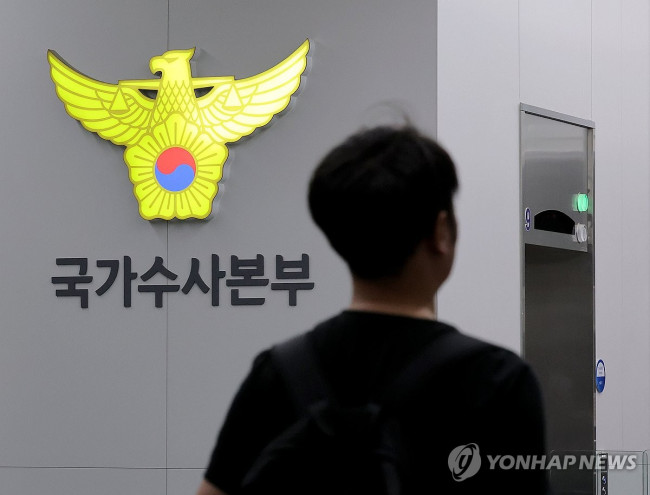 "Cannot Trust Police Investigations": Objections Double in 4 Years… 34,000 Cases in First Half of This Year
Police officials walk past the lobby of the National Office of Investigation (NOI) as the special investigation team looking into the Jang Yoon-gi case conducts a raid at the National Police Agency he
"Cannot Trust Police Investigations": Objections Double in 4 Years… 34,000 Cases in First Half of This Year
Police officials walk past the lobby of the National Office of Investigation (NOI) as the special investigation team looking into the Jang Yoon-gi case conducts a raid at the National Police Agency he
 Starbucks' 'Aero-cano', first launched in Korea, sells 5.5 million cups in 5 months
Starbucks Aerocano [Courtesy of Starbucks Korea. Yonhap News file photo] Starbucks Korea announced that its "Aerocano," which debuted in South Korea—a world first—on February 26, has surpasse
Starbucks' 'Aero-cano', first launched in Korea, sells 5.5 million cups in 5 months
Starbucks Aerocano [Courtesy of Starbucks Korea. Yonhap News file photo] Starbucks Korea announced that its "Aerocano," which debuted in South Korea—a world first—on February 26, has surpasse
 [New Book] Approaching the Truth of Gwangju… ‘The Memory of Two Gunshots, The Tears of Two Gwangjus’
For a long time, the memory of the May 18 Gwangju Democratization Movement has remained fragmented, never converging into a singular meaning. The new book, Memories of Two Gunshots, Tears of Two Gwang
[New Book] Approaching the Truth of Gwangju… ‘The Memory of Two Gunshots, The Tears of Two Gwangjus’
For a long time, the memory of the May 18 Gwangju Democratization Movement has remained fragmented, never converging into a singular meaning. The new book, Memories of Two Gunshots, Tears of Two Gwang
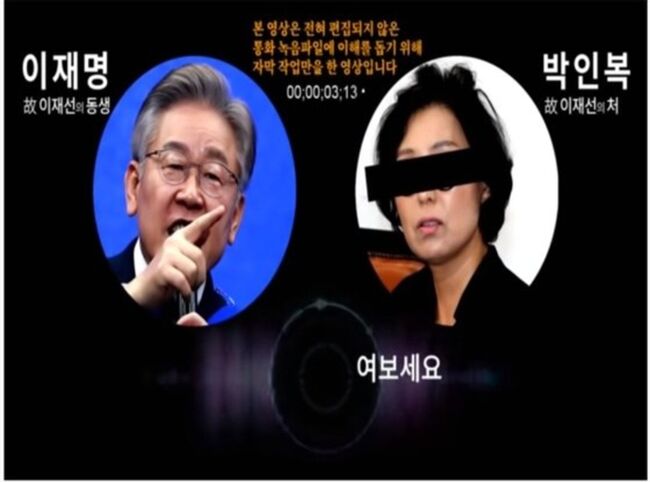 [Writer Park Joo-hyun’s Column] The ‘Controversy Over Recommended Summer Reading Lists’ Caused by Blind Idolatry
The cover of the full audio recording file of the so-called "sister-in-law profanity" call, released in 2021 by the pro-Moon Jae-in group "Awakened Citizens' Solidarity Party." [Source: Awakened Citiz
[Writer Park Joo-hyun’s Column] The ‘Controversy Over Recommended Summer Reading Lists’ Caused by Blind Idolatry
The cover of the full audio recording file of the so-called "sister-in-law profanity" call, released in 2021 by the pro-Moon Jae-in group "Awakened Citizens' Solidarity Party." [Source: Awakened Citiz
 [Photo] Evidence of Election Fraud Flooding U.S. Media… Trump Had 2.7 Million Votes Stolen
 [Video] U.S. Semiquincentennial Air Show... 'Art in the Sky' streaks across New York
 [Editorial Cartoon] A Draconian Law That Undermines Freedom of Expression

 List
List