U.S. President Donald Trump and Lee Jae-myung shake hands during a summit. Following recent trade tensions, the overlapping issues of reduced joint military exercises and moves toward direct North Korea-U.S. dialogue are causing the anomalous atmosphere in South Korea-U.S. relations to spread into the security sector. 2025.8.26 [Photo=Yonhap News]
The atmosphere in South Korea-U.S. relations is unsettling. The anomalies, which began in trade, are rapidly spreading to security, North Korean affairs, and issues involving China.
It is not yet the stage to conclude that U.S. President Donald Trump and Lee Jae-myung have entered a head-on collision. However, when the events of the last few days are viewed in chronological order, it is possible to interpret that both sides have begun a trial of strength, signaling to each other that "I have other options."
The starting point is trade.
On the 15th, Lee Jae-myung abruptly dismissed Yeo Han-koo, the Minister for Trade at the Ministry of Trade, Industry and Energy, who had been the point man for South Korea-U.S. tariff negotiations. Although the head of negotiations was replaced at a time when major trade issues with the U.S., such as Section 301 investigations and investment issues, were mounting, the government provided no specific reason.
Therefore, there is no evidence to conclude that Yeo’s dismissal represents an immediate shift toward a hardline stance against the U.S. However, considering subsequent events, the timing is noteworthy.
Trump plays the security card a day later
Trump made his move the very next day, on the 16th. He instructed the U.S. Department of Defense to significantly reduce joint South Korea-U.S. military exercises.
What is particularly noteworthy is that Trump did not only discuss the North Korea issue. While emphasizing his good relationship with Kim Jong-un, he also expressed dissatisfaction with South Korea's lack of cooperation regarding U.S. demands on the Iran issue.
Frustrations over other issues involving the South Korean government were mentioned in the same breath as joint exercises, a core security asset of the South Korea-U.S. alliance.
The instruction led to actual measures. The Ulchi Freedom Shield (UFS) exercise, initially scheduled for 11 days from the 17th to the 27th, was shortened to five days, ending on the 21st, and some field maneuver exercises were scaled back.
With reports even emerging that the South Korean government had not been notified of Trump's directive in advance, the issue has escalated beyond a simple reduction in training to a question of "the decision-making process between allies."
It is impossible to pinpoint Trump's exact intent. However, the result can certainly be read as a clear message of pressure on Seoul.
It implies that if South Korea does not comply with U.S. demands, Washington can also take action in the security sector, which South Korea considers most sensitive.
Trump plans to scale back drills and meet Kim Jong-un directly
Trump did not stop there. This time, he brought up Kim Jong-un.
The Wall Street Journal reported that Trump has directed his staff to pursue a direct meeting with Kim Jong-un as early as this fall, and that a summit during his visit to Asia in November is also being discussed.
Reuters, while reporting this, stated that it could not independently verify the meeting plans. Therefore, a North Korea-U.S. summit is not yet a confirmed schedule.
However, the political effect is already being felt.
The combination of scaling back joint military exercises and pushing for a direct deal with Kim Jong-un demonstrates the possibility that the U.S. could deal with North Korean issues without going through South Korea.
To Trump, Kim Jong-un is a counterpart for North Korean nuclear negotiations, but for Seoul, it is a matter directly tied to South Korea's role on the Korean Peninsula.
There is also another variable that has not been publicly verified.
The Kim Jong-un regime was the North Korean counterpart during the 2019 push for a visit to North Korea by then-Gyeonggi Governor Lee Jae-myung and the Ssangbangwool North Korea remittance case.
In the case of Lee Hwa-young, former Vice Governor for Peace of Gyeonggi Province, guilt was established regarding involvement in Ssangbangwool’s $8 million remittance to North Korea. This included $5 million for a smart farm project and $3 million for the then-governor's visit to the North. However, this ruling did not confirm the personal collusion of Lee Jae-myung himself.
Facts regarding the delivery of a personal letter to North Korea in Lee Jae-myung's name and documents related to an invitation to visit North Korea were also revealed through reports during the investigation and trial process.
There is a possibility that North Korea retains its own records of the contacts and consultations from that time.
There is no evidence that Trump knows this and used the Kim Jong-un card to pressure Lee Jae-myung. However, the possibility that direct contact between the North Korean and U.S. leaders could act as a different kind of political burden for Lee compared to other South Korean presidents is a variable to be considered in the current situation.
Attention turns to Seoul's options
Seoul's moves are also drawing attention.
Following Trump's instruction to reduce training, Lee Jae-myung ordered at the Ulchi Cabinet meeting on the 18th to proceed with the transfer of wartime operational control (OPCON) within his term without a hitch. He also ordered that the nuclear-powered submarine project be accelerated.
The message is that South Korea will strengthen its independent defense capabilities while maintaining the alliance with the U.S.
And then China enters the picture.
Wang Yi, a member of the Political Bureau of the Communist Party of China Central Committee and Foreign Minister, will visit South Korea from the 19th to the 20th. Lee Jae-myung will meet with Wang Yi at the Blue House on the morning of the 20th. The agenda will include not only South Korea-China relations but also the situation on the Korean Peninsula and in the region. Wang Yi will also hold talks with National Security Office Director Wi Sung-lac.
Wang Yi's visit is not a last-minute schedule created in response to Trump's order to reduce joint exercises. Labeling this as "tit-for-tat diplomacy" would be factually incorrect.
However, in diplomacy, timing itself can be a message.
At a time when Trump is pursuing direct dialogue with Kim Jong-un, a top-level Chinese diplomat is meeting Lee Jae-myung in Seoul. It naturally paints a picture that while the U.S. shows it has a "North Korea option," Seoul also has diplomatic space to maneuver with China.
Environmental liability of the Yongsan Garrison also a potential card
Another potential variable in U.S.-South Korea relations is the environmental issue at the Yongsan U.S. military base.
The amendment to the 'Special Act on the Creation of Yongsan Park,' currently pending in the National Assembly, includes Article 20-2, which mandates 'environmental management' in the administration of returned land.
The proposal for the amendment specifically points out that past temporary openings of the Yongsan Garrison lacked sufficient environmental purification and hazard mitigation measures.
This clause itself does not charge the U.S. with soil purification costs or create new legal liabilities for the U.S. military. The bill was also proposed last March, long before the recent anomalies in South Korea-U.S. relations.
Therefore, it is a stretch to view this as a bill created in response to Trump's recent moves.
However, its potential for future use is a different matter.
During the process of returning U.S. military bases, soil and groundwater contamination and purification costs have long been sensitive issues between the two countries. There are cases, such as Camp Hialeah in Busan, where the South Korean government actually bore the purification costs after the return.
If the Yongsan base environmental issue becomes a political controversy again, it could expand into a debate over U.S. responsibility—covering the polluter-pays principle, purification cost burdens, and even SOFA (Status of Forces Agreement) issues.
If this card is combined with actual negotiations or political offensives against the U.S., the trial of strength between Seoul and Washington could enter a new phase, going beyond trade and security.
Still in the ‘showing our cards’ stage
It is too early to say that Trump and Lee Jae-myung have entered a head-on collision based only on the facts confirmed so far. The basic framework of the South Korea-U.S. alliance is also being maintained.
However, the pace of movement is fast.
Dismissal of Yeo Han-koo → Trump's reduction of joint exercises → Public mention of South Korea's refusal to cooperate on Iran → Push for direct talks with Kim Jong-un → Lee Jae-myung's emphasis on OPCON transfer and self-reliant defense → Wang Yi's visit to Seoul.
These events occurred in just a few days.
What is important is not that these events have been confirmed as direct causes and effects of one another. It is that these independently occurring events have begun to function like cards with which to pressure the other side.
Trump has shown the "North Korea option" in the security sector, which South Korea finds most sensitive. Lee Jae-myung is emphasizing self-reliant defense and meeting with the head of Chinese diplomacy. If trade policy and the issue of environmental liability for U.S. bases start to be linked as actual countermeasures, South Korea-U.S. relations could transition into a new phase.
The collision has not yet begun. However, both sides have entered the "stage of revealing one option at a time" to each other.
The problem is the next move.
The moment one side actually begins to use the card the other has shown, the "trial of strength" between South Korea and the U.S. could turn into a head-on collision.

 [Statement by the Seo-beo-kka Korea Military Academy Patriotic Comrades Association] ㊷ We Condemn the Ruling Party Leader's Intimidation and Mockery of Supreme Court Justices, and Acts of Destroying the Judiciary
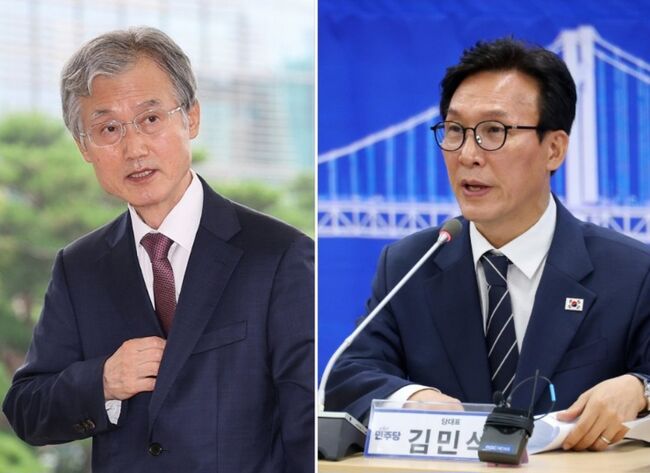
Chief Justice of the Supreme Court Cho Hee-de (left) and Democratic Party of Korea Leader Lee Jae-myung [Photo=Yonhap News]We are witnessing an unprecedented situation where the newly inaugurated lead
[Statement by the Seo-beo-kka Korea Military Academy Patriotic Comrades Association] ㊷ We Condemn the Ruling Party Leader's Intimidation and Mockery of Supreme Court Justices, and Acts of Destroying the Judiciary
Chief Justice of the Supreme Court Cho Hee-de (left) and Democratic Party of Korea Leader Lee Jae-myung [Photo=Yonhap News]We are witnessing an unprecedented situation where the newly inaugurated lead
 Criticizing Trump, yet… Europe also backsliding on climate change response
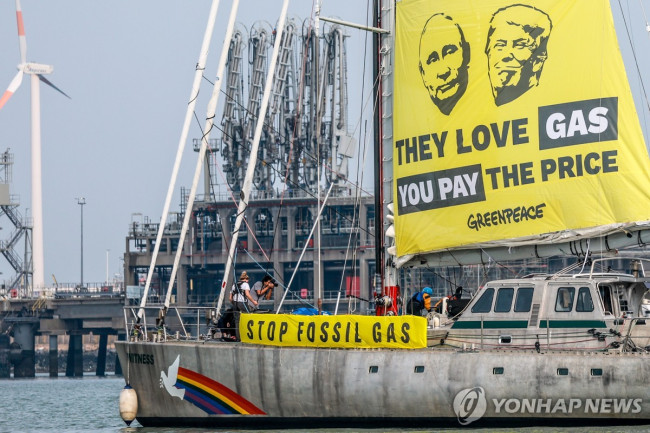
Greenpeace, an environmental organization calling for renewable energy policies [EPA=Yonhap News file photo]European nations, which previously criticized U.S. President Donald Trump's rollback of clim
Criticizing Trump, yet… Europe also backsliding on climate change response
Greenpeace, an environmental organization calling for renewable energy policies [EPA=Yonhap News file photo]European nations, which previously criticized U.S. President Donald Trump's rollback of clim
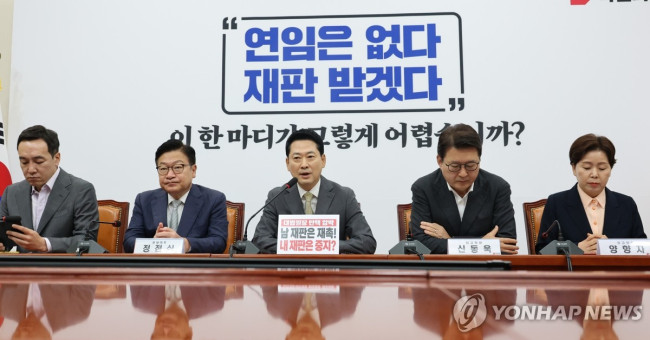 PPP on Nomination of 'Ruling Party-Recommended' Special Inspector Candidate: "We Will Rigorously Verify Them at the Hearing"
People Power Party representative Jang Dong-hyeok is speaking at the Supreme Council meeting held at the National Assembly on the 24th. [Yonhap News] On the 24th, the People Power Party stated th
PPP on Nomination of 'Ruling Party-Recommended' Special Inspector Candidate: "We Will Rigorously Verify Them at the Hearing"
People Power Party representative Jang Dong-hyeok is speaking at the Supreme Council meeting held at the National Assembly on the 24th. [Yonhap News] On the 24th, the People Power Party stated th
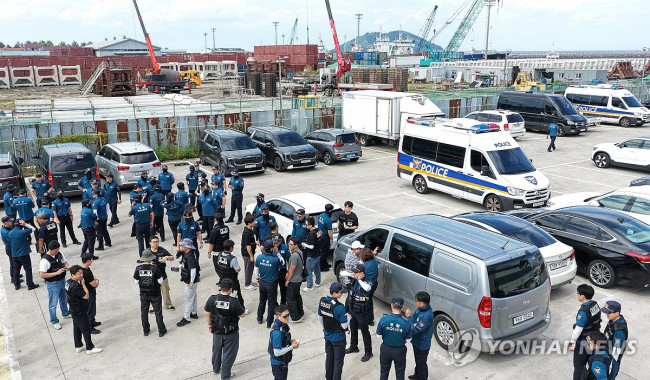 [Comprehensive] Another body of a missing person discovered in Jeju… 4th in three days
Police conducting an intensive search for missing persons [Yonhap News file photo]Recently, bodies suspected to be those of missing persons have been discovered in succession on Jeju Island. This mark
[Comprehensive] Another body of a missing person discovered in Jeju… 4th in three days
Police conducting an intensive search for missing persons [Yonhap News file photo]Recently, bodies suspected to be those of missing persons have been discovered in succession on Jeju Island. This mark
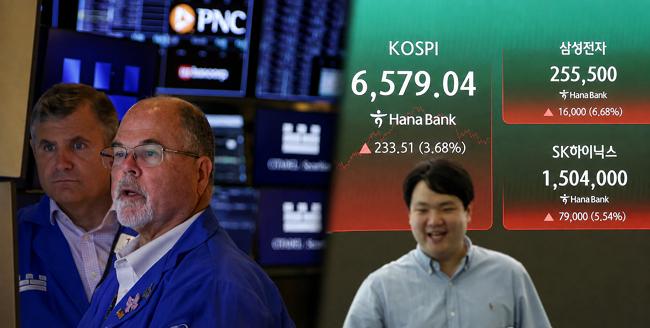 [Korea-US Data Lab] 3rd Week of August (18th–21st) Money Insight
In the U.S., rising long-term Treasury yields lowered the future cash value of tech stocks, while in Korea, shareholder returns from Samsung Electronics and SK Hynix drove a rebound in major semicondu
[Korea-US Data Lab] 3rd Week of August (18th–21st) Money Insight
In the U.S., rising long-term Treasury yields lowered the future cash value of tech stocks, while in Korea, shareholder returns from Samsung Electronics and SK Hynix drove a rebound in major semicondu
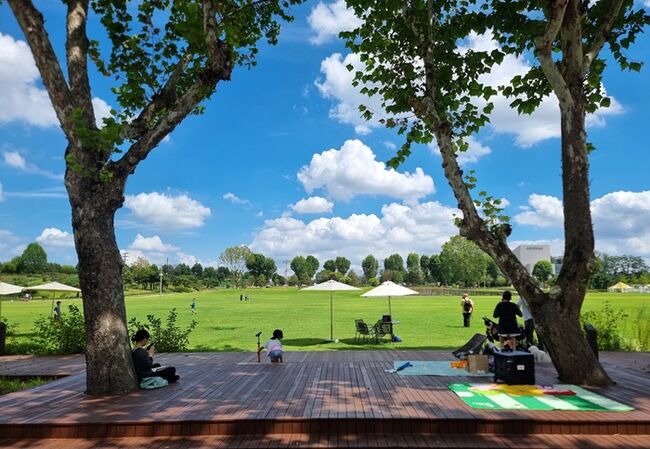 [Trending Travel Destinations] Unlocking a Century of Secrets: ‘Yongsan Children’s Garden’
Family visitors resting in the shade on a picnic mat. [Photo by Reporter Yohi Lim]Throughout history, the wealthy in both the East and the West have enjoyed greenery by creating private gardens on vas
[Trending Travel Destinations] Unlocking a Century of Secrets: ‘Yongsan Children’s Garden’
Family visitors resting in the shade on a picnic mat. [Photo by Reporter Yohi Lim]Throughout history, the wealthy in both the East and the West have enjoyed greenery by creating private gardens on vas
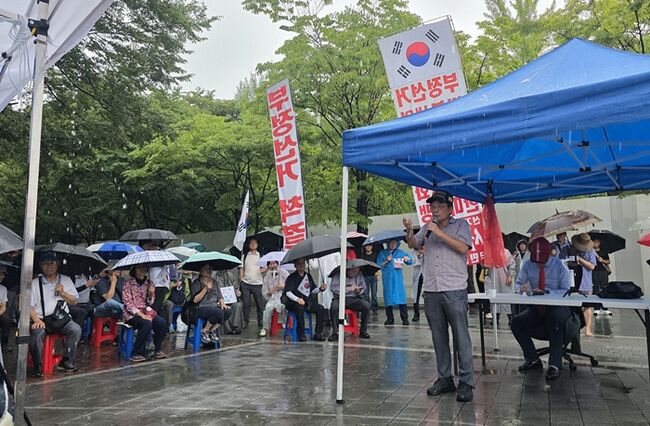 [Photo] Btooyun “We are recruiting 1,600 members for the Olympic Park Scientific Verification Team”… The rainy scenery of Olympic Park on the 22nd
On Saturday the 22nd, amid rainy weather at Olympic Park, the National Coalition for Election Fraud Struggle held a public forum on election integrity. They argued that the "Olympic Park Scientific Ve
[Photo] Btooyun “We are recruiting 1,600 members for the Olympic Park Scientific Verification Team”… The rainy scenery of Olympic Park on the 22nd
On Saturday the 22nd, amid rainy weather at Olympic Park, the National Coalition for Election Fraud Struggle held a public forum on election integrity. They argued that the "Olympic Park Scientific Ve
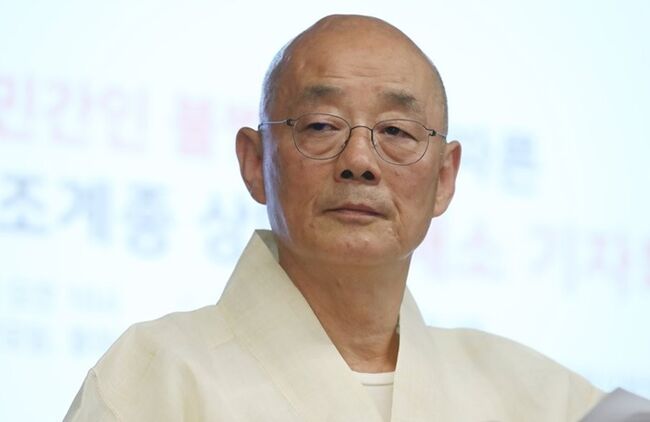 [Special Contribution: Songsan] The Life of a Political Monk Must Also Be Evaluated… What the Passing of Venerable Myeongjin Leaves Behind
Venerable Myeongjin, former head monk of Bongeunsa Temple, passed away on the 22nd. He was 76 years old and had been a monk for 52 years. [Yonhap News File Photo]Various narratives are emerging follow
[Special Contribution: Songsan] The Life of a Political Monk Must Also Be Evaluated… What the Passing of Venerable Myeongjin Leaves Behind
Venerable Myeongjin, former head monk of Bongeunsa Temple, passed away on the 22nd. He was 76 years old and had been a monk for 52 years. [Yonhap News File Photo]Various narratives are emerging follow
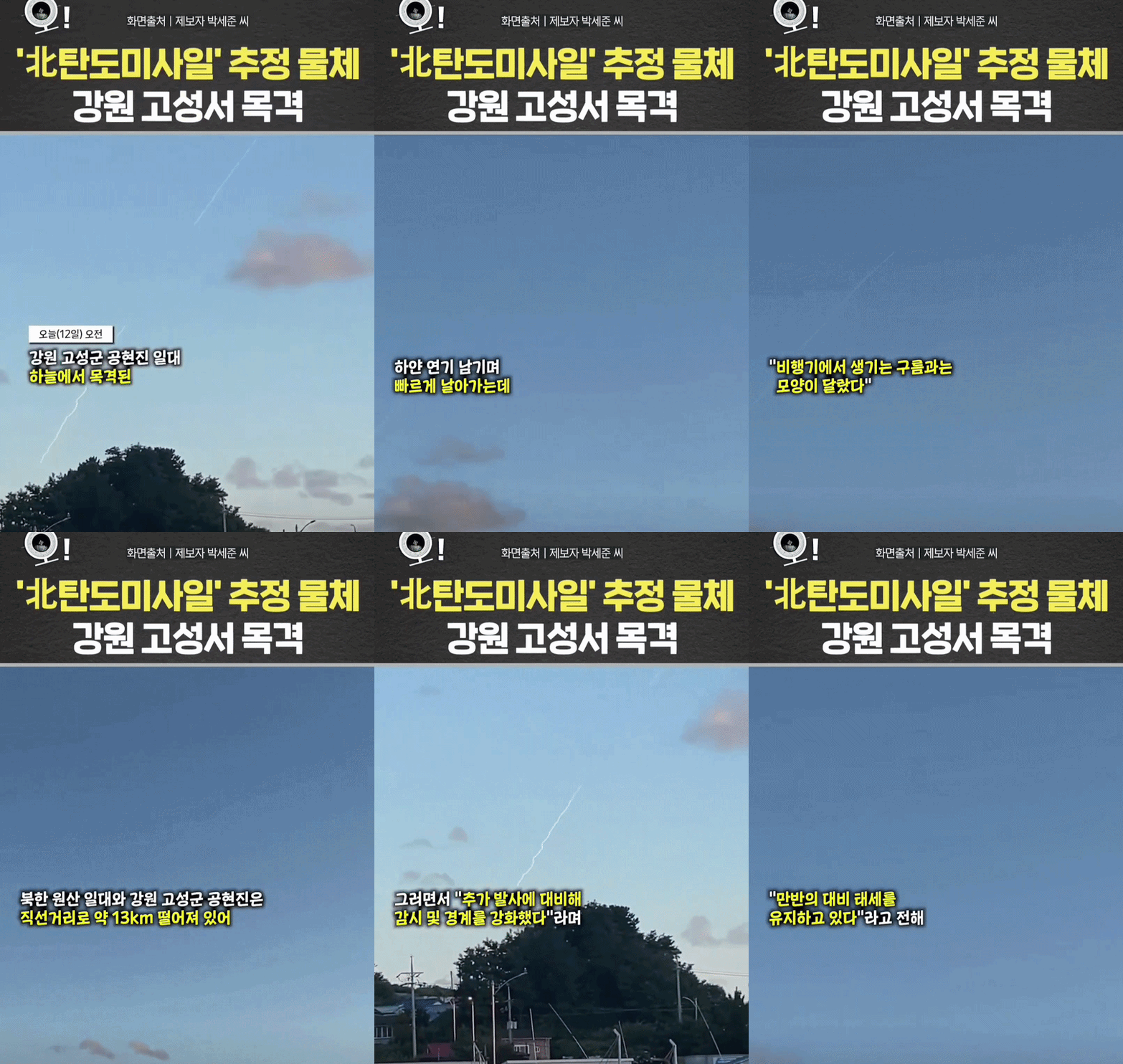 [Video] North Korean ballistic missile filmed by a civilian in Goseong, Gangwon-do
 [Editorial Cartoon] A Draconian Law That Undermines Freedom of Expression

 List
List