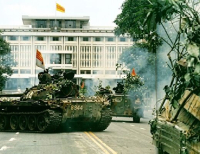
Communist rebel tanks, having entered Saigon on April 30, 1975, take control of the "Independence Palace," the presidential residence of South Vietnam.
The breakdown of national security and the weakening of the ROK-U.S. alliance are reminiscent of the tragedy of Saigon.
The fact that the Ulchi Freedom Shield (UFS) exercises were significantly scaled back from their original schedule and terminated early comprehensively illustrates the structural crisis facing South Korea's national security.
The cancellation of counter-offensive operations and the halving of field maneuver training, following abrupt directives from the Trump administration, are not mere technical adjustments. They signal an enormous tectonic shift.
This is a self-inflicted disaster, stemming from the current administration’s ideologically biased privatization of security, an unreasonable obsession with the early transfer of wartime operational control (OPCON), and the reckless plan to relocate the Gwangju Combat Wing. Furthermore, this security crisis will lead directly to a massive structural crisis that shakes the entire South Korean economy.
This is because the relaxation of the security posture causes the risk profile of Korean assets to soar in global financial markets, triggering a fatal ripple effect throughout the national economy.
In the early 1970s, South Vietnamese authorities and religious groups, ignoring the security reality, were mired in a romanticized view of peace—believing that "the war would end if only dialogue and peace agreements were signed"—and thereby dismantled and relaxed their own security posture. As they complacently stood by during the withdrawal of U.S. forces and the reduction of aid, the deterrent collapsed. As the threat from communist forces intensified, foreign investment funds evaporated in an instant, and a severe economic crisis ensued.
We must painfully recall the historical error where the fall of Saigon on April 30, 1975, led to the total disintegration of the market economic system, the lives of the people, and all their assets.
1. Security voids act as a cause for macroeconomic threats and the concurrent collapse of core industries
There are limitations to analyzing the background of the early termination of the ROK-U.S. combined exercises, as it involves opaque factors such as the U.S. midterm elections in November, approaches to U.S.-North Korea dialogue, Washington's cold transactional approach, and the shifting functions of alliances. We must face the reality that the alliance is being treated not as a commitment to shared values, but from the perspective of costs and interests.
If we ignore these massive tectonic shifts and insist on misguided appeasement policies while clinging to illusions of the past, self-inflicted damage to both security and the economy will be unavoidable. Just as friction arose during previous defense cost-sharing negotiations, when trust in the alliance wavers, the U.S. will use it as economic leverage to pressure for drastic increases in defense spending.
Furthermore, this will extend beyond simple military friction into the broader trade negotiation front, including the imposition of tariffs and pressure on investments in the U.S., acting as a factor that strangles the export-dependent Korean economy.
These concerns regarding a security vacuum serve as a catalyst that immediately exacerbates geopolitical risks in domestic and international financial markets. In fact, every time signs of a crack in the ROK-U.S. alliance are detected, the phenomenon of the won-dollar exchange rate soaring and massive outflows of foreign investment capital has repeated itself. A rising exchange rate not only stimulates import prices and causes stock market declines, but also lowers national credit ratings, increasing the cost of overseas funding for domestic companies and fatally dampening investment sentiment.
Security anxiety does not stop at financial markets; it spreads to the defense industry and high-tech manufacturing supply chains, which are the core pillars of the real economy. If trust between nations and the combined defense posture are shaken, cracks will inevitably appear in the global market's evaluation of the excellence and reliability of K-Defense. Ultimately, as the instability of parts supply chains intensifies and the ecosystem shrinks, it creates a domino effect that causes a concurrent collapse in the competitiveness of the nation's core export industries.
2. Security policies that ignore the surrounding situation accelerate economic decline
The Korean economy, with its high dependence on trade, is highly vulnerable to global supply chain disruptions (such as semiconductors and critical minerals) caused by geopolitical tensions on the Korean Peninsula and the U.S.-China hegemonic competition; this leads directly to investment contraction and economic costs.
The relaxation of the ROK-U.S. combined defense posture does not stop at friction with the U.S.; it encourages aggressive moves by neighboring powers, turning geopolitical risk into a tangible economic crisis. In fact, as China secures navigation rights at the mouth of the Tumen River to enter the East Sea in earnest, and the military alliance between North Korea and Russia is restored, the security landscape in the waters around the Korean Peninsula is fluctuating rapidly.
This kind of geopolitical pressure, which accelerates maritime expansion by taking advantage of weakened security deterrence, undermines the stability of Korea's maritime logistics and serves as a fatal signal to global investors regarding systemic risk in the Korean economy.
To defend against macroeconomic blows and break through these complex crises, we must abandon the romanticized view that security and the economy can be separated. We must comprehensively reset our national security strategy under the premise that robust security is directly linked to national credit and economic trust.
3. Security-destroying policies must be stopped immediately
If the current administration's security failures overlap with the looming international economic recession and an international financial crisis, the explosive power will be equivalent to or greater than that of a nuclear bomb. For South Korea to overcome geopolitical crises and survive, it must immediately stop policies that destroy security and activate a practical system for overcoming crises.
Among the anti-national policies that simultaneously threaten national security and the economic foundation, those that must be scrapped as a priority include: the premature transfer of wartime operational control (OPCON) which weakens trust in the ROK-U.S. alliance; attempts to abolish and integrate the three military academies which degrade the identity and morale of the military; ineffective declarations of an end to the war that lead to the dissolution of the Combined Forces Command and the United Nations Command; the promotion of a selective conscription system that collapses the existing conscription system at a time when the recruitment rate for non-commissioned officers is plummeting; and the reckless reduction of frontline guard personnel, a form of self-inflicted disarmament that even threatens the survival of the guards themselves. These retrograde security policies must be stopped immediately.
Even now, we must avoid wasteful defense budget allocations and restore the ROK-U.S. alliance as quickly as possible. In particular, the budget of over 10 trillion won to be spent on creating a new military academy should be utilized to expand welfare for junior officers.
The only solution to break through massive global uncertainty is to lay the foundation for practical self-reliant security by advancing the Korean-style 'Three-Axis' system, achieving technological independence in high-tech surveillance and reconnaissance assets, and building an irreplaceable defense industry supply chain. Forces that bring security anxiety and economic collapse to the people are subjects for judgment and removal.
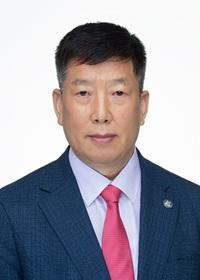
◆ Commissioner Park Phil-kyu
Editorial Commissioner, ROK-U.S. Daily (Han-Mi Ilbo)
Korea Military Academy, 40th Class

 [Statement by the Seo-beo-kka Korea Military Academy Patriotic Comrades Association] ㊷ We Condemn the Ruling Party Leader's Intimidation and Mockery of Supreme Court Justices, and Acts of Destroying the Judiciary
Chief Justice of the Supreme Court Cho Hee-de (left) and Democratic Party of Korea Leader Lee Jae-myung [Photo=Yonhap News]We are witnessing an unprecedented situation where the newly inaugurated lead
[Statement by the Seo-beo-kka Korea Military Academy Patriotic Comrades Association] ㊷ We Condemn the Ruling Party Leader's Intimidation and Mockery of Supreme Court Justices, and Acts of Destroying the Judiciary
Chief Justice of the Supreme Court Cho Hee-de (left) and Democratic Party of Korea Leader Lee Jae-myung [Photo=Yonhap News]We are witnessing an unprecedented situation where the newly inaugurated lead
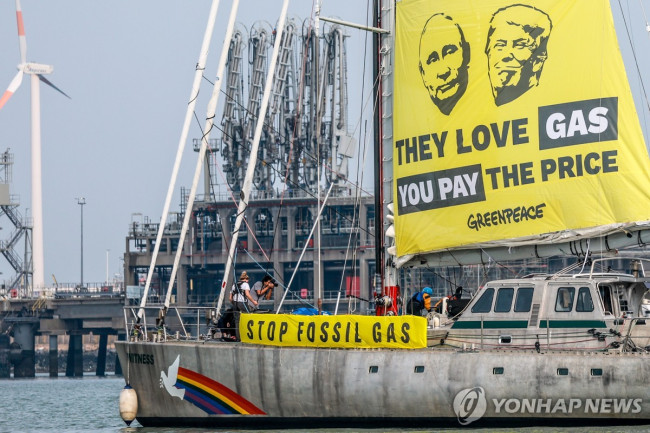 Criticizing Trump, yet… Europe also backsliding on climate change response
Greenpeace, an environmental organization calling for renewable energy policies [EPA=Yonhap News file photo]European nations, which previously criticized U.S. President Donald Trump's rollback of clim
Criticizing Trump, yet… Europe also backsliding on climate change response
Greenpeace, an environmental organization calling for renewable energy policies [EPA=Yonhap News file photo]European nations, which previously criticized U.S. President Donald Trump's rollback of clim
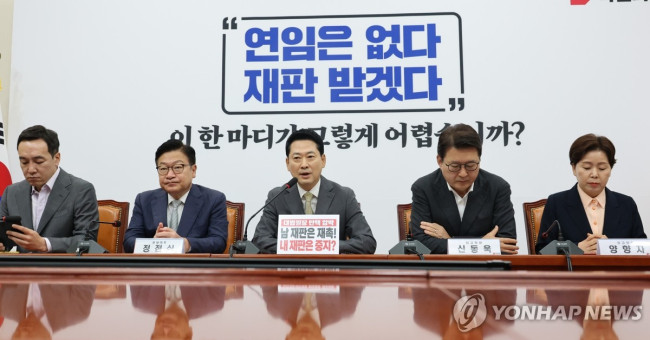 PPP on Nomination of 'Ruling Party-Recommended' Special Inspector Candidate: "We Will Rigorously Verify Them at the Hearing"
People Power Party representative Jang Dong-hyeok is speaking at the Supreme Council meeting held at the National Assembly on the 24th. [Yonhap News] On the 24th, the People Power Party stated th
PPP on Nomination of 'Ruling Party-Recommended' Special Inspector Candidate: "We Will Rigorously Verify Them at the Hearing"
People Power Party representative Jang Dong-hyeok is speaking at the Supreme Council meeting held at the National Assembly on the 24th. [Yonhap News] On the 24th, the People Power Party stated th
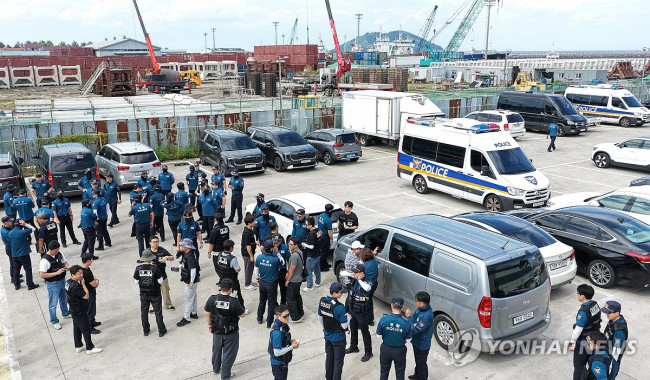 [Comprehensive] Another body of a missing person discovered in Jeju… 4th in three days
Police conducting an intensive search for missing persons [Yonhap News file photo]Recently, bodies suspected to be those of missing persons have been discovered in succession on Jeju Island. This mark
[Comprehensive] Another body of a missing person discovered in Jeju… 4th in three days
Police conducting an intensive search for missing persons [Yonhap News file photo]Recently, bodies suspected to be those of missing persons have been discovered in succession on Jeju Island. This mark
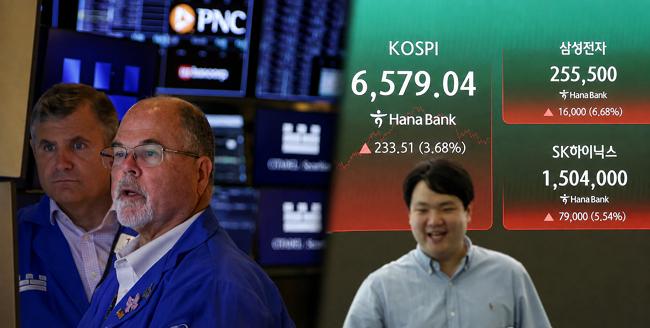 [Korea-US Data Lab] 3rd Week of August (18th–21st) Money Insight
In the U.S., rising long-term Treasury yields lowered the future cash value of tech stocks, while in Korea, shareholder returns from Samsung Electronics and SK Hynix drove a rebound in major semicondu
[Korea-US Data Lab] 3rd Week of August (18th–21st) Money Insight
In the U.S., rising long-term Treasury yields lowered the future cash value of tech stocks, while in Korea, shareholder returns from Samsung Electronics and SK Hynix drove a rebound in major semicondu
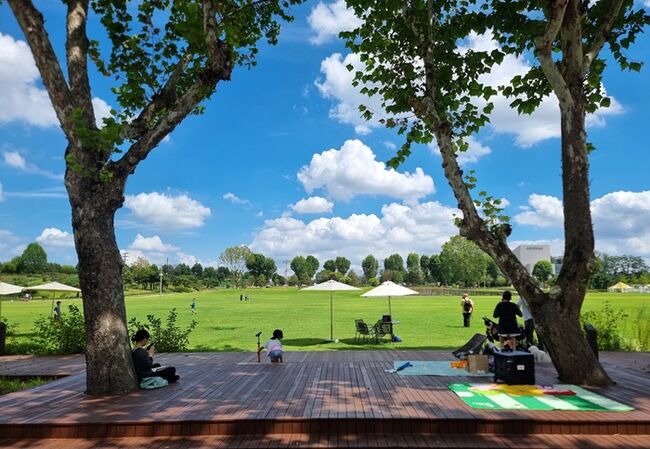 [Trending Travel Destinations] Unlocking a Century of Secrets: ‘Yongsan Children’s Garden’
Family visitors resting in the shade on a picnic mat. [Photo by Reporter Yohi Lim]Throughout history, the wealthy in both the East and the West have enjoyed greenery by creating private gardens on vas
[Trending Travel Destinations] Unlocking a Century of Secrets: ‘Yongsan Children’s Garden’
Family visitors resting in the shade on a picnic mat. [Photo by Reporter Yohi Lim]Throughout history, the wealthy in both the East and the West have enjoyed greenery by creating private gardens on vas
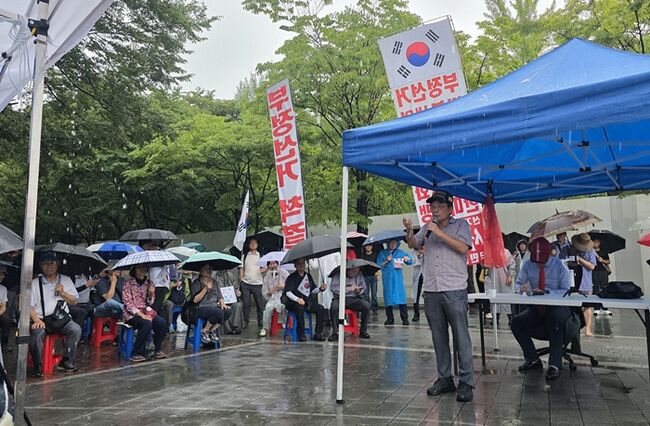 [Photo] Btooyun “We are recruiting 1,600 members for the Olympic Park Scientific Verification Team”… The rainy scenery of Olympic Park on the 22nd
On Saturday the 22nd, amid rainy weather at Olympic Park, the National Coalition for Election Fraud Struggle held a public forum on election integrity. They argued that the "Olympic Park Scientific Ve
[Photo] Btooyun “We are recruiting 1,600 members for the Olympic Park Scientific Verification Team”… The rainy scenery of Olympic Park on the 22nd
On Saturday the 22nd, amid rainy weather at Olympic Park, the National Coalition for Election Fraud Struggle held a public forum on election integrity. They argued that the "Olympic Park Scientific Ve
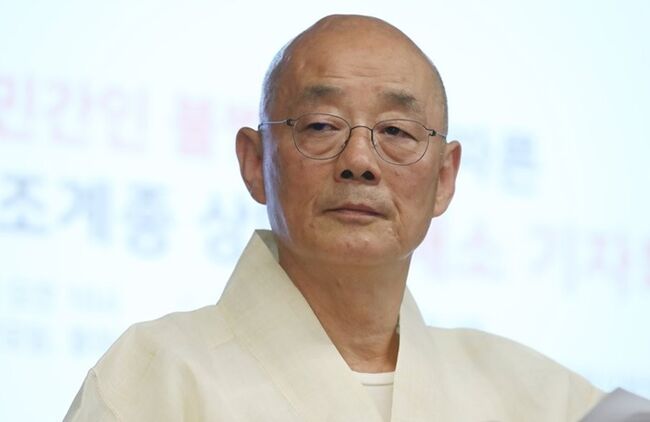 [Special Contribution: Songsan] The Life of a Political Monk Must Also Be Evaluated… What the Passing of Venerable Myeongjin Leaves Behind
Venerable Myeongjin, former head monk of Bongeunsa Temple, passed away on the 22nd. He was 76 years old and had been a monk for 52 years. [Yonhap News File Photo]Various narratives are emerging follow
[Special Contribution: Songsan] The Life of a Political Monk Must Also Be Evaluated… What the Passing of Venerable Myeongjin Leaves Behind
Venerable Myeongjin, former head monk of Bongeunsa Temple, passed away on the 22nd. He was 76 years old and had been a monk for 52 years. [Yonhap News File Photo]Various narratives are emerging follow
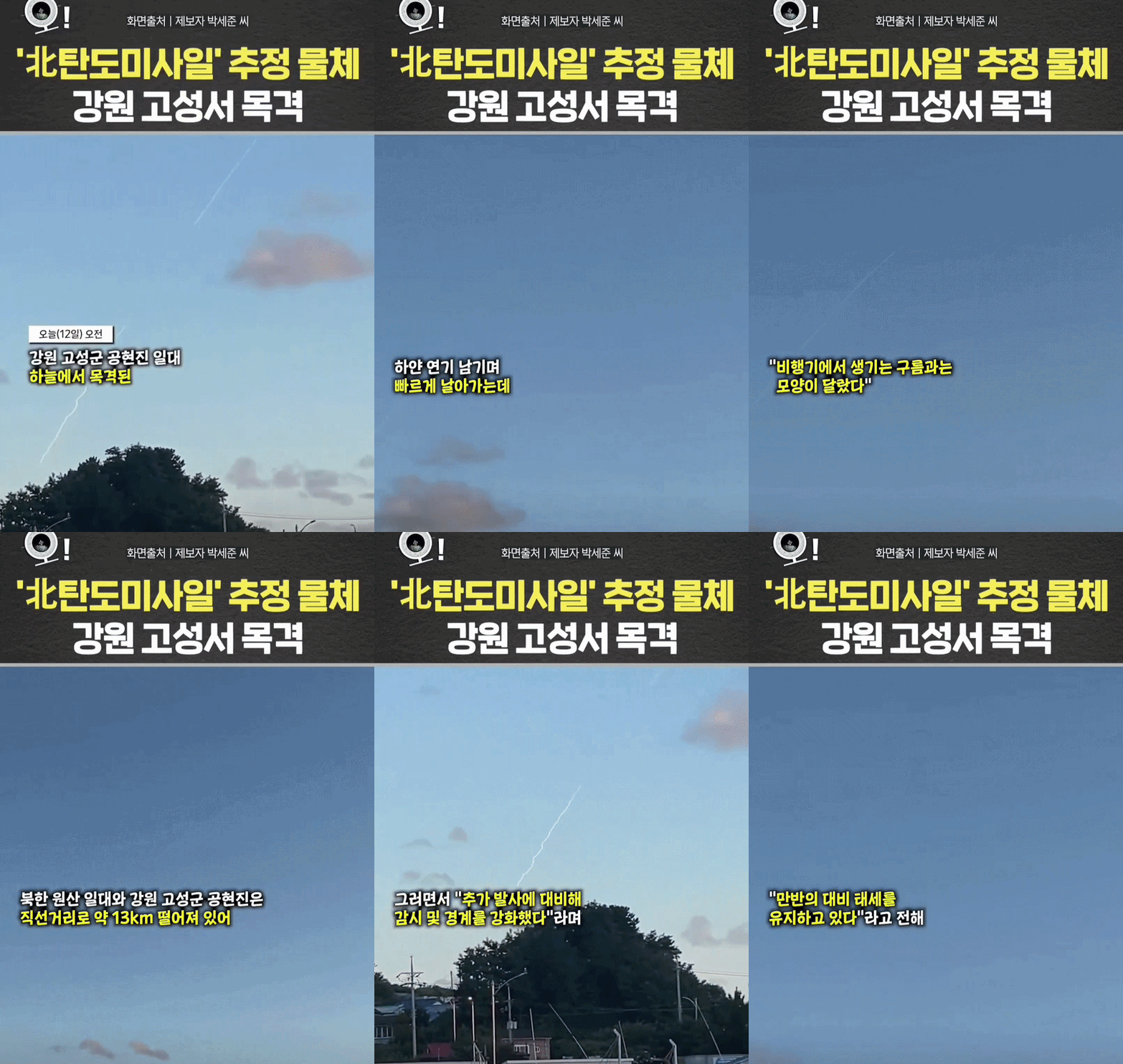 [Video] North Korean ballistic missile filmed by a civilian in Goseong, Gangwon-do
 [Editorial Cartoon] A Draconian Law That Undermines Freedom of Expression

 List
List