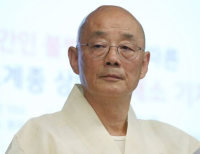
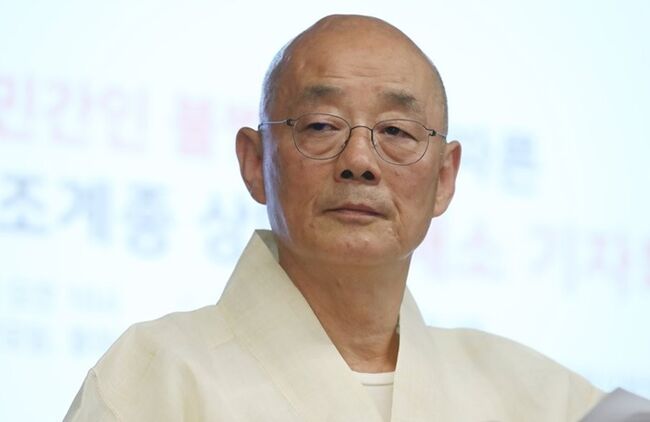
 Venerable Myeongjin, former head monk of Bongeunsa Temple, passed away on the 22nd. He was 76 years old and had been a monk for 52 years. [Yonhap News File Photo]
Various narratives are emerging following the passing of Venerable Myeongjin. It is natural to mourn a sudden death. However, mourning the death of a human being is a separate matter from evaluating the political path they walked during their lifetime. This is especially true for an individual like Myeongjin, who consistently intervened in real-world politics far beyond the scope of a religious figure.
Venerable Myeongjin participated in reforms within the Jogye Order and strongly criticized the Buddhist leadership. Up to this point, one could argue it was an internal religious matter. However, his activities did not stop there. He continuously made political statements targeting the president, the government, political parties, and politicians, and in particular, he maintained harsh criticism of the Lee Myung-bak administration. In the process, the name "Myeongjin" appeared more frequently in political circles and the media than in the Buddhist community.
This is not to say that religious figures should not have political opinions. Monks are also citizens. They can criticize the government, attack the president, and oppose specific policies.
The problem arises when religious authority is combined with political claims. Political remarks made in monk's robes carry a much greater symbolic effect than those made by ordinary citizens. Therefore, the participation of religious figures in real-world politics requires even stricter self-restraint.
Criticism of Venerable Myeongjin must start right here. While holding the position of a religious figure who criticizes power, he was gradually perceived as a figure close to a specific political camp.
He poured out sharp criticism against the conservative administration, but it is necessary to examine whether he applied the same standard to the power and political issues of the progressive camp. The justification for criticizing power gains its persuasive power only when that criticism is applied equally to all forms of power.
Political bias is the most dangerous aspect of a religious person's participation in society. If one is outraged by the wrongdoings of political forces one opposes, but is relatively lenient toward the wrongdoings of forces one is close to, it can no longer be called religious criticism of power. It is, in fact, closer to a political choice. While the political choice itself is an individual right, packaging it with religious authority is a different matter.
Therefore, it is insufficient to describe Venerable Myeongjin simply as a "monk who stood up to power." We must also examine what kind of power he stood up to. Just because one attacks a conservative government does not automatically make one a critic of power. True criticism of power requires the ability to speak out with the same voice even when the political forces one supports or aligns with are in power.
In Korean society, the criteria for evaluating the political participation of religious figures are already heavily politicized. When a conservative pastor makes political remarks at a rally, the criticism of "violating the separation of religion and state" follows immediately. However, when a progressive priest or monk denounces the government and supports a specific political force, praise such as "conscience of the era" and "an engaged religious figure" follows. This double standard has been repeated.
The other side should not fall into the same error. It is illogical to defend the political participation of conservative pastors while banning that of progressive monks. While the right to political expression should be acknowledged for everyone, those remarks must be evaluated separately from religious authority. The political claims of Venerable Myeongjin should be no exception.
In particular, one must ask what the true calling of a monk is. Buddhism emphasizes the practice of letting go of human desire and attachment, and reflecting on oneself. However, real-world politics is the arena where the acquisition and exercise of power, and the competition between parties and factions, take place most intensely. A monk showing interest in the suffering of reality is not the same as becoming a warrior for a political camp.
Criticism that this boundary had blurred followed the controversies surrounding Venerable Myeongjin. His scope of activity expanded from a monk demanding internal reform to a social activist attacking the government, and then to a celebrity voice for every political issue. As a result, the name Myeongjin remained in the public consciousness more strongly as a "political monk" than as a Zen master or ascetic.
That was the life he chose. Therefore, that choice must also be evaluated.
The large-scale tributes from political circles and civil society following his passing are not unrelated to these activities during his life. Many of those who mourn him are not just commemorating the ascetic life of a monk, but are also evaluating the political and social activities he demonstrated. If so, criticism of his political bias from the other side must naturally be permitted as well.
Minimum courtesy is required in the face of death. However, death does not erase one’s political track record during their lifetime. Furthermore, for someone who exercised significant influence on society through political statements, it is necessary to examine how consistent those statements were, whether they were biased toward a specific camp, and whether religious authority was used for political ends.
There is no need to go beyond the confirmed facts regarding the death of Venerable Myeongjin. If there is no evidence to support criminal suspicion so far, one should wait for the investigation results regarding the circumstances of the incident. However, the evaluation of his life is different. This is because his words and actions, which have been made publicly for decades, remain.
Venerable Myeongjin criticized power throughout his life. If so, we must be able to ask him the same question: Was what he criticized truly "power," or was it the "power" he opposed?
If we remember Venerable Myeongjin only as a "conscience of the era who stood against power" without examining this question, it is closer to political beautification for the sake of memorializing rather than an evaluation. Conversely, erasing all his activities due to one political bias is also inappropriate. His work for reform of the religious order and his participation in real-world politics must be examined separately.
What is needed following the passing of Venerable Myeongjin is neither sanctification nor ridicule. It is to show courtesy to the death of a human being while applying a cold, objective evaluation to the life of a public figure. I mourn the death of the monk. However, the evaluation of the "political monk" Myeongjin starts now.
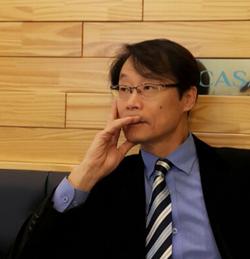
◆ Songsan Jeong Kwang-je
A poet and researcher of history and philosophy. Former director of the Rhee Syngman Institute. Currently serving as a research advisor for the Korea Association of Modern and Contemporary History and representative of the philosophy forum Lyceum. He has published four volumes of poetry, co-translated "The Heroes of Hook Hill," and authored humanities books such as "Joseon That Became a Myth," "Humanities on the Tatami," "A Liberal's Reading of Gramsci," and "The World of Literature and Thought."

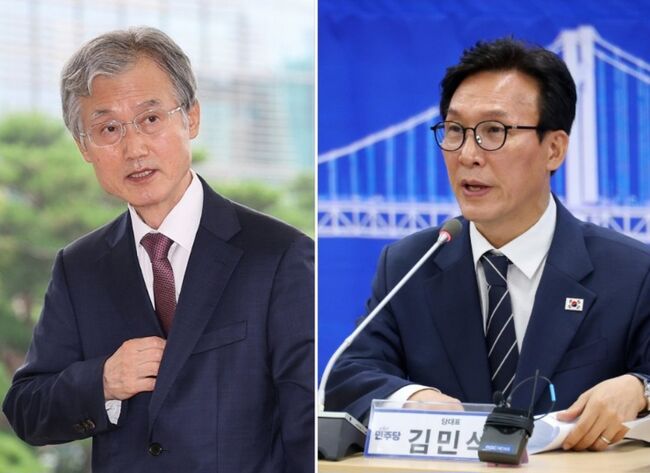 [Statement by the Seo-beo-kka Korea Military Academy Patriotic Comrades Association] ㊷ We Condemn the Ruling Party Leader's Intimidation and Mockery of Supreme Court Justices, and Acts of Destroying the Judiciary
Chief Justice of the Supreme Court Cho Hee-de (left) and Democratic Party of Korea Leader Lee Jae-myung [Photo=Yonhap News]We are witnessing an unprecedented situation where the newly inaugurated lead
[Statement by the Seo-beo-kka Korea Military Academy Patriotic Comrades Association] ㊷ We Condemn the Ruling Party Leader's Intimidation and Mockery of Supreme Court Justices, and Acts of Destroying the Judiciary
Chief Justice of the Supreme Court Cho Hee-de (left) and Democratic Party of Korea Leader Lee Jae-myung [Photo=Yonhap News]We are witnessing an unprecedented situation where the newly inaugurated lead
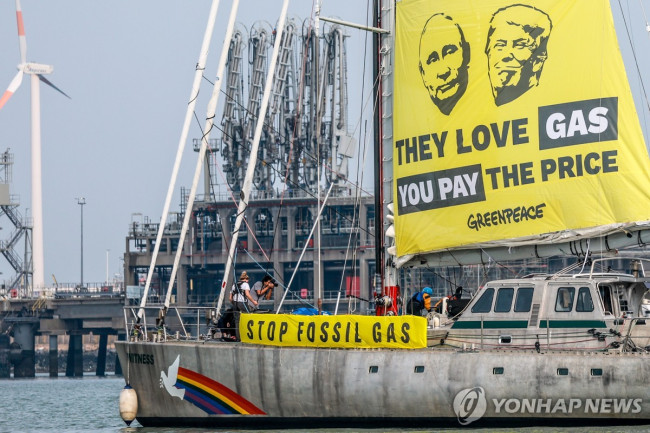 Criticizing Trump, yet… Europe also backsliding on climate change response
Greenpeace, an environmental organization calling for renewable energy policies [EPA=Yonhap News file photo]European nations, which previously criticized U.S. President Donald Trump's rollback of clim
Criticizing Trump, yet… Europe also backsliding on climate change response
Greenpeace, an environmental organization calling for renewable energy policies [EPA=Yonhap News file photo]European nations, which previously criticized U.S. President Donald Trump's rollback of clim
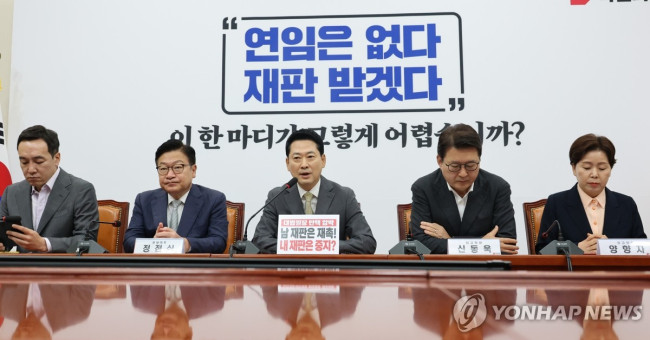 PPP on Nomination of 'Ruling Party-Recommended' Special Inspector Candidate: "We Will Rigorously Verify Them at the Hearing"
People Power Party representative Jang Dong-hyeok is speaking at the Supreme Council meeting held at the National Assembly on the 24th. [Yonhap News] On the 24th, the People Power Party stated th
PPP on Nomination of 'Ruling Party-Recommended' Special Inspector Candidate: "We Will Rigorously Verify Them at the Hearing"
People Power Party representative Jang Dong-hyeok is speaking at the Supreme Council meeting held at the National Assembly on the 24th. [Yonhap News] On the 24th, the People Power Party stated th
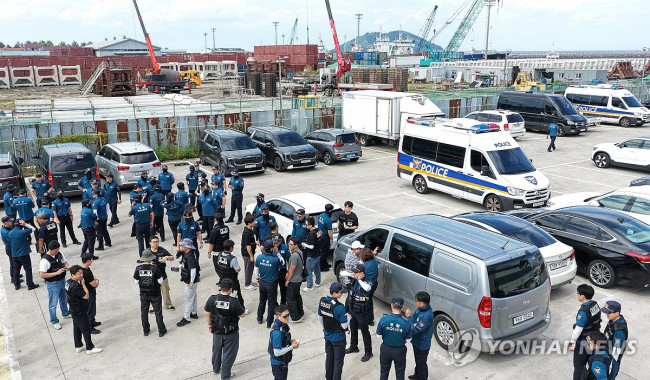 [Comprehensive] Another body of a missing person discovered in Jeju… 4th in three days
Police conducting an intensive search for missing persons [Yonhap News file photo]Recently, bodies suspected to be those of missing persons have been discovered in succession on Jeju Island. This mark
[Comprehensive] Another body of a missing person discovered in Jeju… 4th in three days
Police conducting an intensive search for missing persons [Yonhap News file photo]Recently, bodies suspected to be those of missing persons have been discovered in succession on Jeju Island. This mark
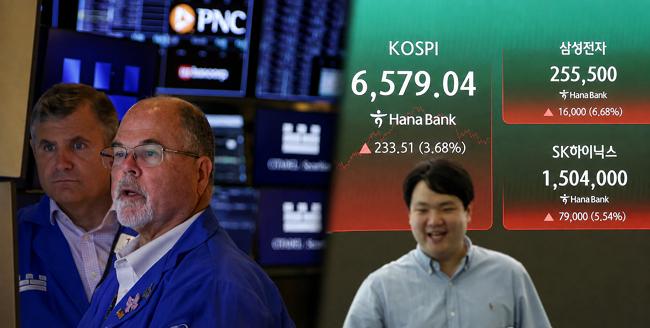 [Korea-US Data Lab] 3rd Week of August (18th–21st) Money Insight
In the U.S., rising long-term Treasury yields lowered the future cash value of tech stocks, while in Korea, shareholder returns from Samsung Electronics and SK Hynix drove a rebound in major semicondu
[Korea-US Data Lab] 3rd Week of August (18th–21st) Money Insight
In the U.S., rising long-term Treasury yields lowered the future cash value of tech stocks, while in Korea, shareholder returns from Samsung Electronics and SK Hynix drove a rebound in major semicondu
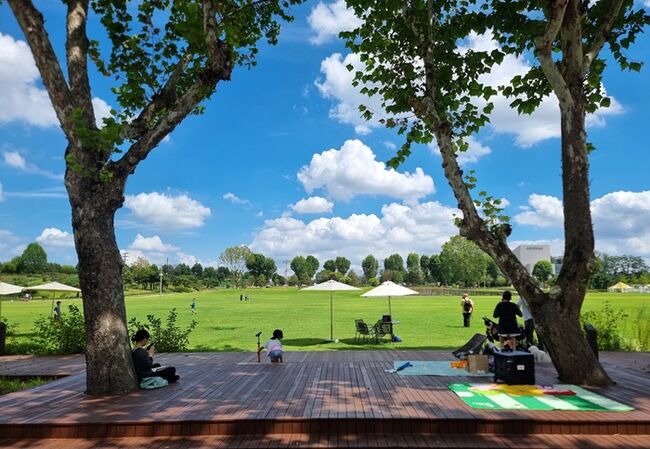 [Trending Travel Destinations] Unlocking a Century of Secrets: ‘Yongsan Children’s Garden’
Family visitors resting in the shade on a picnic mat. [Photo by Reporter Yohi Lim]Throughout history, the wealthy in both the East and the West have enjoyed greenery by creating private gardens on vas
[Trending Travel Destinations] Unlocking a Century of Secrets: ‘Yongsan Children’s Garden’
Family visitors resting in the shade on a picnic mat. [Photo by Reporter Yohi Lim]Throughout history, the wealthy in both the East and the West have enjoyed greenery by creating private gardens on vas
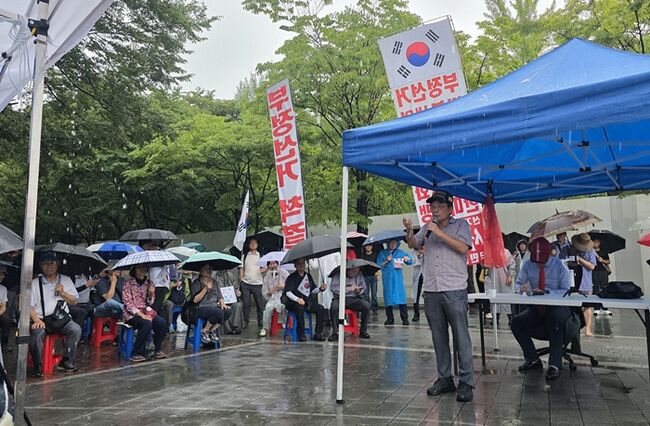 [Photo] Btooyun “We are recruiting 1,600 members for the Olympic Park Scientific Verification Team”… The rainy scenery of Olympic Park on the 22nd
On Saturday the 22nd, amid rainy weather at Olympic Park, the National Coalition for Election Fraud Struggle held a public forum on election integrity. They argued that the "Olympic Park Scientific Ve
[Photo] Btooyun “We are recruiting 1,600 members for the Olympic Park Scientific Verification Team”… The rainy scenery of Olympic Park on the 22nd
On Saturday the 22nd, amid rainy weather at Olympic Park, the National Coalition for Election Fraud Struggle held a public forum on election integrity. They argued that the "Olympic Park Scientific Ve
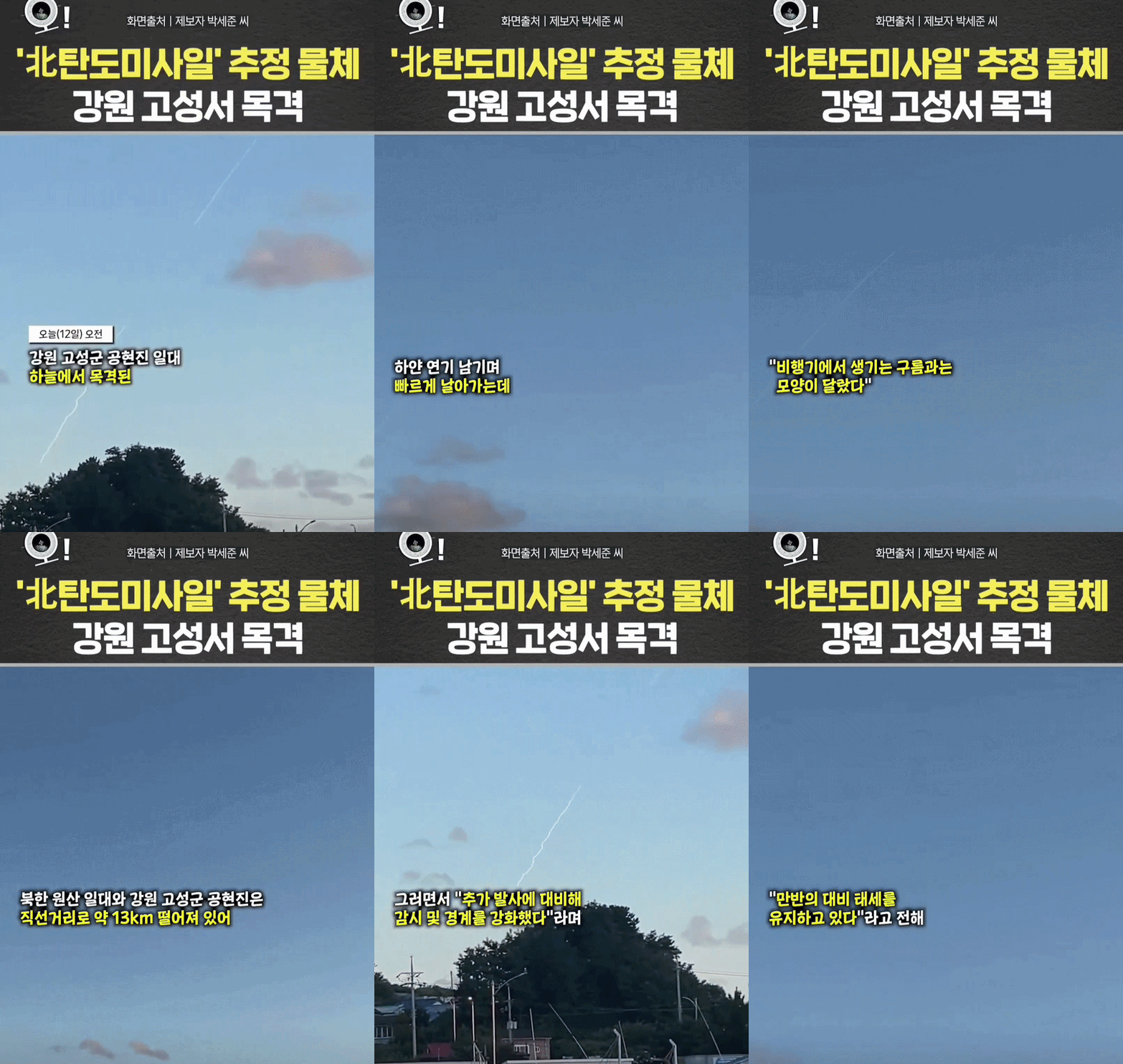 [Video] North Korean ballistic missile filmed by a civilian in Goseong, Gangwon-do
 [Editorial Cartoon] A Draconian Law That Undermines Freedom of Expression

 List
List