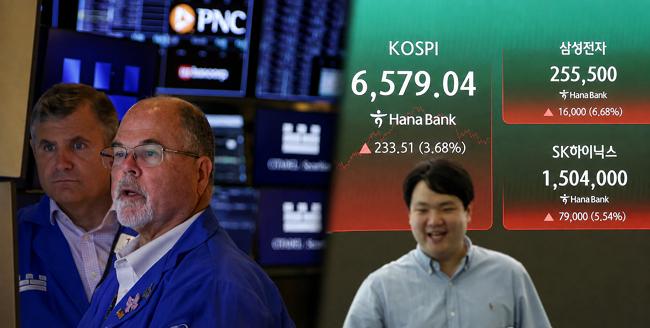
 In the U.S., rising long-term Treasury yields lowered the future cash value of tech stocks, while in Korea, shareholder returns from Samsung Electronics and SK Hynix drove a rebound in major semiconductor stocks. This week, the Korean and U.S. stock markets illustrated a clash between "cost of capital and capital allocation." [Photo=EPA/Yonhap News, HMI Ilbo Graphics] The framing for market judgment left by this week is "cost of capital versus capital allocation."
Last week, Money Insight raised questions about whether the risk discount rate applied to the Korean market would continue to shrink and whether the return of foreign investors would spread from large-cap semiconductor stocks to the broader market.
This week's market answer can be summarized as, "While external discount rates have risen again, certain companies attempted to lower their own discount rates through capital allocation."
U.S. stock markets ended the week down, with the S&P 500 falling 1.4%, the Nasdaq 2.1%, the Dow 0.8%, and the Russell 2000 1.6%. Despite a rebound on the 21st, they could not fully recover from the earlier losses. Korea’s KOSPI also declined by 0.93%, from 6977.94 to 6912.95.
The common core price variable was interest rates.
The July FOMC minutes were more hawkish than expected, sending U.S. 10-year Treasury yields up to 4.737% and 30-year yields to 5.276%. Brent crude also rose to $94.39 per barrel.
When long-term interest rates rise, the present value of future cash flows that companies are expected to generate decreases. The more a company’s stock price reflects growth expectations for the distant future—such as AI and semiconductor firms—the more sensitive it is to an increase in the discount rate. The adjustment in U.S. tech stocks this week was a result not only of shifts in AI demand but also of rising capital costs.
The same shock appeared in Korea first. With the combination of rising U.S. long-term yields and concerns over delayed data center investments, the KOSPI plunged 5.80% on the 19th.
However, a different internal price dynamic took hold in Korea afterward. As SK Hynix announced a 40 trillion won share buyback and cancellation program, and Samsung Electronics approved a shareholder return plan valued at 90–110 trillion won, share prices for both companies rebounded.
In the U.S., high interest rates eroded the value of future cash flows. In Korea, companies partially offset the rise in the discount rate with plans to return current cash holdings to shareholders through dividends and share buybacks/cancellations.
As a result, a new, independent path of "Korean semiconductor shareholder returns → Korean large-cap rebound" was added behind the existing price path of "U.S. rate hike → U.S. tech decline → Korean semiconductor decline."
However, corporate capital allocation did not lower the discount rate for the entire market. On the 21st, foreign investors net sold 170.7 billion won in the KOSPI spot market, and the KOSDAQ fell 4.63%.
What appeared this week is not a "resolution of the Korea discount" but rather a selective adjustment of the discount rate applied to ultra-large semiconductor companies.
Results of Last Week's Checkpoints
Continued reduction of risk discount in the Korean market: Failed
The external discount rate applied to the Korean market has risen again due to higher U.S. long-term yields and oil prices.
Structural return of foreign investors: Pending
Foreign investors net sold in the KOSPI spot market on the 21st. A reversal in the monthly trend has not yet been confirmed.
Selective rebound centered on semiconductors: Confirmed
Samsung Electronics and SK Hynix led the KOSPI rebound on expectations for shareholder returns.
Efforts to lower corporate internal discount rates: Confirmed
The two semiconductor firms made dividends and share buybacks/cancellations new price variables.
Next Week's Checkpoints
On the 26th, the U.S. second-quarter GDP revision, July PCE inflation data, and Nvidia's earnings will be released. The Bank of Korea’s Monetary Policy Board meets on the 27th, followed by the Jackson Hole Symposium from the 27th to the 29th.
It is necessary to confirm whether Nvidia proves the sustainability of AI capital expenditure and whether the U.S. PCE justifies the hawkish FOMC minutes.
It is also important to see if the Bank of Korea signals further tightening following its July base rate hike, and what answers Fed Chair Powell provides regarding the sharp rise in long-term interest rates.
Points to Avoid Over-Concluding
There is insufficient evidence to conclude that the AI cycle has broken just because the Korean and U.S. stock markets declined together. While the key price variable for this adjustment was long-term interest rates, oil prices, Middle East instability, and concerns over data center investment delays also played a role.
The shareholder return initiatives from Samsung Electronics and SK Hynix should not be immediately over-interpreted as a "resolution of the Korea discount." Whether these changes will spread to finance, automotive, industrial goods, and small-to-mid-cap stocks must be verified separately.
This week, the market asked not how much AI will earn, but at what interest rate those profits will be valued and in what way they will be returned to shareholders.
※ This article analyzes financial markets and industrial structures based on publicly available market data and does not recommend the purchase or sale of any specific financial product or stock. Investment decisions and the subsequent responsibilities lie solely with the investor.

 [Statement by the Seo-beo-kka Korea Military Academy Patriotic Comrades Association] ㊷ We Condemn the Ruling Party Leader's Intimidation and Mockery of Supreme Court Justices, and Acts of Destroying the Judiciary
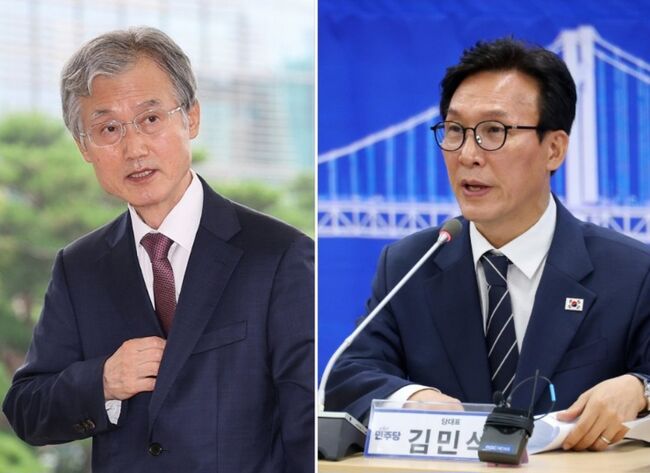
Chief Justice of the Supreme Court Cho Hee-de (left) and Democratic Party of Korea Leader Lee Jae-myung [Photo=Yonhap News]We are witnessing an unprecedented situation where the newly inaugurated lead
[Statement by the Seo-beo-kka Korea Military Academy Patriotic Comrades Association] ㊷ We Condemn the Ruling Party Leader's Intimidation and Mockery of Supreme Court Justices, and Acts of Destroying the Judiciary
Chief Justice of the Supreme Court Cho Hee-de (left) and Democratic Party of Korea Leader Lee Jae-myung [Photo=Yonhap News]We are witnessing an unprecedented situation where the newly inaugurated lead
 Criticizing Trump, yet… Europe also backsliding on climate change response
Greenpeace, an environmental organization calling for renewable energy policies [EPA=Yonhap News file photo]European nations, which previously criticized U.S. President Donald Trump's rollback of clim
Criticizing Trump, yet… Europe also backsliding on climate change response
Greenpeace, an environmental organization calling for renewable energy policies [EPA=Yonhap News file photo]European nations, which previously criticized U.S. President Donald Trump's rollback of clim
 PPP on Nomination of 'Ruling Party-Recommended' Special Inspector Candidate: "We Will Rigorously Verify Them at the Hearing"
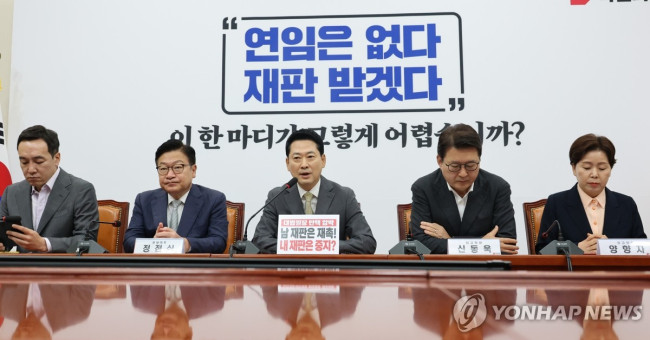
People Power Party representative Jang Dong-hyeok is speaking at the Supreme Council meeting held at the National Assembly on the 24th. [Yonhap News] On the 24th, the People Power Party stated th
PPP on Nomination of 'Ruling Party-Recommended' Special Inspector Candidate: "We Will Rigorously Verify Them at the Hearing"
People Power Party representative Jang Dong-hyeok is speaking at the Supreme Council meeting held at the National Assembly on the 24th. [Yonhap News] On the 24th, the People Power Party stated th
 [Comprehensive] Another body of a missing person discovered in Jeju… 4th in three days
Police conducting an intensive search for missing persons [Yonhap News file photo]Recently, bodies suspected to be those of missing persons have been discovered in succession on Jeju Island. This mark
[Comprehensive] Another body of a missing person discovered in Jeju… 4th in three days
Police conducting an intensive search for missing persons [Yonhap News file photo]Recently, bodies suspected to be those of missing persons have been discovered in succession on Jeju Island. This mark
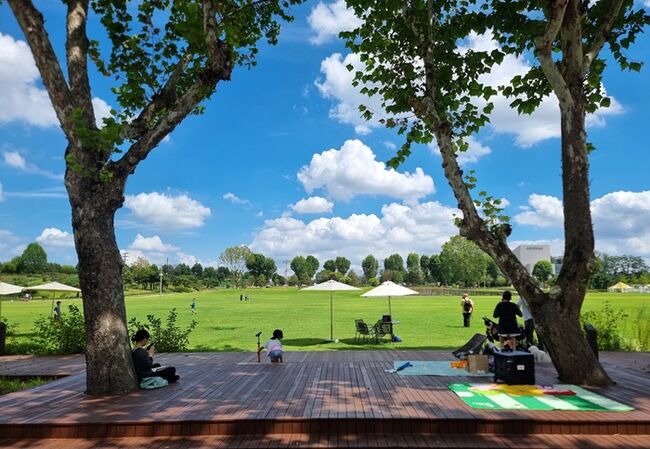 [Trending Travel Destinations] Unlocking a Century of Secrets: ‘Yongsan Children’s Garden’
Family visitors resting in the shade on a picnic mat. [Photo by Reporter Yohi Lim]Throughout history, the wealthy in both the East and the West have enjoyed greenery by creating private gardens on vas
[Trending Travel Destinations] Unlocking a Century of Secrets: ‘Yongsan Children’s Garden’
Family visitors resting in the shade on a picnic mat. [Photo by Reporter Yohi Lim]Throughout history, the wealthy in both the East and the West have enjoyed greenery by creating private gardens on vas
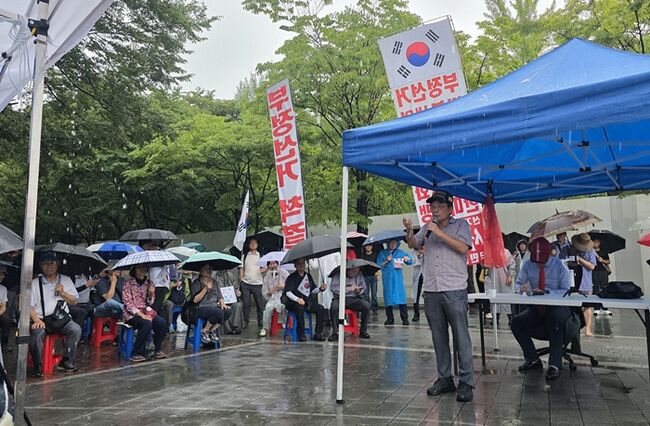 [Photo] Btooyun “We are recruiting 1,600 members for the Olympic Park Scientific Verification Team”… The rainy scenery of Olympic Park on the 22nd
On Saturday the 22nd, amid rainy weather at Olympic Park, the National Coalition for Election Fraud Struggle held a public forum on election integrity. They argued that the "Olympic Park Scientific Ve
[Photo] Btooyun “We are recruiting 1,600 members for the Olympic Park Scientific Verification Team”… The rainy scenery of Olympic Park on the 22nd
On Saturday the 22nd, amid rainy weather at Olympic Park, the National Coalition for Election Fraud Struggle held a public forum on election integrity. They argued that the "Olympic Park Scientific Ve
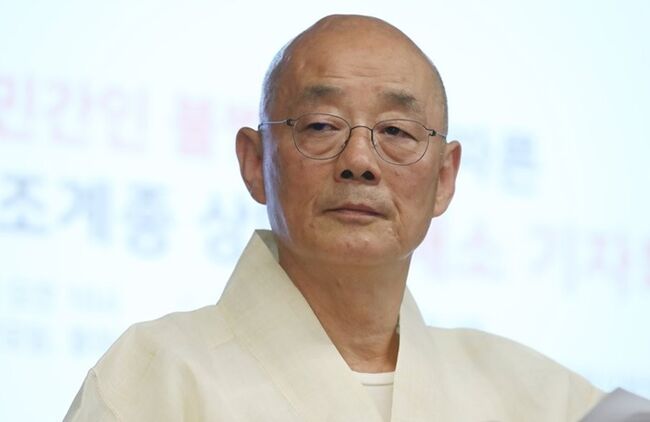 [Special Contribution: Songsan] The Life of a Political Monk Must Also Be Evaluated… What the Passing of Venerable Myeongjin Leaves Behind
Venerable Myeongjin, former head monk of Bongeunsa Temple, passed away on the 22nd. He was 76 years old and had been a monk for 52 years. [Yonhap News File Photo]Various narratives are emerging follow
[Special Contribution: Songsan] The Life of a Political Monk Must Also Be Evaluated… What the Passing of Venerable Myeongjin Leaves Behind
Venerable Myeongjin, former head monk of Bongeunsa Temple, passed away on the 22nd. He was 76 years old and had been a monk for 52 years. [Yonhap News File Photo]Various narratives are emerging follow
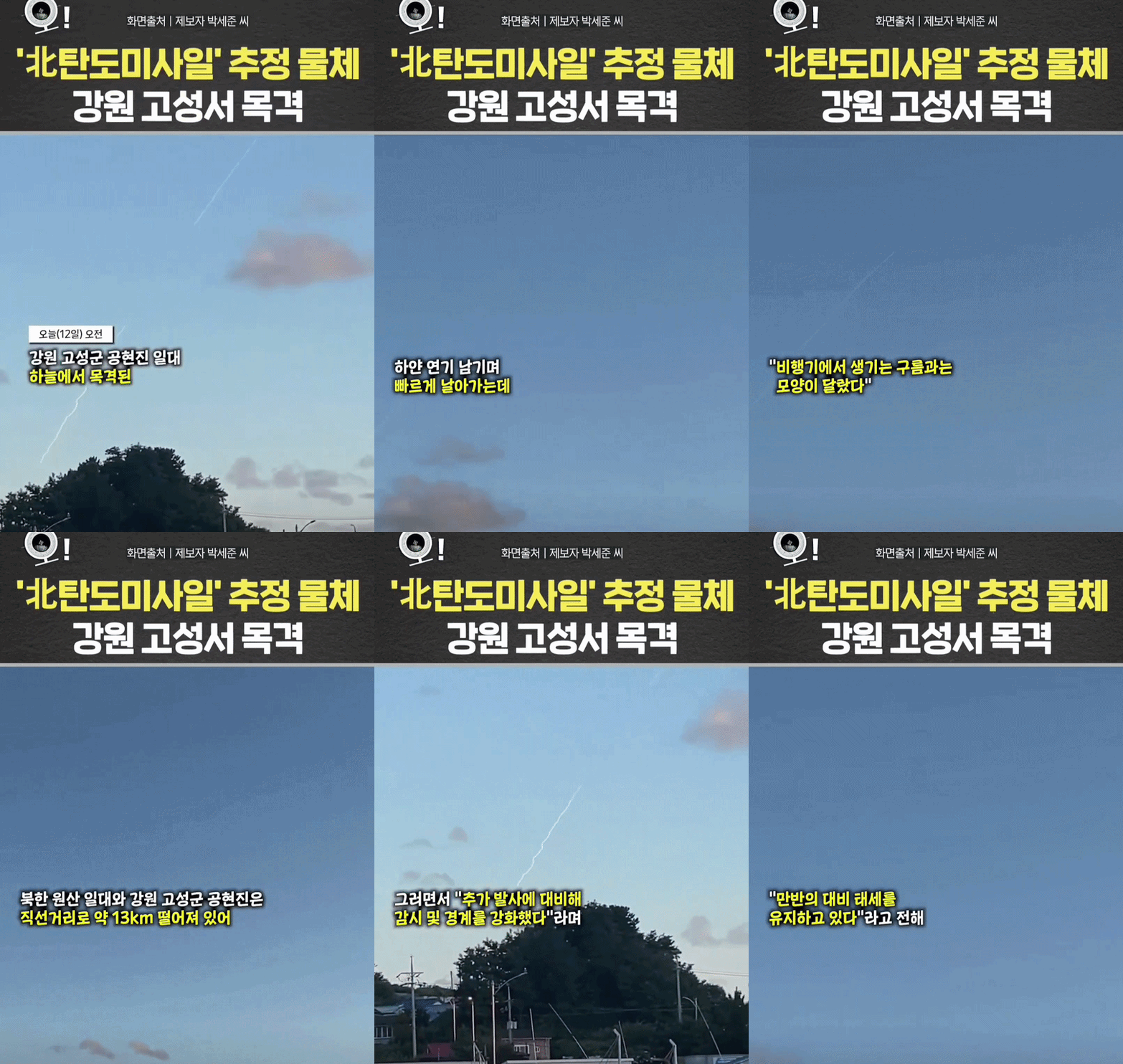 [Video] North Korean ballistic missile filmed by a civilian in Goseong, Gangwon-do
 [Editorial Cartoon] A Draconian Law That Undermines Freedom of Expression

 List
List