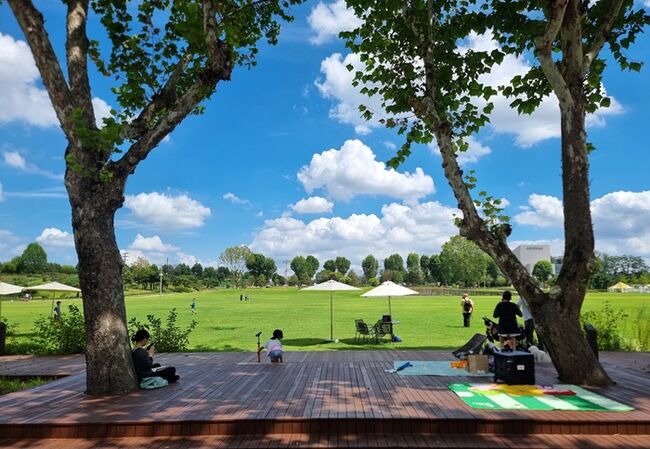
 Family visitors resting in the shade on a picnic mat. [Photo by Reporter Yohi Lim]
Throughout history, the wealthy in both the East and the West have enjoyed greenery by creating private gardens on vast estates. This reflects how essential forests and trees are to human life. Parks in urban centers provide resting spaces for citizens living in concrete jungles, purify the air by releasing oxygen, and help lower the temperature of the city.
2-1 Yongsan-ro 5-ga. It was at the end of 2025 that this "forbidden land" in Seoul—which had been strictly off-limits to the public for years while serving as a foreign military base—was finally opened to the general public.
Total Scale Rivaling New York’s Central Park
Among its areas, the Yongsan Children’s Garden, located near Sinyongsan Station on Subway Line 4, is part of the designated Yongsan Park site. Given the name "Children’s Garden," I expected a small park, but it is actually a massive 90-pyeong (approx. 297,500 square meters) space, larger than Yeouido Park (70,000 pyeong).
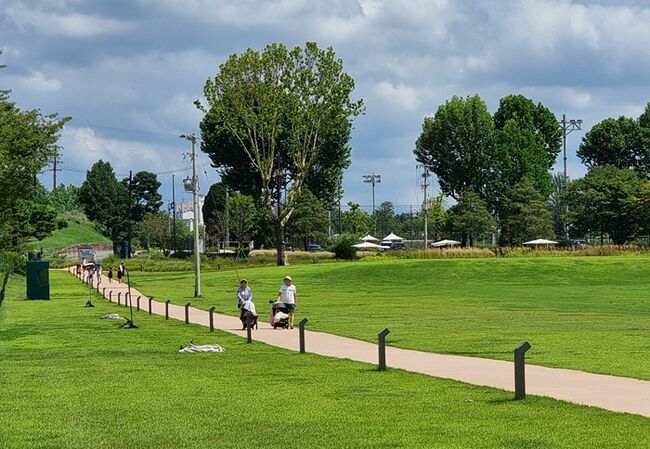 The lawn, repurposed from a baseball field within the Yongsan base. It is overwhelmingly large, equivalent to 10 soccer fields. [Photo by Reporter Yohi Lim]
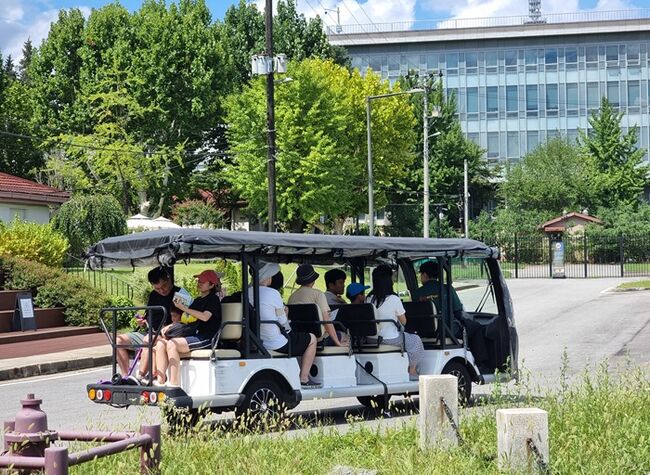 Considering the high proportion of young visitors, the park operates a dedicated shuttle cart that circles the premises. [Photo by Reporter Yohi Lim]
With the government planning for the full Yongsan Park to reach 900,000 pyeong in the future, the Children’s Garden is merely a preview. If the Yongsan Park project proceeds as planned, it will reach a scale comparable to New York City's Central Park (approx. 3.4 square kilometers).
On the sidewalk leading from Sinyongsan Station to the Yongsan Children’s Garden, rows of funeral wreaths were lined up. A fierce debate has recently erupted as the Lee Jae-myung administration pushes to consider constructing a large-scale public rental housing complex for youths and newlyweds on the Yongsan Children’s Garden site.
The Yongsan U.S. military base site was first occupied by the Japanese military following the Korea-Japan Protocol of 1904, and after liberation, it became the headquarters for the U.S. Eighth Army, existing as a "little America within Seoul" where American culture was embedded for about 80 years. Given that U.S. history spans 250 years, the 80-year Yongsan era must hold significant meaning for the U.S. military as well.
The area currently open as the Yongsan Children’s Garden was once the residential quarters for U.S. military officer families. With its American-style detached houses, gardens, and private clubs, it carries the look of a typical American suburban village.
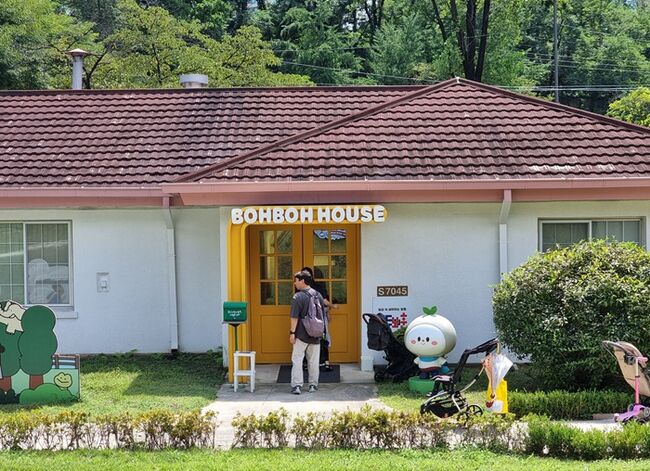 None of the 16 major facilities at the Yongsan Children’s Garden are newly constructed. Because they are remodeled former U.S. military officers' quarters, the entire area is filled with an exotic atmosphere. [Photo by Reporter Yohi Lim]
None of the 16 major facilities here, including the promotional hall, Yongsan Library, exhibition halls, archives, and art lounge, were newly built. Because they are repurposed former U.S. military officers' quarters, the space remains filled with an exotic atmosphere.
Despite its vast size, it is well-equipped with cultural spaces such as cafes, markets, and galleries. Moreover, each building is equipped with powerful air conditioning, meaning visitors don’t have to walk aimlessly under the scorching sun. Considering the high proportion of young visitors, the park also operates a dedicated shuttle cart that runs frequently from the information center. It is free of charge.
A Glimpse into the Lives of U.S. Military Families
If you are extremely busy and can only visit one place, I recommend the "Archive." Archive 1 recreates the living spaces of U.S. military officers and their families who actually resided on the Yongsan base, featuring bedrooms, living rooms, and studies decorated just as they were back then. It feels as if someone might return home this evening to eat, read a book, and go to sleep there.
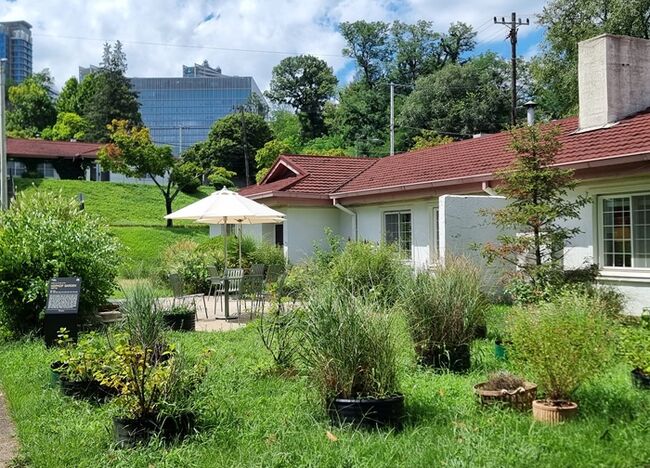
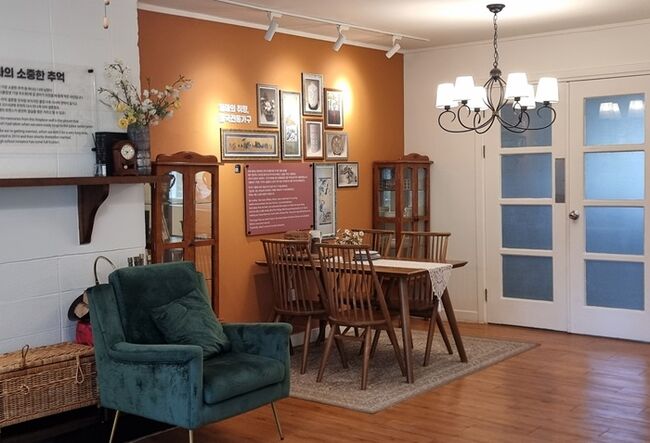 Archive 1 recreates the living spaces of U.S. military officers and their families who actually resided at the Yongsan base. [Photo by Reporter Yohi Lim]
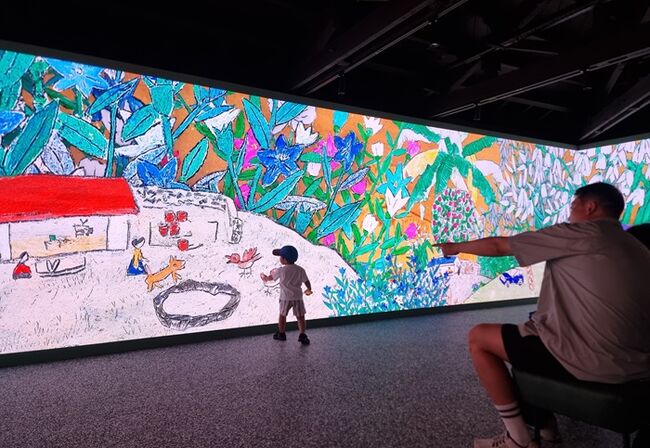 The "Art Lounge" at the end of the village hosts a media art exhibition, "Jeju, Island of the Middle Way," by artist Lee Wal-jong. [Photo by Reporter Yohi Lim]
Archive 2 covers the cultural aspects of the base and the Eighth Army clubs, which were the birthplace of modern Korean popular music. Data on first-generation pop singers who passed through the Eighth Army stage, such as Shin Jung-hyeon, Patti Kim, and Han Myeong-sook, along with performance posters and LP records, are on display; some records can even be listened to on-site.
If you have more time, pay a visit to the "Yongsan Library," where you can see the 100-year history of the Yongsan base at a glance, and "Cafe Eoullim," a rest area converted from U.S. military quarters. You might feel as if you’ve flown to a small cafe in the U.S. without ever boarding a plane.
Additionally, you can enjoy a vast, wide-open view thanks to the lawn—large enough to fit 10 soccer fields—and a massive children’s playground. A lawn of this size is rare not just in the city, but across the entire country. You can see families with children laying out picnic mats and resting under the shade. With chairs and parasols provided in every shaded area, it is the perfect place for a leisurely stroll.
At the end of the village, the "Art Lounge" hosts a media art exhibition, "Jeju, Island of the Middle Way," by artist Lee Wal-jong. It is a place where you can feel the peace of "Jungdo" (the Middle Way), where humans, nature, animals, and plants harmonize without boundaries. Nearby, the "Exhibition Hall" runs "Gentle Harmony," a meditation exhibition using water, light, and sound, guiding visitors into a different kind of tranquility.
Between the Happiness of 10,000 and the Happiness of Thousands
It was a different world. Did you know that restaurants like Pizza Hut, Subway, Popeyes, Burger King, and Starbucks, which are common today, had already established themselves on the Yongsan base in the 1980s? Camp Kim’s USO (United Service Organizations) hosted performances by American pop stars, earning great affection from U.S. soldiers.
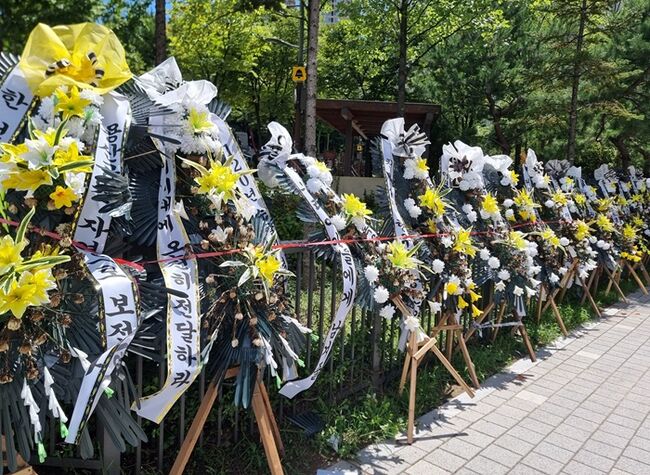 Funeral wreaths opposing the apartment construction are lined up on the sidewalk leading to the Yongsan Children’s Garden. [Photo by Reporter Yohi Lim]
In 1954, Marilyn Monroe visited the Camp Kim USO stage, causing a sensation throughout Korea. In modern terms, it would be equivalent to Blackpink going on an overseas military morale-boosting tour. The Camp Kim USO building was used as the Yongsan Park Gallery until recently.
If the government builds apartments here, perhaps 10,000 young people might find happiness. However, the happiness of the millions who visit this place will vanish. It is a matter that requires serious consideration regarding which carries more weight: the happiness of 10,000 people or the happiness of hundreds of thousands or millions.
The Yongsan Children’s Garden is open from 9:00 AM to 6:00 PM daily, with extended hours until 9:00 PM on Saturdays. It is closed on Mondays and national holidays.
Reporter Yohi Lim

 [Statement by the Seo-beo-kka Korea Military Academy Patriotic Comrades Association] ㊷ We Condemn the Ruling Party Leader's Intimidation and Mockery of Supreme Court Justices, and Acts of Destroying the Judiciary
Chief Justice of the Supreme Court Cho Hee-de (left) and Democratic Party of Korea Leader Lee Jae-myung [Photo=Yonhap News]We are witnessing an unprecedented situation where the newly inaugurated lead
[Statement by the Seo-beo-kka Korea Military Academy Patriotic Comrades Association] ㊷ We Condemn the Ruling Party Leader's Intimidation and Mockery of Supreme Court Justices, and Acts of Destroying the Judiciary
Chief Justice of the Supreme Court Cho Hee-de (left) and Democratic Party of Korea Leader Lee Jae-myung [Photo=Yonhap News]We are witnessing an unprecedented situation where the newly inaugurated lead
 Criticizing Trump, yet… Europe also backsliding on climate change response
Greenpeace, an environmental organization calling for renewable energy policies [EPA=Yonhap News file photo]European nations, which previously criticized U.S. President Donald Trump's rollback of clim
Criticizing Trump, yet… Europe also backsliding on climate change response
Greenpeace, an environmental organization calling for renewable energy policies [EPA=Yonhap News file photo]European nations, which previously criticized U.S. President Donald Trump's rollback of clim
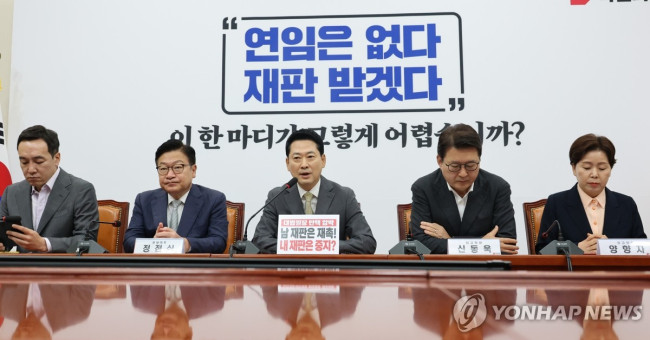 PPP on Nomination of 'Ruling Party-Recommended' Special Inspector Candidate: "We Will Rigorously Verify Them at the Hearing"
People Power Party representative Jang Dong-hyeok is speaking at the Supreme Council meeting held at the National Assembly on the 24th. [Yonhap News] On the 24th, the People Power Party stated th
PPP on Nomination of 'Ruling Party-Recommended' Special Inspector Candidate: "We Will Rigorously Verify Them at the Hearing"
People Power Party representative Jang Dong-hyeok is speaking at the Supreme Council meeting held at the National Assembly on the 24th. [Yonhap News] On the 24th, the People Power Party stated th
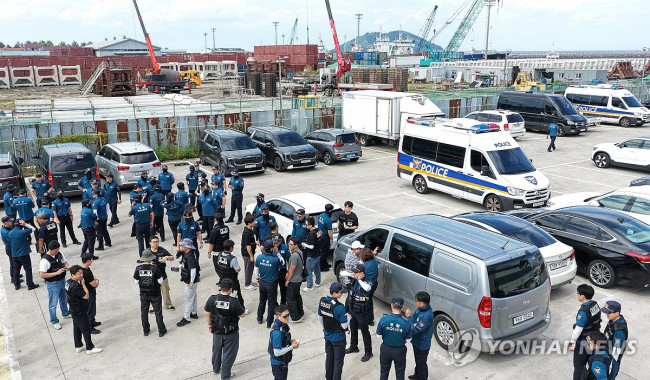 [Comprehensive] Another body of a missing person discovered in Jeju… 4th in three days
Police conducting an intensive search for missing persons [Yonhap News file photo]Recently, bodies suspected to be those of missing persons have been discovered in succession on Jeju Island. This mark
[Comprehensive] Another body of a missing person discovered in Jeju… 4th in three days
Police conducting an intensive search for missing persons [Yonhap News file photo]Recently, bodies suspected to be those of missing persons have been discovered in succession on Jeju Island. This mark
 [Korea-US Data Lab] 3rd Week of August (18th–21st) Money Insight
In the U.S., rising long-term Treasury yields lowered the future cash value of tech stocks, while in Korea, shareholder returns from Samsung Electronics and SK Hynix drove a rebound in major semicondu
[Korea-US Data Lab] 3rd Week of August (18th–21st) Money Insight
In the U.S., rising long-term Treasury yields lowered the future cash value of tech stocks, while in Korea, shareholder returns from Samsung Electronics and SK Hynix drove a rebound in major semicondu
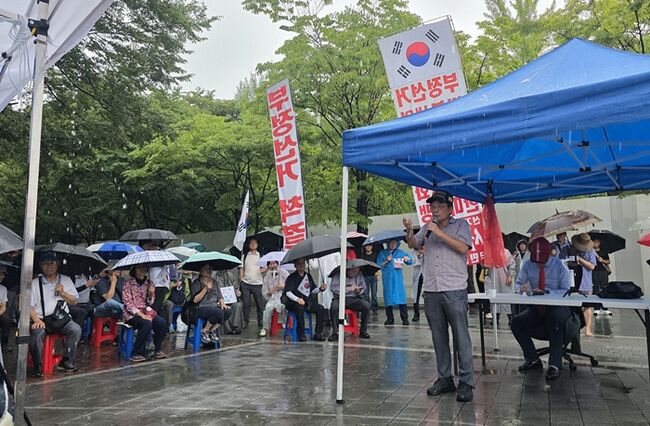 [Photo] Btooyun “We are recruiting 1,600 members for the Olympic Park Scientific Verification Team”… The rainy scenery of Olympic Park on the 22nd
On Saturday the 22nd, amid rainy weather at Olympic Park, the National Coalition for Election Fraud Struggle held a public forum on election integrity. They argued that the "Olympic Park Scientific Ve
[Photo] Btooyun “We are recruiting 1,600 members for the Olympic Park Scientific Verification Team”… The rainy scenery of Olympic Park on the 22nd
On Saturday the 22nd, amid rainy weather at Olympic Park, the National Coalition for Election Fraud Struggle held a public forum on election integrity. They argued that the "Olympic Park Scientific Ve
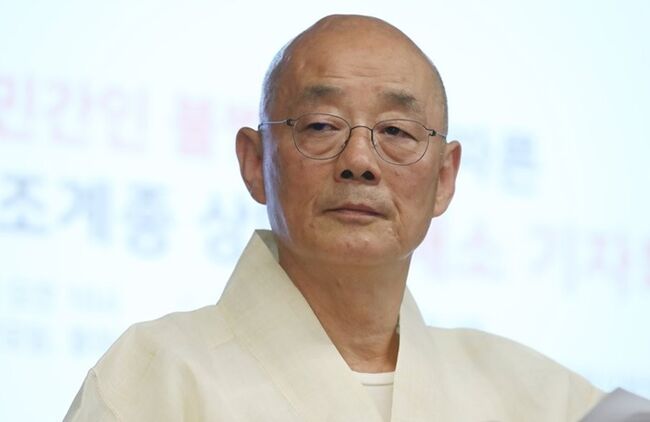 [Special Contribution: Songsan] The Life of a Political Monk Must Also Be Evaluated… What the Passing of Venerable Myeongjin Leaves Behind
Venerable Myeongjin, former head monk of Bongeunsa Temple, passed away on the 22nd. He was 76 years old and had been a monk for 52 years. [Yonhap News File Photo]Various narratives are emerging follow
[Special Contribution: Songsan] The Life of a Political Monk Must Also Be Evaluated… What the Passing of Venerable Myeongjin Leaves Behind
Venerable Myeongjin, former head monk of Bongeunsa Temple, passed away on the 22nd. He was 76 years old and had been a monk for 52 years. [Yonhap News File Photo]Various narratives are emerging follow
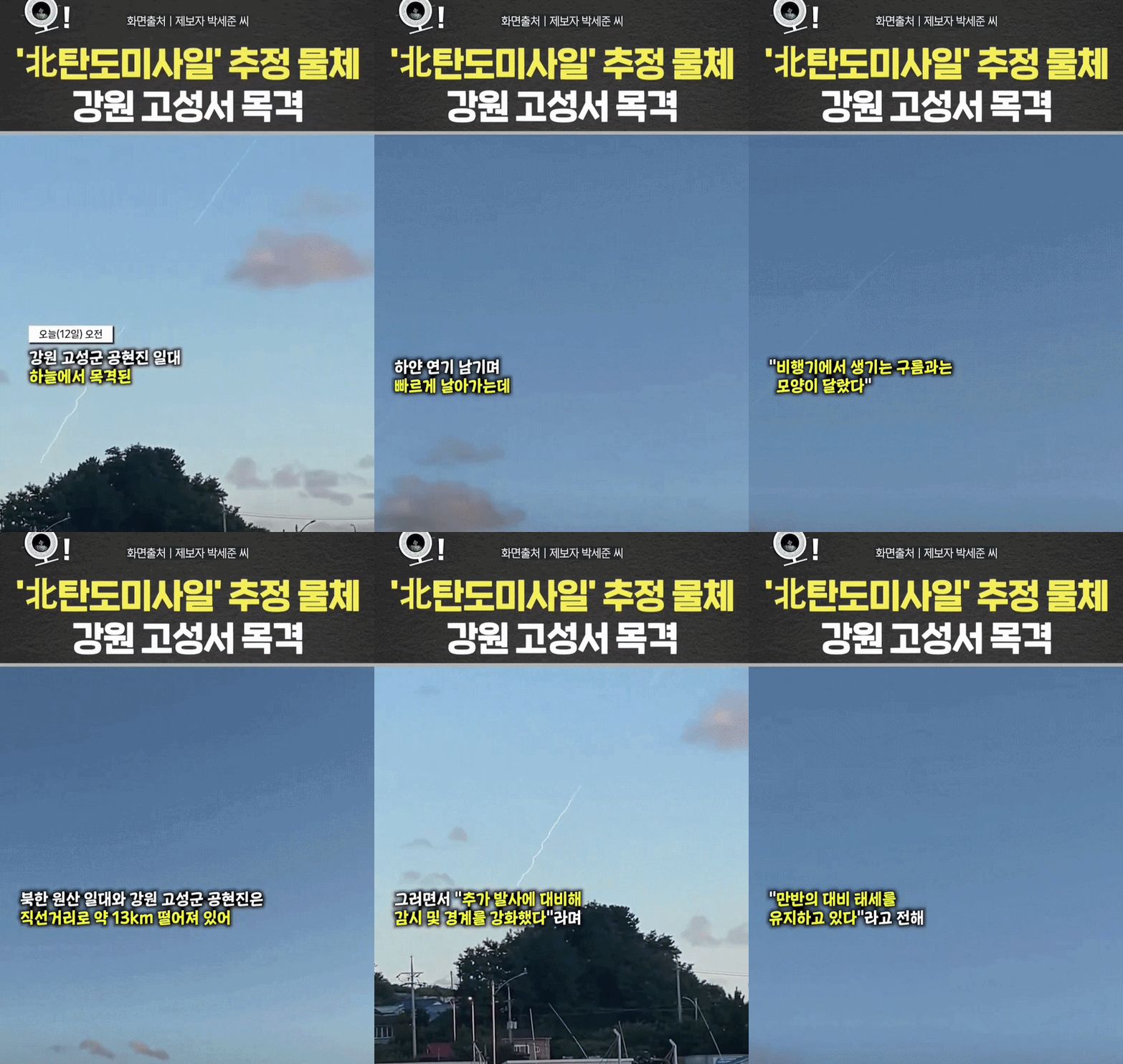 [Video] North Korean ballistic missile filmed by a civilian in Goseong, Gangwon-do
 [Editorial Cartoon] A Draconian Law That Undermines Freedom of Expression

 List
List