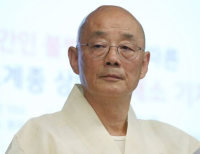
Jung Ji-woong, Vice President of the Korean Bar Association, delivers a presentation at the '34th Lawyers' Conference for the Rule of Law' held at the Grand Lotte Seoul in Jung-gu on the 24th. [Courtesy of the Korean Bar Association]
Ahead of the implementation of the revised Criminal Procedure Act, which focuses on the complete abolition of the prosecution's investigative powers, legal professionals have raised their voices in unison at an official event held by the Korean Bar Association to express concerns about side effects such as delays in investigations and trials.
On the 24th, the Korean Bar Association hosted the 34th Lawyers' Conference for the Rule of Law at the Grand Lotte Seoul in Jung-gu, which featured a symposium under the theme, "A New Paradigm for Criminal Justice: Crossroads Between Restructuring Investigative Agencies and Protecting Human Rights."
Experts, including practicing lawyers, prosecutors, judges, and academics, unanimously agreed that if the revised Criminal Procedure Act is implemented without complementary measures, it will cause significant confusion in investigation and trial practices.
Jung Ji-woong, Vice President of the Korean Bar Association, who gave the keynote presentation, criticized the act, stating, "The revised law is highly likely to cause various systematic problems, such as the disconnection between investigation and prosecution, repeated transfers during supplementary investigations and reinvestigations, and the formalization of warrant control."
He pointed out that while the revised law grants investigative responsibilities to the police and indictment and prosecution maintenance responsibilities to prosecutors, it is difficult to mechanically separate these functions in practice.
He added his concerns, saying, "If evidence is missing due to shoddy investigations or if the prosecution fails to prove a case at trial, the police could blame the prosecution for poor trial management, while the prosecution office could cite the inadequate investigation as the cause. By isolating responsibilities at each stage, accountability for the final outcome may end up being diluted."
Vice President Jung further noted, "If prosecutors cannot directly verify and supplement flaws in criminal charges and evidence, and there are no alternative control mechanisms, citizens will have to rely on the judgment and goodwill of a single investigative agency (the police). This represents a serious institutional risk in terms of due process and effective remedy."
Park Chan-woon, a professor at Hanyang University Law School, pointed out that the revised law has made investigations more complex by adding procedures such as expanding the scope for filing objections against non-prosecution decisions, allowing complainants to access investigative records, enabling prosecutors to conduct fact-finding and interview interested parties, and expanding applications for judicial review (fiscal applications).
He remarked, "As procedures become more complex, the process falls into the hands of experts, and ultimately, only those who can afford a lawyer can fully utilize the new system. It is essentially a commodification of the procedural protections that the state should guarantee, and many experts call this the privatization of justice."
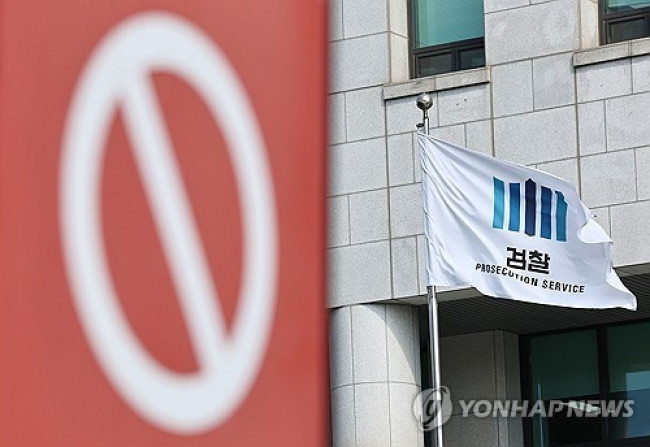 Complete abolition of the prosecution's investigative power [Yonhap News File Photo]
Kim Ji-geon, a judge at the National Court Administration of the Supreme Court, pointed out that the abolition of the prosecution's power to demand supplementary investigations could eventually lead to prolonged trials.
He noted, "In cases where a significant amount of time is required for a prosecutor's 'request' for supplementary investigation and the police's implementation, it is difficult to rule out the possibility of cases being indicted without sufficient supplementary investigation due to statute of limitations or detention period constraints."
He continued, "In such cases, the determination of facts and the reinforcement of evidence, which were previously resolved during the investigation stage, would have to be handled during the trial phase. This could increase the trial duration due to more witness examinations, defendant interrogations, amendments to indictments, and requests for additional evidence."
Prosecutor Park Sun-young of the Legal Research and Training Institute remarked, "In a structure where different agencies are responsible for investigation and prosecution, it must be clarified not only how they cooperate, but also who has the authority to make the final judgment and take responsibility for the outcome when their views diverge."
For instance, she raised the question of whether a prosecutor can refuse to indict a case on the grounds that a "supplementary investigation request was not fulfilled" if the police fail to comply with such a request.
Woo Dong-seok, head of the Investigation Structure Reform Team at the National Office of Investigation (Senior Superintendent), who participated in the discussion, was the only one to defend the revised law.
He emphasized, "The argument that control disappears if a prosecutor cannot directly verify or supplement investigations should be re-examined. A system where prosecutors review records independently rather than investigating directly actually institutionalizes cross-verification between the different perspectives of initial investigation and legal review."
He added, "When both agencies focus on their respective areas of expertise, the potential for filtering out errors increases compared to a structure where the judgment of a single agency becomes the final conclusion."
He also noted, "Looking at the system of the revised law, police investigations remain under at least four layers of control: prosecutors, the courts, parties involved in the case, and internal police oversight. The abolition of the prosecution's direct investigative power does not mean a weakening of control over police investigations."

 [Statement by the Seo-beo-kka Korea Military Academy Patriotic Comrades Association] ㊷ We Condemn the Ruling Party Leader's Intimidation and Mockery of Supreme Court Justices, and Acts of Destroying the Judiciary
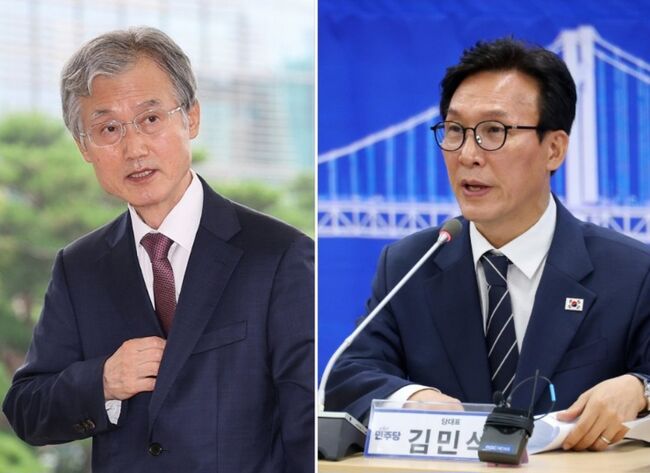
Chief Justice of the Supreme Court Cho Hee-de (left) and Democratic Party of Korea Leader Lee Jae-myung [Photo=Yonhap News]We are witnessing an unprecedented situation where the newly inaugurated lead
[Statement by the Seo-beo-kka Korea Military Academy Patriotic Comrades Association] ㊷ We Condemn the Ruling Party Leader's Intimidation and Mockery of Supreme Court Justices, and Acts of Destroying the Judiciary
Chief Justice of the Supreme Court Cho Hee-de (left) and Democratic Party of Korea Leader Lee Jae-myung [Photo=Yonhap News]We are witnessing an unprecedented situation where the newly inaugurated lead
 Criticizing Trump, yet… Europe also backsliding on climate change response
Greenpeace, an environmental organization calling for renewable energy policies [EPA=Yonhap News file photo]European nations, which previously criticized U.S. President Donald Trump's rollback of clim
Criticizing Trump, yet… Europe also backsliding on climate change response
Greenpeace, an environmental organization calling for renewable energy policies [EPA=Yonhap News file photo]European nations, which previously criticized U.S. President Donald Trump's rollback of clim
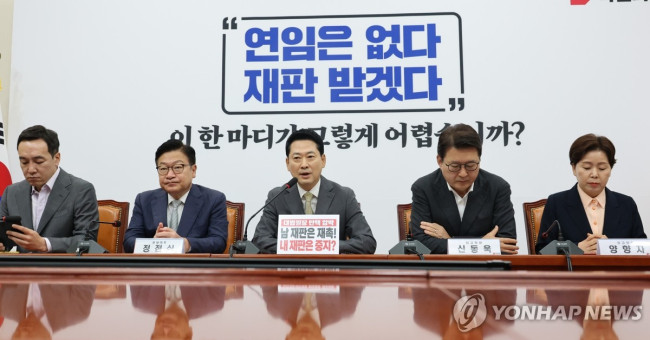 PPP on Nomination of 'Ruling Party-Recommended' Special Inspector Candidate: "We Will Rigorously Verify Them at the Hearing"
People Power Party representative Jang Dong-hyeok is speaking at the Supreme Council meeting held at the National Assembly on the 24th. [Yonhap News] On the 24th, the People Power Party stated th
PPP on Nomination of 'Ruling Party-Recommended' Special Inspector Candidate: "We Will Rigorously Verify Them at the Hearing"
People Power Party representative Jang Dong-hyeok is speaking at the Supreme Council meeting held at the National Assembly on the 24th. [Yonhap News] On the 24th, the People Power Party stated th
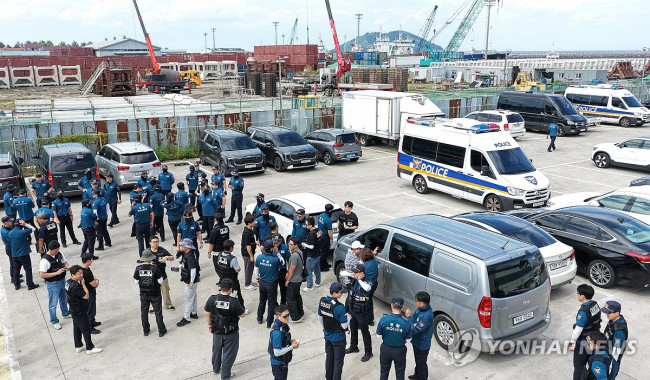 [Comprehensive] Another body of a missing person discovered in Jeju… 4th in three days
Police conducting an intensive search for missing persons [Yonhap News file photo]Recently, bodies suspected to be those of missing persons have been discovered in succession on Jeju Island. This mark
[Comprehensive] Another body of a missing person discovered in Jeju… 4th in three days
Police conducting an intensive search for missing persons [Yonhap News file photo]Recently, bodies suspected to be those of missing persons have been discovered in succession on Jeju Island. This mark
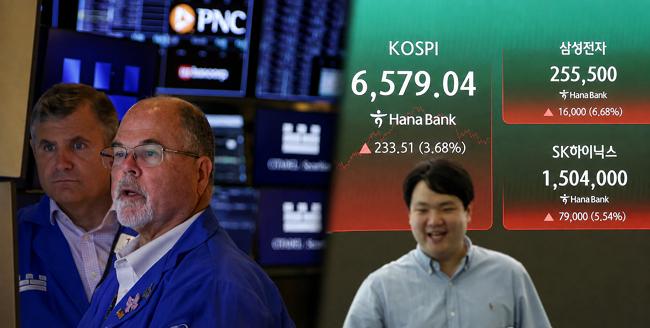 [Korea-US Data Lab] 3rd Week of August (18th–21st) Money Insight
In the U.S., rising long-term Treasury yields lowered the future cash value of tech stocks, while in Korea, shareholder returns from Samsung Electronics and SK Hynix drove a rebound in major semicondu
[Korea-US Data Lab] 3rd Week of August (18th–21st) Money Insight
In the U.S., rising long-term Treasury yields lowered the future cash value of tech stocks, while in Korea, shareholder returns from Samsung Electronics and SK Hynix drove a rebound in major semicondu
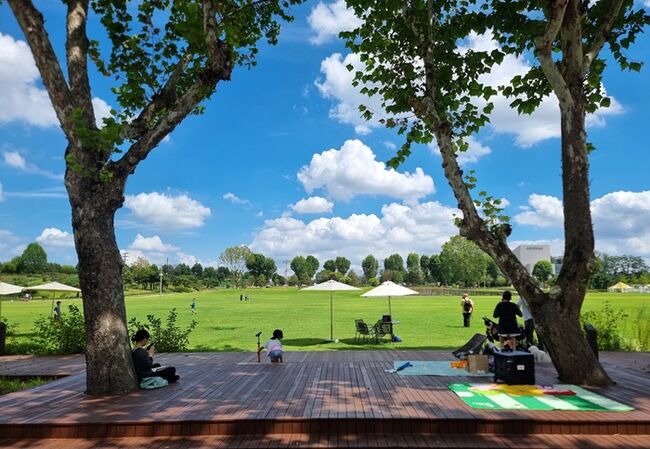 [Trending Travel Destinations] Unlocking a Century of Secrets: ‘Yongsan Children’s Garden’
Family visitors resting in the shade on a picnic mat. [Photo by Reporter Yohi Lim]Throughout history, the wealthy in both the East and the West have enjoyed greenery by creating private gardens on vas
[Trending Travel Destinations] Unlocking a Century of Secrets: ‘Yongsan Children’s Garden’
Family visitors resting in the shade on a picnic mat. [Photo by Reporter Yohi Lim]Throughout history, the wealthy in both the East and the West have enjoyed greenery by creating private gardens on vas
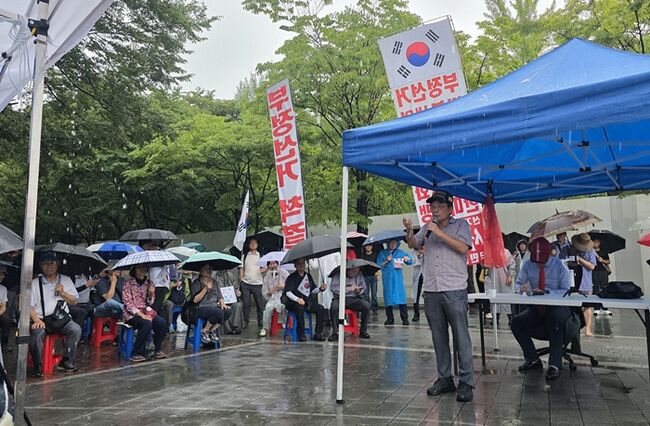 [Photo] Btooyun “We are recruiting 1,600 members for the Olympic Park Scientific Verification Team”… The rainy scenery of Olympic Park on the 22nd
On Saturday the 22nd, amid rainy weather at Olympic Park, the National Coalition for Election Fraud Struggle held a public forum on election integrity. They argued that the "Olympic Park Scientific Ve
[Photo] Btooyun “We are recruiting 1,600 members for the Olympic Park Scientific Verification Team”… The rainy scenery of Olympic Park on the 22nd
On Saturday the 22nd, amid rainy weather at Olympic Park, the National Coalition for Election Fraud Struggle held a public forum on election integrity. They argued that the "Olympic Park Scientific Ve
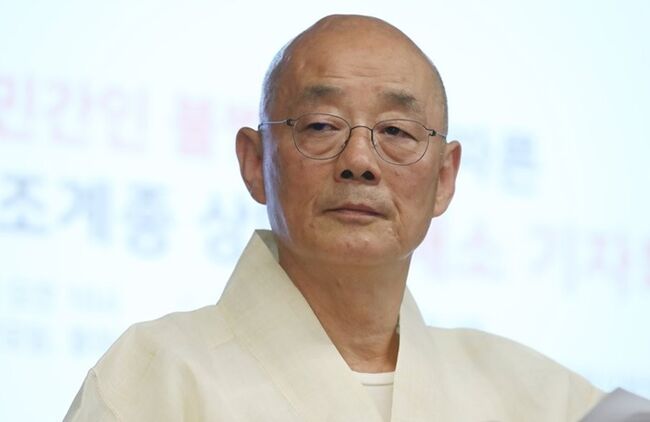 [Special Contribution: Songsan] The Life of a Political Monk Must Also Be Evaluated… What the Passing of Venerable Myeongjin Leaves Behind
Venerable Myeongjin, former head monk of Bongeunsa Temple, passed away on the 22nd. He was 76 years old and had been a monk for 52 years. [Yonhap News File Photo]Various narratives are emerging follow
[Special Contribution: Songsan] The Life of a Political Monk Must Also Be Evaluated… What the Passing of Venerable Myeongjin Leaves Behind
Venerable Myeongjin, former head monk of Bongeunsa Temple, passed away on the 22nd. He was 76 years old and had been a monk for 52 years. [Yonhap News File Photo]Various narratives are emerging follow
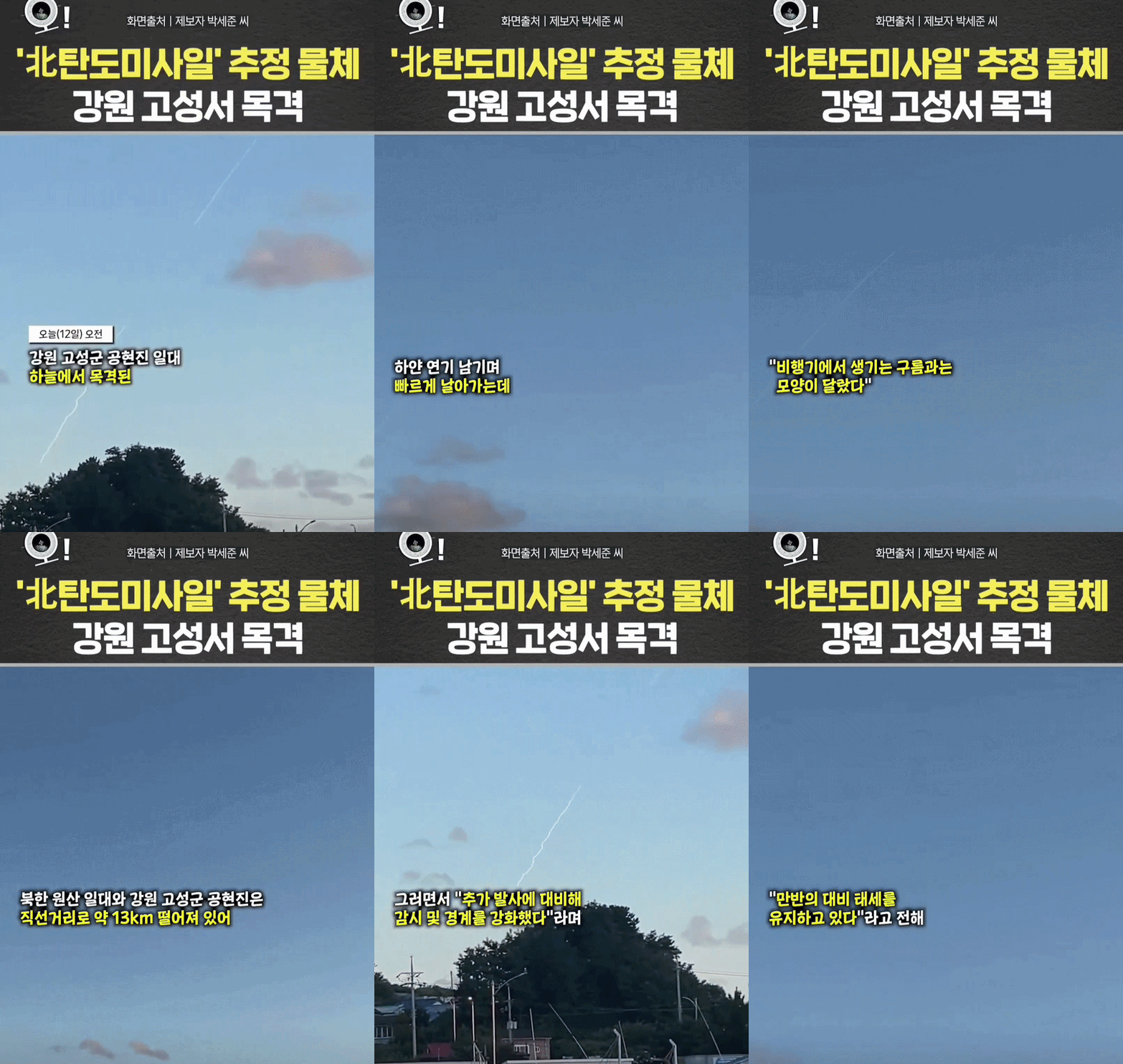 [Video] North Korean ballistic missile filmed by a civilian in Goseong, Gangwon-do
 [Editorial Cartoon] A Draconian Law That Undermines Freedom of Expression

 List
List