A session will be held to examine the current state of South Korea's legal system regarding business succession.
A National Assembly seminar titled "Issues and Tasks in Business Succession Legislation" will take place at 2:00 PM on Monday, the 24th, at the 9th Conference Room of the National Assembly Members' Office Building.
The seminar will focus on analyzing the problems of the current inheritance tax system and discussing practical alternatives for the succession of management rights.
Prior to the main presentations, an opening address will be delivered by Representative Kwak Kyu-taek of the Legislation and Judiciary Committee, followed by welcome remarks from Choi Jae-hyeong, former Chairman of the Board of Audit and Inspection. The subsequent session will feature two experts delivering in-depth presentations.
First, Hwang Seung-yeon, Professor Emeritus of Sociology at Kyung Hee University, will present on "How Inheritance Tax Kills Businesses," with a focus on analyzing the so-called "Anti-Stock Price Suppression Act."
Regarding the amendment to the Inheritance and Gift Tax Act proposed by Democratic Party Representative Lee So-young—known as the "Anti-Stock Price Suppression Act"—Professor Hwang asserted, "This is an attempt to further increase inheritance tax rates in South Korea, a country that already has the world's highest inheritance tax rate at 60%." He added, "It is a socialist idea that denies property rights and the market economy guaranteed by the Constitution, as it rejects market-determined stock prices in favor of imposing inheritance tax based on government-set valuations."
The "Anti-Stock Price Suppression Act" is a bill that would force approximately 47.5% of all listed companies in South Korea—those with a Price-to-Book Ratio (PBR) of less than 0.8—to bear an even higher inheritance tax burden than the existing world-leading 50-60% rate.
According to Professor Hwang, this bill constitutes a serious infringement on property rights, as it would uniformly calculate the stock value of all companies with a PBR below 0.8 as 0.8 for inheritance tax purposes, regardless of the company's industry or capital characteristics.
Furthermore, citing international examples, he emphasized, "We must learn from the fact that Sweden, which once had a 70% inheritance tax rate, experienced remarkable economic growth and increased tax revenue after abolishing the inheritance tax in 2004 under the leadership of the Social Democratic Party, following a long period of economic stagnation."
He also pointed to Venezuela's tax policy as a counter-example. He argued, "When we look squarely at the collapse of Venezuela, which attempted the nationalization of companies through high taxes such as inheritance tax, the 'Anti-Stock Price Suppression Act,' which seeks to further raise the world's highest inheritance tax rate, must be withdrawn."
Professor Hwang predicts that if this bill is implemented, South Korea will become a society where there is no reason to conduct business, leading to the gradual disappearance of companies. This is because, in a modern industrial society, a society without companies cannot survive, and a welfare state without companies is an illusion.
He further suggests that since South Korea already has the world's highest inheritance tax rate, it would be correct to abolish the inheritance tax in line with global trends; if abolition is difficult, he proposes introducing a "capital gains tax." This topic will be discussed in detail during the event.
In the second session, Choi Joon-sun, Professor Emeritus at Sungkyunkwan University Law School, will focus his presentation on "Methods for Management Succession Using Family Foundations."
In the subsequent plenary discussion, moderator Jin-kwon Hyun, Representative of the Liberty and Decentralization Forum (former Director of the National Assembly Library), will be joined by panelists Kim Seung-wook, Professor Emeritus of Economics at Chung-Ang University; Hong Ki-yong, Professor Emeritus of Business Administration at Incheon National University (former President of the Korean Accounting Association); and Kim Woo-cheol, Professor of Taxation at the University of Seoul (47th President of the Korean Association of Public Finance), for a vigorous debate.
The seminar is co-hosted by the office of People Power Party Representative Kwak Kyu-taek and the organization "People Preparing for Tomorrow," and organized by the Korea Corporate Law Institute.
◆ Event Overview
Event Title: National Assembly Seminar: "Issues and Tasks in Business Succession Legislation"
Date & Time: Monday, August 24, 2026, at 2:00 PM
Venue: 9th Conference Room, National Assembly Members' Office Building
Hosts: Representative Kwak Kyu-taek (People Power Party), People Preparing for Tomorrow
Organizer: Korea Corporate Law Institute

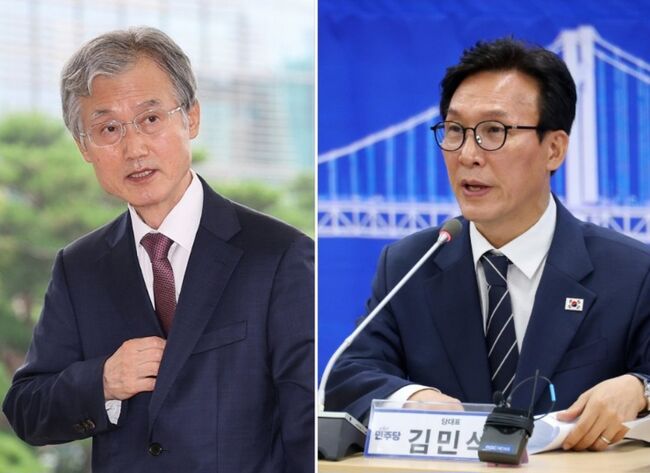 [Statement by the Seo-beo-kka Korea Military Academy Patriotic Comrades Association] ㊷ We Condemn the Ruling Party Leader's Intimidation and Mockery of Supreme Court Justices, and Acts of Destroying the Judiciary
Chief Justice of the Supreme Court Cho Hee-de (left) and Democratic Party of Korea Leader Lee Jae-myung [Photo=Yonhap News]We are witnessing an unprecedented situation where the newly inaugurated lead
[Statement by the Seo-beo-kka Korea Military Academy Patriotic Comrades Association] ㊷ We Condemn the Ruling Party Leader's Intimidation and Mockery of Supreme Court Justices, and Acts of Destroying the Judiciary
Chief Justice of the Supreme Court Cho Hee-de (left) and Democratic Party of Korea Leader Lee Jae-myung [Photo=Yonhap News]We are witnessing an unprecedented situation where the newly inaugurated lead
 Criticizing Trump, yet… Europe also backsliding on climate change response
Greenpeace, an environmental organization calling for renewable energy policies [EPA=Yonhap News file photo]European nations, which previously criticized U.S. President Donald Trump's rollback of clim
Criticizing Trump, yet… Europe also backsliding on climate change response
Greenpeace, an environmental organization calling for renewable energy policies [EPA=Yonhap News file photo]European nations, which previously criticized U.S. President Donald Trump's rollback of clim
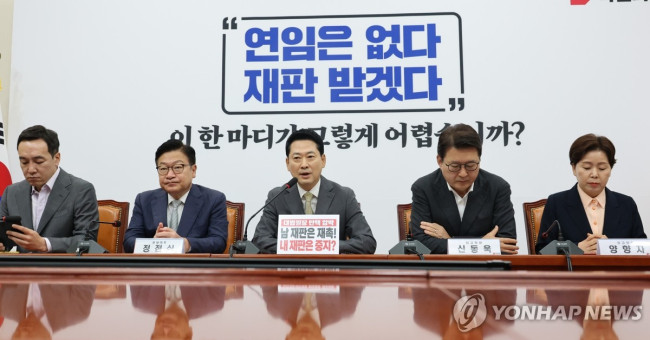 PPP on Nomination of 'Ruling Party-Recommended' Special Inspector Candidate: "We Will Rigorously Verify Them at the Hearing"
People Power Party representative Jang Dong-hyeok is speaking at the Supreme Council meeting held at the National Assembly on the 24th. [Yonhap News] On the 24th, the People Power Party stated th
PPP on Nomination of 'Ruling Party-Recommended' Special Inspector Candidate: "We Will Rigorously Verify Them at the Hearing"
People Power Party representative Jang Dong-hyeok is speaking at the Supreme Council meeting held at the National Assembly on the 24th. [Yonhap News] On the 24th, the People Power Party stated th
 [Comprehensive] Another body of a missing person discovered in Jeju… 4th in three days
Police conducting an intensive search for missing persons [Yonhap News file photo]Recently, bodies suspected to be those of missing persons have been discovered in succession on Jeju Island. This mark
[Comprehensive] Another body of a missing person discovered in Jeju… 4th in three days
Police conducting an intensive search for missing persons [Yonhap News file photo]Recently, bodies suspected to be those of missing persons have been discovered in succession on Jeju Island. This mark
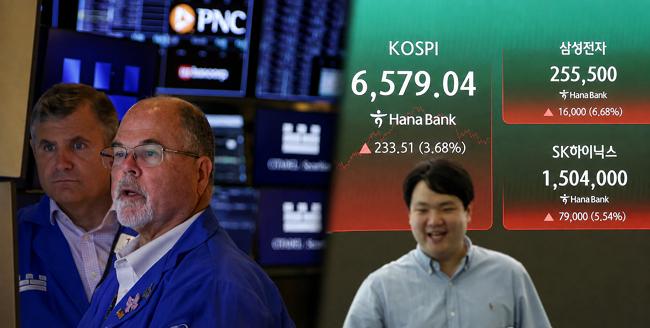 [Korea-US Data Lab] 3rd Week of August (18th–21st) Money Insight
In the U.S., rising long-term Treasury yields lowered the future cash value of tech stocks, while in Korea, shareholder returns from Samsung Electronics and SK Hynix drove a rebound in major semicondu
[Korea-US Data Lab] 3rd Week of August (18th–21st) Money Insight
In the U.S., rising long-term Treasury yields lowered the future cash value of tech stocks, while in Korea, shareholder returns from Samsung Electronics and SK Hynix drove a rebound in major semicondu
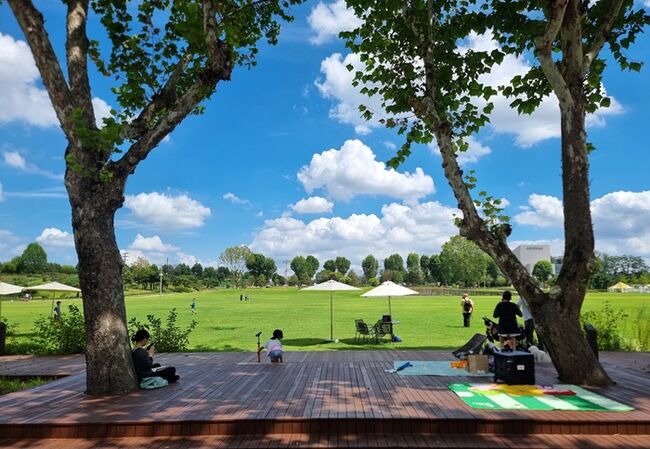 [Trending Travel Destinations] Unlocking a Century of Secrets: ‘Yongsan Children’s Garden’
Family visitors resting in the shade on a picnic mat. [Photo by Reporter Yohi Lim]Throughout history, the wealthy in both the East and the West have enjoyed greenery by creating private gardens on vas
[Trending Travel Destinations] Unlocking a Century of Secrets: ‘Yongsan Children’s Garden’
Family visitors resting in the shade on a picnic mat. [Photo by Reporter Yohi Lim]Throughout history, the wealthy in both the East and the West have enjoyed greenery by creating private gardens on vas
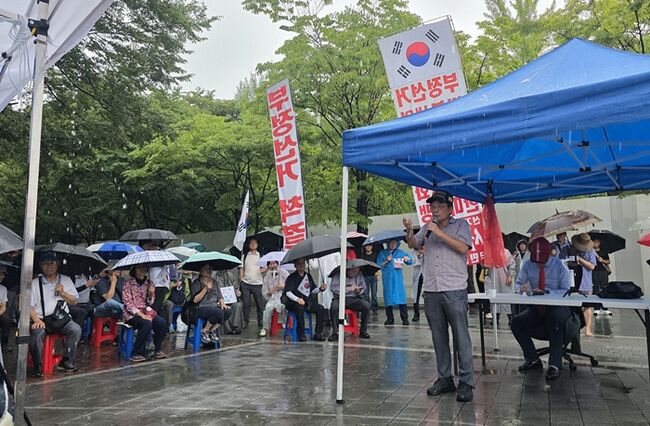 [Photo] Btooyun “We are recruiting 1,600 members for the Olympic Park Scientific Verification Team”… The rainy scenery of Olympic Park on the 22nd
On Saturday the 22nd, amid rainy weather at Olympic Park, the National Coalition for Election Fraud Struggle held a public forum on election integrity. They argued that the "Olympic Park Scientific Ve
[Photo] Btooyun “We are recruiting 1,600 members for the Olympic Park Scientific Verification Team”… The rainy scenery of Olympic Park on the 22nd
On Saturday the 22nd, amid rainy weather at Olympic Park, the National Coalition for Election Fraud Struggle held a public forum on election integrity. They argued that the "Olympic Park Scientific Ve
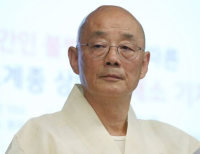
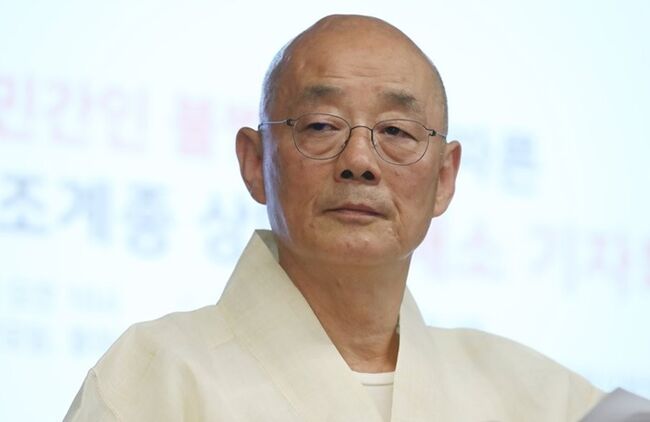 [Special Contribution: Songsan] The Life of a Political Monk Must Also Be Evaluated… What the Passing of Venerable Myeongjin Leaves Behind
Venerable Myeongjin, former head monk of Bongeunsa Temple, passed away on the 22nd. He was 76 years old and had been a monk for 52 years. [Yonhap News File Photo]Various narratives are emerging follow
[Special Contribution: Songsan] The Life of a Political Monk Must Also Be Evaluated… What the Passing of Venerable Myeongjin Leaves Behind
Venerable Myeongjin, former head monk of Bongeunsa Temple, passed away on the 22nd. He was 76 years old and had been a monk for 52 years. [Yonhap News File Photo]Various narratives are emerging follow
 [Video] North Korean ballistic missile filmed by a civilian in Goseong, Gangwon-do
 [Editorial Cartoon] A Draconian Law That Undermines Freedom of Expression

 List
List