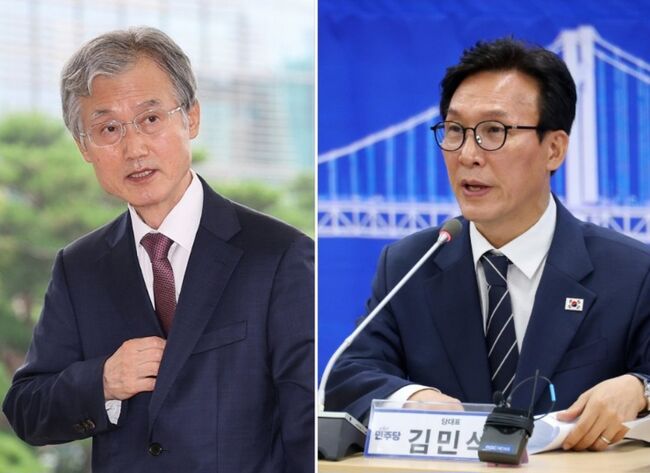
Noh Kyung-pil, Minister of National Court Administration, attends a plenary session of the Legislation and Judiciary Committee at the National Assembly on the 19th, answering lawmakers' questions regarding Chief Justice Cho Hee-dae’s process of recommending Supreme Court Justices. [Photo=Yonhap News]
Noh Kyung-pil, Minister of National Court Administration, has once again stood at the boundary of presidential power. Following his ruling last month as a Supreme Court Justice that narrowly interpreted the scope of the President's immunity from prosecution, he has now drawn a line as the second-in-command of the judiciary, asserting that the President's power to appoint Supreme Court Justices cannot replace the Chief Justice’s authority to nominate them.
When Chief Justice Cho Hee-dae formally submitted a written recommendation for Daegu District Court senior judge Son Bong-ki and Seoul High Court senior judge Kim Sung-soo as new Supreme Court justice candidates on the 18th, the ruling party protested, labeling it a "presidential passing." Calls for his resignation and impeachment even emerged.
However, the explanation given by Noh Kyung-pil when he appeared before the Legislation and Judiciary Committee the following day painted a different picture than the one suggested by the ruling party. He stated that Cho had requested a meeting with President Lee Jae-myung but was not granted the opportunity, leading to the decision to proceed with a written recommendation after consultations with the Presidential Office's Office of the Senior Secretary for Civil Affairs.
"A meeting was requested, but there was no opportunity"
When asked at the Judiciary Committee on the 19th whether Cho had requested a meeting with the President before the written recommendation, Noh replied, "He requested it, but it did not happen." Regarding the timing of the request, he added, "I told them about it even before that."
He also explained that the written recommendation method was not unilaterally decided by the Supreme Court. He revealed that the idea of a written recommendation arose during discussions with the Presidential Office's Office of the Senior Secretary for Civil Affairs, stating, "We agreed on the method of written recommendation in consultation with the Senior Secretary for Civil Affairs."
The explanation is that while the President and the Chief Justice typically meet to discuss candidates before submitting an official recommendation to the Ministry of Personnel Management, they were not given the opportunity to meet this time, making the written recommendation the final remaining option.
Noh said, "Normally, the two meet and reach an agreement before sending it in writing, but because they were not given the chance to reach an agreement, it was the only remaining method." When pressed on the truthfulness of his response, he asserted, "I am not lying."
This was not an anonymous explanation from a court official. It was public testimony given by the Minister of National Court Administration, who is fully aware of the personnel negotiation process with the Presidential Office, held accountable before the National Assembly.
If Noh’s account is accurate, the claim of "presidential passing"—that Cho notified the candidates by surprise without any consultation with the Presidential Office—is inconsistent with the facts. The explanation implies that it was not Cho who avoided the meeting, but the Presidential Office that failed to arrange it, and that the method of written submission was also consulted with the Office of the Senior Secretary for Civil Affairs.
However, agreeing on the method of written submission is distinct from agreeing on the nomination of Son Bong-ki. It appears that while both sides discussed the form of the recommendation, they ultimately failed to reach an agreement on the candidates themselves.
Now, it is the Presidential Office's turn to clarify when they received the Chief Justice’s meeting request, why the meeting with Lee Jae-myung did not materialize, and the extent to which the Office of the Senior Secretary for Civil Affairs agreed to the written recommendation.
"The Chief Justice has the right to nominate; the President has the right to appoint"
Noh also clarified the relationship of authority surrounding Supreme Court justice appointments. He responded to the effect that the Chief Justice may nominate candidates based on his own judgment, while the President exercises the power of appointment granted by the Constitution.
Article 104, Paragraph 2 of the Constitution stipulates, "Justices of the Supreme Court shall be appointed by the President upon the recommendation of the Chief Justice and with the consent of the National Assembly." This structure is designed to prevent any single institution from monopolizing the appointment of Supreme Court justices by dividing the authority between the Chief Justice’s nomination, the National Assembly’s consent, and the President’s appointment.
However, if the Chief Justice must nominate candidates desired by the President, the power of nomination is reduced to a formal procedure for delivering the President's personnel choices. This could lead to a result where the President effectively controls everything from candidate selection to parliamentary consent from the majority party and final appointment.
The ruling party claims that Cho challenged the President's power of appointment. Conversely, one must ask whether the President's power of appointment also includes the Chief Justice's power to select and nominate candidates. If the President must personally select even Supreme Court justices, it is difficult to avoid the counterargument that this is a demand for imperial presidential power.
Who is Kim Min-ki, the candidate desired by the Presidential Office?
At the center of this conflict is the appointment of a successor to former Supreme Court Justice Noh Tae-ak. The Recommendation Committee for Supreme Court Justices recommended four candidates last January: judges Kim Min-ki, Park Soon-young, Son Bong-ki, and Yoon Sung-sik.
It is known that the Presidential Office preferred Seoul High Court judge Kim Min-ki. However, after about seven months of negotiations, Cho recommended Son Bong-ki instead of Kim.
Kim Min-ki is a former member of the "Our Law Research Society." His spouse is Oh Young-jun, a Constitutional Court Justice appointed by President Lee Jae-myung. Oh Young-jun was also active in the Our Law Research Society. Had Kim become a Supreme Court justice, it would have created a situation where the spouse of a Constitutional Court justice appointed by the Lee Jae-myung administration would be appointed as the first Supreme Court justice of the Lee Jae-myung administration.
With the introduction of the system for constitutional complaints against court rulings, a structure could also arise where the Constitutional Court, where the husband Oh Young-jun serves, would re-examine Supreme Court rulings in which Kim Min-ki participated. Even if Justice Oh recused himself from individual cases, the controversy over fairness due to a married couple serving simultaneously in the two highest judicial institutions—the Supreme Court and the Constitutional Court—would remain.
It has not been confirmed that Cho did not nominate Kim because of his background in the Our Law Research Society or his spousal relationship. However, Kim's profile, the process by which the Presidential Office demanded him, and the conflict-of-interest concerns raised by the constitutional complaint system provide insight into the nature of this appointment standoff.
Noh Kyung-pil appointed the day after the July 9 ruling
The weight of Noh’s responses at the Judiciary Committee is also connected to his recent judicial history.
On July 9, the Third Division of the Supreme Court, in the case 2026Do6500 involving former President Yoon Suk-yeol, defined "prosecution" in Article 84 of the Constitution as the act of filing a public charge for a criminal case. It also presented the principle that the President's immunity from prosecution is an exception to the principle of equality before the law and therefore its scope should not be interpreted too broadly.
Supreme Court Justices Lee Heung-goo, Lee Sook-yeon, and Noh Kyung-pil participated in this ruling. Supreme Court Justice Oh Seok-jeon recused himself, and no separate or dissenting opinions were indicated in the published ruling.
The direct issue of the ruling was the scope of possible investigation into an incumbent President. It did not directly judge that the trial of a president indicted before taking office could continue. However, by defining prosecution as the filing of public charges and cautioning against broad interpretations of immunity, the Supreme Court created new legal circumstances for re-evaluating Lee Jae-myung’s suspended criminal trial.
Cho Hee-dae announced the appointment of Noh Kyung-pil as the new Minister of National Court Administration on July 10, the day after the ruling. Noh took office on July 14. A Supreme Court Justice who participated in a ruling defining the scope of presidential immunity became the second-in-command of the judiciary five days later.
About a month later, Noh Kyung-pil distinguished between the President’s power to appoint and the Chief Justice’s power to nominate at the National Assembly. While Cho remained silent, Noh disclosed the requests for presidential meetings and the negotiation process with the Presidential Office, absorbing the ruling party’s "passing" offensive.
The President's constitutional authority must be respected. However, if immunity is to block investigations and existing trials, and the power of appointment is to dominate the Chief Justice’s power to nominate candidates, one cannot help but ask where the boundaries of presidential power lie.
This turmoil is not about the question of a face-to-face meeting versus a written one. The core of the matter is whether the President's power of appointment should be respected, or whether the President should personally select Supreme Court justice candidates. The Presidential Office and the Supreme Court have begun to collide head-on over the boundaries of presidential power.

 [Statement by the Seo-beo-kka Korea Military Academy Patriotic Comrades Association] ㊷ We Condemn the Ruling Party Leader's Intimidation and Mockery of Supreme Court Justices, and Acts of Destroying the Judiciary
Chief Justice of the Supreme Court Cho Hee-de (left) and Democratic Party of Korea Leader Lee Jae-myung [Photo=Yonhap News]We are witnessing an unprecedented situation where the newly inaugurated lead
[Statement by the Seo-beo-kka Korea Military Academy Patriotic Comrades Association] ㊷ We Condemn the Ruling Party Leader's Intimidation and Mockery of Supreme Court Justices, and Acts of Destroying the Judiciary
Chief Justice of the Supreme Court Cho Hee-de (left) and Democratic Party of Korea Leader Lee Jae-myung [Photo=Yonhap News]We are witnessing an unprecedented situation where the newly inaugurated lead
 Criticizing Trump, yet… Europe also backsliding on climate change response
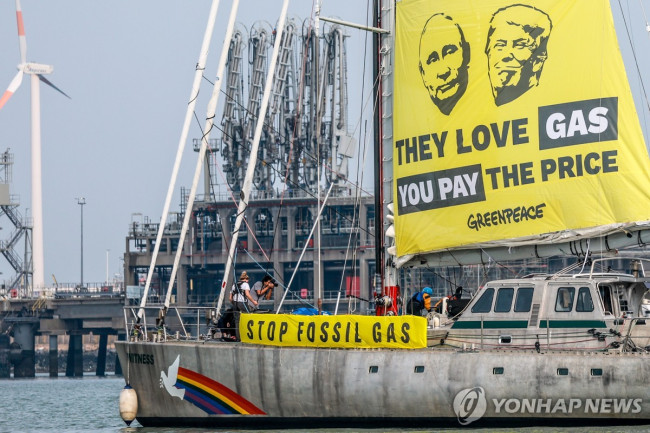
Greenpeace, an environmental organization calling for renewable energy policies [EPA=Yonhap News file photo]European nations, which previously criticized U.S. President Donald Trump's rollback of clim
Criticizing Trump, yet… Europe also backsliding on climate change response
Greenpeace, an environmental organization calling for renewable energy policies [EPA=Yonhap News file photo]European nations, which previously criticized U.S. President Donald Trump's rollback of clim
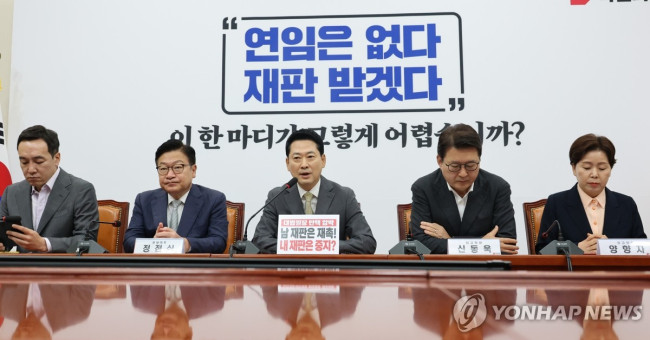 PPP on Nomination of 'Ruling Party-Recommended' Special Inspector Candidate: "We Will Rigorously Verify Them at the Hearing"
People Power Party representative Jang Dong-hyeok is speaking at the Supreme Council meeting held at the National Assembly on the 24th. [Yonhap News] On the 24th, the People Power Party stated th
PPP on Nomination of 'Ruling Party-Recommended' Special Inspector Candidate: "We Will Rigorously Verify Them at the Hearing"
People Power Party representative Jang Dong-hyeok is speaking at the Supreme Council meeting held at the National Assembly on the 24th. [Yonhap News] On the 24th, the People Power Party stated th
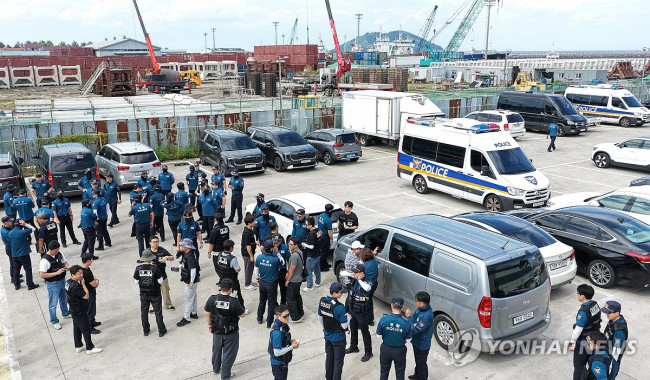 [Comprehensive] Another body of a missing person discovered in Jeju… 4th in three days
Police conducting an intensive search for missing persons [Yonhap News file photo]Recently, bodies suspected to be those of missing persons have been discovered in succession on Jeju Island. This mark
[Comprehensive] Another body of a missing person discovered in Jeju… 4th in three days
Police conducting an intensive search for missing persons [Yonhap News file photo]Recently, bodies suspected to be those of missing persons have been discovered in succession on Jeju Island. This mark
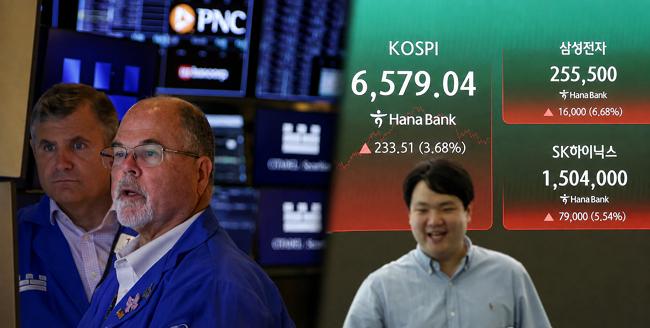 [Korea-US Data Lab] 3rd Week of August (18th–21st) Money Insight
In the U.S., rising long-term Treasury yields lowered the future cash value of tech stocks, while in Korea, shareholder returns from Samsung Electronics and SK Hynix drove a rebound in major semicondu
[Korea-US Data Lab] 3rd Week of August (18th–21st) Money Insight
In the U.S., rising long-term Treasury yields lowered the future cash value of tech stocks, while in Korea, shareholder returns from Samsung Electronics and SK Hynix drove a rebound in major semicondu
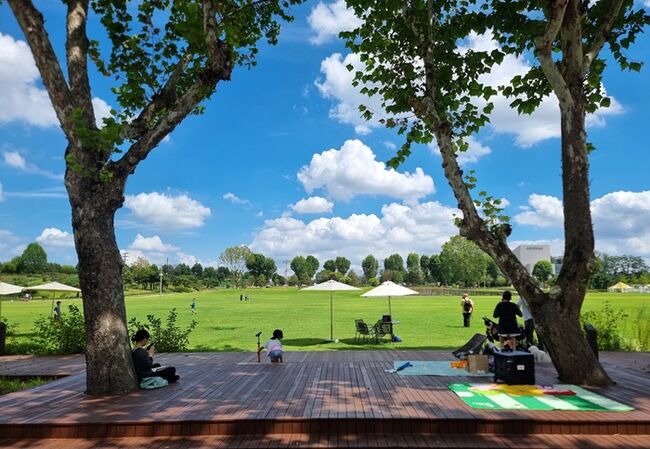 [Trending Travel Destinations] Unlocking a Century of Secrets: ‘Yongsan Children’s Garden’
Family visitors resting in the shade on a picnic mat. [Photo by Reporter Yohi Lim]Throughout history, the wealthy in both the East and the West have enjoyed greenery by creating private gardens on vas
[Trending Travel Destinations] Unlocking a Century of Secrets: ‘Yongsan Children’s Garden’
Family visitors resting in the shade on a picnic mat. [Photo by Reporter Yohi Lim]Throughout history, the wealthy in both the East and the West have enjoyed greenery by creating private gardens on vas
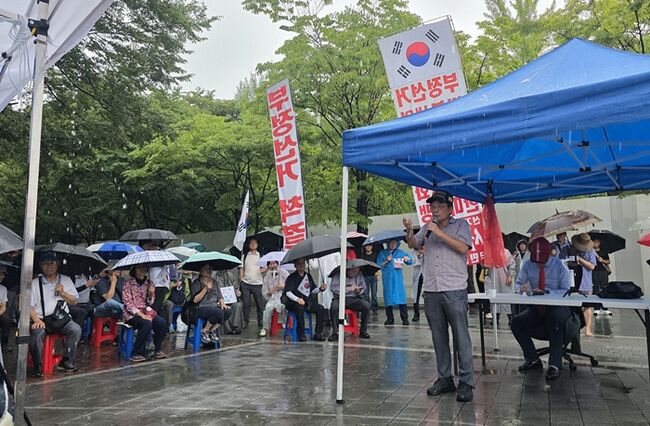 [Photo] Btooyun “We are recruiting 1,600 members for the Olympic Park Scientific Verification Team”… The rainy scenery of Olympic Park on the 22nd
On Saturday the 22nd, amid rainy weather at Olympic Park, the National Coalition for Election Fraud Struggle held a public forum on election integrity. They argued that the "Olympic Park Scientific Ve
[Photo] Btooyun “We are recruiting 1,600 members for the Olympic Park Scientific Verification Team”… The rainy scenery of Olympic Park on the 22nd
On Saturday the 22nd, amid rainy weather at Olympic Park, the National Coalition for Election Fraud Struggle held a public forum on election integrity. They argued that the "Olympic Park Scientific Ve
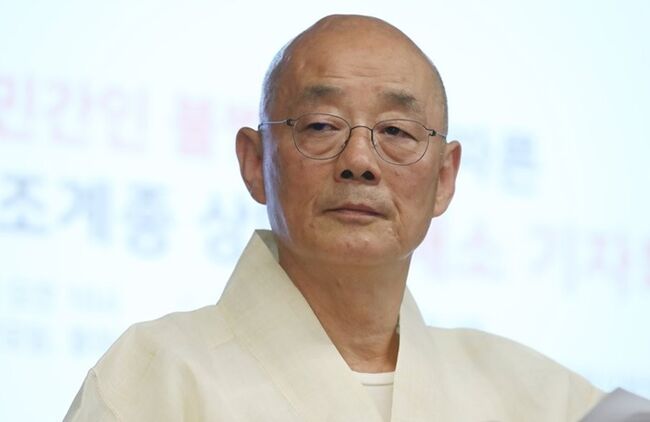 [Special Contribution: Songsan] The Life of a Political Monk Must Also Be Evaluated… What the Passing of Venerable Myeongjin Leaves Behind
Venerable Myeongjin, former head monk of Bongeunsa Temple, passed away on the 22nd. He was 76 years old and had been a monk for 52 years. [Yonhap News File Photo]Various narratives are emerging follow
[Special Contribution: Songsan] The Life of a Political Monk Must Also Be Evaluated… What the Passing of Venerable Myeongjin Leaves Behind
Venerable Myeongjin, former head monk of Bongeunsa Temple, passed away on the 22nd. He was 76 years old and had been a monk for 52 years. [Yonhap News File Photo]Various narratives are emerging follow
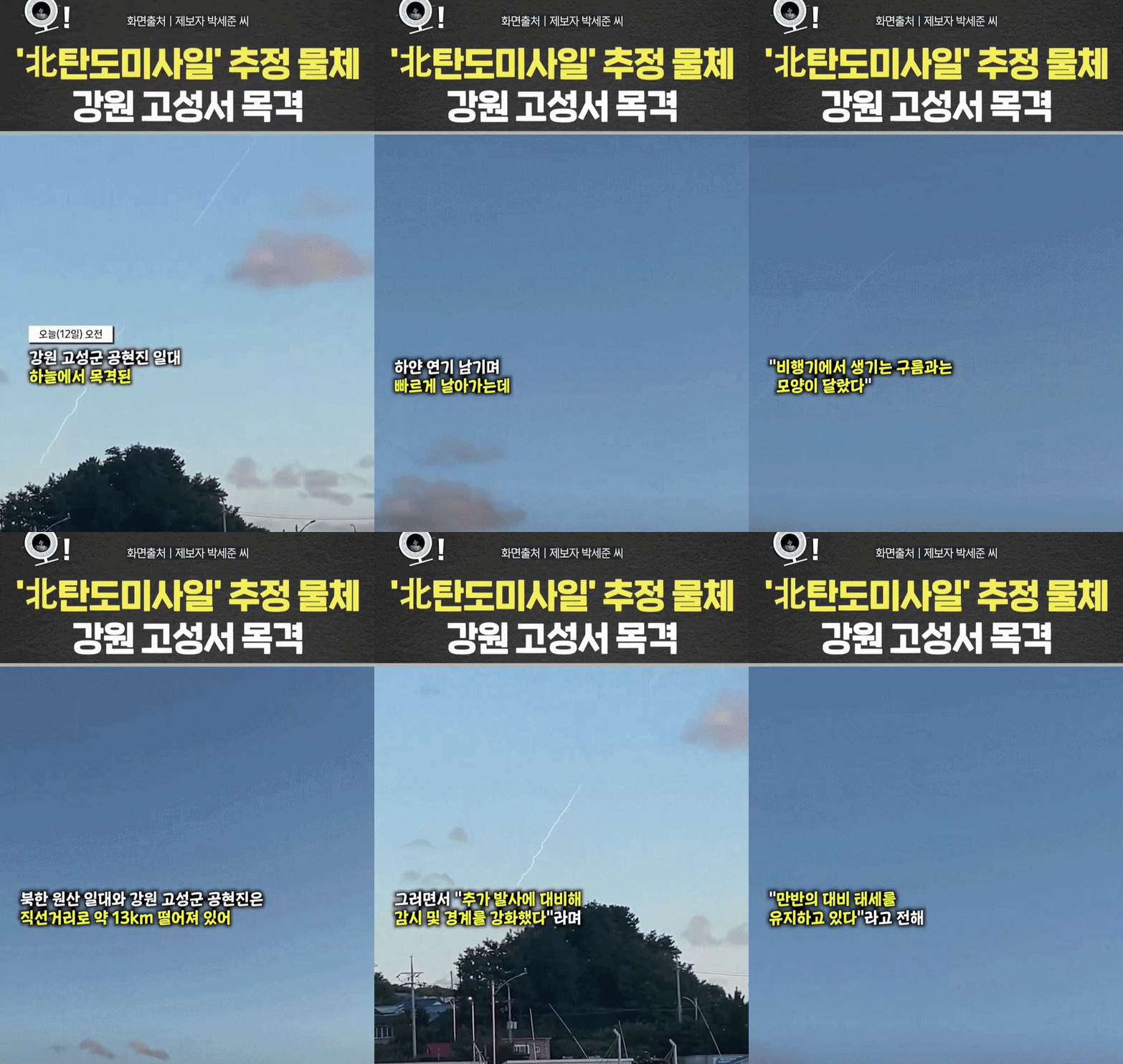 [Video] North Korean ballistic missile filmed by a civilian in Goseong, Gangwon-do
 [Editorial Cartoon] A Draconian Law That Undermines Freedom of Expression

 List
List