Han Dong-hoon's Expulsion, What Impact Will It Have on the 'Local Elections'? We Asked ChatGPT. [Photo=Yonhap News]
ChatGPT is a research assistant. The conclusion varies depending on the "quality of the prompt."
Nowadays, the phrase "Han Dong-hoon's expulsion means defeat in the local elections" is too easily circulated. However, this framing is the most common error easily made in politics. It's a simplification that connects a single variable (Han Dong-hoon) to election results (local elections) on a 1:1 basis. Real politics doesn't work that way.
Rather, using tools like ChatGPT makes the answer clear.
If you pre-determine the conclusion "We will lose the local elections because Han Dong-hoon was expelled" and ask the question, you will get an answer that finds logic to support that conclusion.
Conversely, if you instruct it to "judge by comprehensively considering various angles, data, and even political engineering mechanisms," a different conclusion emerges.
The conclusion was clear.
The answer was that Han Dong-hoon's expulsion is not a 'cause' of defeat in the local elections, but a 'signal of systemic transition (reorganization of power structure).' This is because the success or failure of the local elections depends on how that signal is connected to 'expansion, administration, and candidate competitiveness.'
Han Dong-hoon's Expulsion Can Be an Opportunity for Systemic Transition
The artificial intelligence (AI) assistant also provided specific reasons how Han Dong-hoon's expulsion could be an opportunity for systemic transition.
First, for local elections, 'mobilization and rallying' come before 'likability.' Local elections generally have low voter turnout, thus maximizing the efficiency of mobilization. What party leadership should avoid most in such elections is a "situation where their supporters do not go to the polls."
The immediate effects of Han Dong-hoon's expulsion are as follows:
△ A "winner's signal" that the center of party power is confirmed as Jang Dong-hyuk.
△ A perception that they are not "conservatives who just talk tough" but "conservatives who actually make decisions."
△ The paradoxical rallying effect where attacks from the legacy group paradoxically bind supporters to the "party leader who must be protected."
In other words, expulsion does not automatically guarantee "expansion to the center," but it is likely to create "strengths" rather than "weaknesses" in terms of mobilizing supporters.
Second, 'not expelling him' might have been more dangerous.
Anyone with a little political experience knows this. What ruins elections is not external attacks, but civil war. The structural risks that would have occurred if Han Dong-hoon had been kept are as follows:
△ The constant "pro-Han vs. anti-Han civil war" during the local election nomination process.
△ Message fragmentation, evasion of responsibility, and candidates playing it safe.
△ Ultimately, the local election frame being fixed as "internal strife" rather than "evaluation of administration."
In this case, defeat would not be a "defeat with a good showing," but a defeat without even being able to fight.
Expulsion has at least removed the fuse of this "civil war structure" first.
Third, as fatigue from the 'special prosecutor/rebellion frame' accumulates, the game changes.
One of the core sentiments in Korean politics today is "fatigue from extreme conflict." Whether it's a special prosecutor or a rebellion frame, as time goes on, some voters (especially the less engaged) shift to thinking, "Another political squabble?"
There are two important points here. One is the backlash that occurs when the special prosecutor does not meet all expectations (or when scenes of failure to build a conviction accumulate). Another is the phenomenon where continued political conflict turns into "political aversion," increasing the desire for strong leadership, resolution, and normalization.
In this structure, if Jang Dong-hyuk remains solely in the 'victim frame,' moderates will disengage. However, if the fatigue from political revenge and political investigations is reframed as 'normalization' and 'administration,' there is room to absorb expectations.
Time for 'Design' for Jang Dong-hyuk
Fourth, as the special prosecutor situation subsides, 'high-caliber cards' will revive.
The reason why high-caliber figures in the conservative camp have been subdued until now is not a lack of ability but the risk environment. In the context of a special prosecutor, simply being on the 'same screen' was a burden.
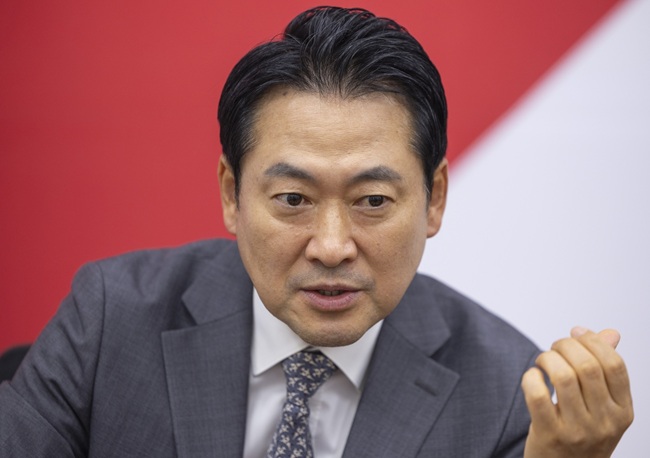 After Han Dong-hoon's Expulsion, What is the Design Blueprint for 'Rallying and Expansion' Under the Jang Dong-hyuk System? [Photo=Yonhap News]
However, this changes as the situation shifts. If the Jang Dong-hyuk system has already solidified the party's center, figures like Won Hee-ryong and Ahn Cheol-soo become 'cooperation cards' rather than 'competitors.'
When the center is weak, high-caliber figures are a threat, but when the center is strong, they are a resource.
The same applies to Busan (PK). If competitive dynamics are formed among figures like Park Hyeong-joon and Park Soo-young, it itself amplifies the regional news volume and boosts conservative energy. Local elections are shaped by this kind of 'regional enthusiasm' creating the overall atmosphere.
Fifth, the "Jang Dong-hyuk 22%" indicator is a 'direction,' not a result.
The recent trend of Jang Dong-hyuk appearing at the top in presidential candidate preference polls indicates, at least, a signal that the 'direction of power' is changing. However, this figure does not automatically guarantee victory in the local elections.
Ultimately, local elections are decided by four factors: △ how stably nominations are managed, △ whether candidates are competitive, △ how moderate fatigue is managed, and △ whether mobilization is converted into actual votes.
In conclusion, it is premature to definitively state that "Han Dong-hoon's expulsion means defeat in the local elections."
Rather, synthesizing the trends so far, expulsion has not only left disadvantages for Jang Dong-hyuk, but has also created at least three "advantageous structures": △ a signal for supporter rallying and mobilization, △ confirmation of the party's power center (leverage for nominations and recruitment), and △ space to deploy 'administration and expansion cards' after the special prosecutor phase.
Therefore, the issue is not "whether to expel or not." It is about how to translate the post-expulsion system into 'expansion, administration, and candidate competitiveness.'
And this is precisely why ChatGPT should be used. ChatGPT is not a political prophet but a research assistant. Simplifying the question leads to a simple answer, and broadening the angles and data leads to an answer closer to reality.
Now, only one question remains.
"Who will design the blueprint for 'administration, expansion, and talent' to convert the mobilization created by the expulsion into victory in the local elections?"
From here on, it is a matter of design and execution, not luck.

◆ Professor Shim Gyu-jin
Professor of Digital Media at IE University in Spain. He previously served as a policy advisor to the Ministry of National Defense and head of the Data Lab at the Yeouido Institute. He also worked as a full-time professor at the University of Melbourne in Australia and an assistant professor at Singapore Management University. His books include 'K-Drama Yoon Seok-yeol' and 'Hyper Gender.'

 [Statement by the Seo-beo-kka Korea Military Academy Save-the-Nation Comrades Association] ㉛ Recount the Votes Publicly, as the Previous Recount Concealed Election Fraud
Tongyeong Mayoral Election Recount [Photo=Yonhap News]South Korea's liberal democracy is dying. The National Election Commission (NEC) and the judiciary, which have plummeted into criminal syndicates
[Statement by the Seo-beo-kka Korea Military Academy Save-the-Nation Comrades Association] ㉛ Recount the Votes Publicly, as the Previous Recount Concealed Election Fraud
Tongyeong Mayoral Election Recount [Photo=Yonhap News]South Korea's liberal democracy is dying. The National Election Commission (NEC) and the judiciary, which have plummeted into criminal syndicates
 What is the significance of the "Trump 2028" red hats that keep making a comeback?
It is noteworthy that President Donald Trump is "intentionally" fueling controversy over whether he can actually run in the 2028 presidential election, even though it is "highly likely he is seriously
What is the significance of the "Trump 2028" red hats that keep making a comeback?
It is noteworthy that President Donald Trump is "intentionally" fueling controversy over whether he can actually run in the 2028 presidential election, even though it is "highly likely he is seriously
 Jin Cummings: "North Korea says it will increase the number of spies, so what is the government doing?"
U.S. political columnist Gene Cummings has publicly questioned the South Korean government, asking, "North Korea is announcing plans to increase its number of spies, yet what is the South Korean
Jin Cummings: "North Korea says it will increase the number of spies, so what is the government doing?"
U.S. political columnist Gene Cummings has publicly questioned the South Korean government, asking, "North Korea is announcing plans to increase its number of spies, yet what is the South Korean
 Attorney Do Tae-woo: “Discrepancies in Voter Count and Improper Sealing Confirmed in Tongyeong Mayoral Recount… Official Request for Additional Verification Submitted to Gyeongnam Election Commission”
A bundle of mail-in early voting ballots captured by lawyer Do Tae-woo at the Tongyeong mayoral election recount site. A clear solid line, raising suspicions of election fraud, is visible on the side
Attorney Do Tae-woo: “Discrepancies in Voter Count and Improper Sealing Confirmed in Tongyeong Mayoral Recount… Official Request for Additional Verification Submitted to Gyeongnam Election Commission”
A bundle of mail-in early voting ballots captured by lawyer Do Tae-woo at the Tongyeong mayoral election recount site. A clear solid line, raising suspicions of election fraud, is visible on the side
 Stock Market Crash 'Black Tuesday'… KOSPI down 10.8%, KOSDAQ down 7.7%
The KOSPI fell by more than 5% in early trading on the 28th, triggering a sell-side sidecar.On the 28th, the KOSPI plunged by more than 10%.Due to the sharp decline, a sell-side sidecar—a temporary
Stock Market Crash 'Black Tuesday'… KOSPI down 10.8%, KOSDAQ down 7.7%
The KOSPI fell by more than 5% in early trading on the 28th, triggering a sell-side sidecar.On the 28th, the KOSPI plunged by more than 10%.Due to the sharp decline, a sell-side sidecar—a temporary
 [World Heritage Committee] 25 New World Heritage Sites Inscribed in Busan… South Korea Successfully Expands 'Getbol' Listing
The Chairperson of the World Heritage Committee speaks at the plenary session of the 48th session of the World Heritage Committee, held at BEXCO in Busan on the 20th. [Photo: Yonhap News]A total of 25
[World Heritage Committee] 25 New World Heritage Sites Inscribed in Busan… South Korea Successfully Expands 'Getbol' Listing
The Chairperson of the World Heritage Committee speaks at the plenary session of the 48th session of the World Heritage Committee, held at BEXCO in Busan on the 20th. [Photo: Yonhap News]A total of 25
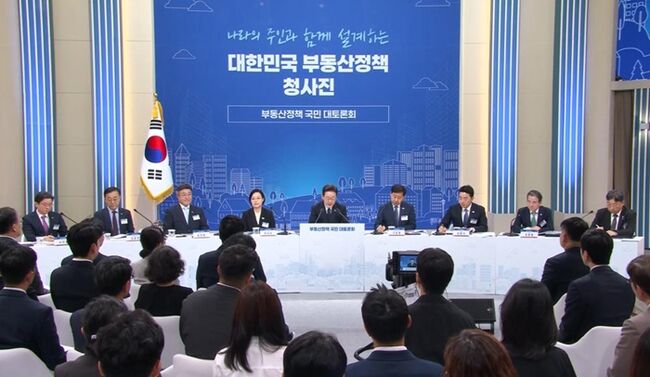 [Liberal Democratic Party Statement] Calling it a Grand Real Estate Debate… It Was Nothing More Than a Private Party Among Themselves
The 'National Grand Debate on Real Estate Policy' held on July 23rd and 27th. [Photo=Yonhap News]The 'National Grand Debate on Real Estate Policy,' hosted by the Lee Jae-myung administration under the
[Liberal Democratic Party Statement] Calling it a Grand Real Estate Debate… It Was Nothing More Than a Private Party Among Themselves
The 'National Grand Debate on Real Estate Policy' held on July 23rd and 27th. [Photo=Yonhap News]The 'National Grand Debate on Real Estate Policy,' hosted by the Lee Jae-myung administration under the
 [Photo] Evidence of Election Fraud Flooding U.S. Media… Trump Had 2.7 Million Votes Stolen
 [Video] U.S. Semiquincentennial Air Show... 'Art in the Sky' streaks across New York
 [Editorial Cartoon] A Draconian Law That Undermines Freedom of Expression

 List
List