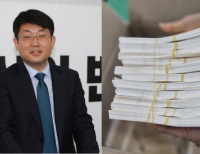
“The National Assembly of the Republic of Korea has expanded its own privileges to the extent that it is called a ‘Parliamentary Kingdom.’ As of 2026, there are as many as 184 benefits for members of the National Assembly.” [Photo=Hankook Ilbo]
The author recently served as co-representative of the 'National Campaign for the Abolition of Privileges' and, along with many comrades such as the late Representative Jang Ki-pyo, has made significant efforts to abolish privileges.
However, in the process, the wall of vested interests I experienced was thicker than imagined, and I keenly realized that change is by no means easy.
The Republic of Korea stands at a crossroads. Will it regress into a 'new class society' where those in power greedily generate and protect privileges? Or will it exercise national sovereignty to rectify this abnormality?
Correcting the reality where National Assembly members and high-ranking public officials, who are defined as public servants by the Constitution, enjoy overwhelming privileges is a task that can no longer be postponed for the sake of true national harmony and the construction of a free democratic state.
The Dire Reality of South Korea's Privileged Class
Article 11 of our Constitution stipulates, "All citizens shall be equal before the law, and there shall be no discrimination in political, social, or economic aspects based on sex, religion, or social status." However, what is the current reality?
The greed and corruption structure at the very top of South Korean society are at a lamentable level. A 'new class society' is becoming entrenched, where power forms an interest cartel, and a minority monopolizes honor, money, and power.
A prime example is the 'Daejang-dong 5 billion won club,' which was the epitome of greed, where Supreme Court justices, special prosecutors, and high-ranking members of both ruling and opposition parties were promised huge sums in exchange for protecting a criminal organization.
In particular, the National Assembly has expanded its privileges to the extent that it is called a 'Parliamentary Kingdom.' As of 2026, there are as many as 184 benefits for members of the National Assembly.
In addition to an annual salary of approximately 160 million won (around 13-14 million won per month), they receive an additional 13-14 million won per month under various titles such as general allowances, legislative activity expenses, special activity expenses, and holiday bonuses. This alone amounts to 300-350 million won annually. Furthermore, they receive benefits such as free use of transportation and convenience facilities.
And members of the National Assembly are granted privileges such as immunity from arrest and freedom of speech, which are unimaginable to ordinary citizens. The number of aides, which was initially 1-3 people, has increased to 9, and the office space for members has also continuously expanded.
This is not all. Cartels colluding with political power are deeply embedded in various aspects of society, including the legal, education, environment, media, and construction sectors. The malady known as 'Jeon-gwan Ye-u' (post-retirement favors) solidifies a winner-take-all structure, creating a sick society where comeback is impossible for those who lose.
Political Power's Responsibility, as Seen in the Swedish Case
We must learn from the case of Sweden. Sweden is wary of parliamentary salaries becoming economic incentives. They are so strict about the use of public funds that even family members of members of parliament from provincial areas must bear their own expenses to stay in state-supported apartments.
In contrast, in Korea, political parties receive enormous state subsidies by leveraging their nomination rights, accelerating the 'welfare justification' for politicians.
The benefits of election cost reimbursement and donation systems (150 million won annually, 300 million won during elections) are only given to incumbent members, hindering the entry of fresh political newcomers.
Furthermore, the exclusive nomination structure that forces loyalty only to the party leader and the nomination rights for local government heads are fundamental causes that prevent the breaking of the chain of corruption.
High-Ranking Public Officials and the Legal Profession's 'The Rich Get Richer, the Poor Get Poorer'
Although public officials should be servants of the people, the desire for promotion and personnel corruption still persist.
In particular, the practice of taking up positions as consultants at large law firms or major corporations after retiring from high-ranking posts and wielding immense influence is a typical example of 'conflict of interest.' How would their billions in legal fees and high salaries appear to ordinary citizens living on a national pension of around 1 million won per month?
Even judges, who should be the bulwark of social justice, allow the stigma of 'guilty for the rich, innocent for the poor' to persist under the name of Jeon-gwan Ye-u.
Unlike Japan, where the issue of Jeon-gwan Ye-u rarely arises due to a mandatory retirement age even after retirement, in Korea, it has become a practice to resign and open a law practice, accumulating wealth in a short period. This is why I fully agree with the argument that a cap should be placed on criminal case legal fees.
Proposals for Abolishing Privileges: The People Must Remove the Poisonous Clauses
The abolition of privileges is impossible without political reform.
First, to break the structure that is solely focused on constituencies and re-election rather than the nation as a whole, the number of National Assembly members should be reduced from 300 to 200.
Second, the 'self-privileges' where members of parliament decide their own salaries and privileges must be fundamentally blocked.
To this end, a 'Social Committee on Parliamentary Benefits' (tentative name), composed of external experts and citizens, should be established to build an objective consensus system. Models such as Germany's Hartz Commission or the Netherlands' Wassenaar Agreement would serve as good references.
Third, the system of recall, through which citizens can directly check power, should be introduced to remove underqualified politicians.
Privileges are like a sea without salt. Just as a sea without salt rots, unchecked privileges corrupt the nation. All citizens must become a vigilant watchdog to dismantle the privilege cartel. It is time for all of us to constantly play the role of 'salt' for a fair and just Republic of Korea.
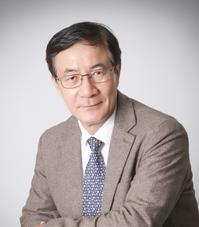
◆ Dr. Shin Dong-chun
Ph.D. in Public Administration, Representative of the National United Council for Freedom and Unification. After passing the 21st Higher Civil Service Examination, he had an active career including public service, CEO of a company, university professor, media contributor, author, and president of the Global Aerospace Industry Association.

 [Statement by the Seo-beo-kka Korea Military Academy Save-the-Nation Comrades Association] ㉛ Recount the Votes Publicly, as the Previous Recount Concealed Election Fraud
Tongyeong Mayoral Election Recount [Photo=Yonhap News]South Korea's liberal democracy is dying. The National Election Commission (NEC) and the judiciary, which have plummeted into criminal syndicates
[Statement by the Seo-beo-kka Korea Military Academy Save-the-Nation Comrades Association] ㉛ Recount the Votes Publicly, as the Previous Recount Concealed Election Fraud
Tongyeong Mayoral Election Recount [Photo=Yonhap News]South Korea's liberal democracy is dying. The National Election Commission (NEC) and the judiciary, which have plummeted into criminal syndicates
 What is the significance of the "Trump 2028" red hats that keep making a comeback?
It is noteworthy that President Donald Trump is "intentionally" fueling controversy over whether he can actually run in the 2028 presidential election, even though it is "highly likely he is seriously
What is the significance of the "Trump 2028" red hats that keep making a comeback?
It is noteworthy that President Donald Trump is "intentionally" fueling controversy over whether he can actually run in the 2028 presidential election, even though it is "highly likely he is seriously
 Jin Cummings: "North Korea says it will increase the number of spies, so what is the government doing?"
U.S. political columnist Gene Cummings has publicly questioned the South Korean government, asking, "North Korea is announcing plans to increase its number of spies, yet what is the South Korean
Jin Cummings: "North Korea says it will increase the number of spies, so what is the government doing?"
U.S. political columnist Gene Cummings has publicly questioned the South Korean government, asking, "North Korea is announcing plans to increase its number of spies, yet what is the South Korean
 Attorney Do Tae-woo: “Discrepancies in Voter Count and Improper Sealing Confirmed in Tongyeong Mayoral Recount… Official Request for Additional Verification Submitted to Gyeongnam Election Commission”
A bundle of mail-in early voting ballots captured by lawyer Do Tae-woo at the Tongyeong mayoral election recount site. A clear solid line, raising suspicions of election fraud, is visible on the side
Attorney Do Tae-woo: “Discrepancies in Voter Count and Improper Sealing Confirmed in Tongyeong Mayoral Recount… Official Request for Additional Verification Submitted to Gyeongnam Election Commission”
A bundle of mail-in early voting ballots captured by lawyer Do Tae-woo at the Tongyeong mayoral election recount site. A clear solid line, raising suspicions of election fraud, is visible on the side
 Stock Market Crash 'Black Tuesday'… KOSPI down 10.8%, KOSDAQ down 7.7%
The KOSPI fell by more than 5% in early trading on the 28th, triggering a sell-side sidecar.On the 28th, the KOSPI plunged by more than 10%.Due to the sharp decline, a sell-side sidecar—a temporary
Stock Market Crash 'Black Tuesday'… KOSPI down 10.8%, KOSDAQ down 7.7%
The KOSPI fell by more than 5% in early trading on the 28th, triggering a sell-side sidecar.On the 28th, the KOSPI plunged by more than 10%.Due to the sharp decline, a sell-side sidecar—a temporary
 [World Heritage Committee] 25 New World Heritage Sites Inscribed in Busan… South Korea Successfully Expands 'Getbol' Listing
The Chairperson of the World Heritage Committee speaks at the plenary session of the 48th session of the World Heritage Committee, held at BEXCO in Busan on the 20th. [Photo: Yonhap News]A total of 25
[World Heritage Committee] 25 New World Heritage Sites Inscribed in Busan… South Korea Successfully Expands 'Getbol' Listing
The Chairperson of the World Heritage Committee speaks at the plenary session of the 48th session of the World Heritage Committee, held at BEXCO in Busan on the 20th. [Photo: Yonhap News]A total of 25
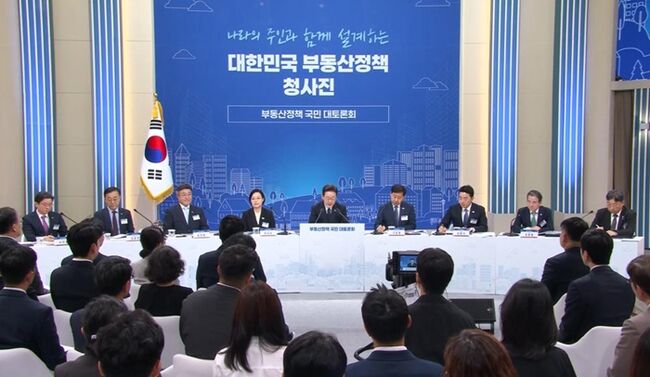 [Liberal Democratic Party Statement] Calling it a Grand Real Estate Debate… It Was Nothing More Than a Private Party Among Themselves
The 'National Grand Debate on Real Estate Policy' held on July 23rd and 27th. [Photo=Yonhap News]The 'National Grand Debate on Real Estate Policy,' hosted by the Lee Jae-myung administration under the
[Liberal Democratic Party Statement] Calling it a Grand Real Estate Debate… It Was Nothing More Than a Private Party Among Themselves
The 'National Grand Debate on Real Estate Policy' held on July 23rd and 27th. [Photo=Yonhap News]The 'National Grand Debate on Real Estate Policy,' hosted by the Lee Jae-myung administration under the
 [Photo] Evidence of Election Fraud Flooding U.S. Media… Trump Had 2.7 Million Votes Stolen
 [Video] U.S. Semiquincentennial Air Show... 'Art in the Sky' streaks across New York
 [Editorial Cartoon] A Draconian Law That Undermines Freedom of Expression

 List
List