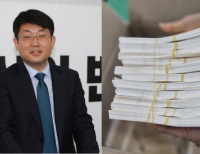
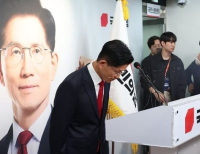
The first general election of the Second Republic, which for the first time in our nation's legislative history established a bicameral legislature, was held as a direct election on July 29, 1960. [Photo=Seoul Archives]
1960 was a year of fierce transition in the political history of the Republic of Korea. The exposure of election fraud by the Liberal Party regime on March 15 triggered nationwide resistance, resulting in large-scale protests by students and citizens on April 19.
This event ultimately led to the collapse of the Syngman Rhee administration. The presidential system crumbled, and the political sphere began to establish a new system.
In June of the same year, the National Assembly amended the constitution, significantly reducing presidential powers and adopting a parliamentary cabinet system. Following this, the 5th National Assembly general election was held on July 29, 1960, to elect the legislature that would form the Second Republic.
What Kind of Politics Would the People Choose After the Liberal Party?
This election was not merely a routine vote. It was the first nationwide political test held after the April 19 Revolution. Voters had to decide which political force they would choose after the dictatorship of the Liberal Party. The election was conducted by simultaneously electing members of the House of Representatives and the House of Councillors.
As the political landscape suddenly widened, a variety of political parties and forces emerged. In addition to the Democratic Party, remnants of the Liberal Party, and independent politicians, so-called "progressive" parties also openly participated in the election.
Progressive political forces had existed since the 1950s, but their political activities were severely restricted under the anti-communist system after the Korean War. However, after the political environment changed following the April 19 Revolution, they re-emerged into the public political arena.
Representative organizations included the Social Masses Party, the Korean Socialist Party, and the Progressive Comrades League. Figures such as Seo Sang-il, Yoon Gil-jung, Kim Sung-sook, and Jeong Hwa-am participated in the Social Masses Party, while the Korean Socialist Party was led by the Jeon Jin-han faction. They attempted to consolidate their political power by advocating for a more radical social reform line than the Democratic Party.
However, the election results were stark.
The results for the House of Representatives in the 1960 5th General Election were as follows. Out of a total of 233 seats, the Democratic Party secured 175 seats, achieving an overwhelming victory. Independents won 49 seats, and the Liberal Party won 2 seats.
The performance of the progressive parties was much more modest. The Social Masses Party won 4 seats, the Korean Socialist Party won 1 seat, and the Unification Party won 1 seat. The progressive bloc as a whole only secured about 6 seats.
The vote share showed a similar pattern. The Social Masses Party received approximately 6% of the vote, while the Korean Socialist Party received less than 1%. In the national political landscape, the progressive forces were clearly peripheral. Despite the significant upheaval in the political environment caused by the April 19 Revolution, the majority of voters did not choose radical political forces.
Radical Political Forces Lose the Election
This outcome can be explained by several reasons.
First, there was the memory of the Korean War. The election was held only seven years after the signing of the armistice agreement. The experience of the war remained deeply imprinted on society as a whole.
There was strong vigilance against communism, and radical political slogans were perceived as a source of anxiety for many voters. A widespread sentiment prioritizing political stability and national reconstruction prevailed throughout society.
Second, there was division within the progressive bloc. The progressive forces had been experiencing internal conflicts over unification issues even before the election. While there were moves to form an electoral alliance, each party opted to field its own candidates.
The Social Masses Party, the Korean Socialist Party, and the Progressive Comrades League became competitors. In some regions, candidates from the same progressive bloc ended up splitting votes. The political messages were also not unified. Under these conditions, it was difficult for them to grow into a nationwide political force.
Third, there was the political absorption power of the Democratic Party. The Democratic Party was the political beneficiary of the April 19 Revolution. It had a strong image as a force that had opposed the Liberal Party's dictatorship, and many voters expected regime change and political reform to be achieved through the Democratic Party.
As a result, the Democratic Party gained massive support instead of the radical political forces. Subsequently, the Second Republic government was launched with Yun Posun of the Democratic Party elected as president and Chang Myon as prime minister.
At this point, the progressive political forces were faced with an important choice: to analyze the election results and revise their strategies, or to interpret them in a different way.
In a normal democracy, election defeat serves as an opportunity to review policies and organization. This is followed by a process of analyzing why voters chose other parties and changing political strategies.
However, within the progressive bloc, a different interpretation emerged. It was an attempt to understand the election results within a distorted structure of real politics.
The argument was that true public opinion could not be properly revealed because Korean society was under an anti-communist system. The logic was also raised that it was difficult for radical political forces to grow because capital and power dominated the elections.
This perception influenced the subsequent political strategies of the progressive bloc.
In early 1961, a movement for "Great Unification" was promoted within the progressive bloc. It was an attempt to unite various progressive parties and political groups into a single political organization. As a result, the formation of the Unified Socialist Party began in January 1961. Various forces, including the Social Masses Party, the Korean Socialist Party, the Progressive Comrades League, and the Social Reformation Party, participated. This party advocated a line that combined national subjectivity with democratic socialism.
Another characteristic of the progressive bloc during this period was its media activities. A prime example was the Minjok Ilbo (National Newspaper). Minjok Ilbo was founded on February 13, 1961, with Cho Yong-soo as its publisher. This newspaper actively supported the progressive political line, advocating for unification and neutral diplomacy. It also gained a certain level of influence in student movements and intellectual circles.
However, these political movements did not last long.
Korean Society Does Not Want Radicals
On May 16, 1961, a military coup was carried out by reformist elements within the military. This event, led by officers such as Park Chung-hee and Kim Jong-pil, completely overturned the political order of Korea.
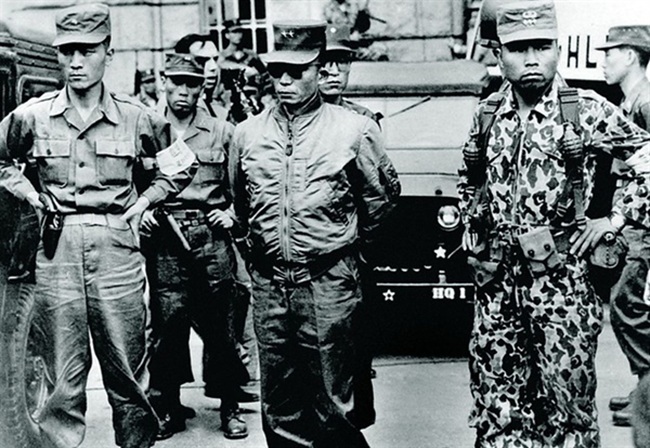 During the May 16 Revolution, Major General Park Chung-hee (center) is guarded by Major Park Jong-kyu (left) and Captain Cha Ji-chul (right). [Photo=Seoul Archives]
The military government soon established the Supreme Council for National Reconstruction and imposed strict controls on political activities. On May 22 of the same year, Presidential Decree No. 6 was issued, dissolving all political parties and organizations. The Unified Socialist Party also ceased its activities as a result of this measure.
The military government subsequently conducted extensive investigations and arrests of individuals associated with progressive political forces. Several incidents occurred during this process, and some judgments were later overturned in retrials. The Minjok Ilbo incident, in particular, was revisited during subsequent historical re-evaluations.
Nevertheless, one important fact remains from a historical perspective. In the 1960 general election, the progressive political forces had already revealed their popular limitations.
Elections are the most direct means of showing the political judgment of the majority of the people. The number of votes is impartial. It clearly reveals the extent of support a political force has in society.
The results of the 1960 general election showed that Korean society did not wish to be reorganized around radical political forces. The majority of voters chose the Second Republic system centered on the Democratic Party.
However, some within the progressive bloc tended to explain this defeat as a problem of the political structure itself rather than as a problem of real politics.
This attitude becomes one of the patterns that repeatedly appears in Korean politics thereafter. When a political force wins an election, it is interpreted as an expression of public will.
However, when a political force loses an election, the explanation emerges that the political structure is distorted. How a political force interprets its defeat significantly alters its subsequent political strategy.
The defeat in the 1960 general election and the subsequent response of the progressive bloc show a facet of Korean political history. Democracy operates on the rules of accepting election results. For the political system to function stably, there must be a process of acknowledging defeat and formulating new political strategies.
The 1960 general election was a test for the progressive political forces. However, faced with this test, some factions chose to reinterpret the meaning of the election results rather than coolly analyze the reality. This choice remained one of the starting points of a way of thinking that has been repeated in various forms within Korean political culture since then.
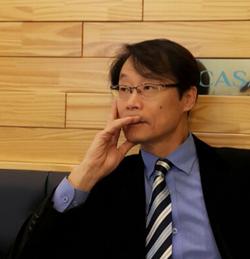
◆ Songsan (송산)
Poet and researcher of history and philosophy. Former director of the Syngman Rhee Institute. Currently serves as a research advisor for the Korean Modern History Research Association and as the head of the Philosophy Forum Lyceion. He has published four poetry collections, co-translated "Heroes of Makgeolli Hills," and published the historical psychology commentary "Joseon That Became a Myth" (2026). He is actively engaged in research and practice of the liberal cultural movement. Songsan is a pen name.

 [Statement by the Seo-beo-kka Korea Military Academy Save-the-Nation Comrades Association] ㉛ Recount the Votes Publicly, as the Previous Recount Concealed Election Fraud
Tongyeong Mayoral Election Recount [Photo=Yonhap News]South Korea's liberal democracy is dying. The National Election Commission (NEC) and the judiciary, which have plummeted into criminal syndicates
[Statement by the Seo-beo-kka Korea Military Academy Save-the-Nation Comrades Association] ㉛ Recount the Votes Publicly, as the Previous Recount Concealed Election Fraud
Tongyeong Mayoral Election Recount [Photo=Yonhap News]South Korea's liberal democracy is dying. The National Election Commission (NEC) and the judiciary, which have plummeted into criminal syndicates
 What is the significance of the "Trump 2028" red hats that keep making a comeback?
It is noteworthy that President Donald Trump is "intentionally" fueling controversy over whether he can actually run in the 2028 presidential election, even though it is "highly likely he is seriously
What is the significance of the "Trump 2028" red hats that keep making a comeback?
It is noteworthy that President Donald Trump is "intentionally" fueling controversy over whether he can actually run in the 2028 presidential election, even though it is "highly likely he is seriously
 Jin Cummings: "North Korea says it will increase the number of spies, so what is the government doing?"
U.S. political columnist Gene Cummings has publicly questioned the South Korean government, asking, "North Korea is announcing plans to increase its number of spies, yet what is the South Korean
Jin Cummings: "North Korea says it will increase the number of spies, so what is the government doing?"
U.S. political columnist Gene Cummings has publicly questioned the South Korean government, asking, "North Korea is announcing plans to increase its number of spies, yet what is the South Korean
 Attorney Do Tae-woo: “Discrepancies in Voter Count and Improper Sealing Confirmed in Tongyeong Mayoral Recount… Official Request for Additional Verification Submitted to Gyeongnam Election Commission”
A bundle of mail-in early voting ballots captured by lawyer Do Tae-woo at the Tongyeong mayoral election recount site. A clear solid line, raising suspicions of election fraud, is visible on the side
Attorney Do Tae-woo: “Discrepancies in Voter Count and Improper Sealing Confirmed in Tongyeong Mayoral Recount… Official Request for Additional Verification Submitted to Gyeongnam Election Commission”
A bundle of mail-in early voting ballots captured by lawyer Do Tae-woo at the Tongyeong mayoral election recount site. A clear solid line, raising suspicions of election fraud, is visible on the side
 Stock Market Crash 'Black Tuesday'… KOSPI down 10.8%, KOSDAQ down 7.7%
The KOSPI fell by more than 5% in early trading on the 28th, triggering a sell-side sidecar.On the 28th, the KOSPI plunged by more than 10%.Due to the sharp decline, a sell-side sidecar—a temporary
Stock Market Crash 'Black Tuesday'… KOSPI down 10.8%, KOSDAQ down 7.7%
The KOSPI fell by more than 5% in early trading on the 28th, triggering a sell-side sidecar.On the 28th, the KOSPI plunged by more than 10%.Due to the sharp decline, a sell-side sidecar—a temporary
 [World Heritage Committee] 25 New World Heritage Sites Inscribed in Busan… South Korea Successfully Expands 'Getbol' Listing
The Chairperson of the World Heritage Committee speaks at the plenary session of the 48th session of the World Heritage Committee, held at BEXCO in Busan on the 20th. [Photo: Yonhap News]A total of 25
[World Heritage Committee] 25 New World Heritage Sites Inscribed in Busan… South Korea Successfully Expands 'Getbol' Listing
The Chairperson of the World Heritage Committee speaks at the plenary session of the 48th session of the World Heritage Committee, held at BEXCO in Busan on the 20th. [Photo: Yonhap News]A total of 25
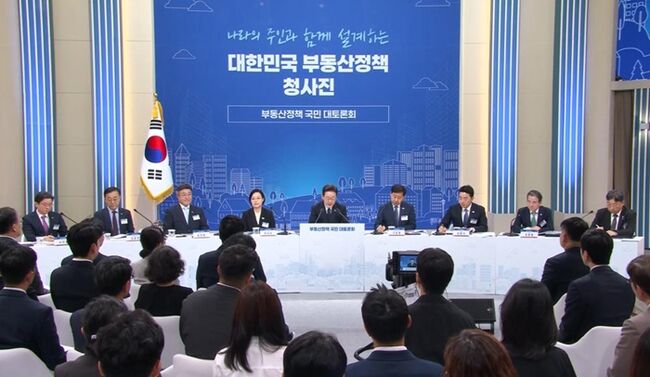 [Liberal Democratic Party Statement] Calling it a Grand Real Estate Debate… It Was Nothing More Than a Private Party Among Themselves
The 'National Grand Debate on Real Estate Policy' held on July 23rd and 27th. [Photo=Yonhap News]The 'National Grand Debate on Real Estate Policy,' hosted by the Lee Jae-myung administration under the
[Liberal Democratic Party Statement] Calling it a Grand Real Estate Debate… It Was Nothing More Than a Private Party Among Themselves
The 'National Grand Debate on Real Estate Policy' held on July 23rd and 27th. [Photo=Yonhap News]The 'National Grand Debate on Real Estate Policy,' hosted by the Lee Jae-myung administration under the
 [Photo] Evidence of Election Fraud Flooding U.S. Media… Trump Had 2.7 Million Votes Stolen
 [Video] U.S. Semiquincentennial Air Show... 'Art in the Sky' streaks across New York
 [Editorial Cartoon] A Draconian Law That Undermines Freedom of Expression

 List
List