Busy traffic situation in the Strait of Malacca, a major artery of maritime transport between continents. Almost a quarter of global maritime trade volume passes through this strait. The strait is approximately 800 km long and 50 km wide at its narrowest point. [Photo=worldoceanreview]
It has been over two weeks since the United States declared a blockade of Iranian-related ships in the Strait of Hormuz. Amidst this, the strategic importance of alternative routes around Africa and the Strait of Gibraltar is drawing attention.
In the Strait of Malacca in Southeast Asia, the passage of U.S. warships was officially confirmed on the 20th. It seems we will now have to hear the word "choke point," which encapsulates President Donald Trump's actions. It has become clear that this keyword, rather than "tariffs," is central to his bigger picture.
Previously, the United States and Indonesia established a "Major Defense Cooperation Partnership" around the time of their defense ministers' meeting on the 13th. Immediately after, issues regarding Indonesian airspace were also brought to the discussion table.
This is not a series of ad hoc responses. It is a signal that the United States intends to reassert control over maritime transport, shipbuilding, ports, waterways, and military access as a single entity, proclaiming its will to lead in the Atlantic and Indo-Pacific regions.
Hormuz is the windpipe, Malacca is the uvula
For over 500 years since the Age of Discovery, the control of sea lanes has been the core of global hegemony. The initiative for this passed from Spain to the Netherlands, and then to Britain. Under the "Pax Britannica" of the 19th century, British maritime dominance became the standard for trade and international order. The equation of "maritime hegemony = global hegemony" was solidified during this period.
The United States took over that position in the mid-20th century. It was almost an unintentional consequence of being involved in two World Wars. Despite its "isolationism" to avoid getting entangled in the various twists and turns of the European continent, the U.S. became a hegemonic power by effectively bringing both World Wars to a close.
The overwhelming naval power of the United States, which keeps the high seas open, underpins global trade, energy transport, alliance systems, the dollar order, and container logistics since the post-war era.
The stable sea lanes that countries like Korea, which rely on energy imports and manufacturing/trade for their livelihoods, have enjoyed for decades, and the resulting abundance in daily life, are unimaginable without the order upheld by U.S. maritime hegemony. Every time major sea routes have been threatened, we have belatedly felt the existence of that order.
Besides Hormuz, another choke point is the Strait of Malacca. Approximately 22% of global maritime trade and 29% of maritime oil pass through it. According to Reuters, over 102,500 vessels transited the Strait of Malacca last year. Notably, about 75% of China's maritime oil imports pass through Malacca.
If the Strait of Hormuz is the windpipe of the Middle East, then Malacca is the uvula of China's industry. Following its counter-blockade in Hormuz, the United States has also made its presence in the Strait of Malacca more visible through increased cooperation with Indonesia and U.S. warship transits.
The Arctic and Greenland, the gateway to the next era
Trump signed an executive order on "Restoring America's Maritime Dominance" on April 9 last year, and the "National Maritime Strategy," released in February this year, includes a separate "Arctic Maritime Security Strategy." This explicitly states the strategy to make the Arctic a hub for competition over trade routes, resources, and military access due to melting ice. Securing freedom of navigation in the Arctic region is outlined as a policy objective.
Trump's focus on Greenland can also be understood in this context. This is not a hobby of territorial expansion but a calculation to simultaneously secure the entrance to the North Atlantic, early warning capabilities, critical minerals, and Arctic shipping routes. From this perspective, Trump's approach to Russian President Vladimir Putin also becomes understandable.
Unlike many Western leaders, Trump does not "demonize" Putin. This is because he does not want Russia to be permanently confined within China's embrace. While expressing "disappointment" with Putin, he has maintained communication channels by leaving room for dialogue, stating "it's not over," thus employing both pressure and dialogue.
Gibraltar and even Morocco... The Atlantic and Indo-Pacific in one grasp
Extending the view westward, the Strait of Gibraltar fits into the same picture. With recent Middle East events causing instability in the Suez, Red Sea, and Hormuz, the Port of Tangier Med in Morocco has gained attention as a key hub for alternative routes. This is the largest container port in Africa, located at the Strait of Gibraltar.
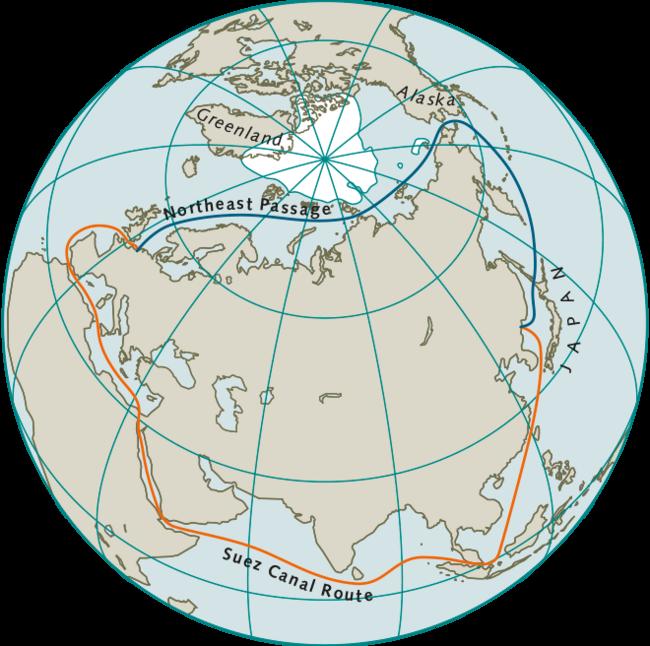 The southernmost part of the Suez Canal is the Strait of Malacca. [Photo=worldoceanreview]
Trump's reaffirmation of Morocco's sovereignty over Western Sahara last year can be interpreted in conjunction with the trend of the United States prioritizing pro-American bases on the southern shore of Gibraltar. The importance of such a judgment was revealed during the recent Hormuz incident.
Reports emerged that the U.S. Department of Defense internally considered sanctions against Spain when the Spanish Socialist government on the northern shore of the Strait of Gibraltar denied the use of its bases and airspace for a potential further U.S. attack on Iran. The criteria for judging "allies" who can manage maritime gateways are becoming increasingly explicit.
Ultimately, Trump's new order can be summarized as "enforcement of norms through strength." When viewed from above, connecting Hormuz, Malacca, Gibraltar, and Greenland, Trump's U.S. vision becomes clear. It is about targeting China's critical vulnerabilities in energy, logistics, and mineral dependence, reminding Europe of the price of the U.S. security umbrella, and preemptively securing the northern gateway for the approaching Arctic era.
Trump's reshaping of the world order is far more primal and practical than eloquent diplomacy of values. Where do ships pass, and who can open and close those paths? That question pierces through the restructuring of the hegemonic order. Whether to ride this wave or to sink while resisting it is each nation's choice.

◆ Dr. Lim Myung-shin
Doctorate in Chinese Studies, Northeast Asia Researcher
Former International Deputy Director, Sky Daily

 [Statement by the Seobeokka KMA Patriots Association] ㉛ Recount the ballots openly, as the previous recount covered up election fraud
Recount of the Tongyeong mayoral election [Photo=Yonhap News]South Korea's liberal democracy is dying. The National Election Commission (NEC), which has degraded into a criminal organization through t
[Statement by the Seobeokka KMA Patriots Association] ㉛ Recount the ballots openly, as the previous recount covered up election fraud
Recount of the Tongyeong mayoral election [Photo=Yonhap News]South Korea's liberal democracy is dying. The National Election Commission (NEC), which has degraded into a criminal organization through t
 What is the significance of the "Trump 2028" red hat that keeps reappearing?
It is noteworthy that while it is "highly likely" that President Donald Trump is "seriously considering" a run for the presidency in 2028, he is also "deliberately" fueling speculation regarding wheth
What is the significance of the "Trump 2028" red hat that keeps reappearing?
It is noteworthy that while it is "highly likely" that President Donald Trump is "seriously considering" a run for the presidency in 2028, he is also "deliberately" fueling speculation regarding wheth
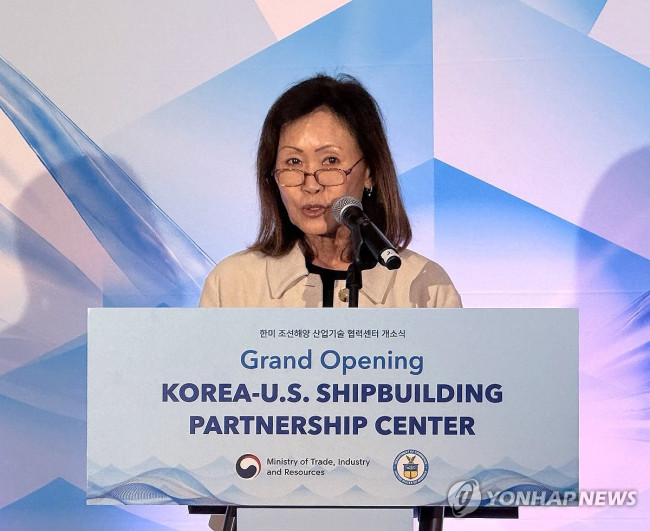 First U.S. Ambassador of Trump's Second Term to Arrive This Week… Will It Provide Momentum to Resolve Pending Issues?
U.S. Ambassador to South Korea Michelle Steel speaks at the opening ceremony of the Korea-U.S. Shipbuilding Cooperation Center held at the Mayflower Hotel in Washington, D.C., on the 23rd (local time)
First U.S. Ambassador of Trump's Second Term to Arrive This Week… Will It Provide Momentum to Resolve Pending Issues?
U.S. Ambassador to South Korea Michelle Steel speaks at the opening ceremony of the Korea-U.S. Shipbuilding Cooperation Center held at the Mayflower Hotel in Washington, D.C., on the 23rd (local time)
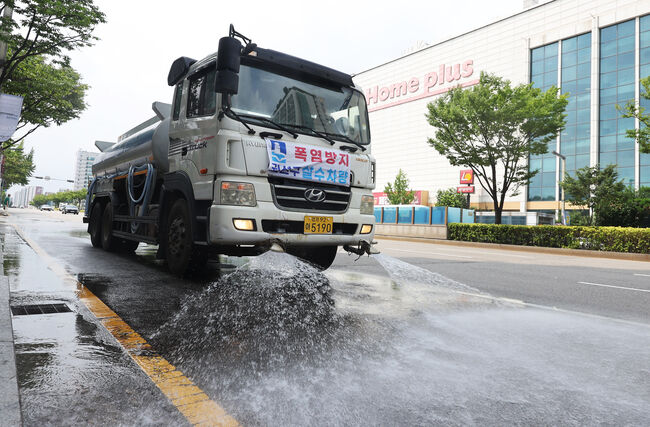 The Korean Peninsula wrapped in a thick blanket of scorching high pressure… Will the 1994 record be broken?
On the 28th, as the heatwave continues, a water sprinkler truck sprays water on Hyowon-ro, Gwonseon-gu, Suwon, Gyeonggi Province. [Photo = Yonhap News]The hottest years on record are considered to be
The Korean Peninsula wrapped in a thick blanket of scorching high pressure… Will the 1994 record be broken?
On the 28th, as the heatwave continues, a water sprinkler truck sprays water on Hyowon-ro, Gwonseon-gu, Suwon, Gyeonggi Province. [Photo = Yonhap News]The hottest years on record are considered to be
 Stock Market Crash 'Black Tuesday'… KOSPI down 10.8%, KOSDAQ down 7.7%
The KOSPI fell by more than 5% in early trading on the 28th, triggering a sell-side sidecar.On the 28th, the KOSPI plunged by more than 10%.Due to the sharp decline, a sell-side sidecar—a temporary
Stock Market Crash 'Black Tuesday'… KOSPI down 10.8%, KOSDAQ down 7.7%
The KOSPI fell by more than 5% in early trading on the 28th, triggering a sell-side sidecar.On the 28th, the KOSPI plunged by more than 10%.Due to the sharp decline, a sell-side sidecar—a temporary
 [World Heritage Committee] 25 New World Heritage Sites Inscribed in Busan… South Korea Successfully Expands 'Getbol' Listing
The Chairperson of the World Heritage Committee speaks at the plenary session of the 48th session of the World Heritage Committee, held at BEXCO in Busan on the 20th. [Photo: Yonhap News]A total of 25
[World Heritage Committee] 25 New World Heritage Sites Inscribed in Busan… South Korea Successfully Expands 'Getbol' Listing
The Chairperson of the World Heritage Committee speaks at the plenary session of the 48th session of the World Heritage Committee, held at BEXCO in Busan on the 20th. [Photo: Yonhap News]A total of 25
 [Cho Yang-geon Column] The NEC: Facing a Fate of "Discarding the Dog After the Hunt"
Banner calling for the "dissolution of the NEC" posted by the Democratic Party. [AI-generated image]Banners calling for the "dissolution of the National Election Commission (NEC)" posted by the Democr
[Cho Yang-geon Column] The NEC: Facing a Fate of "Discarding the Dog After the Hunt"
Banner calling for the "dissolution of the NEC" posted by the Democratic Party. [AI-generated image]Banners calling for the "dissolution of the National Election Commission (NEC)" posted by the Democr
 [Photo] Evidence of Election Fraud Flooding U.S. Media… Trump Had 2.7 Million Votes Stolen
 [Video] U.S. Semiquincentennial Air Show... 'Art in the Sky' streaks across New York
 [Editorial Cartoon] A Draconian Law That Undermines Freedom of Expression

 List
List