Europe has been hit by a record-breaking heatwave. [AFP=Yonhap News]
Behind the news of European heatwaves, I see a bizarre contradiction in energy transition policies.
They encourage the use of electric heat pumps by even providing subsidies, yet they prohibit the installation of air conditioners during the summer. However, physically speaking, the two operate on the same principle.
If you bring heat from the outside to the inside, it is heating; if you extract it from the inside to the outside, it is cooling. It is a device that moves heat by compressing and expanding a refrigerant. The residential air conditioning systems we commonly see are exactly that.
There have been reports that some local governments in the UK have ordered the removal of air conditioners from homes amidst heatwaves reaching over 40℃ (104℉).
The reasons cited are carbon neutrality, the preservation of cultural heritage, the prevention of urban heat islands, and the priority of passive cooling (natural cooling). In other words, they are telling people to open windows, turn on fans, and prioritize natural ventilation. The implication is that air conditioning will only be permitted after exhausting all those options.
But is this feasible in the dense, low-rise cities of Europe? I remember experiencing summer in the shantytown environment of Sillim-dong when I was a college student. Wind barely circulated between the tightly packed houses, and the heat from the ground and tin roofs pushed straight into the rooms.
In such places, summer is simply hell. Because of the heat, children cannot stay inside and are forced to run around the alleys until past 10 p.m. Telling people to open windows may look reasonable in administrative documents, but it is an irresponsible statement that cannot be applied to the reality of people's lives.
Using the dogma of carbon neutrality to sacrifice the conveniences of civilization—which humans have invented and improved—is akin to state violence.
I remember the generation that endured the heat with hand fans during my childhood. Then came electric fans. The breeze from a fan powered by an electric motor felt like it had changed the world. And as we began using air conditioners, the meaning of the season of summer changed again. Heat was no longer a natural punishment that one had to unconditionally endure, but an environmental condition that humans could control with technology.
Humanity overcame cold relatively early. Even prehistoric humans escaped the cold by lighting fires inside caves. We wore clothes, built walls, created stoves, and invented boilers.
However, heat was a much more difficult problem. When the outside temperature approaches body temperature and humidity levels rise, the human body loses its ability to shed heat. If sweat does not evaporate, the body begins to collapse from within. Heatstroke is not merely an inconvenience; it is a life-threatening condition.
In that sense, the air conditioner is one of the greatest devices ever invented by humans. It is not just a convenience tool; it is a core technology of civilization that has overcome spatial constraints.
The modern air conditioner first created by Willis Carrier in 1902 was not made to keep people cool. It was a device made to solve the problem of paper and ink warping due to humidity in printing plants.
However, that invention soon changed the very space of human civilization. Hospitals, subways, offices, data centers, semiconductor cleanrooms, large shopping malls, skyscrapers, modern apartments, laboratories, and server rooms cannot function properly without air conditioning.
Modern cities are massive heat-storage devices packed with concrete, asphalt, glass, steel, and electrical equipment. They radiate the heat absorbed during the day even at night. The advice to "just open a window" might be a casual suggestion for someone living in a suburb or a country villa, but it is not a solution for the reality of city apartments, cramped rooms, crime risks, noise, fine dust, and vulnerable populations.
What is even more absurd is that Europe is encouraging heat pumps on one hand.
Europe's energy transition policy is moving in the direction of reducing gas boilers and increasing electric heat pumps. This itself is physically understandable. A heat pump is not a device that creates heat directly using electricity, but a device that moves external heat indoors. With the same electrical energy, it can supply much more heat than resistive heating.
However, an air-to-air heat pump is essentially the same device as an air conditioning system. By switching a valve, it becomes heating in winter and cooling in summer. If so, is it an eco-friendly heat pump when used for heating in winter, but a luxury item that harms carbon neutrality when used for cooling in summer?
It uses the same compressor, the same refrigerant cycle, the same outdoor unit, and the same thermodynamic principles. Yet it is branded as "good technology" in winter and "evil technology" in summer. The outdated mindset that heating is a welfare necessity while cooling is a luxury still remains deep within European administration.
The climate has changed, and cities have changed. Now, cooling is not a luxury, but a matter of public health and a human right. Leaving people to suffer in the heat in the name of carbon neutrality is not science.
Of course, air conditioning operation requires massive electricity consumption. Outdoor units release heat into the surroundings. If an entire city installs air conditioners without a plan, peak power demand can increase and the heat island effect can worsen.
However, this is a matter of design, not prohibition. We should use high-efficiency inverter air conditioning systems, standardize low-noise outdoor units, and architecturally organize the placement of outdoor units.
We can combine heat-recovery ventilation, insulation, and shading, and match daytime cooling demand with power supply. We can support base power loads with nuclear, hydro, and stable power grids. If historical facades must be preserved, we can conceal outdoor units or introduce central air conditioning or district cooling.
Attempting to solve problems that require technology through regulation and prohibition is administrative incompetence.
The same applies to the preservation of cultural heritage. Tradition has meaning only when people are alive. Calling a building beautiful while making it a place where people suffer in the heat, the elderly collapse from heatstroke, and children cannot sleep is putting the cart before the horse. A tradition that cannot accommodate human life is nothing but a stuffed shell.
For Europe's old buildings to be cultural heritage, people must be able to live, work, and breathe in them. A building abandoned by people is not culture; it is a museum or a tomb.
Korea, too, could not properly preserve cultural heritage back when it was poor. Seokguram, Bulguksa, and the palaces could only be properly restored and managed after money, technology, and national capability were accumulated. Europe is currently antagonizing modern technology under the guise of preserving tradition, and pushing human survival rights to the back burner under the guise of carbon neutrality.
This recent European heatwave is a complex meteorological phenomenon caused by "omega blocks" blocking jet streams, hot air from the Sahara covering Europe, and sea surface temperature anomalies in the Atlantic and Mediterranean affecting atmospheric currents. In such a situation, what people need is not slogans about carbon neutrality, but cooling.
What does "carbon neutrality by 2050" mean to an elderly person collapsing today? In front of a heat dome, what is needed is not a carbon tax, but air conditioning, power grids, hospitals, shade, water, and urban design.
To truly reduce carbon, we must move toward electrification and high efficiency, not prohibition. We must electrify heating, cooling, and industry, and supply that electricity through nuclear power, hydropower, stable grids, and high-efficiency equipment.
If you are going to promote heat pumps, do not ban air conditioning systems. Calling the same device "good" in winter and "evil" in summer is not science; it is dogma. In the face of a heatwave, cooling is not a luxury; it is a lifeline. Carbon neutrality, too, only has meaning if humans remain alive.
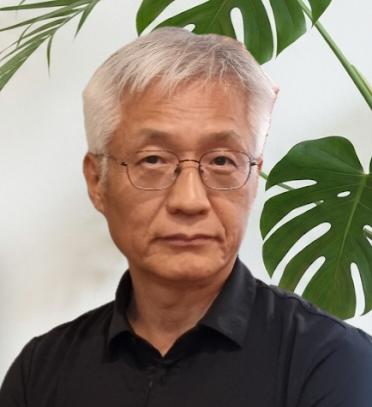
◆ Dr. Chae Soo-jo
Ph.D. in Physics, Seoul National University

 [Statement by the Seo-beokka Korea Military Academy Save-the-Nation Comrades Association] ㉖ Suppressing a Just Struggle for Sovereignty is a Violation of the Constitution and a Grave Crime Equivalent to Insurrection
National Election Commission. [Photo=Yonhap News]The ‘ballot paper shortage’ during the June 3 local elections was an act of constitutional destruction that shook the foundations of South Korean d
[Statement by the Seo-beokka Korea Military Academy Save-the-Nation Comrades Association] ㉖ Suppressing a Just Struggle for Sovereignty is a Violation of the Constitution and a Grave Crime Equivalent to Insurrection
National Election Commission. [Photo=Yonhap News]The ‘ballot paper shortage’ during the June 3 local elections was an act of constitutional destruction that shook the foundations of South Korean d
 Japan's Ministry of Defense: "China and Russia conduct live-fire naval exercises in Japan's EEZ... China also fires machine guns"
Japan’s Ministry of Defense announced on the 21st that Chinese and Russian naval forces conducted live-fire exercises within Japan's Exclusive Economic Zone (EEZ) on the 19th, including machine gun
Japan's Ministry of Defense: "China and Russia conduct live-fire naval exercises in Japan's EEZ... China also fires machine guns"
Japan’s Ministry of Defense announced on the 21st that Chinese and Russian naval forces conducted live-fire exercises within Japan's Exclusive Economic Zone (EEZ) on the 19th, including machine gun
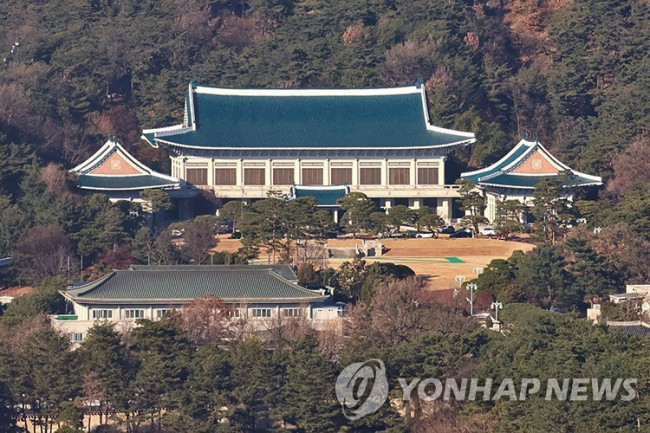 Blue House: "We will respect any conclusion on the right to request supplementary investigations... A prompt decision is needed to minimize confusion."
The Blue House [Photo by Lee Jung-hoon] 2025.12.8Regarding the issue of the prosecution's supplementary investigative authority, the Blue House stated on the 21st, "The decision on whether to abolish
Blue House: "We will respect any conclusion on the right to request supplementary investigations... A prompt decision is needed to minimize confusion."
The Blue House [Photo by Lee Jung-hoon] 2025.12.8Regarding the issue of the prosecution's supplementary investigative authority, the Blue House stated on the 21st, "The decision on whether to abolish
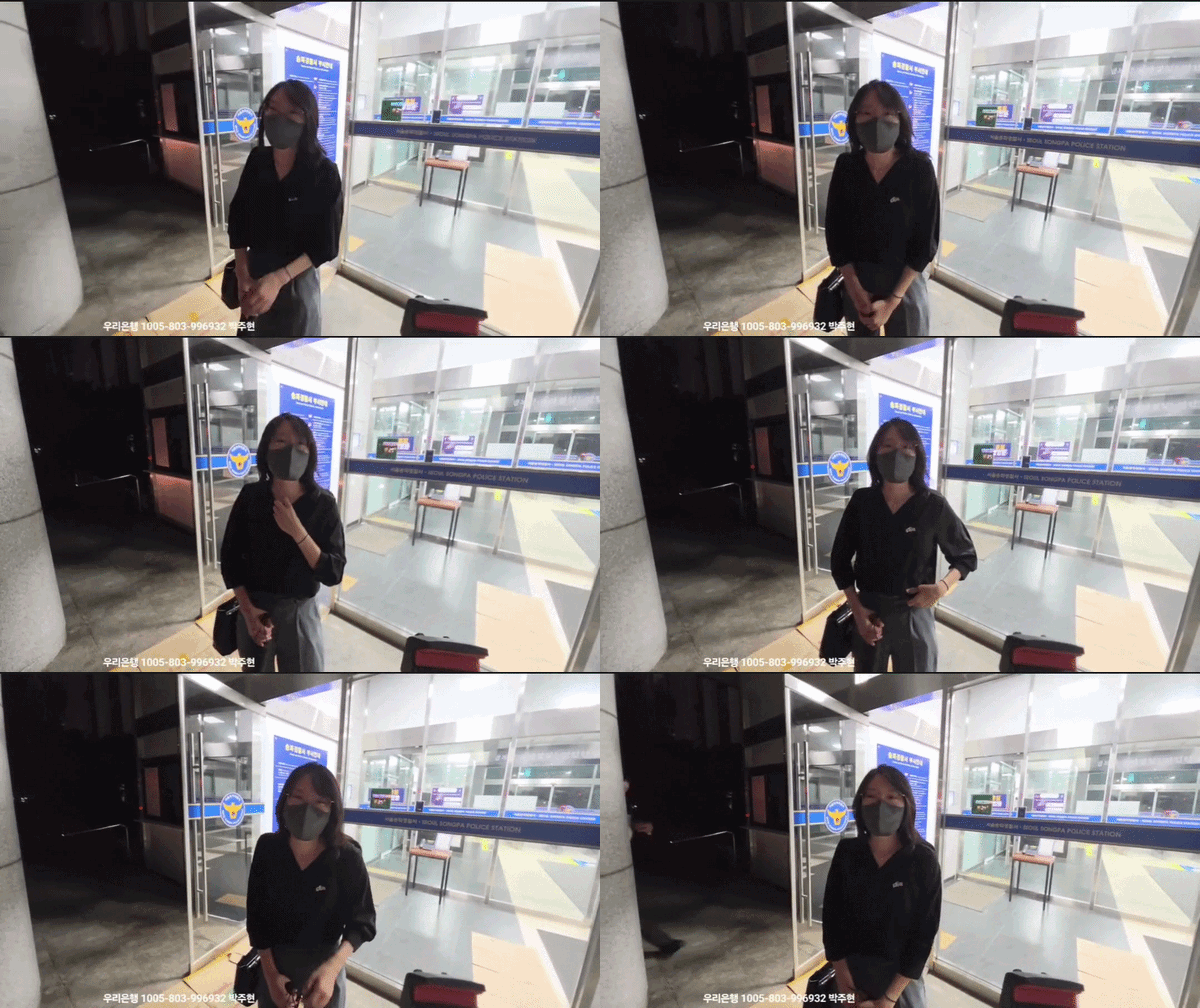 [Comprehensive 2nd Report] ‘Warrant Dismissed’ Oldark: “I Will Fight More for Freedom… I Am Thinking of First Lady Kim Keon-hee’s Hardships,” Expresses Feelings for the First Time
"Ol-darc" (A woman in her 30s) shares her feelings as she leaves the Songpa Police Station on the night of the 21st. [YouTube Channel Park Joo-hyun TV GIF] Comprehensive Update 2 (Additional Con
[Comprehensive 2nd Report] ‘Warrant Dismissed’ Oldark: “I Will Fight More for Freedom… I Am Thinking of First Lady Kim Keon-hee’s Hardships,” Expresses Feelings for the First Time
"Ol-darc" (A woman in her 30s) shares her feelings as she leaves the Songpa Police Station on the night of the 21st. [YouTube Channel Park Joo-hyun TV GIF] Comprehensive Update 2 (Additional Con
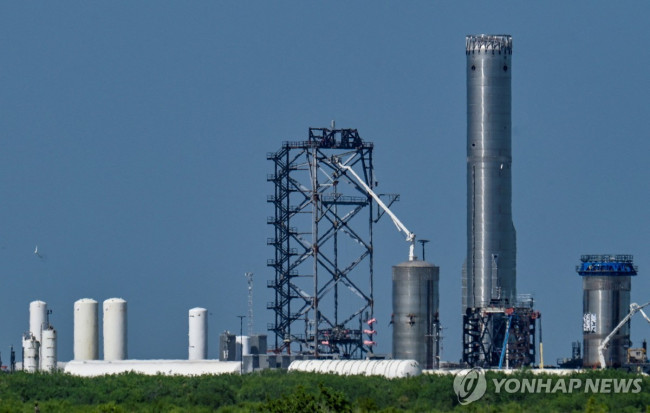 SpaceX overtakes Meta, pushing it down to 8th place in U.S. market capitalization
SpaceX Starship launch delayed [Reuters=Yonhap News]SpaceX has seen its market capitalization evaporate by over $1 trillion (1,489 trillion won) since peaking about a month ago, causing it to fall to
SpaceX overtakes Meta, pushing it down to 8th place in U.S. market capitalization
SpaceX Starship launch delayed [Reuters=Yonhap News]SpaceX has seen its market capitalization evaporate by over $1 trillion (1,489 trillion won) since peaking about a month ago, causing it to fall to
 Jeong-Ik Academy Board Chair Kim Myung-hee Launches ‘Lucia’s Love for Grandchildren: Quadrilingual Simultaneous Learning’ App
Kim Myung-hee, Chairperson of Jeong-ik Hakdang, has developed 'Lucia’s Love for Grandchildren: 4-Language Simultaneous Learning' with the help of AI and officially released it on the Google Play Sto
Jeong-Ik Academy Board Chair Kim Myung-hee Launches ‘Lucia’s Love for Grandchildren: Quadrilingual Simultaneous Learning’ App
Kim Myung-hee, Chairperson of Jeong-ik Hakdang, has developed 'Lucia’s Love for Grandchildren: 4-Language Simultaneous Learning' with the help of AI and officially released it on the Google Play Sto
 [Column by Park Joo-hyun] Shouldn't we put a price tag on the rise of my home value...?
[This image was created with the help of AI]Since you managed to sell your house well while defending your asking price, there is a point I have been wanting to make that I must address now. A sp
[Column by Park Joo-hyun] Shouldn't we put a price tag on the rise of my home value...?
[This image was created with the help of AI]Since you managed to sell your house well while defending your asking price, there is a point I have been wanting to make that I must address now. A sp
 [Photo] Evidence of Election Fraud Flooding U.S. Media… Trump Had 2.7 Million Votes Stolen
 [Video] U.S. Semiquincentennial Air Show... 'Art in the Sky' streaks across New York
 [Editorial Cartoon] A Draconian Law That Undermines Freedom of Expression

 List
List