 People Power Party leader Jang Dong-hyeok is moving through the Olympic Park Handball Gymnasium in Songpa-gu, Seoul, on the 17th. [Photo=Yonhap News]
It is truly suspicious. What is the topic that Representative Yoon Sang-hyun, who is under compulsory investigation by the Corruption Investigation Office for High-ranking Officials (CIO) over allegations of violating the Political Funds Act, and Seoul Mayor Oh Se-hoon, who is one day away from his first-instance verdict in the Myung Tae-kyun public opinion poll fee proxy payment scandal, are putting their heads together to discuss?
It is not about the people's livelihood. It is not a strategy to stop the runaway power of the massive ruling party. Nor is it a countermeasure against the controversy over the infringement of suffrage.
It is precisely the "abolition of the party leadership system." Is the most urgent matter right now really to eliminate the party representative? What is even more serious is the intention behind it. The party representative is elected directly by the party members. On the other hand, the floor leader is elected by the lawmakers.
In other words, the move to abolish the party leadership system and transition to a party-centered system around the parliamentary group is a declaration to strip power from the hands of the party members and "concentrate it all" in the hands of the lawmakers. It means to eliminate the leadership elected by the party members and let the lawmakers run the party among themselves.
It is not about creating a party monitored by its members, but a "collusive party" where lawmakers make decisions behind closed doors, share power among themselves, and protect one another.
Is this innovation? No. It is a declaration to return to an "opaque party" that excludes its members. What is even more absurd is that they are packaging this under the plausible name of "public nomination."
Are party members not the public? The people who pay membership dues, sweat on the streets, and protect the party with devotion every election season are the very party members and the public. Yet, to claim that we should strip party members of their power through a divisive frame of "party members versus the public" is a sophistry that fundamentally denies party democracy.
Why is this argument emerging now?
In the past, it was possible to ignore party members. Nominations were decided by a few politicians, and party members just had to applaud. But things are different now. A large number of highly politically engaged individuals have joined as members; these members monitor politicians, send critical comments and text messages, and do not tolerate wrongful nominations or factional politics.
As the power of party members grows stronger, backroom politics loses its place. As party members become smarter, vested-interest politics is shaken. That is why they are trying to strip away the power of the members first.
Representative Yoon Sang-hyun is under compulsory investigation by the CIO over allegations of violating the Political Funds Act. Mayor Oh Se-hoon is awaiting his first-instance verdict in the scandal involving the proxy payment of public opinion poll fees by Myung Tae-kyun.
It is only natural that party members are outraged that politicians who carry such significant judicial risks themselves, rather than fulfilling their responsibilities to the public and the party members, are instead pulling out plans for a power structure reorganization that reduces the members' authority.
Party members are the first to hold them accountable for their faults. Party members are not mere rubber stamps for politicians; they are overseers. That is why they find party members inconvenient. That is why they want to get rid of the party representative directly elected by the members. They find Jang Dong-hyeok, who talks about "reborn as a party-centered organization," to be an eyesore.
A politician who fears party members is not qualified to speak of innovation. The owner of a political party is not a lawmaker. It is not the mayor. It is not a politician with vested interests.
The owner of a political party is its members.
The idea of taking power away from party members to monopolize it among lawmakers is not innovation, but a regression that turns back the clock on party democracy, and the members will never tolerate such a regression.
Oh Sang-jong, Head of the Free Korea Homeland Corps

 [Statement by the Seo-beokka Korea Military Academy Save-the-Nation Comrades Association] ㉖ Suppressing a Just Struggle for Sovereignty is a Violation of the Constitution and a Grave Crime Equivalent to Insurrection
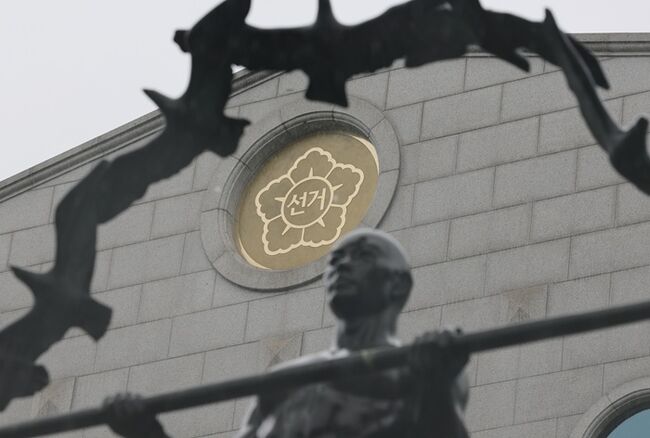
National Election Commission. [Photo=Yonhap News]The ‘ballot paper shortage’ during the June 3 local elections was an act of constitutional destruction that shook the foundations of South Korean d
[Statement by the Seo-beokka Korea Military Academy Save-the-Nation Comrades Association] ㉖ Suppressing a Just Struggle for Sovereignty is a Violation of the Constitution and a Grave Crime Equivalent to Insurrection
National Election Commission. [Photo=Yonhap News]The ‘ballot paper shortage’ during the June 3 local elections was an act of constitutional destruction that shook the foundations of South Korean d
 Japan's Ministry of Defense: "China and Russia conduct live-fire naval exercises in Japan's EEZ... China also fires machine guns"
Japan’s Ministry of Defense announced on the 21st that Chinese and Russian naval forces conducted live-fire exercises within Japan's Exclusive Economic Zone (EEZ) on the 19th, including machine gun
Japan's Ministry of Defense: "China and Russia conduct live-fire naval exercises in Japan's EEZ... China also fires machine guns"
Japan’s Ministry of Defense announced on the 21st that Chinese and Russian naval forces conducted live-fire exercises within Japan's Exclusive Economic Zone (EEZ) on the 19th, including machine gun
 Blue House: "We will respect any conclusion on the right to request supplementary investigations... A prompt decision is needed to minimize confusion."
The Blue House [Photo by Lee Jung-hoon] 2025.12.8Regarding the issue of the prosecution's supplementary investigative authority, the Blue House stated on the 21st, "The decision on whether to abolish
Blue House: "We will respect any conclusion on the right to request supplementary investigations... A prompt decision is needed to minimize confusion."
The Blue House [Photo by Lee Jung-hoon] 2025.12.8Regarding the issue of the prosecution's supplementary investigative authority, the Blue House stated on the 21st, "The decision on whether to abolish
 'Oldarc' who blocked access to Jamsil counting station faces arrest warrant hearing… 4 Olympic Park protesters also under review
A woman in her 30s, accused of obstructing business by blocking sports organization staff from entering the indoor office at the Olympic Park Handball Gymnasium—which served as a vote counting
'Oldarc' who blocked access to Jamsil counting station faces arrest warrant hearing… 4 Olympic Park protesters also under review
A woman in her 30s, accused of obstructing business by blocking sports organization staff from entering the indoor office at the Olympic Park Handball Gymnasium—which served as a vote counting
 SpaceX overtakes Meta, pushing it down to 8th place in U.S. market capitalization
SpaceX Starship launch delayed [Reuters=Yonhap News]SpaceX has seen its market capitalization evaporate by over $1 trillion (1,489 trillion won) since peaking about a month ago, causing it to fall to
SpaceX overtakes Meta, pushing it down to 8th place in U.S. market capitalization
SpaceX Starship launch delayed [Reuters=Yonhap News]SpaceX has seen its market capitalization evaporate by over $1 trillion (1,489 trillion won) since peaking about a month ago, causing it to fall to
 The Summer of 2026 in Jeju, documented by me… Kirin Villa Resort, August Summer Event
Kylin Villa Resort is launching its collaborative summer event, the "Kylin Summer Passport," which will run for one month starting August 1st.Kylin Villa Resort is launching its collaborative summer e
The Summer of 2026 in Jeju, documented by me… Kirin Villa Resort, August Summer Event
Kylin Villa Resort is launching its collaborative summer event, the "Kylin Summer Passport," which will run for one month starting August 1st.Kylin Villa Resort is launching its collaborative summer e
 [Column by Park Joo-hyun] Shouldn't we put a price tag on the rise of my home value...?
[This image was created with the help of AI]Since you managed to sell your house well while defending your asking price, there is a point I have been wanting to make that I must address now. A sp
[Column by Park Joo-hyun] Shouldn't we put a price tag on the rise of my home value...?
[This image was created with the help of AI]Since you managed to sell your house well while defending your asking price, there is a point I have been wanting to make that I must address now. A sp
 [Photo] Evidence of Election Fraud Flooding U.S. Media… Trump Had 2.7 Million Votes Stolen
 [Video] U.S. Semiquincentennial Air Show... 'Art in the Sky' streaks across New York
 [Editorial Cartoon] A Draconian Law That Undermines Freedom of Expression

 List
List