 [This image was created with the help of AI]
Since you managed to sell your house well while defending your asking price, there is a point I have been wanting to make that I must address now.
A space, as it is for anyone, does not exist merely as a physical volume. To ordinary people, a home is the wallpaper soaked in the sweat of arduous labor and a repository of time where the heights of growing children are marked on doorframes every year.
Everyone crosses the threshold of a bank to take on debt, barely securing a foothold for an insecure life. Hoping that, as time passes, that pile of old concrete will warm up with capital and serve as a small shield for one’s old age—that is not corrupt greed, but an extremely poignant and universal way of survival in a harsh world, trying to protect one's family.
However, in today's South Korea, this modest, human scent is a luxurious romance permitted only to a handful of wealthy individuals and foreigners holding stacks of cash.
The sentimental commotion Lee Jae-myung made while selling his apartment in Bundang is a sad comedy that proves how arrogantly they look down upon the lives of the public.
The initial report by the JoongAng Ilbo on the president’s (then candidate’s) apartment sale was dry. It was a calm statement of fact: a home bought for 360 million won in 1998 had become worth 2.9 billion won, netting a profit of 2.5 billion won.
Then, Lee Jae-myung, unable to hide his displeasure, stepped in to "correct" the print. From his lips, which poured out protests that the article was malicious, flowed a line worthy of literature.
He claimed it was a home bought amidst the cold winds of the IMF era, a space as dear as a favorite stuffed animal that raised his children. He argued he was not a speculator seeking profit, but a seeker who, with tears in his eyes, gave up his lifelong memories solely to set an example for the normalization of real estate.
In the end, the headline of the article was stripped of the worldly term "capital gain" and transformed into a noble hymn titled "Will for Real Estate Normalization."
It is at this point that I encounter the profound disgust emitted by the peculiar political engineering of the left. What is more terrifying than the monopoly of wealth is the "monopoly of narrative." How many people in this land buy up empty houses solely for the purpose of capital gains?
Ordinary people also lose sleep signing loan documents just like Lee Jae-myung, raising their children in those homes, and writing their own tearful narratives of life.
Then why is it that when an ordinary neighbor borrows money to buy a house, they are reduced to a speculator who sickens the national economy and becomes a target for punitive taxes, while the process of Lee Jae-myung realizing a 2.5 billion won profit must be praised as a holy sacrifice and moving family love?
They denounce the asset accumulation of others as a malady of capitalism that must be eradicated, while locking away their own massive wealth in a sterile room labeled "memories" and "romance," bleaching it clean.
This terrible self-righteousness posits that "my profit is a beautiful essay, while your profit is shallow greed." That sadism—trying to steal not only moral superiority but even the narrative of an ordinary life from the public—is the true face of leftist politics.
If you pull back the curtain on this lyrical melodrama, you will find the cold and clever calculations of capital. Behind that elegant farewell where he spoke of "memories" and "setting an example" was hidden a world of perfect private leverage, where he set a 1.77 billion won mortgage for the buyer.
It was a brilliant transaction where the buyer's desperation to secure member status for reconstruction and the seller's interest in extracting the full peak price of 2.9 billion won meshed like gears. They were utilizing the grammar of capitalism better than anyone else.
While the ink was drying on those documents, the streets were facing a harsh winter. Ordinary people in their 30s and 40s were bowing their heads at clogged bank counters, trying to get loans for tens of millions of won in deposits just to keep a roof over their heads. A leader who had so ruthlessly burned down the ladder of loans that ordinary people needed to climb was, in reality, leisurely walking through a spring of private financing worth 1.77 billion won.
In the face of this elegant barbarism—which traps the sweat-scented desires of others in the equality of poverty while placing their own wealth and memories upon a sacred altar—we must think quietly.
How long must we endure those noble excuses, recited while they strictly choked off the loans that are the survival lines for the common people, all the while rewriting the narrative to their liking?
If we do not tear down the curtain of that hypocritical narrative monopolized by power, the tearful time you have endured to keep your own home will forever be recorded only as a sin called speculation.

◆ Park Joo-hyun, Writer
A composer, music director, columnist, and essayist. Through Facebook, he actively expresses his opinions on political, current, and social issues, earning empathy from many. He is the author of the essay collection "Crossing the Stormy Sea."

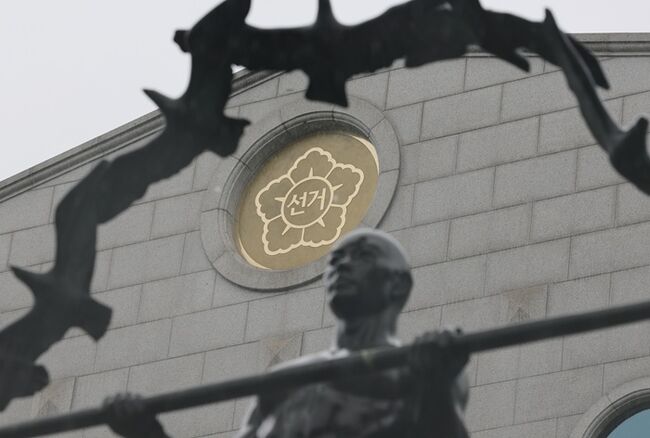 [Statement by the Seo-beokka Korea Military Academy Save-the-Nation Comrades Association] ㉖ Suppressing a Just Struggle for Sovereignty is a Violation of the Constitution and a Grave Crime Equivalent to Insurrection
National Election Commission. [Photo=Yonhap News]The ‘ballot paper shortage’ during the June 3 local elections was an act of constitutional destruction that shook the foundations of South Korean d
[Statement by the Seo-beokka Korea Military Academy Save-the-Nation Comrades Association] ㉖ Suppressing a Just Struggle for Sovereignty is a Violation of the Constitution and a Grave Crime Equivalent to Insurrection
National Election Commission. [Photo=Yonhap News]The ‘ballot paper shortage’ during the June 3 local elections was an act of constitutional destruction that shook the foundations of South Korean d
 Japan's Ministry of Defense: "China and Russia conduct live-fire naval exercises in Japan's EEZ... China also fires machine guns"
Japan’s Ministry of Defense announced on the 21st that Chinese and Russian naval forces conducted live-fire exercises within Japan's Exclusive Economic Zone (EEZ) on the 19th, including machine gun
Japan's Ministry of Defense: "China and Russia conduct live-fire naval exercises in Japan's EEZ... China also fires machine guns"
Japan’s Ministry of Defense announced on the 21st that Chinese and Russian naval forces conducted live-fire exercises within Japan's Exclusive Economic Zone (EEZ) on the 19th, including machine gun
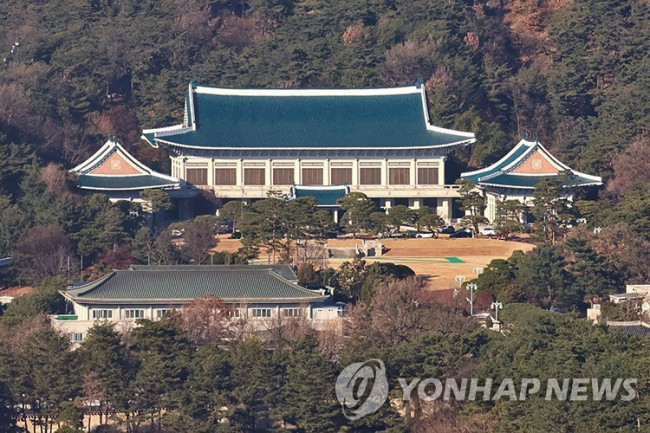 Blue House: "We will respect any conclusion on the right to request supplementary investigations... A prompt decision is needed to minimize confusion."
The Blue House [Photo by Lee Jung-hoon] 2025.12.8Regarding the issue of the prosecution's supplementary investigative authority, the Blue House stated on the 21st, "The decision on whether to abolish
Blue House: "We will respect any conclusion on the right to request supplementary investigations... A prompt decision is needed to minimize confusion."
The Blue House [Photo by Lee Jung-hoon] 2025.12.8Regarding the issue of the prosecution's supplementary investigative authority, the Blue House stated on the 21st, "The decision on whether to abolish
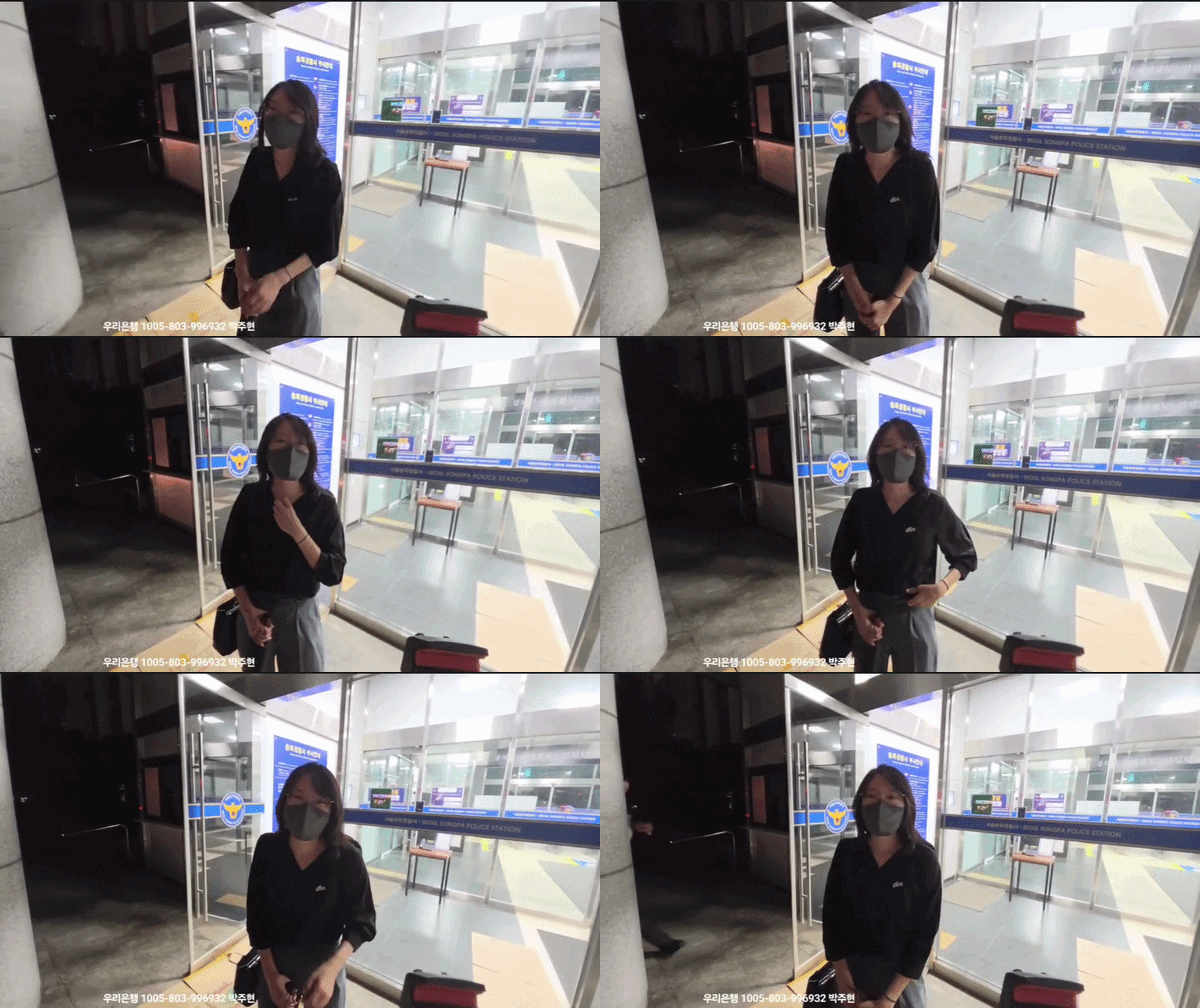 [Comprehensive 2nd Report] ‘Warrant Dismissed’ Oldark: “I Will Fight More for Freedom… I Am Thinking of First Lady Kim Keon-hee’s Hardships,” Expresses Feelings for the First Time
"Ol-darc" (A woman in her 30s) shares her feelings as she leaves the Songpa Police Station on the night of the 21st. [YouTube Channel Park Joo-hyun TV GIF] Comprehensive Update 2 (Additional Con
[Comprehensive 2nd Report] ‘Warrant Dismissed’ Oldark: “I Will Fight More for Freedom… I Am Thinking of First Lady Kim Keon-hee’s Hardships,” Expresses Feelings for the First Time
"Ol-darc" (A woman in her 30s) shares her feelings as she leaves the Songpa Police Station on the night of the 21st. [YouTube Channel Park Joo-hyun TV GIF] Comprehensive Update 2 (Additional Con
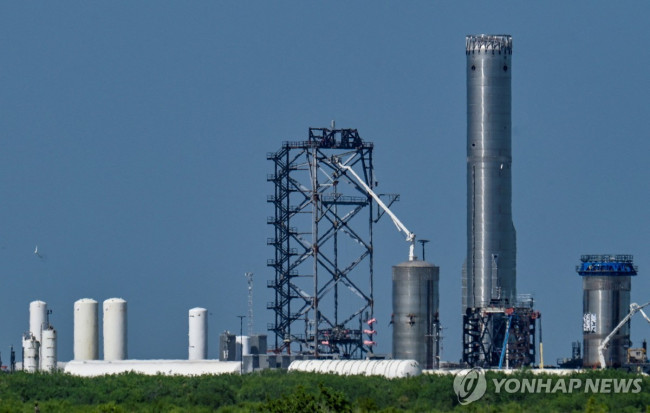 SpaceX overtakes Meta, pushing it down to 8th place in U.S. market capitalization
SpaceX Starship launch delayed [Reuters=Yonhap News]SpaceX has seen its market capitalization evaporate by over $1 trillion (1,489 trillion won) since peaking about a month ago, causing it to fall to
SpaceX overtakes Meta, pushing it down to 8th place in U.S. market capitalization
SpaceX Starship launch delayed [Reuters=Yonhap News]SpaceX has seen its market capitalization evaporate by over $1 trillion (1,489 trillion won) since peaking about a month ago, causing it to fall to
 Jeong-Ik Academy Board Chair Kim Myung-hee Launches ‘Lucia’s Love for Grandchildren: Quadrilingual Simultaneous Learning’ App
Kim Myung-hee, Chairperson of Jeong-ik Hakdang, has developed 'Lucia’s Love for Grandchildren: 4-Language Simultaneous Learning' with the help of AI and officially released it on the Google Play Sto
Jeong-Ik Academy Board Chair Kim Myung-hee Launches ‘Lucia’s Love for Grandchildren: Quadrilingual Simultaneous Learning’ App
Kim Myung-hee, Chairperson of Jeong-ik Hakdang, has developed 'Lucia’s Love for Grandchildren: 4-Language Simultaneous Learning' with the help of AI and officially released it on the Google Play Sto
 [Photo] Evidence of Election Fraud Flooding U.S. Media… Trump Had 2.7 Million Votes Stolen
 [Video] U.S. Semiquincentennial Air Show... 'Art in the Sky' streaks across New York
 [Editorial Cartoon] A Draconian Law That Undermines Freedom of Expression

 List
List