Tanks abandoned by the Russian military left on a road in Kupyansk, northeastern Ukraine, which has been liberated by Ukrainian forces. Dec. 28, 2022. [AP=Yonhap News]1. A Turning Point in the Nature of the War
As the Russia-Ukraine war drags on, the nature of the conflict has entered an entirely new phase. In the early stages of the war, Russia pressured Ukraine based on its incomparable military might, leading the world to believe that a Russian victory was only a matter of time.
※ Comparison of Military Capabilities at the Start of the War (February 2022, Russia vs. Ukraine)
△ Population: 140 million vs. 41 million (3.5x)
△ Defense Budget: $61.7 billion vs. $5.9 billion (10x)
△ Military Ranking: 2nd vs. 22nd globally
△ Standing Army Size: 900,000 vs. 200,000 (4.5x)
△ Quantity of land equipment (tanks, armored vehicles, field artillery, etc.): 5 to 10 times higher for Russia
△ Advanced and Air Force weaponry: Russia possesses world-class air defense systems (S-400), hypersonic missiles (Kinzhal), and over 4,000 aircraft, compared to Ukraine’s roughly 300 aging, Soviet-era fighter jets
However, Ukraine has completely changed the formula of the war by recently utilizing advanced drone technology and asymmetric tactics to precisely strike logistics bases and oil refineries deep within Russian territory.
Consequently, Russia, despite being an oil-producing nation, is experiencing internal fuel shortages and withdrawing from strategic military locations like the Crimean Peninsula, showing that its ability to wage war is increasingly depleting. It is essentially engaged in a total war that is destroying its own military capabilities.
2. Destruction of Oil Refineries and Fuel Depletion in Oil-Rich Russia
Driven by satellite intelligence provided by Starlink, Ukraine’s drone strikes have successfully targeted not only large oil refineries in Moscow but even the Omsk refinery in southwestern Siberia, more than 2,700km from the border. Russia has found itself in the contradictory situation of being an "oil-producing nation without oil."
It is estimated that total gasoline production has dropped by approximately 25–40% due to the series of air raids. As a result, Russia has taken the extreme measure of completely banning the export of aviation fuel and diesel, leading to the worst fuel shortage in decades, with long queues of vehicles at every gas station in the country.
Kaliningrad, Russia’s most powerful strategic stronghold in Europe and base of the Baltic Fleet, has been forced to rely entirely on a 900km ferry route through the Baltic Sea from the mainland (near St. Petersburg) since Lithuania and Poland restricted land routes following the 2022 invasion. This region is also on the verge of isolation, suffering from severe fuel shortages caused by strikes on refineries on the mainland.
China is the world's largest buyer of Russian fossil fuels, purchasing about 50% of Russia’s total crude oil exports, 37% of coal exports, and 31% of pipeline gas. As Russia’s energy production plummets, the impact on China will also be enormous.
With crude oil imports from Venezuela and Iran already shrinking, China is expected to suffer significant damage to its economic security now that supplies from Russia are also facing disruptions.
The Putin regime is now facing strong internal resistance and reaching its limits as fuel for both military and civilian use runs dry and the domestic economy wavers.
3. Ukraine’s Defense Reform and Long-Range Asymmetric Drone Tactics
In a war that appeared impossible to win, President Zelenskyy is demonstrating extraordinary leadership by enduring immense suffering and engaging in transnational diplomacy.
As criticism regarding corruption within the Ukrainian military escalated both domestically and internationally, the government recently replaced four defense ministers and appointed a 30-something IT expert as minister, driving military innovation. With a former civilian entrepreneur serving as the commander of drone forces, Ukraine has maximized its ability to infiltrate deep into Russian territory through self-developed, cutting-edge unmanned systems.
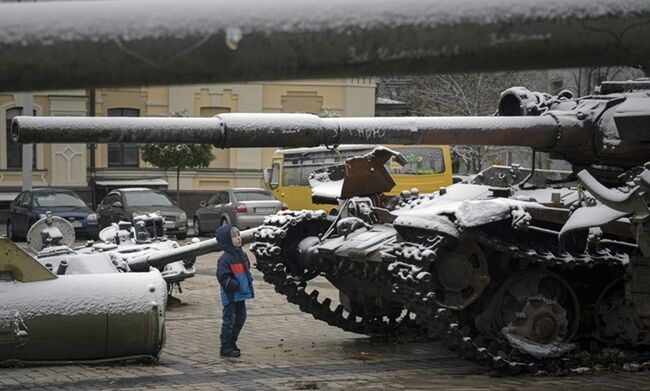 A child watches a destroyed Russian tank and armored vehicle in downtown Kyiv, the capital of Ukraine. Dec. 28, 2022. [AP=Yonhap News]
Furthermore, the deployment of Unmanned Ground Vehicles (UGVs) has significantly reduced human casualties during the most dangerous frontline supply and evacuation missions. Recently, the use of these robots has surged to over 14,000 deployments per month.
Ukraine's unmanned systems forces have expanded their operational range beyond the Black Sea to the Sea of Azov, striking dozens of Russian vessels, including oil tankers, tugboats, and bulk carriers, simultaneously.
Ukrainian maritime drones have moved beyond the initial stage of "hunting warships" (sinking or destroying over 25 vessels); in July 2026, they reached a stage where they launched sequential strikes on 136 vessels of the Russian "shadow fleet" and logistics ships in the Sea of Azov and the Black Sea in just ten days.
These unrestricted attacks have resulted in the paralysis of both Russian military supply chains and major grain export routes, including the suspension of navigation through the Don-Azov Canal and restrictions on passage through the Kerch Strait.
4. The Exodus and Withdrawal from the Crimean Peninsula
The Crimean Peninsula, a sanctuary for the Putin regime and a core logistics hub for the southern front since its forced annexation in 2014, has experienced large-scale paralysis with over half of the territory losing power as Ukraine unleashed massive drone and missile attacks, destroying Russian air defenses and cutting off supply routes between the peninsula and the Russian mainland. Ukraine is currently conducting a "40-day operation" this summer to recapture Crimea.
Tourists who came to Crimea from the Russian mainland and Russian residents living there began to flee in terror amidst the sounds of explosions and blackouts. A chaotic situation unfolded around the only access route to the mainland, with vehicles trying to escape lining up for over 15km.
Additionally, as naval bases and supply networks were neutralized, the Russian military began withdrawing major military assets and troops from Crimea back to the Russian mainland. This is a definitive sign that Russia is losing the initiative on the southern front.
5. Putin’s Great Miscalculation and Western Support for Ukraine
The Russia-Ukraine war has now entered a new phase characterized by the destruction of infrastructure within Russia and the loss of key military strongholds. Putin is a war criminal who committed the massacre of Ukrainian civilians, based on the misjudgment that he could easily invade and occupy Ukraine.
Since the invasion, Sweden and Finland have joined NATO, and Eastern European countries like Poland are accelerating the strengthening of their defense capabilities. Responding to pressure from the Trump administration to increase defense spending, NATO countries have already decided to enhance their own defense industry capabilities and provide financial and military support to Ukraine.
Recently, Ukraine has been formalizing an EU joint drone production agreement, signing an integrated ballistic missile defense coalition agreement with nine countries including France and Germany, and embarking on full-scale negotiations for EU accession. It has even formed an active multilateral coalition called the "Coalition of the Willing," which is even considering sending troops to bolster Ukraine.
How did the West, including the United States, which had strictly prohibited Ukraine from attacking the Russian interior, eventually allow long-range attacks on the mainland?
Initially, such strikes were strictly forbidden out of fear of a direct clash (nuclear war) with Russia. However, the combination of ① Russia’s recruitment of North Korean troops (deployment), ② the practical limitations of border defense, and ③ the proven fallacies of "red lines" following the success of Ukraine’s own drones eventually led to the complete lifting of restrictions on long-range missiles.
President Trump had initially wanted a quick end to the war through negotiations that would involve conceding occupied territories to avoid mass casualties, believing that Ukraine could not withstand Russian military power.
I have opposed this view, seeing it not only as a tacit endorsement of Russian aggression but also as a power game between superpowers that further disadvantages smaller nations.
However, as Putin has not budged on unreasonable conditions—such as the permanent partition of all Ukrainian territory or a total ban on NATO membership—in negotiations between the U.S. and Russia, the success of such negotiations appears nearly hopeless.
With the tide turning toward a Russian defeat, I believe the U.S. will ultimately proceed by supporting Ukraine to exhaust Russia's national power. The U.S. has recently authorized the domestic production of Patriot missiles in Ukraine.
In the Russia-Ukraine war, China is feigning superficial neutrality by cosplaying as a "mediator for peace" on the international stage. However, China has been propping up Putin’s war chest by purchasing the energy it needs at low prices amidst economic sanctions against Russia.
Settling energy payments in rubles and yuan, it is challenging the dollar hegemony. Moreover, China supplies over 90% of the regulated high-tech components that Russia imports for weapons manufacturing. In this situation, the strategy the U.S. must adopt is self-evident.
For Russia, which once claimed to be the world's second-largest military power, to receive troops from North Korea and recruit mercenaries from places like Cuba is an admission of the limits of its own domestic mobilization capacity.
It is reported that North Korea has dispatched about 14,000 troops, with about half having become casualties. Two North Korean soldiers who were captured have expressed a desire to defect to the Republic of Korea, and I hope the government will accept them promptly out of humanitarian considerations.
In particular, if Russia loses the war, the blowback for sacrificing numerous soldiers in an aggressor's war and opposing the West will be difficult to bear, even if North Korea has gained temporary economic support and some military technology. North Korea is becoming thoroughly isolated from the international community.
6. Conclusion
For a permanent member of the UN Security Council to form a close military relationship with North Korea, which is under international sanctions, is a self-inflicted blow to Russia’s own diplomatic authority in the international community.
Russia, which should be a guarantor of international peace, invading the sovereign territory of Ukraine is a direct violation of the UN Charter and cannot be morally justified. Zelenskyy is exposing Russia’s violations of international law and moral depravity, securing international support, and overturning an almost impossible war situation.
Russia believed it could easily achieve its goals by invading Ukraine, but it has proven to be a total miscalculation.
While there are possibilities of nuclear threats or the actualization of tactical nuclear cards that Putin might use when on the verge of total collapse, or potential chaos between internal warlords (like a "second Prigozhin") should power in Russia disintegrate, I believe the internal and external circumstances will not permit Putin to make these choices.
Ultimately, I believe it is the natural course of history that "unjust aggressor nations collapse due to internal contradictions and the depletion of their cause, while defensive nations that possess innovation and legitimacy eventually secure support and prevail."
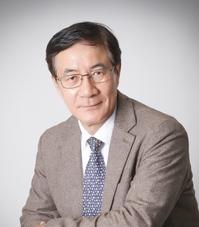
◆ Dr. Shin Dong-chun
Ph.D. in Public Administration, Representative of the Union for Free Unification. After passing the 21st Public Administration Examination, he has been active as a public official, corporate CEO, university professor, media contributor, author, and President of the Global Aerospace Industry Association.

 [Statement by the Seo-beokka Korea Military Academy Save-the-Nation Comrades Association] ㉖ Suppressing a Just Struggle for Sovereignty is a Violation of the Constitution and a Grave Crime Equivalent to Insurrection
National Election Commission. [Photo=Yonhap News]The ‘ballot paper shortage’ during the June 3 local elections was an act of constitutional destruction that shook the foundations of South Korean d
[Statement by the Seo-beokka Korea Military Academy Save-the-Nation Comrades Association] ㉖ Suppressing a Just Struggle for Sovereignty is a Violation of the Constitution and a Grave Crime Equivalent to Insurrection
National Election Commission. [Photo=Yonhap News]The ‘ballot paper shortage’ during the June 3 local elections was an act of constitutional destruction that shook the foundations of South Korean d
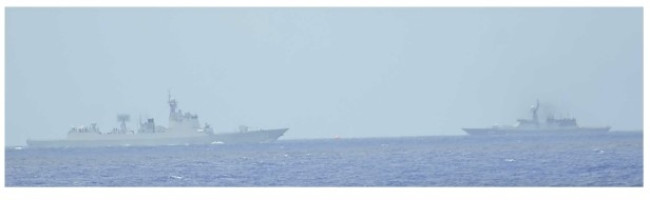 Japan's Ministry of Defense: "China and Russia conduct live-fire naval exercises in Japan's EEZ... China also fires machine guns"
Japan’s Ministry of Defense announced on the 21st that Chinese and Russian naval forces conducted live-fire exercises within Japan's Exclusive Economic Zone (EEZ) on the 19th, including machine gun
Japan's Ministry of Defense: "China and Russia conduct live-fire naval exercises in Japan's EEZ... China also fires machine guns"
Japan’s Ministry of Defense announced on the 21st that Chinese and Russian naval forces conducted live-fire exercises within Japan's Exclusive Economic Zone (EEZ) on the 19th, including machine gun
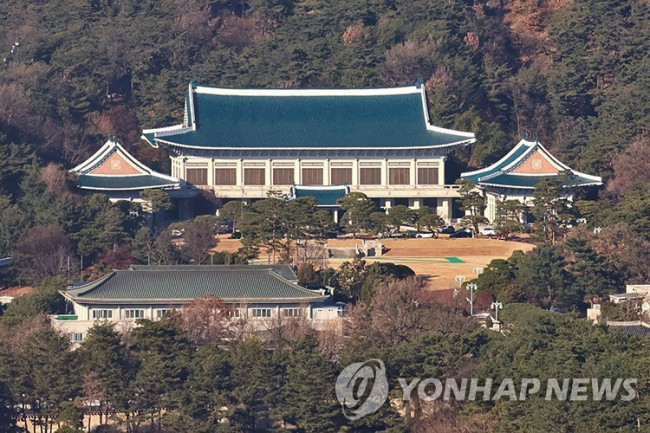 Blue House: "We will respect any conclusion on the right to request supplementary investigations... A prompt decision is needed to minimize confusion."
The Blue House [Photo by Lee Jung-hoon] 2025.12.8Regarding the issue of the prosecution's supplementary investigative authority, the Blue House stated on the 21st, "The decision on whether to abolish
Blue House: "We will respect any conclusion on the right to request supplementary investigations... A prompt decision is needed to minimize confusion."
The Blue House [Photo by Lee Jung-hoon] 2025.12.8Regarding the issue of the prosecution's supplementary investigative authority, the Blue House stated on the 21st, "The decision on whether to abolish
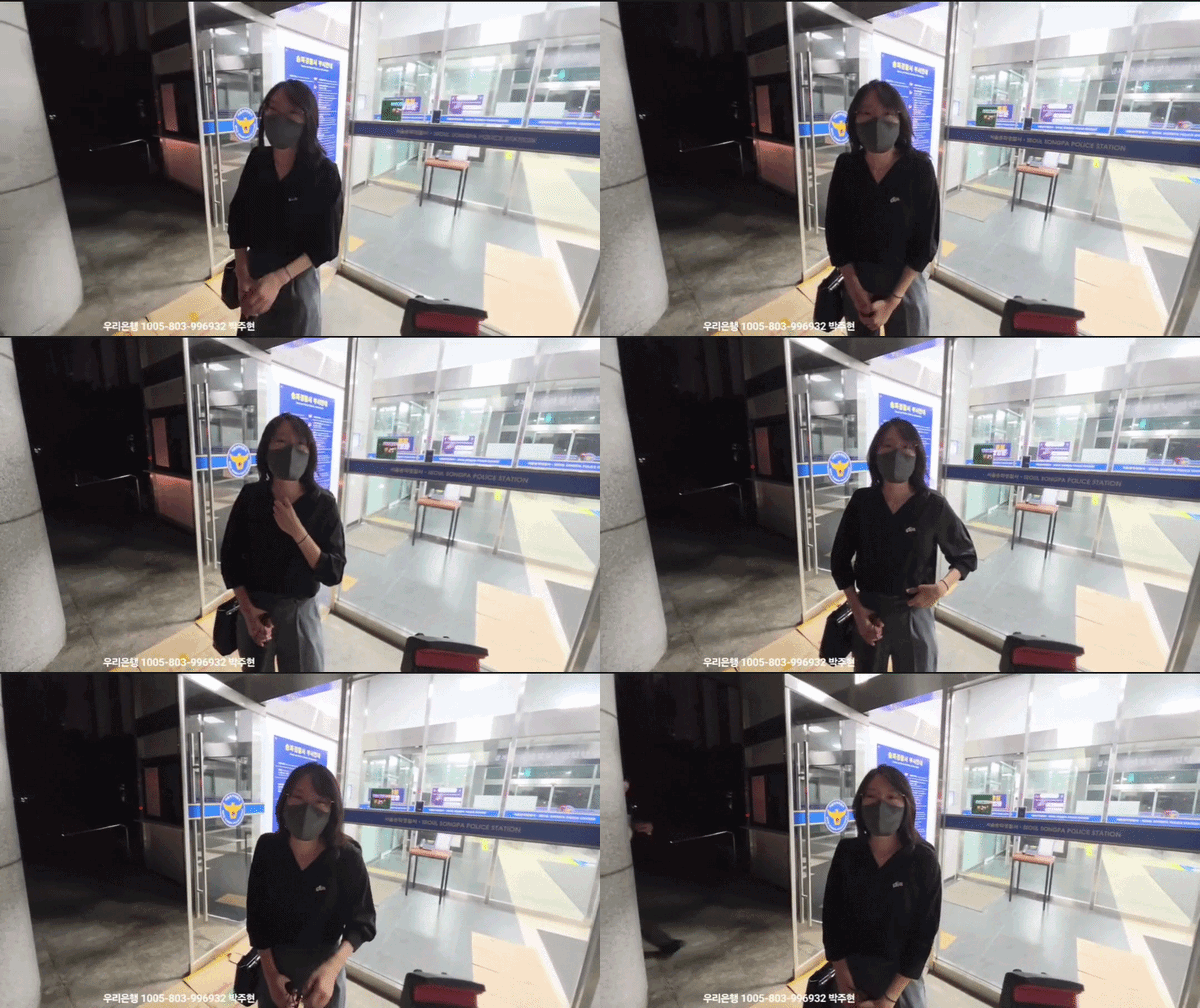 [Comprehensive 2nd Report] ‘Warrant Dismissed’ Oldark: “I Will Fight More for Freedom… I Am Thinking of First Lady Kim Keon-hee’s Hardships,” Expresses Feelings for the First Time
"Ol-darc" (A woman in her 30s) shares her feelings as she leaves the Songpa Police Station on the night of the 21st. [YouTube Channel Park Joo-hyun TV GIF] Comprehensive Update 2 (Additional Con
[Comprehensive 2nd Report] ‘Warrant Dismissed’ Oldark: “I Will Fight More for Freedom… I Am Thinking of First Lady Kim Keon-hee’s Hardships,” Expresses Feelings for the First Time
"Ol-darc" (A woman in her 30s) shares her feelings as she leaves the Songpa Police Station on the night of the 21st. [YouTube Channel Park Joo-hyun TV GIF] Comprehensive Update 2 (Additional Con
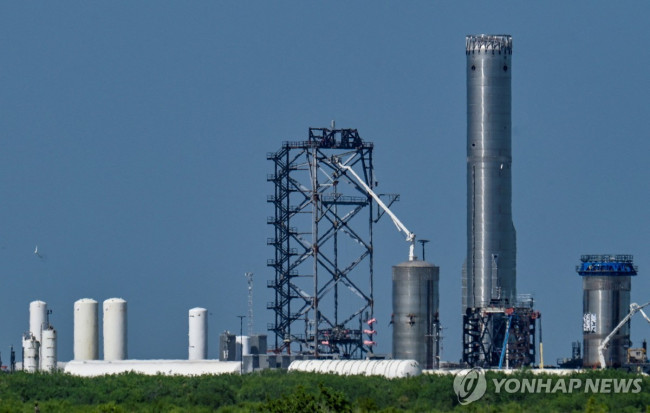 SpaceX overtakes Meta, pushing it down to 8th place in U.S. market capitalization
SpaceX Starship launch delayed [Reuters=Yonhap News]SpaceX has seen its market capitalization evaporate by over $1 trillion (1,489 trillion won) since peaking about a month ago, causing it to fall to
SpaceX overtakes Meta, pushing it down to 8th place in U.S. market capitalization
SpaceX Starship launch delayed [Reuters=Yonhap News]SpaceX has seen its market capitalization evaporate by over $1 trillion (1,489 trillion won) since peaking about a month ago, causing it to fall to
 Jeong-Ik Academy Board Chair Kim Myung-hee Launches ‘Lucia’s Love for Grandchildren: Quadrilingual Simultaneous Learning’ App
Kim Myung-hee, Chairperson of Jeong-ik Hakdang, has developed 'Lucia’s Love for Grandchildren: 4-Language Simultaneous Learning' with the help of AI and officially released it on the Google Play Sto
Jeong-Ik Academy Board Chair Kim Myung-hee Launches ‘Lucia’s Love for Grandchildren: Quadrilingual Simultaneous Learning’ App
Kim Myung-hee, Chairperson of Jeong-ik Hakdang, has developed 'Lucia’s Love for Grandchildren: 4-Language Simultaneous Learning' with the help of AI and officially released it on the Google Play Sto
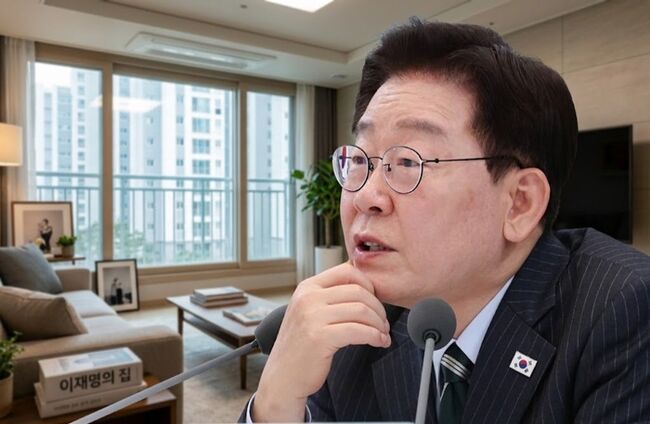 [Column by Park Joo-hyun] Shouldn't we put a price tag on the rise of my home value...?
[This image was created with the help of AI]Since you managed to sell your house well while defending your asking price, there is a point I have been wanting to make that I must address now. A sp
[Column by Park Joo-hyun] Shouldn't we put a price tag on the rise of my home value...?
[This image was created with the help of AI]Since you managed to sell your house well while defending your asking price, there is a point I have been wanting to make that I must address now. A sp
 [Photo] Evidence of Election Fraud Flooding U.S. Media… Trump Had 2.7 Million Votes Stolen
 [Video] U.S. Semiquincentennial Air Show... 'Art in the Sky' streaks across New York
 [Editorial Cartoon] A Draconian Law That Undermines Freedom of Expression

 List
List