Citizens stand atop the Berlin Wall shortly after its collapse on November 9, 1989.
On the evening of November 9, 1989, history in Berlin, Germany, changed in an instant. During a press conference, East German government spokesperson Günter Schabowski, while explaining new regulations for overseas travel, made a statement that was understood to take effect "immediately (effektiv sofort)."
As this news spread through television and radio, tens of thousands of East Berlin citizens flocked to the checkpoints, and border guards were ultimately unable to prevent the movement of the people. The Berlin Wall was effectively opened not by gunfire, but by the footsteps of citizens.
The Berlin Wall Was Meant to Prevent East Germans from Fleeing
This wall was erected by the East German government on August 13, 1961. Its official name was the "Anti-Fascist Protection Rampart (Antifaschistischer Schutzwall)." However, its actual purpose was to prevent East German residents from escaping to West Germany.
Between 1949 and 1961, before the construction of the wall, approximately 2.7 million East Germans moved to West Germany. This represented a significant portion of the East German population at the time. With skilled laborers, doctors, engineers, and even university students continuously leaving, the socialist system suffered a severe brain drain.
The collapse of the wall in 1989 did not happen overnight. In May of that same year, Hungary began dismantling the barbed wire fence along its border with Austria. Starting in the summer, tens of thousands of East Germans escaped to West Germany through Hungary, and in September, the "Monday Demonstrations (Montagsdemonstrationen)" began in Leipzig.
Under the slogan "We are the people (Wir sind das Volk)," citizens demanded freedom of expression, freedom of travel, and political reform. The scale of the demonstrations grew from thousands to hundreds of thousands, and the East German leadership could no longer control them.
The Causes of the Wall's Collapse Were Internal Economic Stagnation and Oppression
This process was neither an invasion by foreign armies nor an armed revolution. It was the result of economic stagnation, political oppression, restrictions on the freedom of movement, and the cumulative grievances of the people exploding from within the system.
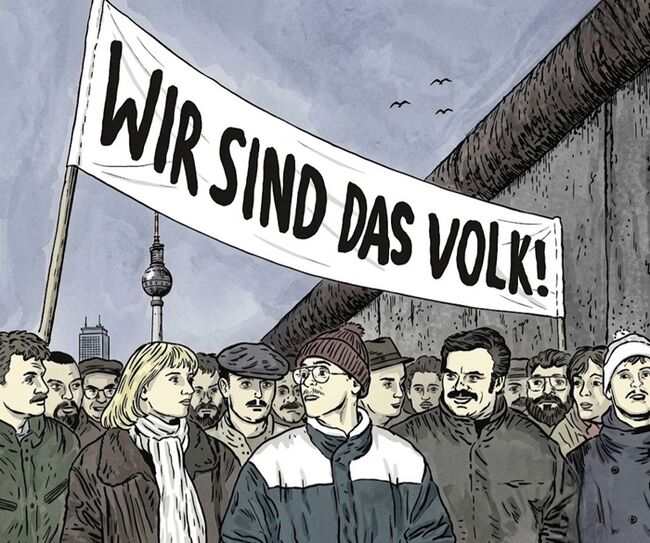 In 1989, East German citizens demanded freedom of expression, travel, and political reform under the slogan "We are the people (Wir sind das Volk)."
In particular, as Soviet leader Mikhail Gorbachev effectively abandoned the "Brezhnev Doctrine" and refrained from military intervention in Eastern European countries, the East German regime found itself in a situation where it could no longer rely on the might of the Soviet military.
However, at the time, some pro-North Korea activists and commentators who defended socialism tended to interpret the crisis of the communist bloc as being caused by Western economic pressure or the influence of the US-led international order, rather than the failure of the system itself.
Of course, it is true that Cold War competition and the international environment had an impact on the communist bloc. However, explaining the direct cause of the wall's collapse solely through external factors fails to sufficiently explain why East German residents were willing to risk their lives to leave the system.
The Berlin Wall was a symbol of the Cold War. At the same time, it was a symbol of a system that imprisoned its own people to prevent them from attaining freedom.
The events of November 9, 1989, were more than just a simple opening of borders. It was a moment when the choices of the people transcended the ideology of the state. Afterward, Germany was reunified on October 3, 1990, and the Soviet Union dissolved in 1991, marking a historical turning point for the European communist bloc.
From the perspective of anti-communism, the significance of this event is clear: no ideology can be sustained for long while continuously ignoring tangible outcomes and the freedom of the people. The collapse of the Berlin Wall is remembered not merely as a diplomatic incident, but as a historical case where a system that suppresses freedom revealed its own limitations.
Activists Who Chose Ideology Over Reality
After the Berlin Wall was opened on November 9, 1989, the flow of history accelerated. By the end of 1989, communist regimes in Eastern Europe, including Poland, Hungary, Czechoslovakia, Bulgaria, and Romania, collapsed one after another.
In particular, on December 25, 1989, Romanian dictator Nicolae Ceaușescu was executed by firing squad following a military trial. This is recorded as a symbolic scene of the fall of the communist bloc in Eastern Europe.
Then, on October 3, 1990, East Germany was reunified with West Germany. The German reunification was not just a territorial integration; it was an event that showed the whole world that a socialist planned economy could not defeat a free-market economy.
East German residents chose a society where they could move freely, choose their professions, and accumulate property, rather than the "equality" permitted by the state. This was a choice made not by ballot, but by voting with their feet.
The decisive moment came on December 26, 1991. The Soviet Union, which had been launched in 1922, was officially dissolved. The 15 republics became independent states, and the communist superpower that had formed one pillar of the Cold War vanished into history.
The reason why a system that had been maintained for nearly 70 years collapsed cannot be explained simply by American pressure or Western subterfuge. Today, history and political science widely discuss the collapse as the result of a complex accumulation of long-term economic stagnation, low productivity, inefficient planned economics, and the absence of political freedom.
However, among some pro-North Korea activists in South Korea, an interpretation emerged that emphasized the pressure of the US-led international order, information warfare, and economic blockades rather than accepting these changes as a failure of the system itself.
While it is true that international competition placed a burden on the communist bloc, it is difficult to explain the phenomenon of socialist countries—where hundreds of millions of people lived—collapsing almost simultaneously based on that factor alone.
The Berlin Wall was not brought down by the United States. The Monday demonstrations in Leipzig, the escape of East German citizens, and the crowds demanding the opening of the borders were what drove history.
The Monday demonstrations, which began in September 1989, expanded from thousands to hundreds of thousands, and the slogan "We are the people (Wir sind das Volk)" carried the meaning that the true owners of the state were the people, not the Communist Party. The East German government could no longer suppress this by force.
On the evening of November 9, 1989, when asked during a press conference about when the new travel regulations would take effect, East German Politburo member Günter Schabowski replied, "As far as I know, immediately, without delay (sofort, unverzüglich)."
As this statement was broadcast live, tens of thousands of citizens flocked to border crossings, and several passages, including the Bornholmer Straße checkpoint, were opened one after another.
Without clear instructions from their superiors, the border guards eventually allowed the citizens to pass. The wall effectively lost its function in the face of the people's power.
Anti-communism does not start from a feeling of hatred toward a specific country, but from a wariness of totalitarian systems that restrict freedom. The collapse of the Berlin Wall and the Eastern European communist bloc was a historical example demonstrating that reality is stronger than ideology.
No ideology can be sustained forever while continuously sacrificing the freedom, standard of living, and human dignity of its people. The end of the Cold War was not a simple change in the international situation, but an event that showed the process by which a system that ignores reality ultimately faces the judgment of history.
◆ Songsan Jeong Gwang-je
A poet and researcher of history and philosophy. Former board member of the Syngman Rhee Institute. Currently serving as a research advisor to the Korean Modern and Contemporary History Research Association and as the representative of the philosophy forum Lyceum. He has published four volumes of poetry, co-translated "Heroes of Heartbreak Ridge," and authored humanities books such as "Joseon Become Myth," "Humanities on the Tatami," and "A Liberal's Reading of Gramsci." Songsan is his pen name.

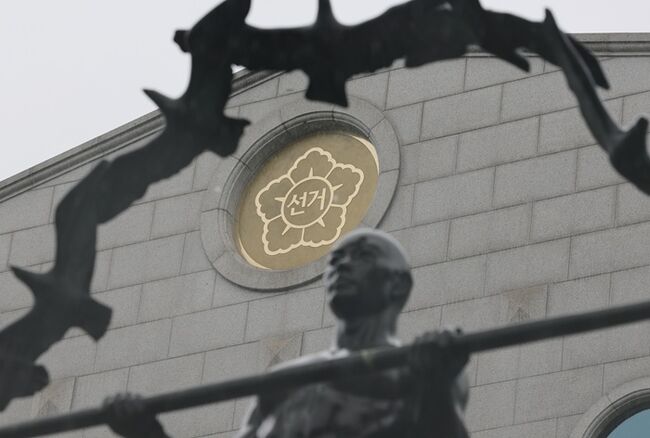 [Statement by the Seo-beokka Korea Military Academy Save-the-Nation Comrades Association] ㉖ Suppressing a Just Struggle for Sovereignty is a Violation of the Constitution and a Grave Crime Equivalent to Insurrection
National Election Commission. [Photo=Yonhap News]The ‘ballot paper shortage’ during the June 3 local elections was an act of constitutional destruction that shook the foundations of South Korean d
[Statement by the Seo-beokka Korea Military Academy Save-the-Nation Comrades Association] ㉖ Suppressing a Just Struggle for Sovereignty is a Violation of the Constitution and a Grave Crime Equivalent to Insurrection
National Election Commission. [Photo=Yonhap News]The ‘ballot paper shortage’ during the June 3 local elections was an act of constitutional destruction that shook the foundations of South Korean d
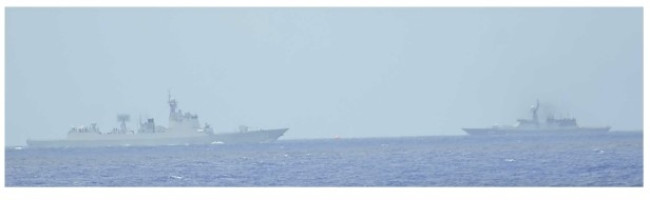 Japan's Ministry of Defense: "China and Russia conduct live-fire naval exercises in Japan's EEZ... China also fires machine guns"
Japan’s Ministry of Defense announced on the 21st that Chinese and Russian naval forces conducted live-fire exercises within Japan's Exclusive Economic Zone (EEZ) on the 19th, including machine gun
Japan's Ministry of Defense: "China and Russia conduct live-fire naval exercises in Japan's EEZ... China also fires machine guns"
Japan’s Ministry of Defense announced on the 21st that Chinese and Russian naval forces conducted live-fire exercises within Japan's Exclusive Economic Zone (EEZ) on the 19th, including machine gun
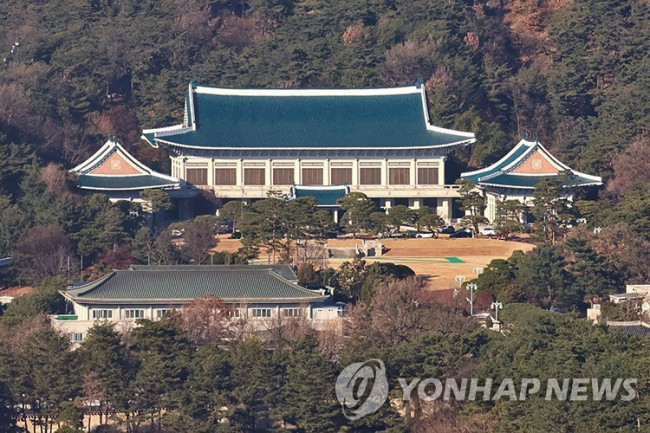 Blue House: "We will respect any conclusion on the right to request supplementary investigations... A prompt decision is needed to minimize confusion."
The Blue House [Photo by Lee Jung-hoon] 2025.12.8Regarding the issue of the prosecution's supplementary investigative authority, the Blue House stated on the 21st, "The decision on whether to abolish
Blue House: "We will respect any conclusion on the right to request supplementary investigations... A prompt decision is needed to minimize confusion."
The Blue House [Photo by Lee Jung-hoon] 2025.12.8Regarding the issue of the prosecution's supplementary investigative authority, the Blue House stated on the 21st, "The decision on whether to abolish
 'Oldarc' who blocked access to Jamsil counting station faces arrest warrant hearing… 4 Olympic Park protesters also under review
A woman in her 30s, accused of obstructing business by blocking sports organization staff from entering the indoor office at the Olympic Park Handball Gymnasium—which served as a vote counting
'Oldarc' who blocked access to Jamsil counting station faces arrest warrant hearing… 4 Olympic Park protesters also under review
A woman in her 30s, accused of obstructing business by blocking sports organization staff from entering the indoor office at the Olympic Park Handball Gymnasium—which served as a vote counting
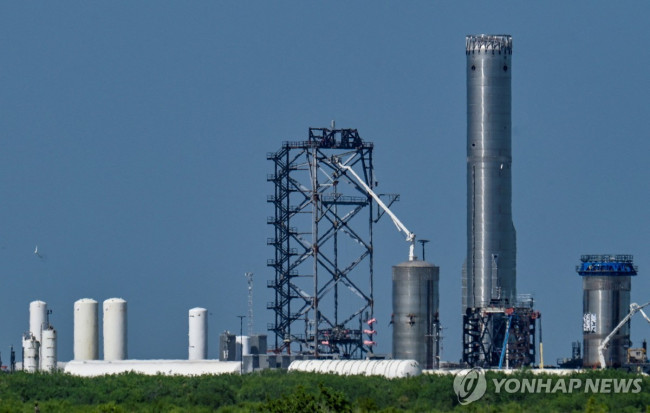 SpaceX overtakes Meta, pushing it down to 8th place in U.S. market capitalization
SpaceX Starship launch delayed [Reuters=Yonhap News]SpaceX has seen its market capitalization evaporate by over $1 trillion (1,489 trillion won) since peaking about a month ago, causing it to fall to
SpaceX overtakes Meta, pushing it down to 8th place in U.S. market capitalization
SpaceX Starship launch delayed [Reuters=Yonhap News]SpaceX has seen its market capitalization evaporate by over $1 trillion (1,489 trillion won) since peaking about a month ago, causing it to fall to
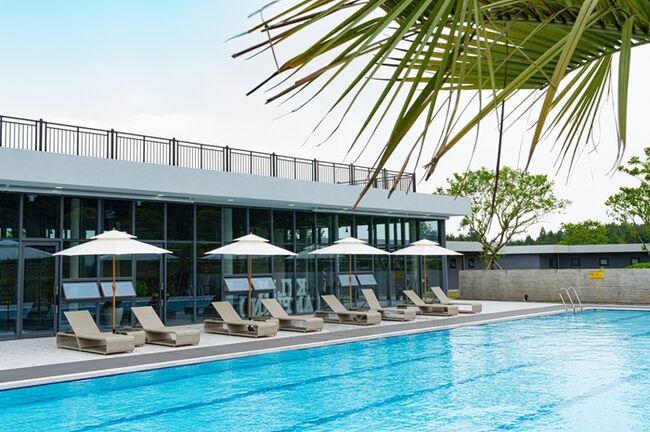 The Summer of 2026 in Jeju, documented by me… Kirin Villa Resort, August Summer Event
Kylin Villa Resort is launching its collaborative summer event, the "Kylin Summer Passport," which will run for one month starting August 1st.Kylin Villa Resort is launching its collaborative summer e
The Summer of 2026 in Jeju, documented by me… Kirin Villa Resort, August Summer Event
Kylin Villa Resort is launching its collaborative summer event, the "Kylin Summer Passport," which will run for one month starting August 1st.Kylin Villa Resort is launching its collaborative summer e
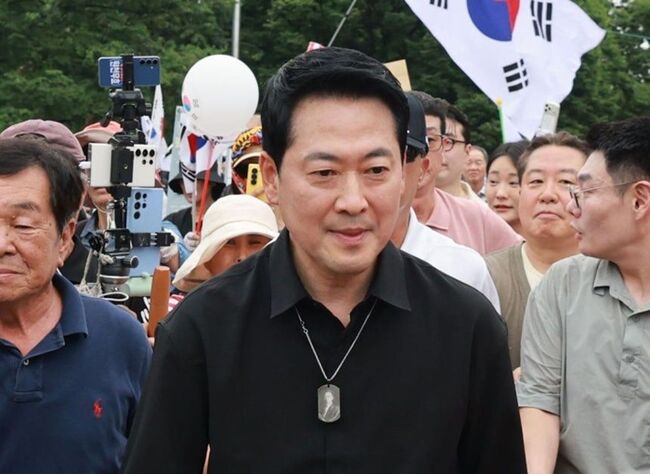 [Oh Sang-jong Column] Are You Afraid of the Party Members? Is That Why You Want to Abolish the Party Leader Position?
People Power Party leader Jang Dong-hyeok is moving through the Olympic Park Handball Gymnasium in Songpa-gu, Seoul, on the 17th. [Photo=Yonhap News]It is truly suspicious. What is the topic that Repr
[Oh Sang-jong Column] Are You Afraid of the Party Members? Is That Why You Want to Abolish the Party Leader Position?
People Power Party leader Jang Dong-hyeok is moving through the Olympic Park Handball Gymnasium in Songpa-gu, Seoul, on the 17th. [Photo=Yonhap News]It is truly suspicious. What is the topic that Repr
 [Photo] Evidence of Election Fraud Flooding U.S. Media… Trump Had 2.7 Million Votes Stolen
 [Video] U.S. Semiquincentennial Air Show... 'Art in the Sky' streaks across New York
 [Editorial Cartoon] A Draconian Law That Undermines Freedom of Expression

 List
List