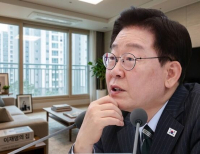
The 7th State of Affairs Declaration by the Professors' Association for Social Justice (CJP), held on the 18th of last month. [Photo: Yonhap News]
The ‘Committee for the Future of Respect for Human Rights in Prosecution,’ established by the Minister of Justice on June 10 via Directive No. 1615 rather than legislation, is essentially nothing more than an advisory body to the Minister.
The committee can only offer opinions and request cooperation; it possesses no independent legal authority to order public prosecutors' offices or individual prosecutors to submit investigation and trial records, nor can it compel the attendance or testimony of relevant individuals.
Furthermore, the ‘Supreme Prosecutors' Office Investigation Body for Fact-Finding on Allegations of Human Rights Violations or Abuse of Power,’ the so-called ‘Prosecution Fact-Finding Team,’ which was established within the Supreme Prosecutors' Office on June 24 at the direction of the Minister of Justice to assist the committee's work, is also an organization established by internal guidelines without legal basis. Therefore, it holds no lawful authority whatsoever.
Moreover, if the committee, under the pretext of investigating so-called abuse of prosecutorial power, extensively collects the investigation process and records of the “Lee Hwa-young case” and uses them as a basis to characterize previous investigations and indictments as ‘fabricated’ or to recommend the ‘withdrawal of indictments,’ this goes beyond mere human rights improvement activities. Ultimately, it is difficult to avoid the suspicion that this is a political procedure intended to undermine the legitimacy of the indictment against the defendant Lee Hwa-young and, by extension, the existing ‘Lee Jae-myung-related cases.’
Concerning and repetitive decisions and omissions have already occurred in criminal cases related to Lee Jae-myung. The Ministry of Justice invited suspicion of having effectively exerted influence over whether or not to appeal the Daejang-dong private developer case, and despite the investigative and trial teams having prepared an appeal, the prosecution leadership consciously allowed the appeal deadline to pass, thereby forfeiting the opportunity to re-litigate partial acquittals and limited forfeiture scopes in a higher court. The ‘split-contribution case’ involving the Lee Jae-myung campaign was a similar instance.
In particular, Lee Hwa-young's claim of a ‘salmon and alcohol party’ was recognized as perjury in a national jury trial, resulting in a prison sentence. Nevertheless, if this claim is used as a starting point to conclude that the entire past investigation was a fabrication and to pursue the withdrawal of indictments, it could be seen as an attempt by the executive branch to politically overturn a court's guilty verdict and finalized judicial proceedings.
No state agency can exist above the law. The executive branch must not create situations where prosecutorial power is exercised—or appears to be exercised—for political purposes, and the prosecution must also determine whether to exercise the power of indictment based solely on law and evidence, not political considerations. The courts must also maintain procedures that conform to the constitutional requirements of judicial independence and speedy trials, and that are understandable to the public.
Accordingly, we strictly advise the Prosecution Fact-Finding Team, as well as all public prosecutors' offices and individual prosecutors, of the following:
It is reasonable to view the Fact-Finding Team as neither a lawful inspection agency nor an investigative agency. The Supreme Court's decision on July 8 to deny the team's request to inspect trial records for the ‘illegal political funds case’ involving defendant Kim Yong was based on this very judgment. Therefore, the prosecutors assigned to it must not obey illegal orders or instructions to proceed with unlawful investigations. Such illegal investigations may be subject to Article 123 of the Criminal Act, ‘Abuse of Authority.’
Meanwhile, public prosecutors' offices and individual prosecutors should not submit investigation records, witness statements, internal reports, personal information, seized materials, or trial strategies simply because the Committee for the Future of Respect for Human Rights in Prosecution or the Fact-Finding Team demands them. First, the specific legal basis, the authority of the recipient to access the information, the purpose and scope of the use of such materials, and mechanisms for maintaining confidentiality must be verified.
Providing official secrets to external committee members without a legal basis may trigger charges of ‘Divulgence of Official Secrets’ under Article 127 of the Criminal Act. The Supreme Court has ruled that even if information is not explicitly marked as secret, it can be considered an official secret if it possesses significant benefits or substantial protective value that warrants it not being made public. Furthermore, if the illegal provision of personal information, arbitrary modification or deletion of records, creation of false reports, or concealment of evidence is involved, accountability under the Personal Information Protection Act, charges of creating false public documents, falsifying or altering official electronic records, or destruction of evidence may also be reviewed.
We, the ‘Professors' Association for Social Justice (CJP),’ once again clearly warn all prosecutors and public officials.
The mere fact of having obeyed orders does not exempt a public official from individual responsibility. If it is confirmed through objective evidence in the future that the Ministry of Justice's ‘Committee for the Future of Respect for Human Rights in Prosecution’ or the Supreme Prosecutors' Office's Fact-Finding Team made requests exceeding their authority, that prosecutors complied with such requests to submit materials illegally, or that there was involvement in the fabrication or concealment of evidence to withdraw an indictment, then not only the relevant minister and prosecution leadership but also the prosecutors and officials who carried out those instructions will be reported to the authorities and held criminally and disciplinarily accountable according to the law.
While the establishment of specific criminal liability is a matter for judicial authorities to determine based on individual facts, criminal or administrative punishment cannot be avoided if illegal acts are confirmed.
The rule of law can only be realized when the state is operated by law, not by individuals.
July 20, 2026
Professors' Association for Social Justice (CJP)
Committee on Constitutional Legislation

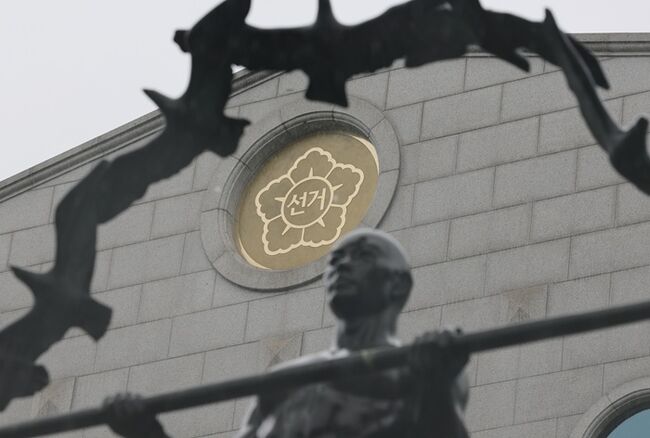 [Statement by the Seo-beokka Korea Military Academy Save-the-Nation Comrades Association] ㉖ Suppressing a Just Struggle for Sovereignty is a Violation of the Constitution and a Grave Crime Equivalent to Insurrection
National Election Commission. [Photo=Yonhap News]The ‘ballot paper shortage’ during the June 3 local elections was an act of constitutional destruction that shook the foundations of South Korean d
[Statement by the Seo-beokka Korea Military Academy Save-the-Nation Comrades Association] ㉖ Suppressing a Just Struggle for Sovereignty is a Violation of the Constitution and a Grave Crime Equivalent to Insurrection
National Election Commission. [Photo=Yonhap News]The ‘ballot paper shortage’ during the June 3 local elections was an act of constitutional destruction that shook the foundations of South Korean d
 Japan's Ministry of Defense: "China and Russia conduct live-fire naval exercises in Japan's EEZ... China also fires machine guns"
Japan’s Ministry of Defense announced on the 21st that Chinese and Russian naval forces conducted live-fire exercises within Japan's Exclusive Economic Zone (EEZ) on the 19th, including machine gun
Japan's Ministry of Defense: "China and Russia conduct live-fire naval exercises in Japan's EEZ... China also fires machine guns"
Japan’s Ministry of Defense announced on the 21st that Chinese and Russian naval forces conducted live-fire exercises within Japan's Exclusive Economic Zone (EEZ) on the 19th, including machine gun
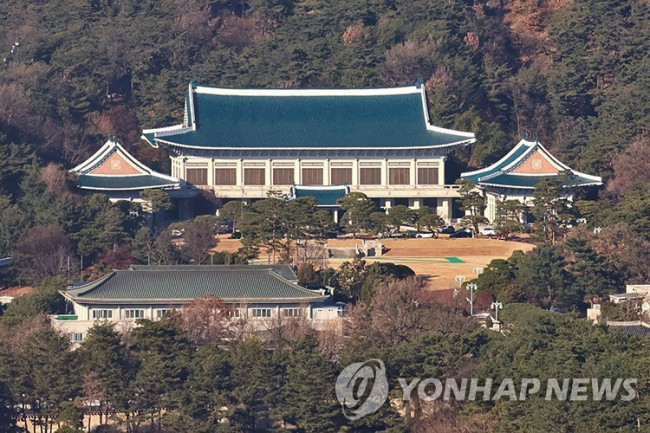 Blue House: "We will respect any conclusion on the right to request supplementary investigations... A prompt decision is needed to minimize confusion."
The Blue House [Photo by Lee Jung-hoon] 2025.12.8Regarding the issue of the prosecution's supplementary investigative authority, the Blue House stated on the 21st, "The decision on whether to abolish
Blue House: "We will respect any conclusion on the right to request supplementary investigations... A prompt decision is needed to minimize confusion."
The Blue House [Photo by Lee Jung-hoon] 2025.12.8Regarding the issue of the prosecution's supplementary investigative authority, the Blue House stated on the 21st, "The decision on whether to abolish
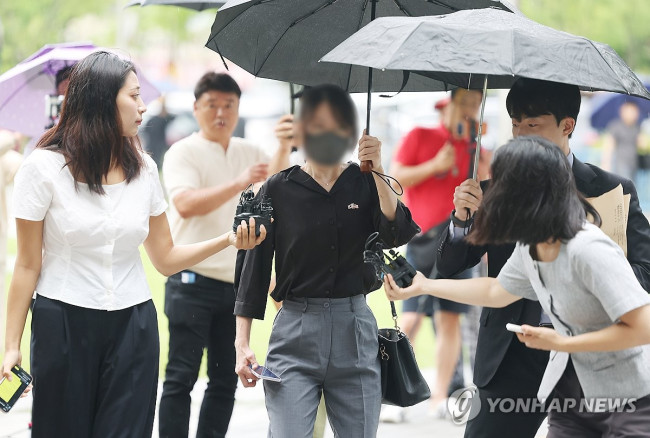 'Oldarc' who blocked access to Jamsil counting station faces arrest warrant hearing… 4 Olympic Park protesters also under review
A woman in her 30s, accused of obstructing business by blocking sports organization staff from entering the indoor office at the Olympic Park Handball Gymnasium—which served as a vote counting
'Oldarc' who blocked access to Jamsil counting station faces arrest warrant hearing… 4 Olympic Park protesters also under review
A woman in her 30s, accused of obstructing business by blocking sports organization staff from entering the indoor office at the Olympic Park Handball Gymnasium—which served as a vote counting
 SpaceX overtakes Meta, pushing it down to 8th place in U.S. market capitalization
SpaceX Starship launch delayed [Reuters=Yonhap News]SpaceX has seen its market capitalization evaporate by over $1 trillion (1,489 trillion won) since peaking about a month ago, causing it to fall to
SpaceX overtakes Meta, pushing it down to 8th place in U.S. market capitalization
SpaceX Starship launch delayed [Reuters=Yonhap News]SpaceX has seen its market capitalization evaporate by over $1 trillion (1,489 trillion won) since peaking about a month ago, causing it to fall to
 The Summer of 2026 in Jeju, documented by me… Kirin Villa Resort, August Summer Event
Kylin Villa Resort is launching its collaborative summer event, the "Kylin Summer Passport," which will run for one month starting August 1st.Kylin Villa Resort is launching its collaborative summer e
The Summer of 2026 in Jeju, documented by me… Kirin Villa Resort, August Summer Event
Kylin Villa Resort is launching its collaborative summer event, the "Kylin Summer Passport," which will run for one month starting August 1st.Kylin Villa Resort is launching its collaborative summer e
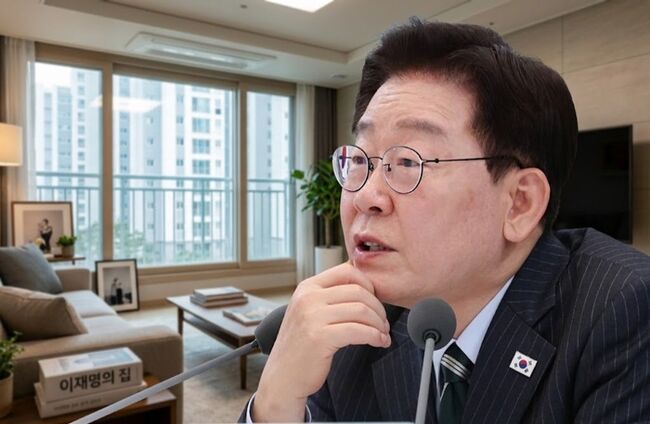 [Column by Park Joo-hyun] Shouldn't we put a price tag on the rise of my home value...?
[This image was created with the help of AI]Since you managed to sell your house well while defending your asking price, there is a point I have been wanting to make that I must address now. A sp
[Column by Park Joo-hyun] Shouldn't we put a price tag on the rise of my home value...?
[This image was created with the help of AI]Since you managed to sell your house well while defending your asking price, there is a point I have been wanting to make that I must address now. A sp
 [Photo] Evidence of Election Fraud Flooding U.S. Media… Trump Had 2.7 Million Votes Stolen
 [Video] U.S. Semiquincentennial Air Show... 'Art in the Sky' streaks across New York
 [Editorial Cartoon] A Draconian Law That Undermines Freedom of Expression

 List
List