Solar panels [Photo=Yonhap News]
As generative AI and semiconductor clusters emerge as the future of South Korean industry, filling the massive "power gap" that lies ahead has become a national priority. This is why nuclear power is once again receiving attention.
However, some argue, "Why build more nuclear power plants when the Honam region already has an abundance of RE100 electricity?" They claim that if renewable energy facilities like solar and wind power are massively expanded to 100GW, the power demand for semiconductors and AI data centers can be met. This argument is often accompanied by justifications related to climate change response and regional development.
Electricity must be supplied at the right place, at the right time, and with the right quality.
Yet, when we strip away government subsidies and policy rhetoric and examine the situation through the lenses of physics and market economics, the conclusion changes. The mere fact that electricity has been produced at a power plant does not mean that electricity holds economic value.
Electricity only becomes useful when it is supplied to the necessary location, at the necessary time, and with the necessary quality. By this standard, current solar power in the Honam region is unlikely to serve as a primary power source for the AI and semiconductor industries.
Of course, solar power has clear advantages: it requires no fuel costs, facilities can be installed in a modular fashion, and construction periods are shorter than those of nuclear or large-scale thermal power plants.
Distributed installation in already-used spaces, such as building rooftops or parking lots, can reduce transmission and distribution losses and help manage some of the cooling demand during daytime hours in the summer. It also has the advantage of not emitting carbon or air pollutants directly during operation.
However, these advantages do not eliminate the physical limitations of solar power. Solar energy cannot be generated at night, and its output fluctuates significantly depending on cloud cover and the seasons.
South Korea has high land prices, mountainous terrain, and a lower capacity factor for solar facilities compared to the Southwestern United States or the deserts of the Middle East. Therefore, when evaluating the economic feasibility of solar power, one must calculate not only the construction cost of the power plant itself but also the total system costs, including transmission networks, output curtailment, standby generators, and energy storage devices.
In regions like Texas, the rapid expansion of solar power was possible due to vast, inexpensive land, abundant solar radiation, and a large-scale power market. Conversely, South Korea's levelized cost of electricity (LCOE) for solar power varies by location and scale, but is estimated to be roughly 110–120 KRW per 1kWh.
Compared to the cost of existing nuclear power, which ranges from 50 to 60 KRW, there is a significant gap from the outset. Furthermore, business viability is only maintained through Renewable Energy Certificates (REC) and various policy support measures.
A more critical problem is the temporal and spatial nature of electricity.
The "hidden system costs" that remain obscured
Unlike general goods, electricity cannot be stored in a warehouse and retrieved whenever needed. In the power grid, production and consumption must match almost exactly at every moment. When I teach physics, I describe the power grid as a massive, real-time experimental device. Frequency and voltage do not move according to political slogans. If supply exceeds or falls short of demand, the laws of physics immediately demonstrate the consequences.
Currently, a significant portion of domestic solar power facilities is concentrated in the Honam region, where land prices are relatively low. However, semiconductor factories and AI data centers, which consume massive amounts of power 24 hours a day, are primarily located in the Seoul metropolitan area.
To transmit electricity generated in the Honam region to the metropolitan area, a new large-scale ultra-high voltage transmission network connecting the west coast to the inland must be constructed. This could cost anywhere from trillions to tens of trillions of won.
However, these transmission costs and grid reinforcement costs are not properly reflected in the individual cost of solar power. A significant portion is transferred to KEPCO’s transmission/distribution investment costs and deficits, ultimately returning to the public in the form of electricity bills or tax burdens.
Looking only at the unit cost recorded on a meter at the power plant and declaring "solar is cheap" is like calculating the price of a product manufactured in a factory without accounting for shipping and warehousing costs.
In the Honam region, during spring and autumn, output curtailment is becoming frequent on sunny days when power demand is low, as solar output peaks simultaneously. This involves forcibly switching off solar facilities that could otherwise generate power to protect the grid.
High generation volume does not necessarily equate to high value. Electricity produced at times when no one needs it can see its market price drop to zero or even turn negative.
Physically, energy cannot disappear. However, economically, its value vanishes the moment it loses the necessary time and place. Electricity left over in the middle of the day and electricity required by a semiconductor factory after sunset are, in effect, different products, despite having the same name.
Electricity no one uses has no value
Some argue for storing daytime electricity in large-scale batteries (ESS) for use at night. However, adding batteries introduces charging/discharging losses, power conversion losses, fire prevention facility requirements, and degradation and replacement costs.
While it is possible to shift power for a few hours within a day, the scale and cost of storage grow exponentially when trying to account for multiple days of cloud cover or seasonal variations. Adding just the storage costs to the generation costs could push the electricity unit cost above 150–200 KRW per 1kWh.
We must also look at the case of California. Although they rapidly expanded renewable energy facilities based on favorable solar and wind conditions, the financial burden of electricity rates has significantly increased due to rising costs for transmission networks, storage devices, gas backups, and wildfire mitigation. The fact that solar panel prices have fallen does not mean that total power system costs automatically decrease.
It is not necessary to reject solar power entirely. Methods that produce and consume electricity close to where it is needed, such as rooftop solar, parking lot solar, and self-consumption facilities, have significant utility. However, the idea of installing large-scale solar in the Honam region just to find cheap land, spending massive amounts to send it to the capital area, and then storing the excess in batteries ignores both economic feasibility and physical reality.
Solar power in the Honam region, dependent on the "IV drip" of subsidies, cannot become the primary power source for the AI and semiconductor industries. A power strategy upon which national competitiveness depends should be evaluated not by image or good intentions, but by supply stability, power quality, and total cost.
An 'Energy Mix' based on cold reason is needed
We must establish nuclear power, which produces electricity stably 24 hours a day, as the backbone of the power system, and use natural gas, pumped-storage hydro power, and transmission networks in tandem to respond to demand fluctuations. It is reasonable to combine solar and wind power as auxiliary sources within an economically viable range, based on regional and time-of-day conditions.
It is the laws of physics, not slogans, that move electricity through the grid. What South Korea needs is not a policy that merely hits numerical targets for renewable energy. We require an energy mix born of cold reason—one that calculates every system cost from the power plant to the factory outlet, while also considering stability and power quality.
◆ Dr. Chae Soo-jo
Ph.D. in Physics, Seoul National University

 [Statement by the Seo-beokka Korea Military Academy Save-the-Nation Comrades Association] ㉖ Suppressing a Just Struggle for Sovereignty is a Violation of the Constitution and a Grave Crime Equivalent to Insurrection
National Election Commission. [Photo=Yonhap News]The ‘ballot paper shortage’ during the June 3 local elections was an act of constitutional destruction that shook the foundations of South Korean d
[Statement by the Seo-beokka Korea Military Academy Save-the-Nation Comrades Association] ㉖ Suppressing a Just Struggle for Sovereignty is a Violation of the Constitution and a Grave Crime Equivalent to Insurrection
National Election Commission. [Photo=Yonhap News]The ‘ballot paper shortage’ during the June 3 local elections was an act of constitutional destruction that shook the foundations of South Korean d
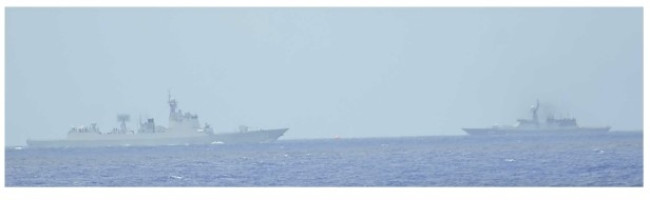 Japan's Ministry of Defense: "China and Russia conduct live-fire naval exercises in Japan's EEZ... China also fires machine guns"
Japan’s Ministry of Defense announced on the 21st that Chinese and Russian naval forces conducted live-fire exercises within Japan's Exclusive Economic Zone (EEZ) on the 19th, including machine gun
Japan's Ministry of Defense: "China and Russia conduct live-fire naval exercises in Japan's EEZ... China also fires machine guns"
Japan’s Ministry of Defense announced on the 21st that Chinese and Russian naval forces conducted live-fire exercises within Japan's Exclusive Economic Zone (EEZ) on the 19th, including machine gun
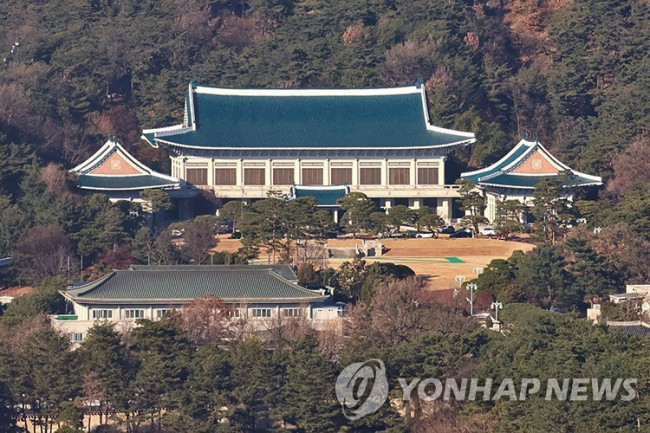 Blue House: "We will respect any conclusion on the right to request supplementary investigations... A prompt decision is needed to minimize confusion."
The Blue House [Photo by Lee Jung-hoon] 2025.12.8Regarding the issue of the prosecution's supplementary investigative authority, the Blue House stated on the 21st, "The decision on whether to abolish
Blue House: "We will respect any conclusion on the right to request supplementary investigations... A prompt decision is needed to minimize confusion."
The Blue House [Photo by Lee Jung-hoon] 2025.12.8Regarding the issue of the prosecution's supplementary investigative authority, the Blue House stated on the 21st, "The decision on whether to abolish
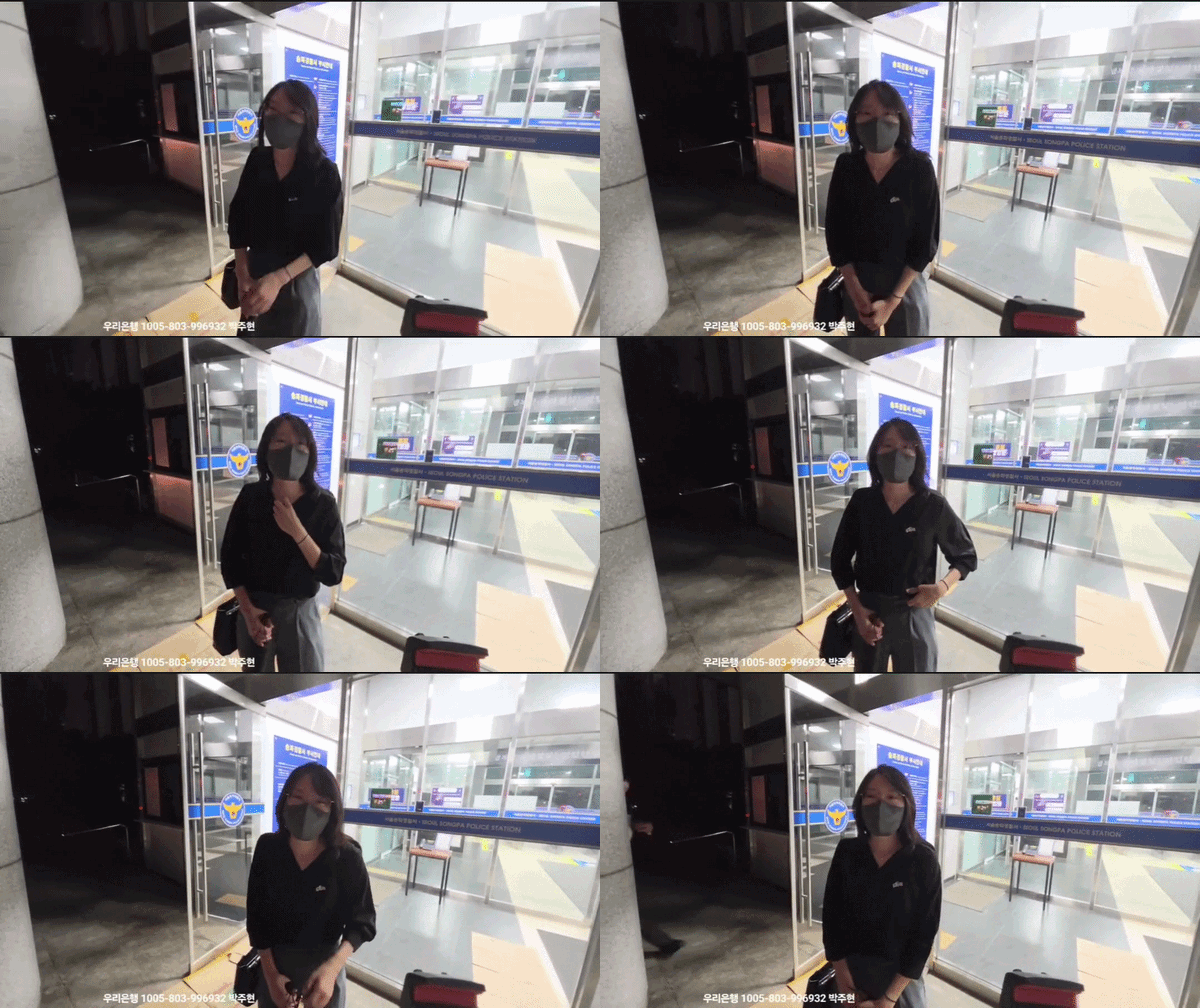 [Comprehensive 2nd Report] ‘Warrant Dismissed’ Oldark: “I Will Fight More for Freedom… I Am Thinking of First Lady Kim Keon-hee’s Hardships,” Expresses Feelings for the First Time
"Ol-darc" (A woman in her 30s) shares her feelings as she leaves the Songpa Police Station on the night of the 21st. [YouTube Channel Park Joo-hyun TV GIF] Comprehensive Update 2 (Additional Con
[Comprehensive 2nd Report] ‘Warrant Dismissed’ Oldark: “I Will Fight More for Freedom… I Am Thinking of First Lady Kim Keon-hee’s Hardships,” Expresses Feelings for the First Time
"Ol-darc" (A woman in her 30s) shares her feelings as she leaves the Songpa Police Station on the night of the 21st. [YouTube Channel Park Joo-hyun TV GIF] Comprehensive Update 2 (Additional Con
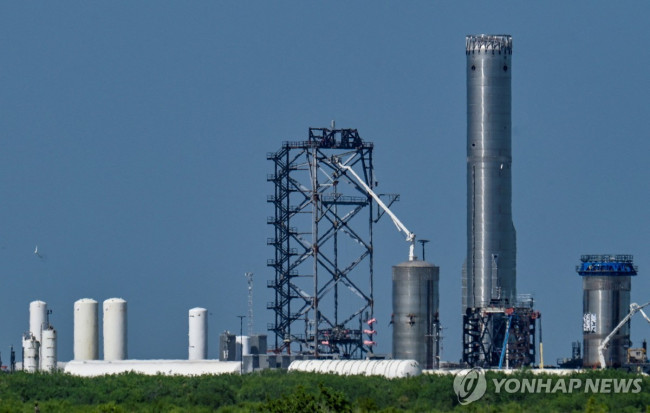 SpaceX overtakes Meta, pushing it down to 8th place in U.S. market capitalization
SpaceX Starship launch delayed [Reuters=Yonhap News]SpaceX has seen its market capitalization evaporate by over $1 trillion (1,489 trillion won) since peaking about a month ago, causing it to fall to
SpaceX overtakes Meta, pushing it down to 8th place in U.S. market capitalization
SpaceX Starship launch delayed [Reuters=Yonhap News]SpaceX has seen its market capitalization evaporate by over $1 trillion (1,489 trillion won) since peaking about a month ago, causing it to fall to
 Jeong-Ik Academy Board Chair Kim Myung-hee Launches ‘Lucia’s Love for Grandchildren: Quadrilingual Simultaneous Learning’ App
Kim Myung-hee, Chairperson of Jeong-ik Hakdang, has developed 'Lucia’s Love for Grandchildren: 4-Language Simultaneous Learning' with the help of AI and officially released it on the Google Play Sto
Jeong-Ik Academy Board Chair Kim Myung-hee Launches ‘Lucia’s Love for Grandchildren: Quadrilingual Simultaneous Learning’ App
Kim Myung-hee, Chairperson of Jeong-ik Hakdang, has developed 'Lucia’s Love for Grandchildren: 4-Language Simultaneous Learning' with the help of AI and officially released it on the Google Play Sto
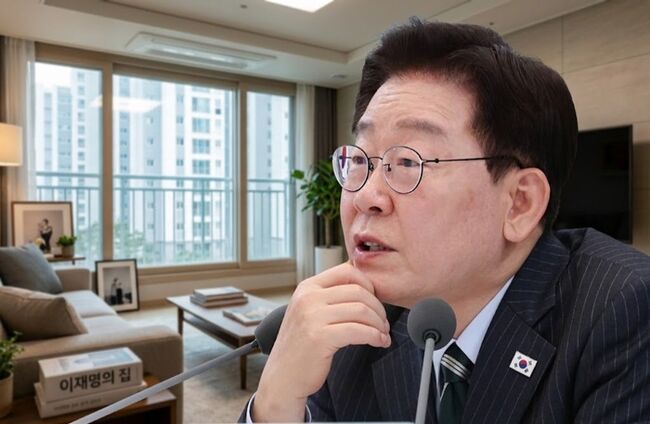 [Column by Park Joo-hyun] Shouldn't we put a price tag on the rise of my home value...?
[This image was created with the help of AI]Since you managed to sell your house well while defending your asking price, there is a point I have been wanting to make that I must address now. A sp
[Column by Park Joo-hyun] Shouldn't we put a price tag on the rise of my home value...?
[This image was created with the help of AI]Since you managed to sell your house well while defending your asking price, there is a point I have been wanting to make that I must address now. A sp
 [Photo] Evidence of Election Fraud Flooding U.S. Media… Trump Had 2.7 Million Votes Stolen
 [Video] U.S. Semiquincentennial Air Show... 'Art in the Sky' streaks across New York
 [Editorial Cartoon] A Draconian Law That Undermines Freedom of Expression

 List
List