A total of 2,032 attack and reconnaissance drones to be introduced... Full delivery to be completed by 2033
Taiwan's Parliament Passes Opposition Proposal for Military Drone Budget; Government's Special Budget Bill Rejected
 Taiwanese President Lai Ching-te participates in an annual drill preparing for a Chinese invasion [Reuters=Yonhap News file photo]
With Chinese President Xi Jinping’s visit to the U.S. expected next month, Taiwan has signed a contract to purchase new drones from the United States worth approximately 1.2 trillion won.
According to Taiwan's Liberty Times on the 27th, the Taiwanese Ministry of National Defense announced the results of the bid for the U.S.-made drone procurement project, valued at 26.9 billion New Taiwan dollars (approximately 1.2 trillion won), through the government's e-procurement system that day.
Based on the purchase list previously released by the Ministry of National Defense, the drones being introduced include 1,554 ALTIUS-700M attack (suicide) drones and 478 ALTIUS-600ISR reconnaissance drones, totaling 2,032 units.
The ALTIUS-700M, designed for anti-tank strikes, weighs 29.5 kg and has an endurance of approximately two hours when equipped with a warhead.
The ALTIUS-600ISR, which will serve as "eyes in the sky," features a long endurance of 3.5 to 4 hours. The Liberty Times explained that together with the ALTIUS-700M, these drones will form a comprehensive "kill chain" system characterized by the "integration of reconnaissance and strike capabilities."
While the U.S. previously announced that the approved purchase price for these drone systems was approximately 1.1 billion dollars (about 1.5 trillion won), the winning bid amount announced on the e-procurement system (26.9 billion New Taiwan dollars) covers the cost of the drone airframes and systems.
These next-generation drones are expected to be delivered starting in the fourth quarter of this year, though the full delivery is scheduled to be completed by June 2033.
The Taiwanese Ministry of National Defense emphasized that the drone missile system will comprehensively strengthen national defense resilience in preparation for threats from adversaries surrounding the Taiwan Strait.
This contract is a follow-up to the large-scale arms sale package for Taiwan approved by the U.S. last year.
The U.S. approved 11.1 billion dollars (approximately 15.3 trillion won) in arms sales to Taiwan last December.
Meanwhile, Taiwan’s Legislative Yuan (parliament), where the opposition holds a majority, rejected the government’s "Special Ordinance for the Procurement of Autonomous Unmanned Systems," which included a special budget for drone procurement.
The government's proposal aimed to secure a special budget of 210 billion New Taiwan dollars (approximately 9 trillion won) by 2031.
The Taiwanese government had been pushing to introduce approximately 210,000 drones, citing the importance of unmanned weapons in modern warfare as demonstrated by the wars in Ukraine and Iran.
Instead of the special budget bill, the Legislative Yuan passed an opposition-led plan to allocate 240 billion New Taiwan dollars (approximately 10 trillion won) over six years from the general budget, with an investment of 40 billion New Taiwan dollars per year in principle.
China continues to criticize Taiwan's moves to increase its military power.
Zhang Xiaogang, a spokesperson for China's Ministry of National Defense, said during a regular press briefing that day, targeting the Lai Ching-te administration and the ruling Democratic Progressive Party (DPP), "They are squandering the money collected from the blood and sweat of the people and are obsessed only with expanding military power, thereby undermining the livelihoods and welfare of the people in Taiwan." He added, "Ultimately, this will exhaust Taiwan's financial foundation, and (the Lai Ching-te administration) will not be able to avoid a tragic end."
What do you think of this article?

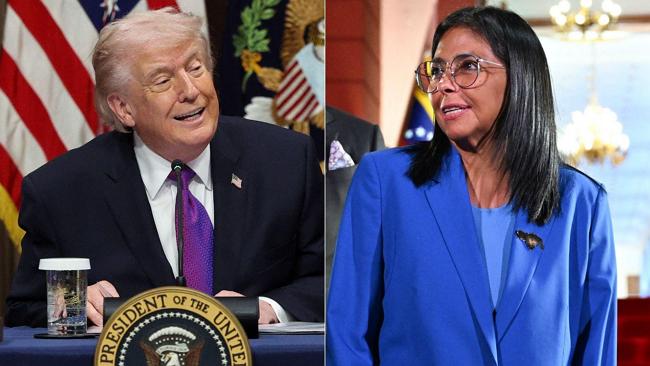 [Analysis] Is a ‘Win-Win’ Possible for the U.S. and Venezuela?
U.S. President Donald Trump and Venezuelan Interim President Delcy Rodríguez. The U.S. government has secured a 35% stake in the parent company of the private oil firm NABEP and the rights to acquire
[Analysis] Is a ‘Win-Win’ Possible for the U.S. and Venezuela?
U.S. President Donald Trump and Venezuelan Interim President Delcy Rodríguez. The U.S. government has secured a 35% stake in the parent company of the private oil firm NABEP and the rights to acquire
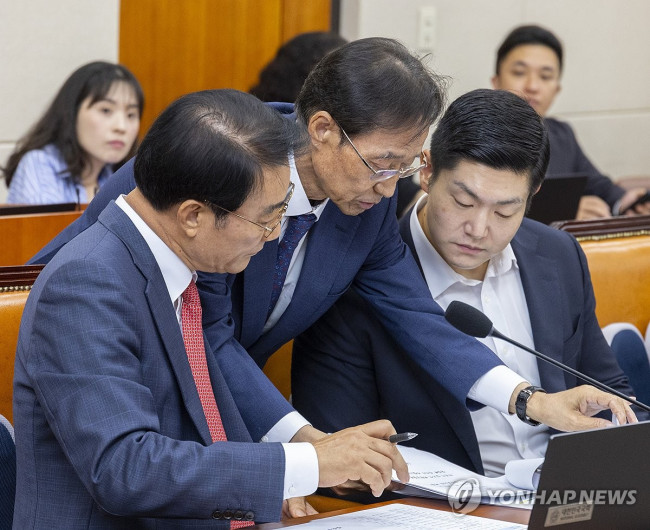 PPP estimates 54 trillion won in losses... to push for parliamentary investigation into leveraged ETFs
Opposition party members and National Policy Committee Chairman Yoo Dong-soo consulting on the processing of proposed bills [Seoul=Yonhap News]On the 3rd, the People Power Party announced, "We will pu
PPP estimates 54 trillion won in losses... to push for parliamentary investigation into leveraged ETFs
Opposition party members and National Policy Committee Chairman Yoo Dong-soo consulting on the processing of proposed bills [Seoul=Yonhap News]On the 3rd, the People Power Party announced, "We will pu
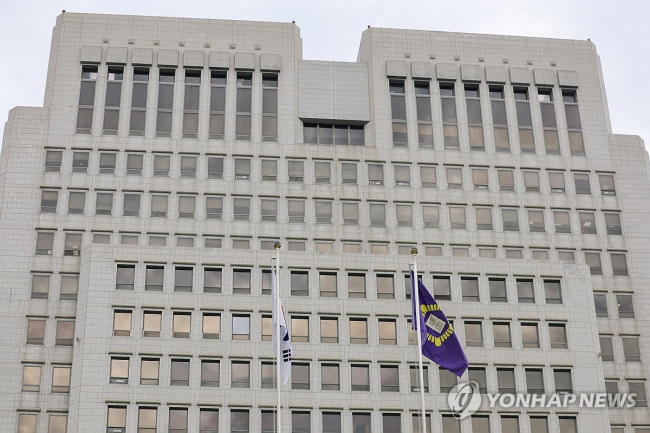 27 legal professionals from the Seoul National University Law School class of '76: "The Blue House’s demand for the reappointment of Supreme Court Justices is unjust."
The Supreme Court of Korea [Seoul=Yonhap News] Twenty-seven legal professionals from the Seoul National University College of Law's class of '76 issued a joint statement on the 3rd, criticizing P
27 legal professionals from the Seoul National University Law School class of '76: "The Blue House’s demand for the reappointment of Supreme Court Justices is unjust."
The Supreme Court of Korea [Seoul=Yonhap News] Twenty-seven legal professionals from the Seoul National University College of Law's class of '76 issued a joint statement on the 3rd, criticizing P
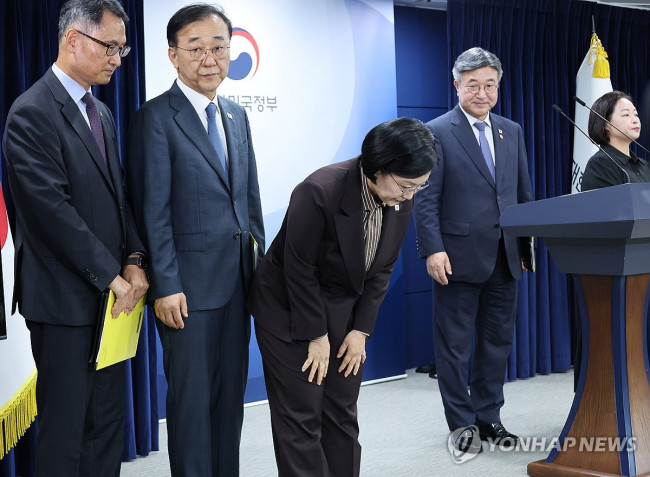 Relocation of Public Institutions to Begin Next Year… "Minimize Retention in Capital Region, Reduce 109 Institutions"
The government will begin the full-scale relocation of administrative and public institutions starting in the first half of next year.It is also launching reforms to reduce the number of public instit
Relocation of Public Institutions to Begin Next Year… "Minimize Retention in Capital Region, Reduce 109 Institutions"
The government will begin the full-scale relocation of administrative and public institutions starting in the first half of next year.It is also launching reforms to reduce the number of public instit
 [New Book] The True Face of the Ivory Tower Hidden in the Shadow of Power… Park Sun-kyung’s ‘Misaki’
The university campus, often called a sanctuary of intellect. A new novel has been published that sharply dissects the hypocrisy and absurdity committed within those solid walls of power. &
[New Book] The True Face of the Ivory Tower Hidden in the Shadow of Power… Park Sun-kyung’s ‘Misaki’
The university campus, often called a sanctuary of intellect. A new novel has been published that sharply dissects the hypocrisy and absurdity committed within those solid walls of power. &
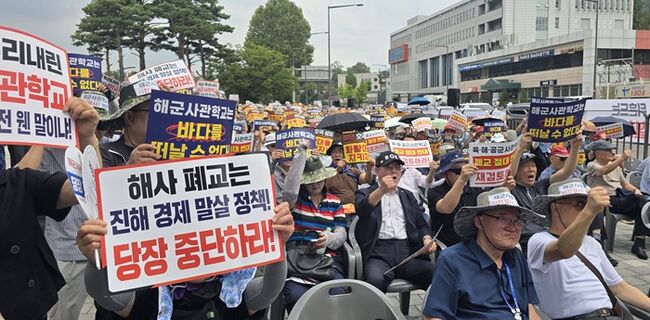 [Photo] “We Oppose the Closing of the Military Academy”… Large-Scale Protest Held in Front of the War Memorial on the 26th
The "National Solidarity for Preventing the Closure of Military Academies" held a rally to protest the closure of military academies at the plaza in front of the War Memorial of Korea in Samgakji, Seo
[Photo] “We Oppose the Closing of the Military Academy”… Large-Scale Protest Held in Front of the War Memorial on the 26th
The "National Solidarity for Preventing the Closure of Military Academies" held a rally to protest the closure of military academies at the plaza in front of the War Memorial of Korea in Samgakji, Seo
 [Trending Destinations] The Leisure of Seoul's Hangang Bus and the Romance of Hong Kong's Star Ferry
Hannam Bridge viewed from the Hangang Bus. [Video = Reporter Lim Yo-hee]With the introduction of the Hangang Bus, Seoul—which previously lacked sufficient water-based public transport—has gained a
[Trending Destinations] The Leisure of Seoul's Hangang Bus and the Romance of Hong Kong's Star Ferry
Hannam Bridge viewed from the Hangang Bus. [Video = Reporter Lim Yo-hee]With the introduction of the Hangang Bus, Seoul—which previously lacked sufficient water-based public transport—has gained a
 [Special Contribution: Songsan] A Cabinet Reshuffle Is Not About Selecting Loyalists
In a liberal democracy, the president is not a monarch, and cabinet ministers are not vassals. Therefore, the criteria for cabinet reshuffles are clear: competence, responsibility, and loyalty to the
[Special Contribution: Songsan] A Cabinet Reshuffle Is Not About Selecting Loyalists
In a liberal democracy, the president is not a monarch, and cabinet ministers are not vassals. Therefore, the criteria for cabinet reshuffles are clear: competence, responsibility, and loyalty to the
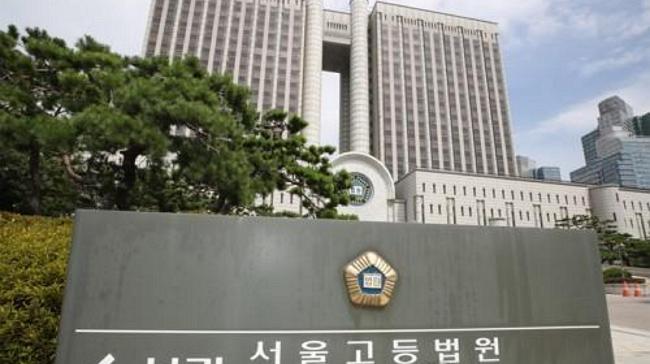 [Issue Commentary] 3 Reasons Why the Lee Jae-myung Trial Must Proceed
 [Editorial Cartoon] A Draconian Law That Undermines Freedom of Expression

 List
List