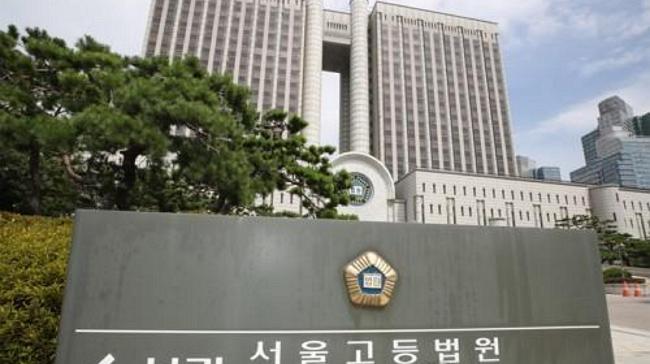
 A view of the Seoul High Court. The 7th Criminal Division of the Seoul High Court, which is in charge of the remand trial for Lee Jae-myung's violation of the Public Official Election Act, has not held a hearing since the trial date was set to "be determined later" last June. The current bench consists of Presiding Judge Koo Hoe-keun and High Court Judges Kim Eun-gu and Park Ju-young. [Photo = Yonhap News]
“Why has the remand trial for President Lee Jae-myung’s violation of the Public Official Election Act not yet been held?”
There is no need to provide a political answer to this question. It is unnecessary to argue that he should be shown leniency because he is president, or that he should be judged more strictly because he is president. One simply needs to read the rulings and the law.
When you lay out the 1995 Constitutional Court decision (94Hun-Ma 246), the 2026 Supreme Court ruling (2026Do6500), current statutes like the Prosecutors' Office Act and the Criminal Procedure Act, and the Public Prosecution Service Act taking effect next month, there are three main reasons why Lee Jae-myung’s trial should proceed.
First, the Constitutional Court established the principle that presidential immunity from prosecution should not be interpreted as a system that grants the president, as an individual, greater criminal privileges than those held by ordinary citizens.
Second, the Supreme Court defined “prosecution” under Article 84 of the Constitution as the “institution of public prosecution,” and current laws, along with the new Public Prosecution Service Act, distinguish between the “institution of public prosecution” and the subsequent “maintenance and conduct of the prosecution.”
Third, in this case, the prosecution was already initiated before the president took office, and it has already passed through the first and second trial levels, reaching a remand decision by the Supreme Court en banc with an intent to convict.
The judges who must answer these three issues are clear. Currently, the 7th Criminal Division of the Seoul High Court is composed of Presiding Judge Koo Hoe-keun and High Court Judges Kim Eun-gu and Park Ju-young.
First, the Constitutional Court did not allow the president ‘any further criminal privilege’ beyond what is necessary
Let’s look at the 94Hun-Ma 246 decision rendered by the full bench of the Constitutional Court on January 20, 1995—the so-called “December 12 Non-Indictment Case.” One of the many issues was whether the statute of limitations for prosecution continues to run while a president is in office.
However, the true significance of this decision does not lie solely in the conclusion that “the statute of limitations is suspended while in office.” What is important is the constitutional principle by which the Constitutional Court set the limits of presidential immunity.
The Constitutional Court started from the fundamental constitutional principles of popular sovereignty, equality before the law, and the denial of special classes and privileges. It determined that immunity is not a special personal benefit for the individual holding the office of the president, but an exceptional privilege recognized only for the duration of the term to ensure the smooth performance of the special duties of the presidency.
〈Excerpt from 94Hun-Ma 246〉 The Constitutional Court expressed its limits as follows:
“It should not be viewed as granting the president any criminal privileges beyond those held by ordinary citizens.”
It reasoned that if the statute of limitations were to continue to run while in office, the president could enjoy the special benefit of avoiding criminal responsibility due to the expiration of the statute of limitations during their term. The Constitutional Court ruled such an outcome to be “contrary to justice and equity.”
In other words, the logic is that presidential immunity is only recognized to the extent necessary for the performance of presidential duties and must not be transformed into a system that provides the individual president with additional criminal advantages not available to ordinary citizens. Accordingly, the Constitutional Court judged that since the exercise of the right to prosecute is legally blocked during the president's term, the progression of the statute of limitations is also suspended.
The direct issue in 94Hun-Ma 246 was the statute of limitations, not whether an ongoing criminal trial of a president could continue. Therefore, one cannot say based on this decision alone that “the Constitutional Court ruled that Lee Jae-myung’s trial must continue.” However, the principle of interpretation for Article 84 of the Constitution presented by the Court is clear: while immunity necessary for the performance of presidential duties is recognized, it must not be expanded into “greater criminal privileges” that grant the president more criminal benefits than ordinary citizens.
Then, one must ask: Is it the immunity intended by Article 84 of the Constitution to effectively halt a criminal trial—which was already indicted before the president took office and has gone through the first and second trials and the Supreme Court—simply because he was elected president? Or is it the “greater criminal privilege” the Constitutional Court warned against?
This is the first reason why the Lee Jae-myung trial must be held.
Second, both the Supreme Court and the law distinguish between ‘institution of prosecution’ and ‘maintenance of prosecution’
Thirty-one years later, the Supreme Court addressed Article 84 of the Constitution again. In the 2026Do6500 ruling on July 9, 2026, the Supreme Court determined whether investigations into an incumbent president are prohibited due to immunity.
The Supreme Court also viewed presidential immunity not as a personal favor, but as a constitutional exception to guarantee stable performance of presidential duties. And it directly clarified the meaning of the most important word in Article 84: “prosecution.”
〈Excerpt from 2026Do6500〉
The Supreme Court stated, “‘Prosecution’ lexically refers to ‘the institution of public prosecution for a criminal case.’” It further ruled that because immunity is an exception to the principle of equality before the law, “the scope of application of that exception must not be excessively expanded.”
Based on this, the Supreme Court judged that just because Article 84 prohibits “prosecution,” it does not mean that basic investigative activities against the president are fully prohibited.
The direct issue was the investigation of the president, not the continuation of an existing trial. Therefore, one cannot say that “the 2026Do6500 ruling ordered the resumption of Lee Jae-myung’s trial.” However, the standard for constitutional interpretation presented is clear: prosecution is the institution of the public charge, and since immunity is an exception to the principle of equality, its scope must not be overly expanded.
Looking at current laws, one thing becomes even clearer. Legislators also do not use “institution of prosecution” and the subsequent “maintenance of prosecution” as the same concept.
Article 4 of the current Prosecutors' Office Act lists the duties of a prosecutor as “the institution and maintenance of public prosecution.” Article 246 of the current Criminal Procedure Act also stipulates that “public prosecution shall be instituted and conducted by a prosecutor.” It lists “institution” and “maintenance/conduct” separately.
More noteworthy is the Public Prosecution Service Act, which goes into effect on October 2, 2026. Article 4 of this act, which replaces the Prosecutors' Office Act, defines the first duty of a prosecutor as “deciding whether to institute a public prosecution and maintaining it.” Even while drastically changing the criminal justice system, the legislator again distinguished between the “institution” and “maintenance” of public prosecution. The Public Prosecution Service Act was enacted on March 24, 2026.
The amended Criminal Procedure Act, which takes effect on the same day, maintains this distinction. The newly established Article 246-2 stipulates that a prosecutor must maintain objectivity and neutrality in the “process of instituting and maintaining a public prosecution.”
It is difficult to view this as a coincidental word choice. The current Prosecutors' Office Act distinguishes between institution and maintenance, the current Criminal Procedure Act between institution and conduct, and the new Public Prosecution Service Act and the amended Criminal Procedure Act again between institution and maintenance. Furthermore, the Supreme Court defined “prosecution” under Article 84 of the Constitution as the institution of public prosecution.
In the case of President Lee Jae-myung’s Public Official Election Act violation, the institution of the public prosecution was already completed before he took office. Since then, the prosecution has conducted the case and the court has proceeded with the trial. It has gone through the first and second trials and reached the Supreme Court. What remains is not a new institution of prosecution, but the maintenance of a prosecution already instituted and the progress of the remand trial.
Of course, just because the Prosecutors' Office Act and the Criminal Procedure Act distinguish between “institution” and “maintenance,” it does not automatically mean that “prosecution” under Article 84 of the Constitution absolutely excludes the maintenance of prosecution. How to interpret the final scope of “prosecution” under the Constitution is a matter for the court to decide.
That is why the question becomes even clearer. Since the Supreme Court defined “prosecution” as the institution of public prosecution, and current laws—not to mention the new Public Prosecution Service Act and the amended Criminal Procedure Act—distinguish between the “institution” and “maintenance/conduct” of prosecution, what is the legal basis for including even the trial of a case for which the institution of prosecution was completed before taking office into the “prosecution” prohibited by Article 84 of the Constitution?
This is the second reason.
Third, criminal litigation must ultimately lead to a conclusion, whether guilty or not guilty
For the third point, one just needs to look at where this case stands in the judicial process. President Lee Jae-myung’s case is not in the investigation stage, nor is it in the stage of deciding whether to indict. The public prosecution was initiated before he took office, and he was found guilty in the first trial and innocent in the second trial.
The Supreme Court en banc, in case 2025Do4697 on May 1, 2025, overturned the original verdict and returned the case to the Seoul High Court. The Supreme Court judged that some of the remarks in question constituted the crime of spreading false information under the Public Official Election Act. This is a standard remand with intent to convict.
Of course, this is not a final conviction. That is why the remand trial must be held.
Under Article 8 of the Court Organization Act, the judgment of a higher court is binding on the lower court regarding that case. Supreme Court precedent holds that even in criminal cases, a remand trial is bound by the factual and legal judgments used as the basis for the remand by the appellate court, unless there is a change in the evidentiary basis due to new evidence.
However, the binding force of a remand ruling is not direct grounds that a trial can continue during the president’s term. There remains the antecedent question of how to interpret Article 84 of the Constitution regarding whether the trial can continue. What the binding force shows is the procedural status of this case.
The institution of prosecution is over, and it has gone through two levels of fact-finding trials. The decision of the Supreme Court en banc has even been handed down. Now, only the remand trial remains.
It is right here that we must consider the purpose of criminal litigation. The purpose of criminal litigation is not just to punish the defendant. It lies in ensuring the defendant's right to defense under due process, uncovering the substantive truth, and reaching a judicial conclusion—guilty or not guilty.
Holding a trial does not mean President Lee Jae-myung will be found guilty. A criminal trial is about ensuring the defendant has an opportunity to contest the charges, having the prosecution conduct the case that has already been initiated, and allowing the court to reach a conclusion based on evidence and the law. Not holding the trial itself for a long period is failing to provide an answer to either guilt or innocence.
Initially, the remand trial was scheduled for June 18, 2025, but after President Lee took office, the 7th Criminal Division of the Seoul High Court at the time set the trial date to “be determined later.” The trial has not been held since.
The current 7th Criminal Division is composed of Presiding Judge Koo Hoe-keun and High Court Judges Kim Eun-gu and Park Ju-young. Since taking over the 7th Criminal Division last February, Presiding Judge Koo has maintained the “to be determined later” measure set by the previous bench.
Above all, the 2026Do6500 ruling was issued after the trial was halted last year. The Supreme Court defined “prosecution” as the institution of public prosecution and ruled that because immunity is an exception to the principle of equality, its scope of application should not be excessively expanded. Current laws and the Public Prosecution Service Act, which will be implemented next month, also explicitly distinguish between the institution of prosecution and the maintenance of prosecution.
If so, the current bench must make a judgment. If criminal litigation is a process to reach a judicial conclusion of guilt or innocence through due process, how long will they keep a case that has already undergone a Supreme Court remand in a “to be determined later” status?
This is the third reason why the Lee Jae-myung trial must be held.
Why is Presiding Judge Koo Hoe-keun not setting a trial date?
It is now past the stage of talking only about the abstract name of the “judiciary.” The judges currently in charge of this case are Presiding Judge Koo Hoe-keun and Judges Kim Eun-gu and Park Ju-young.
Article 267 (1) of the Criminal Procedure Act stipulates that “the presiding judge shall set the trial date.” This clause does not necessarily mean that the date must be set by a specific time. However, it is clear that the responsibility for setting the trial date and directing the trial proceedings lies with the presiding judge.
If so, I must ask Presiding Judge Koo Hoe-keun: What is the legal basis for maintaining the “to be determined later” status set by the previous bench?
Do you believe there is no need to reconsider the previous measure even after the Supreme Court defined “prosecution” as the institution of public prosecution and drew a line against the expanded interpretation of immunity? Since the current Prosecutors' Office Act and the Criminal Procedure Act distinguish between the institution and the maintenance/conduct of prosecution, and the new Public Prosecution Service Act maintains the same distinction, why do you consider continuing the trial of a case where prosecution was already initiated before the president took office to be “prosecution” prohibited by Article 84 of the Constitution?
The same question goes to Judges Kim Eun-gu and Park Ju-young. A collegiate panel is not a court of only one presiding judge.
If the current bench, after reviewing the 94Hun-Ma 246 decision, the 2026Do6500 ruling, and relevant laws, determines that it is constitutionally correct to suspend even existing criminal trials during the president’s term, they should decide so. They should clarify that legal logic.
The problem is not making a judgment. Leaving the four characters “to be determined later” as they are and letting time pass until the president's term ends is also a significant judicial choice.
Now is the time to explain ‘why it is not being held’ rather than ‘why it should be held’
Asking for Lee Jae-myung’s trial to be held is not a call to declare him guilty. The Supreme Court's remand with intent to convict is not a final guilty verdict. That is precisely why a trial is necessary.
The Constitutional Court stated that presidential immunity should not be viewed as a system that grants the president “greater criminal privileges” than ordinary citizens. The Supreme Court defined “prosecution” as the institution of public prosecution and ruled that immunity, as an exception to the principle of equality, should not be excessively expanded. Current laws and the new Public Prosecution Service Act also distinguish between the institution and the maintenance/conduct of prosecution.
This case was already indicted before the president took office and has finished two fact-finding trials and a Supreme Court remand with intent to convict. Criminal litigation is not a system to leave a state of affairs indefinitely, but a process to reach a conclusion of guilt or innocence under due process.
Neither of the two precedents contains a direct ruling to immediately resume President Lee Jae-myung’s remand trial. The mere fact that the law distinguishes between the institution and maintenance of prosecution does not automatically end the interpretation of Article 84 of the Constitution. That is why the current bench must make a judgment.
This is no longer the stage for the public to explain why the trial should be held. It is the stage for the 7th Criminal Division of the Seoul High Court to explain, through the Constitution, precedents, and the law, why they are not holding the trial.
I ask Presiding Judge Koo Hoe-keun and Judges Kim Eun-gu and Park Ju-young:
“Will you hold the Lee Jae-myung trial?”
If you will not, then disclose the legal basis for why the trial must remain halted despite the limits of immunity set by the Constitutional Court and the Supreme Court, the laws that distinguish between the institution and maintenance of prosecution, and the procedural status of a case that has already reached a Supreme Court remand.
The call is to hold the trial. It is not a call to convict.
It is a call to judge whether he is guilty or innocent according to due process.

 [Analysis] Is a ‘Win-Win’ Possible for the U.S. and Venezuela?
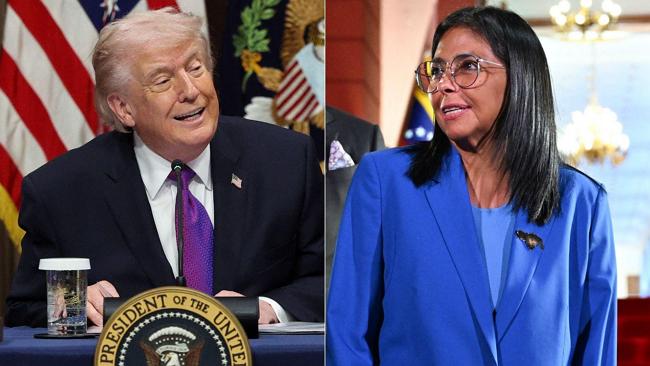
U.S. President Donald Trump and Venezuelan Interim President Delcy Rodríguez. The U.S. government has secured a 35% stake in the parent company of the private oil firm NABEP and the rights to acquire
[Analysis] Is a ‘Win-Win’ Possible for the U.S. and Venezuela?
U.S. President Donald Trump and Venezuelan Interim President Delcy Rodríguez. The U.S. government has secured a 35% stake in the parent company of the private oil firm NABEP and the rights to acquire
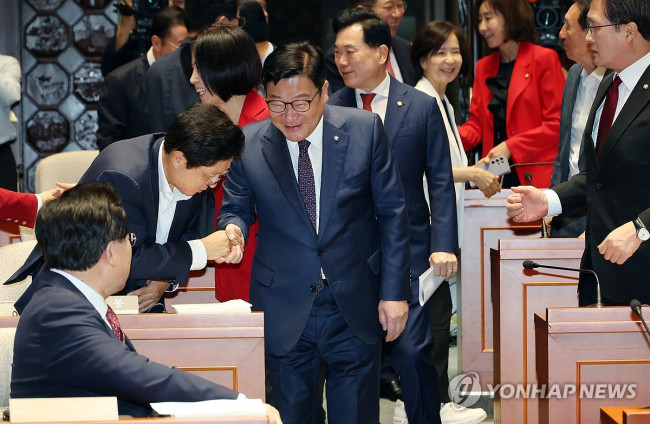 PPP's general meeting fails to adopt 'People's Voting Rights Protection Act' as party platform; agrees to further discussions
Floor Leader Jeong Jeom-sik attending the policy general meeting of lawmakers [Seoul=Yonhap News]On the 3rd, the People Power Party planned to adopt as a party platform a bill to reform the National E
PPP's general meeting fails to adopt 'People's Voting Rights Protection Act' as party platform; agrees to further discussions
Floor Leader Jeong Jeom-sik attending the policy general meeting of lawmakers [Seoul=Yonhap News]On the 3rd, the People Power Party planned to adopt as a party platform a bill to reform the National E
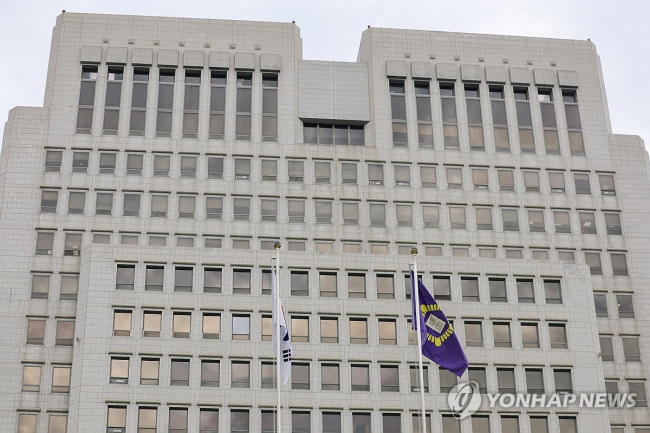 27 legal professionals from the Seoul National University Law School class of '76: "The Blue House’s demand for the reappointment of Supreme Court Justices is unjust."
The Supreme Court of Korea [Seoul=Yonhap News] Twenty-seven legal professionals from the Seoul National University College of Law's class of '76 issued a joint statement on the 3rd, criticizing P
27 legal professionals from the Seoul National University Law School class of '76: "The Blue House’s demand for the reappointment of Supreme Court Justices is unjust."
The Supreme Court of Korea [Seoul=Yonhap News] Twenty-seven legal professionals from the Seoul National University College of Law's class of '76 issued a joint statement on the 3rd, criticizing P
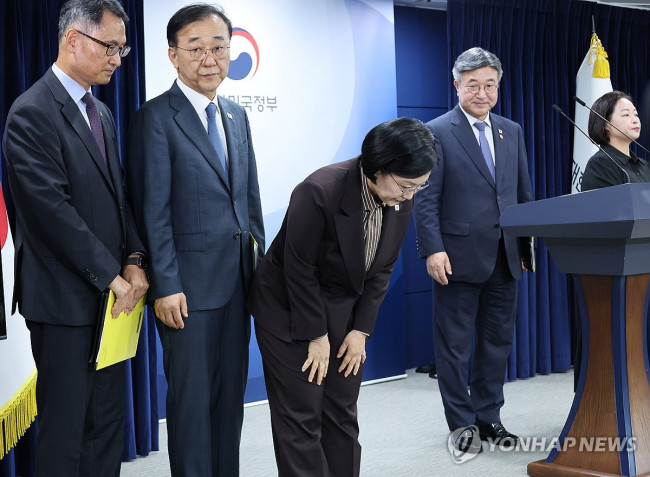 Relocation of Public Institutions to Begin Next Year… "Minimize Retention in Capital Region, Reduce 109 Institutions"
The government will begin the full-scale relocation of administrative and public institutions starting in the first half of next year.It is also launching reforms to reduce the number of public instit
Relocation of Public Institutions to Begin Next Year… "Minimize Retention in Capital Region, Reduce 109 Institutions"
The government will begin the full-scale relocation of administrative and public institutions starting in the first half of next year.It is also launching reforms to reduce the number of public instit
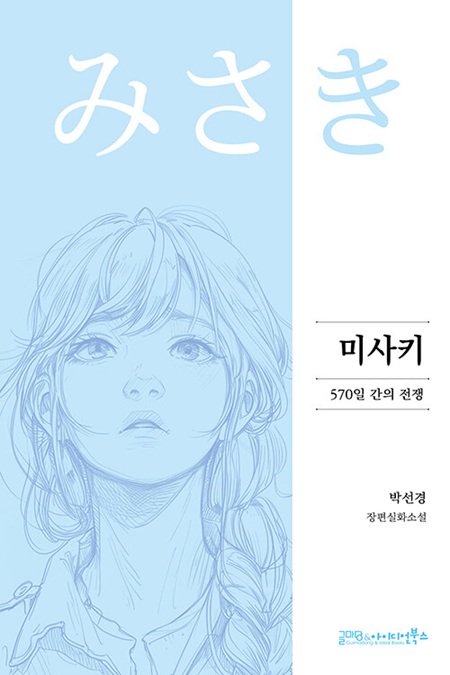 [New Book] The True Face of the Ivory Tower Hidden in the Shadow of Power… Park Sun-kyung’s ‘Misaki’
The university campus, often called a sanctuary of intellect. A new novel has been published that sharply dissects the hypocrisy and absurdity committed within those solid walls of power. &
[New Book] The True Face of the Ivory Tower Hidden in the Shadow of Power… Park Sun-kyung’s ‘Misaki’
The university campus, often called a sanctuary of intellect. A new novel has been published that sharply dissects the hypocrisy and absurdity committed within those solid walls of power. &
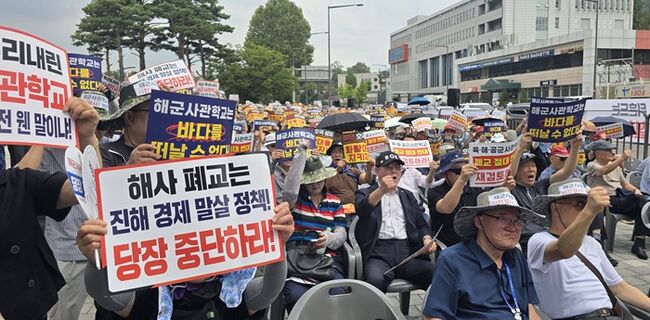 [Photo] “We Oppose the Closing of the Military Academy”… Large-Scale Protest Held in Front of the War Memorial on the 26th
The "National Solidarity for Preventing the Closure of Military Academies" held a rally to protest the closure of military academies at the plaza in front of the War Memorial of Korea in Samgakji, Seo
[Photo] “We Oppose the Closing of the Military Academy”… Large-Scale Protest Held in Front of the War Memorial on the 26th
The "National Solidarity for Preventing the Closure of Military Academies" held a rally to protest the closure of military academies at the plaza in front of the War Memorial of Korea in Samgakji, Seo
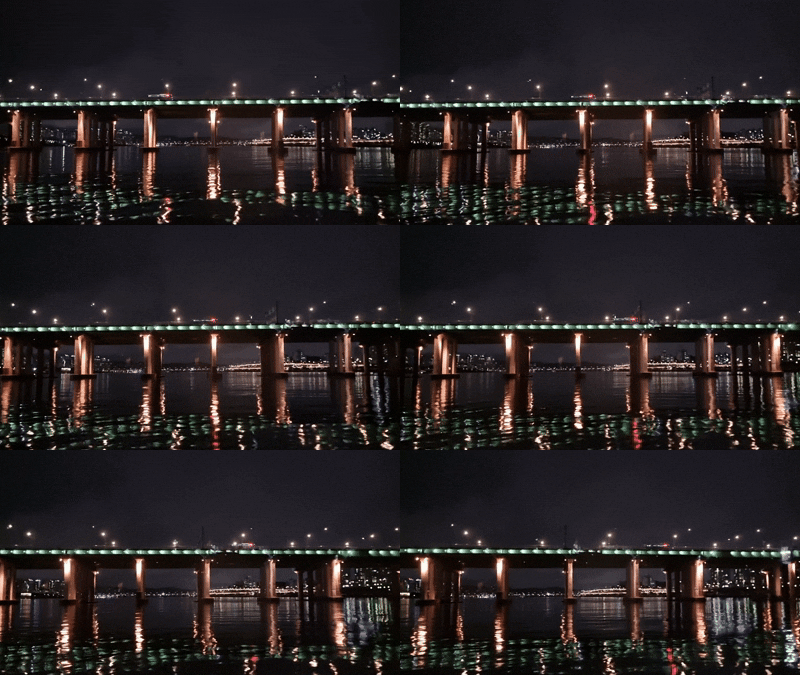 [Trending Destinations] The Leisure of Seoul's Hangang Bus and the Romance of Hong Kong's Star Ferry
Hannam Bridge viewed from the Hangang Bus. [Video = Reporter Lim Yo-hee]With the introduction of the Hangang Bus, Seoul—which previously lacked sufficient water-based public transport—has gained a
[Trending Destinations] The Leisure of Seoul's Hangang Bus and the Romance of Hong Kong's Star Ferry
Hannam Bridge viewed from the Hangang Bus. [Video = Reporter Lim Yo-hee]With the introduction of the Hangang Bus, Seoul—which previously lacked sufficient water-based public transport—has gained a
 [Jung Jae-hak’s From Jeolla-do] Listening to Patti Kim’s ‘Song of September’
Today, as it has been all day long, the heat wave has been sculpting clouds, and the wind has been gathering them. Thus, from the early evening through the night, the sound of rain persists.&nbs
[Jung Jae-hak’s From Jeolla-do] Listening to Patti Kim’s ‘Song of September’
Today, as it has been all day long, the heat wave has been sculpting clouds, and the wind has been gathering them. Thus, from the early evening through the night, the sound of rain persists.&nbs
 [Editorial Cartoon] A Draconian Law That Undermines Freedom of Expression

 List
List