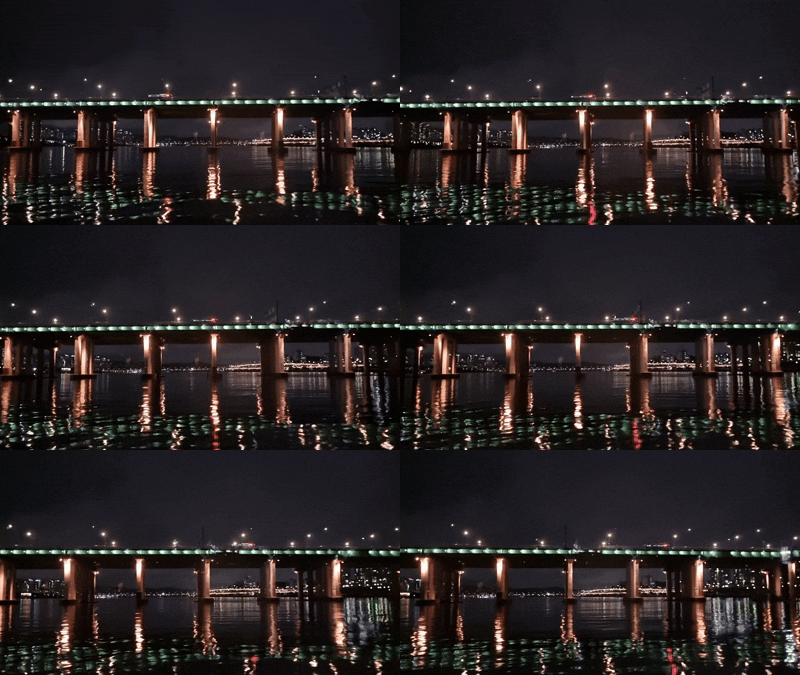
 Hannam Bridge viewed from the Hangang Bus. [Video = Reporter Lim Yo-hee]
With the introduction of the Hangang Bus, Seoul—which previously lacked sufficient water-based public transport—has gained a new element of urban charm. The Hangang Bus is establishing itself not only as an excellent mode of transportation but also as a novel way to enjoy Seoul. The fact that the majority of its passengers are foreign tourists proves this.
If Seoul has the Hangang Bus, Hong Kong has the Star Ferry. The Star Ferry is a 130-year-old mode of transport that has been connecting Hong Kong Island and the Kowloon Peninsula since 1888. It has also cemented its status as both a practical form of transport and a popular attraction for those traveling in Hong Kong.
While the Hangang Bus is a "journey" that allows for a leisurely contemplation of the city along the vast stretch of the river, the Star Ferry is more of an "event"—a brief experience of Hong Kong's dynamism that transcends time and space.
The Highlight of the Hangang Bus: Appreciating 17 Bridges
The Hangang Bus runs along the Hangang River, connecting the eastern and western ends of Seoul. The waterway from Magok to Jamsil spans 30km one way. A standard trip takes about 2 hours and 7 minutes (1 hour and 22 minutes for the express route), stopping at 7 piers along the way.
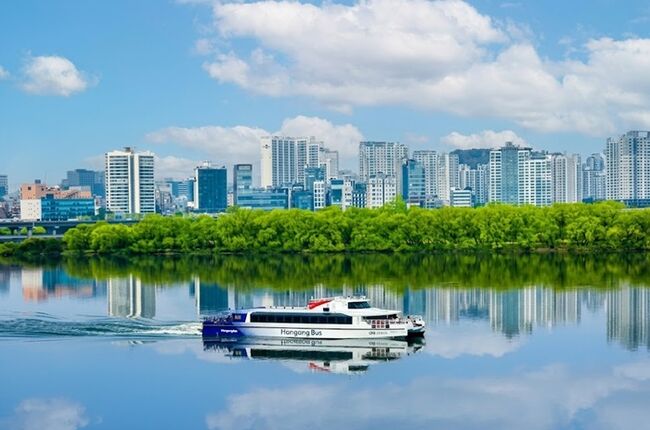 The Hangang Bus gliding gracefully over the river. Color corrected. [Photo = Reporter Lim Yo-hee]
The highlight of this journey is the succession of bridges you pass. The route is largely divided into the western section (Magok–Yeouido) and the eastern section (Yeouido–Jamsil); if you traverse both, you can experience passing under 17 different bridges.
The first bridge you encounter after leaving Magok Pier is Gayang Bridge. This seemingly ordinary bridge hides a surprising secret: it has the widest span (distance between piers) of any bridge in Korea, ranging from a minimum of 100 meters to a maximum of 180 meters.
The next bridge is Seongsan Bridge near Mangwon Pier, known for its beautiful red, crescent-shaped truss structure. In addition to these, there are five more bridges in the western section: Yanghwa Bridge, Dangsan Railway Bridge, and Seogang Bridge.
Moving into the eastern section, the number of bridges increases to 12 as the route enters the heart of the city.
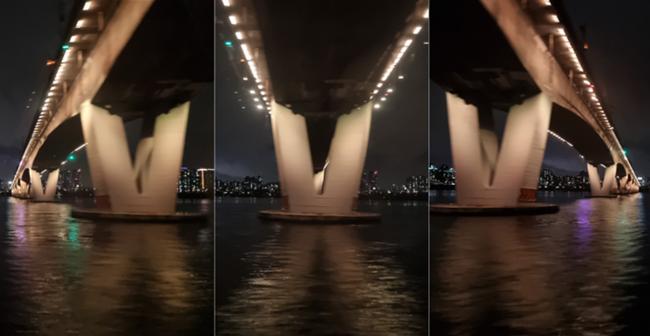 The Hangang Bus passing under Wonhyo Bridge. [Photo = Reporter Lim Yo-hee]
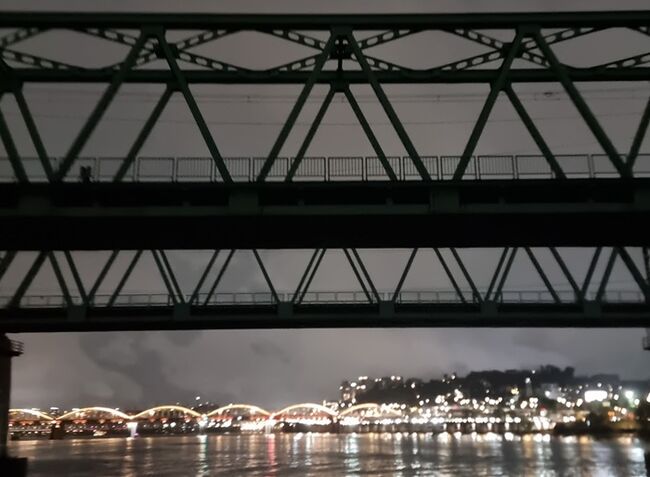 The Hangang Bus passing through the Hangang Railway Bridge. [Photo = Reporter Lim Yo-hee]
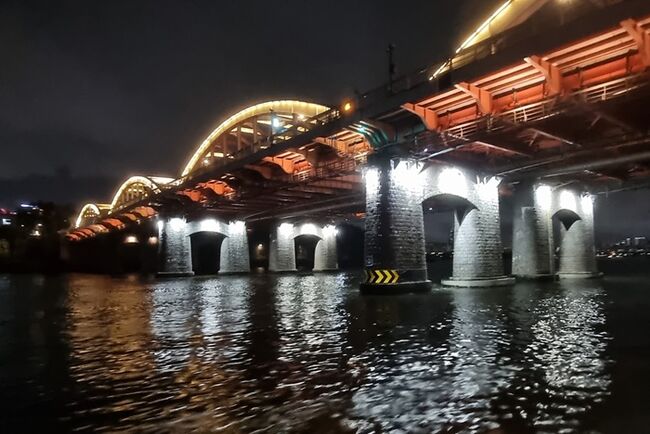 Hangang Bridge [Photo = Reporter Lim Yo-hee]
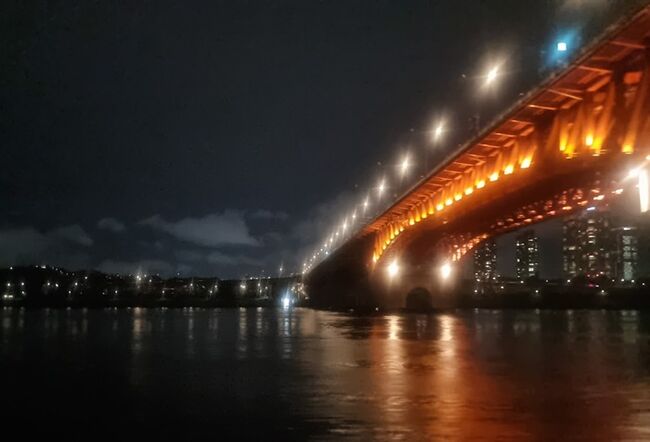 Seongsu Bridge. [Photo = Reporter Lim Yo-hee]
When boarding at the Yeouido Pier, Mapo Bridge appears on your immediate right. It is a key piece of transport infrastructure that helped develop Yeouido into the "Manhattan of Seoul" and was the first bridge to bear the name "Daegyo" (Great Bridge) in Seoul.
Passing the 63 Building, you see Wonhyo Bridge, followed by the historic Hangang Railway Bridge, where KTX trains run. When Nodeulseom Island with its circular moon sculpture comes into view, it signals that Hangang Bridge is next.
Around this point, the crew allows passengers to step out onto the deck—arguably the most exciting part of the entire Hangang Bus tour. The combination of the boat's speed and the rhythmic motion of the river waves creates a truly dynamic experience where you feel both the vessel and yourself swaying in unison.
It is fascinating how the "scenery" that seemed so calm and quiet inside the cabin suddenly transforms into such a tense, "real" experience.
The subsequent Banpo Bridge (Jamsugyo) is a double-decker bridge. After the Hangang Bus passes under it, giving you barely a moment to catch your breath, Hannam Bridge, Dongho Bridge, Seongsu Bridge, Yeongdong Bridge, Cheongdam Bridge, and Jamsil Bridge appear one after another.
Star Ferry: Taking in the Majesty of Hong Kong’s Skyscrapers
Hong Kong's Victoria Harbour is just over 1km wide, similar to the width of the Hangang River. Technically, Victoria Harbour is an inlet of the sea, not a river, but to our eyes, accustomed to the vastness of the Hangang, it looks like just another river.
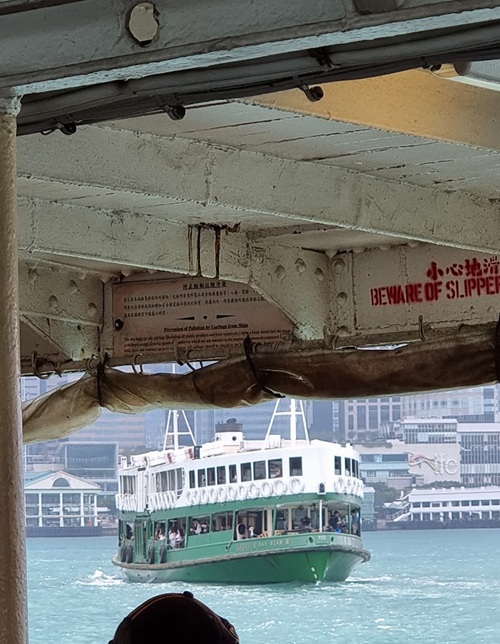 View of a Star Ferry from another Star Ferry. [Photo = Reporter Lim Yo-hee]
Nevertheless, in the late 19th century when the Star Ferry began service, a 1km stretch of water was a significant distance, and this small boat served as the only link between the island and the mainland—at least until the undersea tunnels and subway lines opened in the late 20th century.
If the Hangang Bus is a long journey enjoyed at a leisurely pace while counting bridges, the Star Ferry is a short and intense 10-minute experience that leaves you breathless, marveling at the majesty of the skyscrapers on Hong Kong Island.
One commonality is that for both, the night outperforms the day. After sunset, the Hangang bridges are illuminated, and the distant, modest buildings glow like jewels, filling the windows of the Hangang Bus with a serene splendor. Meanwhile, Hong Kong Island boasts one of the world's top three night views, and you have the good fortune of witnessing the "Symphony of Lights" light show from the middle of the harbor.
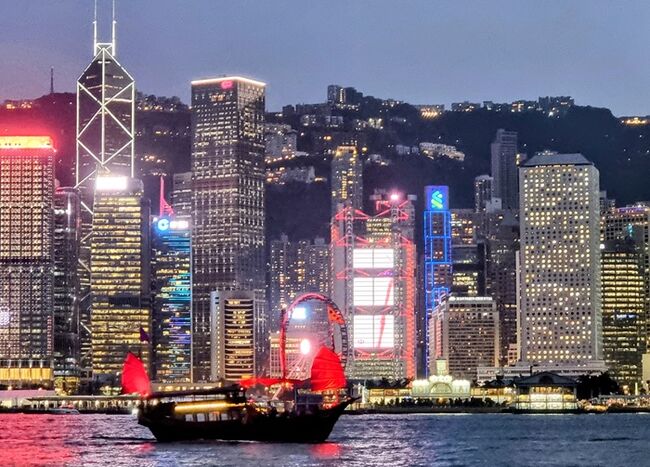 Victoria Harbour in Hong Kong, considered one of the world's top three night view spots. [Photo = Reporter Lim Yo-hee]
The Hangang Bus offers the advantages of a comfortable, air-conditioned interior alongside a deck where you can feel the rhythmic swaying of the river firsthand. You can bring light snacks aboard, and "Hangang Ramen," enjoyed while waiting for the ferry, is a local delicacy. The fare is also an affordable 3,000 won.
While the Hong Kong Star Ferry does not have air conditioning, it offers the romance of a bygone era for a low fare of about 1,000 won. With its original wooden benches, brass fittings, and even the same fan models, the Star Ferry is a charming mode of transport that captures a moment in time.

 [Analysis] Is a ‘Win-Win’ Possible for the U.S. and Venezuela?
U.S. President Donald Trump and Venezuelan Interim President Delcy Rodríguez. The U.S. government has secured a 35% stake in the parent company of the private oil firm NABEP and the rights to acquire
[Analysis] Is a ‘Win-Win’ Possible for the U.S. and Venezuela?
U.S. President Donald Trump and Venezuelan Interim President Delcy Rodríguez. The U.S. government has secured a 35% stake in the parent company of the private oil firm NABEP and the rights to acquire
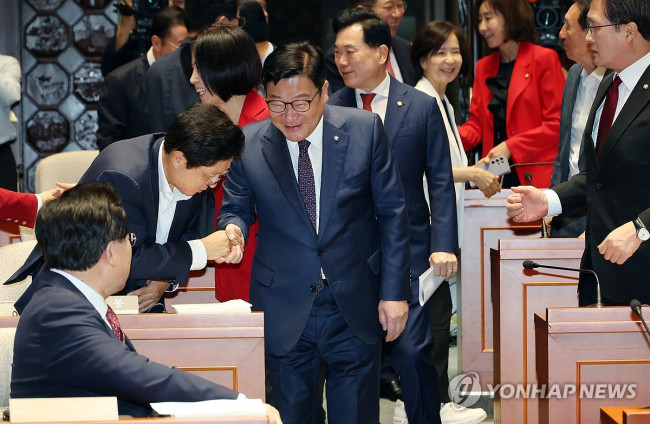 PPP's general meeting fails to adopt 'People's Voting Rights Protection Act' as party platform; agrees to further discussions
Floor Leader Jeong Jeom-sik attending the policy general meeting of lawmakers [Seoul=Yonhap News]On the 3rd, the People Power Party planned to adopt as a party platform a bill to reform the National E
PPP's general meeting fails to adopt 'People's Voting Rights Protection Act' as party platform; agrees to further discussions
Floor Leader Jeong Jeom-sik attending the policy general meeting of lawmakers [Seoul=Yonhap News]On the 3rd, the People Power Party planned to adopt as a party platform a bill to reform the National E
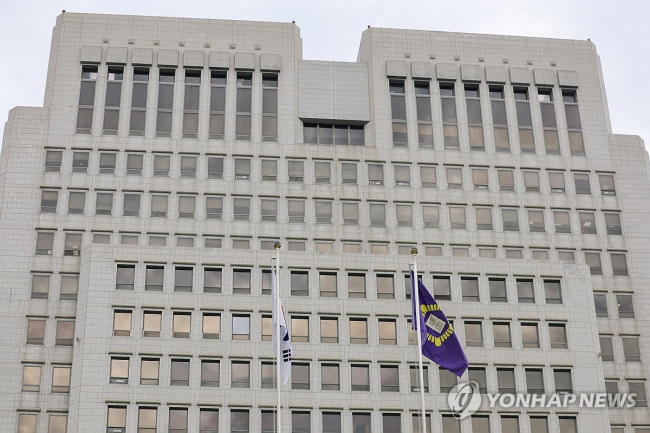 27 legal professionals from the Seoul National University Law School class of '76: "The Blue House’s demand for the reappointment of Supreme Court Justices is unjust."
The Supreme Court of Korea [Seoul=Yonhap News] Twenty-seven legal professionals from the Seoul National University College of Law's class of '76 issued a joint statement on the 3rd, criticizing P
27 legal professionals from the Seoul National University Law School class of '76: "The Blue House’s demand for the reappointment of Supreme Court Justices is unjust."
The Supreme Court of Korea [Seoul=Yonhap News] Twenty-seven legal professionals from the Seoul National University College of Law's class of '76 issued a joint statement on the 3rd, criticizing P
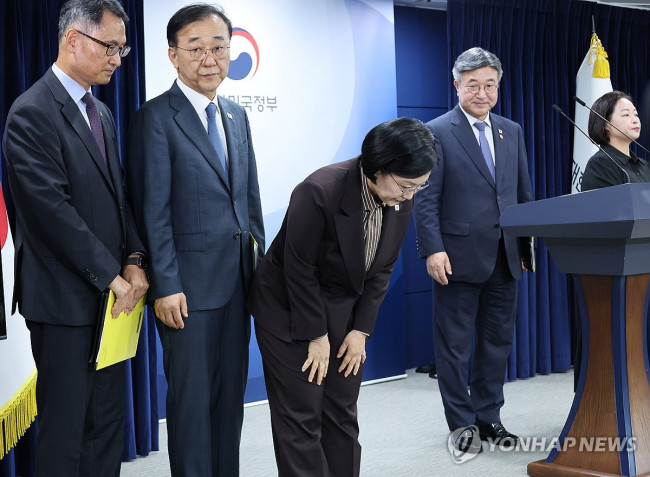 Relocation of Public Institutions to Begin Next Year… "Minimize Retention in Capital Region, Reduce 109 Institutions"
The government will begin the full-scale relocation of administrative and public institutions starting in the first half of next year.It is also launching reforms to reduce the number of public instit
Relocation of Public Institutions to Begin Next Year… "Minimize Retention in Capital Region, Reduce 109 Institutions"
The government will begin the full-scale relocation of administrative and public institutions starting in the first half of next year.It is also launching reforms to reduce the number of public instit
 [New Book] The True Face of the Ivory Tower Hidden in the Shadow of Power… Park Sun-kyung’s ‘Misaki’
The university campus, often called a sanctuary of intellect. A new novel has been published that sharply dissects the hypocrisy and absurdity committed within those solid walls of power. &
[New Book] The True Face of the Ivory Tower Hidden in the Shadow of Power… Park Sun-kyung’s ‘Misaki’
The university campus, often called a sanctuary of intellect. A new novel has been published that sharply dissects the hypocrisy and absurdity committed within those solid walls of power. &
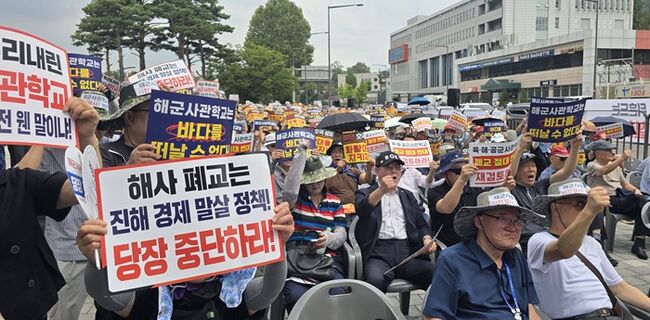 [Photo] “We Oppose the Closing of the Military Academy”… Large-Scale Protest Held in Front of the War Memorial on the 26th
The "National Solidarity for Preventing the Closure of Military Academies" held a rally to protest the closure of military academies at the plaza in front of the War Memorial of Korea in Samgakji, Seo
[Photo] “We Oppose the Closing of the Military Academy”… Large-Scale Protest Held in Front of the War Memorial on the 26th
The "National Solidarity for Preventing the Closure of Military Academies" held a rally to protest the closure of military academies at the plaza in front of the War Memorial of Korea in Samgakji, Seo
 [Jung Jae-hak’s From Jeolla-do] Listening to Patti Kim’s ‘Song of September’
Today, as it has been all day long, the heat wave has been sculpting clouds, and the wind has been gathering them. Thus, from the early evening through the night, the sound of rain persists.&nbs
[Jung Jae-hak’s From Jeolla-do] Listening to Patti Kim’s ‘Song of September’
Today, as it has been all day long, the heat wave has been sculpting clouds, and the wind has been gathering them. Thus, from the early evening through the night, the sound of rain persists.&nbs
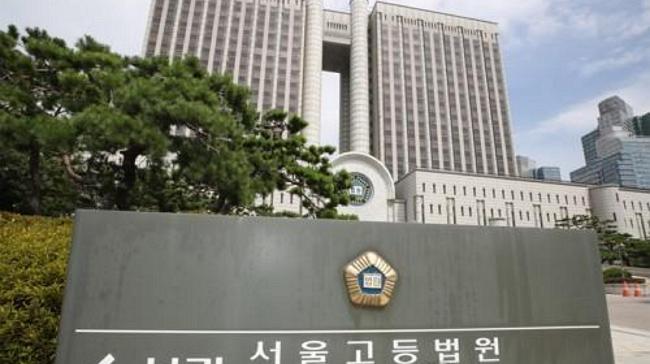 [Issue Commentary] 3 Reasons Why the Lee Jae-myung Trial Must Proceed
 [Editorial Cartoon] A Draconian Law That Undermines Freedom of Expression

 List
List