"Providing equal movie access for the visually and hearing impaired" [Yonhap News file photo]
The Supreme Court has ruled that the failure of cinema operators to provide screen descriptions and subtitles for the visually and hearing impaired constitutes discrimination against people with disabilities.
The Supreme Court remanded the case, stating that while the second appellate court acknowledged the cinema operators' obligation to provide screen descriptions and subtitles, it placed excessive focus on the "financial burden on operators" by applying restrictive criteria to the number of screenings and range of theaters, thereby limiting the scope of accommodations.
This Supreme Court ruling comes 10 years and six months after the lawsuit was first filed by individuals with disabilities.
On the 3rd, the Supreme Court's First Division (presided by Justice Cheon Dae-yeop) overturned the original appellate ruling and sent the case back to the Seoul High Court in an appeal filed by two visually impaired individuals and two hearing-impaired individuals, including a person surnamed Kim, against CJ CGV, Lotte Cultureworks, and Megabox JoongAng.
The Supreme Court explained, "The defendants' failure to provide the plaintiffs with screen descriptions, subtitles, and the necessary receiving equipment constitutes discriminatory conduct prohibited under the Act on the Prohibition of Discrimination Against Persons with Disabilities."
The Court stated, "To substantively guarantee the rights of people with disabilities, proactive measures are required at the social and national levels. Even though the Constitution guarantees the property rights and economic freedom of individuals and businesses, it is inevitable that such freedoms be restricted within a certain scope."
The Supreme Court specifically criticized the second appellate court for acknowledging the act of discrimination while simultaneously limiting the corresponding obligation to provide accommodations by overlapping criteria regarding the frequency of screenings and the selection of theaters.
Previously, the Seoul High Court, which handled the second trial in November 2021, ruled that "subtitles and screen descriptions should be provided for 3% of total screenings in theaters with 300 seats or more."
This was based on the reasoning that exceeding this limit could place an excessive burden on cinema operators.
However, the Supreme Court ruled on this day that "it is difficult to accept that the original court applied the criteria for the number of screenings and the range of theaters in an overlapping manner, as it excessively focused only on the financial burden of the defendants."
The Court found that the second appellate court failed to properly weigh the conflicting interests—specifically, the guarantee of the right of people with disabilities to access information and enjoy films versus the property rights or economic freedom of cinema operators.
The Court stated that the lower court should have examined what criteria could effectively help eliminate cultural discrimination against people with disabilities without causing excessive confusion for non-disabled people, and whether there were ways to reduce the financial burden on operators while enabling people with disabilities to enjoy movies on equal footing with others.
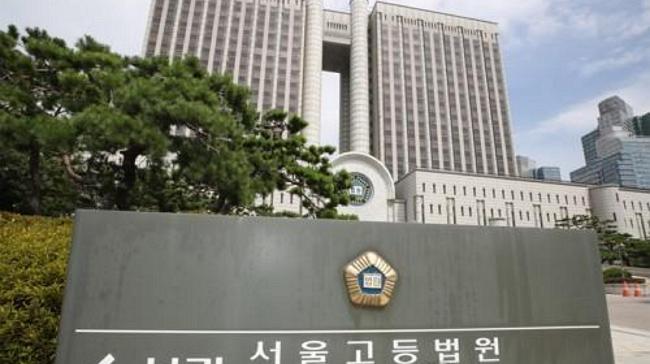
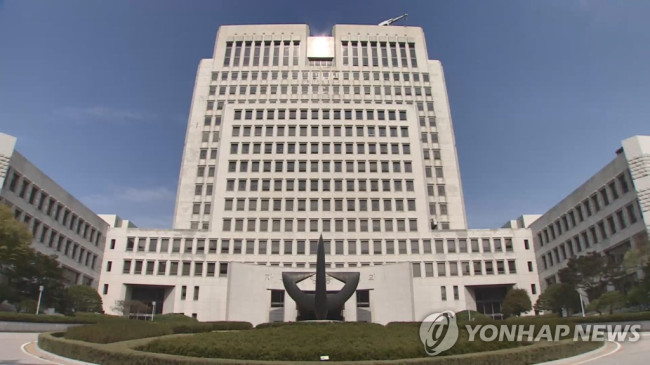 View of the Supreme Court [Provided by Yonhap News TV]
The Supreme Court remanded the case for a new trial.
In February 2016, the plaintiffs, including Kim, filed a lawsuit against the three multiplex chains—CJ CGV, Lotte Cultureworks, and Megabox—demanding that they "provide subtitles or screen descriptions for all movies screened."
In December of the following year, the 28th Civil Division of the Seoul Central District Court ruled in favor of the plaintiffs on all counts in the first trial.
The first court ruled that the defendants must provide screen descriptions for the visually impaired and subtitles for the hearing impaired.
It also ordered the theaters to provide information on which screenings include these features via their websites, and to provide necessary means such as braille materials, large-print documents, Korean Sign Language (KSL) interpretation, or text displays at the theaters.
The Seoul High Court, which handled the second trial in November 2021, also acknowledged the discriminatory act but reduced the scope of accommodations compared to the first ruling.
The Supreme Court's final decision today comes approximately five years after the case was appealed by both parties.
Meanwhile, for the first time in Supreme Court history, an "easy-read" version of the verdict was provided for this ruling.
This format uses simplified language, such as "The Seoul High Court's ruling was incorrect. The Supreme Court is sending this case back to the Seoul High Court," to ensure that anyone can easily understand the contents of the judgment.
Additionally, sign language interpretation was provided for the plaintiffs who are hearing and speech impaired during the delivery of the verdict.

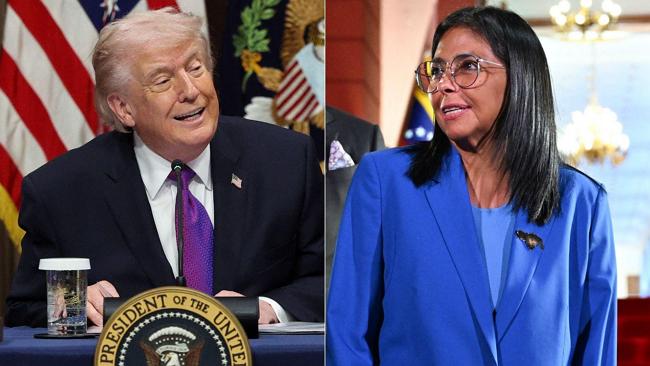 [Analysis] Is a ‘Win-Win’ Possible for the U.S. and Venezuela?
U.S. President Donald Trump and Venezuelan Interim President Delcy Rodríguez. The U.S. government has secured a 35% stake in the parent company of the private oil firm NABEP and the rights to acquire
[Analysis] Is a ‘Win-Win’ Possible for the U.S. and Venezuela?
U.S. President Donald Trump and Venezuelan Interim President Delcy Rodríguez. The U.S. government has secured a 35% stake in the parent company of the private oil firm NABEP and the rights to acquire
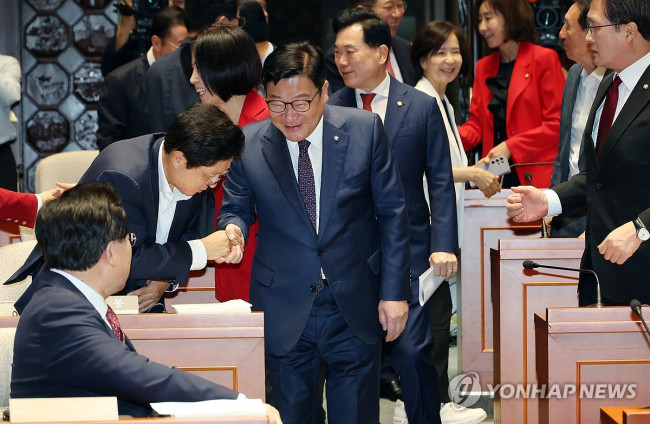 PPP's general meeting fails to adopt 'People's Voting Rights Protection Act' as party platform; agrees to further discussions
Floor Leader Jeong Jeom-sik attending the policy general meeting of lawmakers [Seoul=Yonhap News]On the 3rd, the People Power Party planned to adopt as a party platform a bill to reform the National E
PPP's general meeting fails to adopt 'People's Voting Rights Protection Act' as party platform; agrees to further discussions
Floor Leader Jeong Jeom-sik attending the policy general meeting of lawmakers [Seoul=Yonhap News]On the 3rd, the People Power Party planned to adopt as a party platform a bill to reform the National E
 27 legal professionals from the Seoul National University Law School class of '76: "The Blue House’s demand for the reappointment of Supreme Court Justices is unjust."
The Supreme Court of Korea [Seoul=Yonhap News] Twenty-seven legal professionals from the Seoul National University College of Law's class of '76 issued a joint statement on the 3rd, criticizing P
27 legal professionals from the Seoul National University Law School class of '76: "The Blue House’s demand for the reappointment of Supreme Court Justices is unjust."
The Supreme Court of Korea [Seoul=Yonhap News] Twenty-seven legal professionals from the Seoul National University College of Law's class of '76 issued a joint statement on the 3rd, criticizing P
 Relocation of Public Institutions to Begin Next Year… "Minimize Retention in Capital Region, Reduce 109 Institutions"
The government will begin the full-scale relocation of administrative and public institutions starting in the first half of next year.It is also launching reforms to reduce the number of public instit
Relocation of Public Institutions to Begin Next Year… "Minimize Retention in Capital Region, Reduce 109 Institutions"
The government will begin the full-scale relocation of administrative and public institutions starting in the first half of next year.It is also launching reforms to reduce the number of public instit
 [New Book] The True Face of the Ivory Tower Hidden in the Shadow of Power… Park Sun-kyung’s ‘Misaki’
The university campus, often called a sanctuary of intellect. A new novel has been published that sharply dissects the hypocrisy and absurdity committed within those solid walls of power. &
[New Book] The True Face of the Ivory Tower Hidden in the Shadow of Power… Park Sun-kyung’s ‘Misaki’
The university campus, often called a sanctuary of intellect. A new novel has been published that sharply dissects the hypocrisy and absurdity committed within those solid walls of power. &
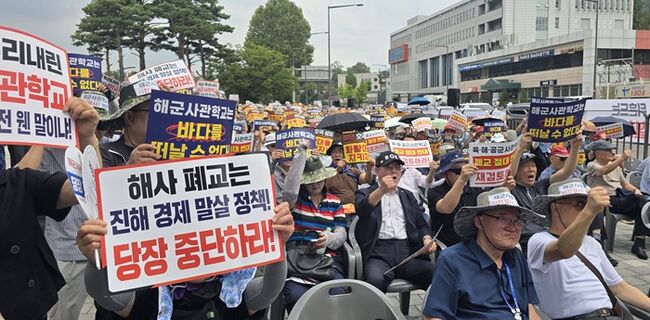 [Photo] “We Oppose the Closing of the Military Academy”… Large-Scale Protest Held in Front of the War Memorial on the 26th
The "National Solidarity for Preventing the Closure of Military Academies" held a rally to protest the closure of military academies at the plaza in front of the War Memorial of Korea in Samgakji, Seo
[Photo] “We Oppose the Closing of the Military Academy”… Large-Scale Protest Held in Front of the War Memorial on the 26th
The "National Solidarity for Preventing the Closure of Military Academies" held a rally to protest the closure of military academies at the plaza in front of the War Memorial of Korea in Samgakji, Seo
 [Trending Destinations] The Leisure of Seoul's Hangang Bus and the Romance of Hong Kong's Star Ferry
Hannam Bridge viewed from the Hangang Bus. [Video = Reporter Lim Yo-hee]With the introduction of the Hangang Bus, Seoul—which previously lacked sufficient water-based public transport—has gained a
[Trending Destinations] The Leisure of Seoul's Hangang Bus and the Romance of Hong Kong's Star Ferry
Hannam Bridge viewed from the Hangang Bus. [Video = Reporter Lim Yo-hee]With the introduction of the Hangang Bus, Seoul—which previously lacked sufficient water-based public transport—has gained a
 [Jung Jae-hak’s From Jeolla-do] Listening to Patti Kim’s ‘Song of September’
Today, as it has been all day long, the heat wave has been sculpting clouds, and the wind has been gathering them. Thus, from the early evening through the night, the sound of rain persists.&nbs
[Jung Jae-hak’s From Jeolla-do] Listening to Patti Kim’s ‘Song of September’
Today, as it has been all day long, the heat wave has been sculpting clouds, and the wind has been gathering them. Thus, from the early evening through the night, the sound of rain persists.&nbs
 [Issue Commentary] 3 Reasons Why the Lee Jae-myung Trial Must Proceed
 [Editorial Cartoon] A Draconian Law That Undermines Freedom of Expression

 List
List