North Korean leader Kim Il-sung, now in power, officially visits the Soviet Union in June 1956, greeting Soviet officials in Moscow. [Pyongyang Central News Agency=Yonhap News]
The second critical error committed by the South Korean left wing immediately after liberation was its stance of simultaneously monopolizing the term "nation" while basing its political survival and acquisition of power on external forces.
This was not merely a difference in diplomatic approach or a misjudgment of international affairs. It was a structural inconsistency between language and reality, and between claims and conditions.
They spoke of the nation but not of the nation's autonomy; they spoke of liberation but replaced the subject of liberation from the people to the external sponsor, the Soviet Union. This contradiction became the core flaw in the discourse of the South Korean left for decades to come.
The Basis of Kim Il-sung's Political Authority was the Soviet Union
Following Japan's defeat in August 1945, the northern half of the Korean Peninsula immediately fell under Soviet military occupation. This occupation was not merely for maintaining public order or restoring security.
The Soviet military administration seized control of key administrative, police, intelligence, and propaganda functions, directly intervening in the formation of political organizations, the selection of leaders, and the setting of policy directions. The political order established in the northern region was not the result of indigenous political competition but operated within a framework designed by the occupying power.
Meanwhile, Kim Il-sung rapidly rose to prominence under Soviet approval and protection. While his anti-Japanese history was used as propaganda material, the substantive basis of his political authority stemmed from the Soviet military's choice and support.
There was no process of popular consensus, open competition, or institutional verification. Nevertheless, some factions of the left in the South, disregarding these obvious conditions, cloaked it in terms of "international solidarity" or "cooperation within the anti-imperialist camp." The problem was not solidarity itself, but the direction of that solidarity and its political cost.
The stance of claiming national autonomy while relying on the approval of the external superpower, the Soviet Union, for the nation's political decision-making power is self-contradictory.
The formation of the Provisional People's Committee of North Korea in 1946 and the land reform process also proceeded under the management and control of the Soviet military administration. The issue was not the land reform policy itself, but its implementation and the political environment.
Dissenting opinions were systematically excluded, and left-wing factions with different agendas or political forces from non-communist camps were systematically eliminated. Pluralistic political competition was not permitted in North Korea from the outset.
Individual Freedoms and Rights Subordinated to "Nation"
Repeatedly chanting the slogan "The North is on the side of the nation, the South is on the side of foreign powers" while ignoring these conditions was either ignorance of the facts or deliberate concealment. While the South was also under US military rule, the difference between the North and the South was not the existence of foreign powers, but the nature of the political space permitted under those powers.
 On April 10, 1950, Stalin approved Kim Il-sung's invasion of the South during his visit to Moscow.
The simplification of all realities into a dichotomy of nation versus foreign powers, erasing this difference, reduced "nation" from an analytical concept to a tool of propaganda.
In the language of the South Korean left, "nation" gradually became a moral license. Speaking of the nation deferred scrutiny, and shouting "nation" meant the nature of power went unquestioned. Policy outcomes, governmental responsibility, and individual freedoms and rights were pushed behind the word "nation."
However, nationalism cannot be a mechanism to justify external dependence. A regime receiving military and political support from the Soviet Union was, in itself, a departure from the nation's autonomous decision-making. This refusal to acknowledge this simple fact became the core habit of pro-North Korea discourse thereafter.
The establishment of the Democratic People's Republic of Korea in 1948 was an event that institutionalized this hypocrisy. While it assumed the form of establishing a state, there was no process for the transfer of power.
Elections were not competitions but mere affirmations, and freedom of the press, freedom of association, and the existence of opposition were entirely pushed outside the system. Nevertheless, some factions of the left in the South praised this as "the birth of a nation-state." They defended a power that the people could not control in the name of the nation, while speaking of the nation.
Shouting "Nation" While Destroying the Nation's Lives and Property
This double standard became more blatant during the Korean War. The war was the worst tragedy for the nation and its people. Millions of lives were sacrificed, and the entire Korean Peninsula was reduced to ruins.
However, the South Korean left either obscured responsibility for the war or attributed all causes to the clash of external imperialisms. While speaking of the nation, they remained silent about the violence that directly destroyed the nation's lives and property. At this moment, the word "nation" became a veil to hide human suffering.
The consequences of this hypocrisy were long-term. For decades thereafter, "nation" functioned not as a subject of discussion but as a device for exclusion.
Pointing out the structural dependency on the Soviet Union and North Korea, and later China, was labeled as "inciting division," and criticism of external powers was immediately branded as "national betrayal." The paradox repeated where those who spoke of the nation were actually shrinking the nation's options.
The nation is not protected by aligning with external powers. The nation is maintained only through the freedom of its citizens, the accountability of its government, and open scrutiny and criticism.
The choice made immediately after liberation, to pledge one's political destiny to the Soviet Union and North Korea while shouting "nation," was hypocrisy that used the nation as a means to protect ideology.
If this hypocrisy is not broken, pro-North Korea leftists will always be in opposition to the reality of the Republic of Korea. And the cost of that conflict will always be borne by the citizens of the Republic of Korea, not the leftists.
Poet, Historian, and Philosopher

◆ Songsan
A poet and historian/philosopher, he previously served as a director of the Syngman Rhee Institute and is currently active as a senior researcher at the Korean Modern and Contemporary History Research Society and the representative of the Philosophical Forum Lyceum. He has published four poetry collections and co-translated "The Hero of the Hook" (original title not provided). Songsan is a pen name.

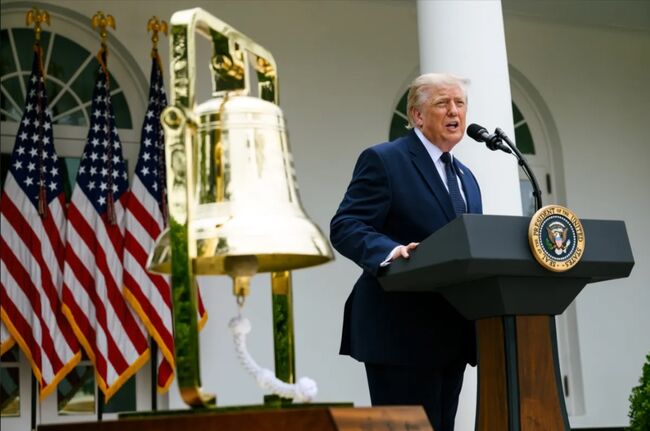 Trump pressures for rate cut again ahead of FOMC... "Should be the lowest in the world"
U.S. President Donald Trump. [Photo = The White House] U.S. President Donald Trump once again pressured the Federal Reserve, the U.S. central bank, to lower interest rates on the 27th (local time
Trump pressures for rate cut again ahead of FOMC... "Should be the lowest in the world"
U.S. President Donald Trump. [Photo = The White House] U.S. President Donald Trump once again pressured the Federal Reserve, the U.S. central bank, to lower interest rates on the 27th (local time
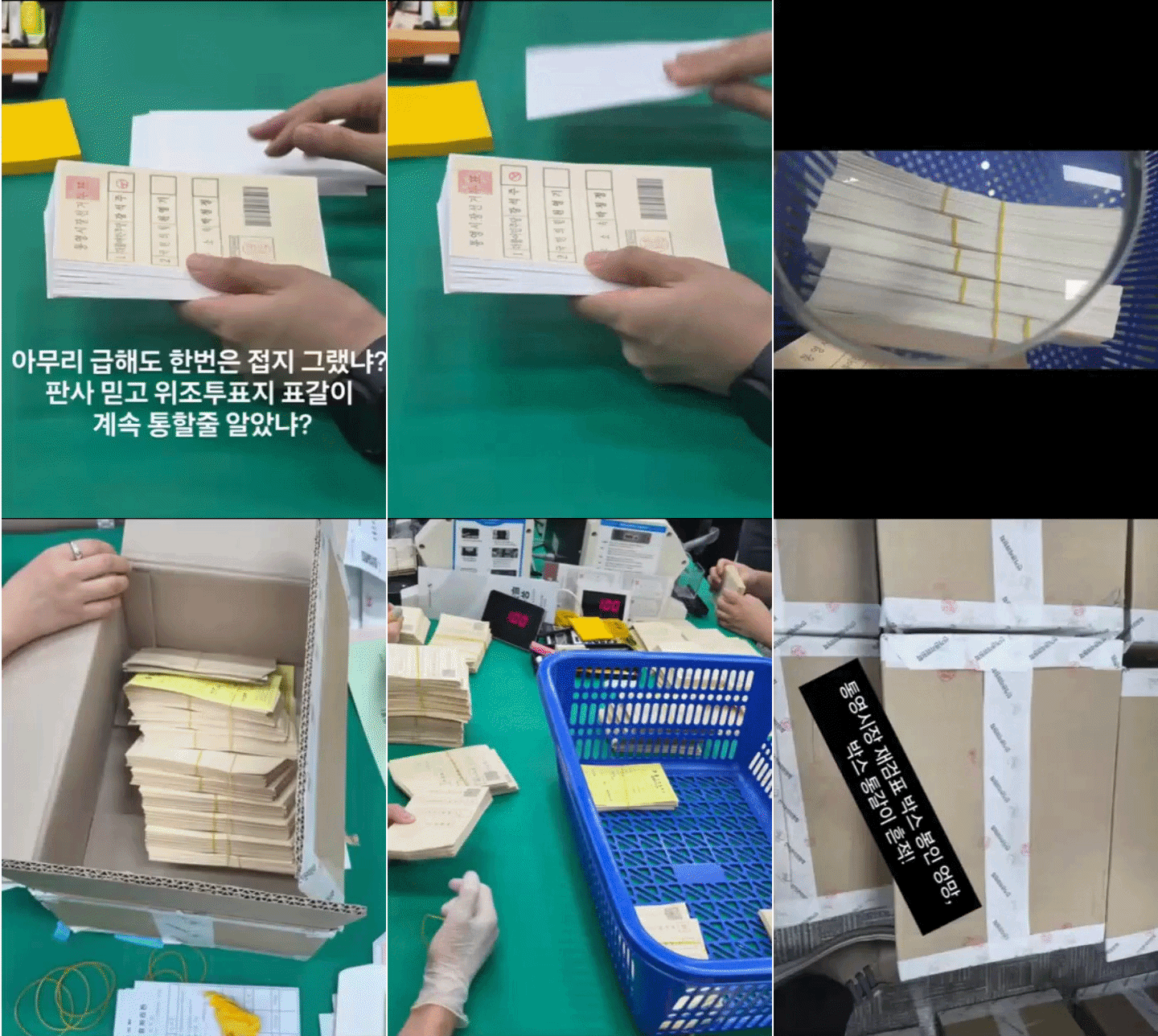 “Ignoring crisp ballots and damaged seals”… Tongyeong mayoral recount concludes with ‘no change in outcome,’ leaving suspicions and public outrage behind
Suspected counterfeit ballots discovered in Tongyeong [GIF from social media of Representative Hwang Kyo-ahn / Attorney Park Joo-hyun]During a recount of the Tongyeong mayoral election in South Gyeong
“Ignoring crisp ballots and damaged seals”… Tongyeong mayoral recount concludes with ‘no change in outcome,’ leaving suspicions and public outrage behind
Suspected counterfeit ballots discovered in Tongyeong [GIF from social media of Representative Hwang Kyo-ahn / Attorney Park Joo-hyun]During a recount of the Tongyeong mayoral election in South Gyeong
 President Yoon, regarding the first-instance ruling on the Public Official Election Act: “An excessive political verdict that distorts the facts… We will appeal immediately.”
The first-instance sentencing hearing for President Yoon Suk Yeol regarding violations of the Public Official Election Act is being broadcast live at Seoul Station on the 27th. [Photo=Yonhap News]Pres
President Yoon, regarding the first-instance ruling on the Public Official Election Act: “An excessive political verdict that distorts the facts… We will appeal immediately.”
The first-instance sentencing hearing for President Yoon Suk Yeol regarding violations of the Public Official Election Act is being broadcast live at Seoul Station on the 27th. [Photo=Yonhap News]Pres
 WSJ: "SK Hynix ADR Premium Is a Sign of AI Trading Overheat"
Advertisement for SK Hynix ADR listing in New York's Times Square [Reuters=Yonhap News file photo]The Wall Street Journal (WSJ) has pointed out that the price of SK Hynix’s American Depositary Recei
WSJ: "SK Hynix ADR Premium Is a Sign of AI Trading Overheat"
Advertisement for SK Hynix ADR listing in New York's Times Square [Reuters=Yonhap News file photo]The Wall Street Journal (WSJ) has pointed out that the price of SK Hynix’s American Depositary Recei
 'Godfather of Japanese Mystery Novels' Keigo Higashino Passes Away After Battle with Cancer at 68
Famous Japanese mystery novelist Keigo Higashino [AFP=Yonhap News]It has been belatedly reported that Keigo Higashino, the "godfather of Japanese mystery novels" and author of bestsellers such as "The
'Godfather of Japanese Mystery Novels' Keigo Higashino Passes Away After Battle with Cancer at 68
Famous Japanese mystery novelist Keigo Higashino [AFP=Yonhap News]It has been belatedly reported that Keigo Higashino, the "godfather of Japanese mystery novels" and author of bestsellers such as "The
 [Park Pil-kyu Security Column] To the Ignorant Trying to Clothe a Beast in Sheep's Clothing
Rep. Kim Byung-joo of the Democratic Party of Korea [Photo=Yonhap News]“The Air Force Academy doesn't teach you how to fly a plane!” “The Army, Navy, and Air Force academies are exactly the
[Park Pil-kyu Security Column] To the Ignorant Trying to Clothe a Beast in Sheep's Clothing
Rep. Kim Byung-joo of the Democratic Party of Korea [Photo=Yonhap News]“The Air Force Academy doesn't teach you how to fly a plane!” “The Army, Navy, and Air Force academies are exactly the
 [Issue Diagnosis] Two Effects of the Election Petition Review
 [Photo] Evidence of Election Fraud Flooding U.S. Media… Trump Had 2.7 Million Votes Stolen
 [Video] U.S. Semiquincentennial Air Show... 'Art in the Sky' streaks across New York
 [Editorial Cartoon] A Draconian Law That Undermines Freedom of Expression

 List
List