 Soviet troops occupying the North Korean region after August 1945.
The biggest problem with pro-North Korea left-wing discourse is not that they "didn't know," but that they "knew and didn't speak."
Ignorance is a lack of knowledge. However, choosing to remain silent when one knows is a choice. Choices invariably come with responsibility. The North Korean regime in the immediate aftermath of liberation was not a naturally formed government. An occupying foreign power laid the framework, a specific political faction enforced that framework, and opposing factions were systematically eliminated in the process.
This flow of events can be sufficiently confirmed by examining the materials from that period. Nevertheless, pro-North Korea leftists have avoided this narrative. The moment they speak of it, terms like "progressive" or "national" can no longer hold.
The Soviet Military Government Held the Power of Life and Death Over State Organizations
After August 1945, the North Korean region was occupied by the Soviet military. This occupation was not merely a military presence. The Soviet Military Government held the power of life and death over administrative, security, and political organizations. Political organizations not sanctioned could not exist from the outset.
Politics in the North during this period was not a freely chosen option for the residents. It was a format for confirming one of the already predetermined choices. Competition was blocked, and alternative paths were eliminated.
This is the starting point of the North Korean regime. However, pro-North Korea leftists do not discuss this starting point. Instead, they blur the lines of responsibility with phrases like "the chaos immediately after liberation" or "the constraints of that era."
This structure was institutionalized with the establishment of the Provisional People's Committee of North Korea in February 1946. Kim Il-sung was the chairman, and the committee operated under the approval of the Soviet Military Government. While the People's Committee is described as a local autonomy organization, in reality, only those who had passed the vetting of Soviet military political officers could hold key positions.
Dissent was not a subject for debate but for exclusion. The land reform implemented in the same year was also packaged as "the demand of the masses," but its execution was a coercive process involving armed organizations and administrative power. Many who questioned the procedures or criticized them were arrested or fled to the South.
Cho Man-sik, a nationalist leader who held overwhelming prestige in the Pyeongan province immediately after liberation, was placed under house arrest by the Soviet military in January 1946 for his persistent opposition to the trusteeship.
This served as a signal that anyone deviating from the occupying power's line would be eliminated, regardless of popular support. After this incident, the non-communist nationalist path in the North's political space effectively vanished.
By 1948, the regime's outward appearance was rapidly established. Elections were held, a constitution was enacted, and the establishment of the state was declared. Pro-North Korea leftists repeatedly emphasize this form. However, the legitimacy of a regime is not secured by listing its formal attributes. The core is the openness of the process.
Could opposing candidates actually run for office? Was criticism of the regime permitted? Was the possibility of a change in government open? To these questions, the North Korean system had no answer from its very beginning. Elections were closer to a confirmation process than a competition.
Establishing a Structure Where the Party Stands Above the State
The party system was no different. In the late 1940s, the North's political structure was rapidly consolidated. Various left-wing and nationalist factions were absorbed or disappeared under the name of "unification." With the unification of the South and North's Labor Parties in 1949 to form the Workers' Party of Korea, the structure where the party stood above the state solidified.
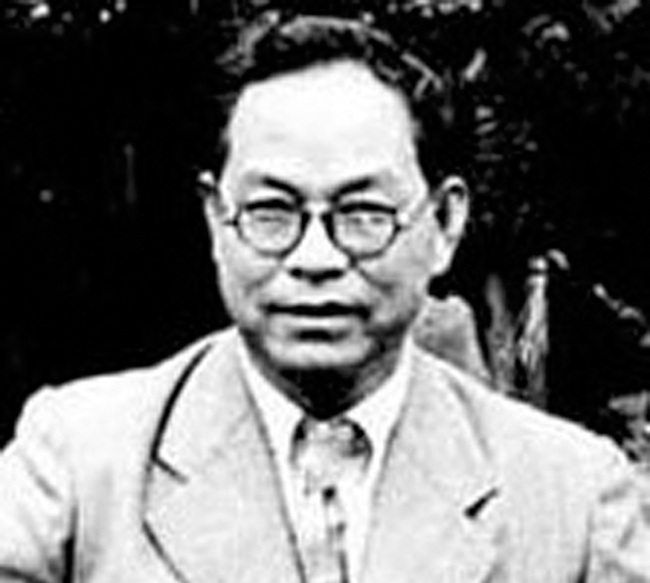 Park Heon-young around 1946.
In this process, Park Heon-young, who led the South Korean Labor Party, was nominally included in the leadership but excluded from actual power. This foreshadowed his later purge. Amidst the power reshuffling after 1953, he was arrested on charges of being a "US spy" and was executed in 1955.
At the same time, figures from the Yenan faction, active in China, and those with direct ties to the Soviet Union, the Soviet faction, were also systematically eliminated. These events occurred after the establishment of the regime, but they demonstrate how power was designed from the outset to not allow competition.
The vertical structure was completed at this time, where the party directed the state, the state controlled society, and society managed individuals. In this structure, freedom becomes a reward for loyalty, not a right.
This is where the term "accomplice" arises. Silence is not neutrality. The attitude of knowing the specific facts—the direct intervention of the occupying power, the systematic elimination of opposition, the consolidation of the one-party system—and yet not speaking, ultimately serves to protect that power.
Pro-North Korea leftists have moved these facts from the realm of discussion to the realm of taboo. When taboos arise, discussion disappears, and only conviction and loyalty remain.
Silence: The Language of Accomplices Shielding a Specific Power
This attitude of silence is repeated within South Korean society. When questions are raised about the North Korean regime, such as "Were the elections a real choice?" or "Why did the opposition disappear?", the intent of the questioner is prioritized over the content of the question.
Fact-finding is reframed as "provoking division," and structural criticism is translated as "hostile acts." This is a defensive habit rather than analysis. Pro-North Korea leftists have not sought to reform the North Korean regime. Instead, they have devoted more energy to blocking the discourse that questions that regime.
The reason pro-North Korea leftists have remained silent about the process of the North Korean regime's formation is not because they didn't know, but because they knew and chose to remain silent. As this silence has been repeated, North Korea has increasingly become an object that should not be criticized, and South Korean society has lost its ability to ask, "Is that really right?"
If this habit continues, pro-North Korea leftists will continue to prioritize peace and the nation, while postponing the questions that are truly necessary for the public. Questions such as who vetted it, who is responsible, and how individual freedoms are guaranteed.
Silence can be an individual's judgment. However, if silence is chosen with knowledge, the responsibility for the consequences cannot be avoided. In such cases, silence becomes not a mere difference of opinion, but the language of an accomplice shielding a specific power.
◆ Songsan
A poet and a researcher of history and philosophy, he formerly served as the director of the Rhee Syngman Academy and currently works as a research advisor for the Korean Modern and Contemporary History Research Association and as the representative of the Philosophy Forum Lyceion. He has published four collections of poetry and co-translated 'Heroes of Koksan'. Songsan is a pen name.

 Trump pressures for rate cut again ahead of FOMC... "Should be the lowest in the world"
U.S. President Donald Trump. [Photo = The White House] U.S. President Donald Trump once again pressured the Federal Reserve, the U.S. central bank, to lower interest rates on the 27th (local time
Trump pressures for rate cut again ahead of FOMC... "Should be the lowest in the world"
U.S. President Donald Trump. [Photo = The White House] U.S. President Donald Trump once again pressured the Federal Reserve, the U.S. central bank, to lower interest rates on the 27th (local time
 “Ignoring crisp ballots and damaged seals”… Tongyeong mayoral recount concludes with ‘no change in outcome,’ leaving suspicions and public outrage behind
Suspected counterfeit ballots discovered in Tongyeong [GIF from social media of Representative Hwang Kyo-ahn / Attorney Park Joo-hyun]During a recount of the Tongyeong mayoral election in South Gyeong
“Ignoring crisp ballots and damaged seals”… Tongyeong mayoral recount concludes with ‘no change in outcome,’ leaving suspicions and public outrage behind
Suspected counterfeit ballots discovered in Tongyeong [GIF from social media of Representative Hwang Kyo-ahn / Attorney Park Joo-hyun]During a recount of the Tongyeong mayoral election in South Gyeong
 President Yoon, regarding the first-instance ruling on the Public Official Election Act: “An excessive political verdict that distorts the facts… We will appeal immediately.”
The first-instance sentencing hearing for President Yoon Suk Yeol regarding violations of the Public Official Election Act is being broadcast live at Seoul Station on the 27th. [Photo=Yonhap News]Pres
President Yoon, regarding the first-instance ruling on the Public Official Election Act: “An excessive political verdict that distorts the facts… We will appeal immediately.”
The first-instance sentencing hearing for President Yoon Suk Yeol regarding violations of the Public Official Election Act is being broadcast live at Seoul Station on the 27th. [Photo=Yonhap News]Pres
 WSJ: "SK Hynix ADR Premium Is a Sign of AI Trading Overheat"
Advertisement for SK Hynix ADR listing in New York's Times Square [Reuters=Yonhap News file photo]The Wall Street Journal (WSJ) has pointed out that the price of SK Hynix’s American Depositary Recei
WSJ: "SK Hynix ADR Premium Is a Sign of AI Trading Overheat"
Advertisement for SK Hynix ADR listing in New York's Times Square [Reuters=Yonhap News file photo]The Wall Street Journal (WSJ) has pointed out that the price of SK Hynix’s American Depositary Recei
 'Godfather of Japanese Mystery Novels' Keigo Higashino Passes Away After Battle with Cancer at 68
Famous Japanese mystery novelist Keigo Higashino [AFP=Yonhap News]It has been belatedly reported that Keigo Higashino, the "godfather of Japanese mystery novels" and author of bestsellers such as "The
'Godfather of Japanese Mystery Novels' Keigo Higashino Passes Away After Battle with Cancer at 68
Famous Japanese mystery novelist Keigo Higashino [AFP=Yonhap News]It has been belatedly reported that Keigo Higashino, the "godfather of Japanese mystery novels" and author of bestsellers such as "The
 [Park Pil-kyu Security Column] To the Ignorant Trying to Clothe a Beast in Sheep's Clothing
Rep. Kim Byung-joo of the Democratic Party of Korea [Photo=Yonhap News]“The Air Force Academy doesn't teach you how to fly a plane!” “The Army, Navy, and Air Force academies are exactly the
[Park Pil-kyu Security Column] To the Ignorant Trying to Clothe a Beast in Sheep's Clothing
Rep. Kim Byung-joo of the Democratic Party of Korea [Photo=Yonhap News]“The Air Force Academy doesn't teach you how to fly a plane!” “The Army, Navy, and Air Force academies are exactly the
 [Issue Diagnosis] Two Effects of the Election Petition Review
 [Photo] Evidence of Election Fraud Flooding U.S. Media… Trump Had 2.7 Million Votes Stolen
 [Video] U.S. Semiquincentennial Air Show... 'Art in the Sky' streaks across New York
 [Editorial Cartoon] A Draconian Law That Undermines Freedom of Expression

 List
List









