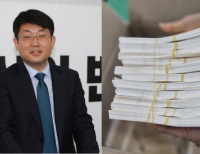
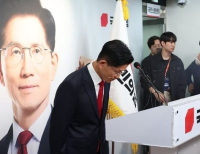
Statements that elevated the reliability of election management systems from ‘institutional debate’ to ‘security agenda’ followed around the Davos Forum from the US conservative camp. [Photo=White House]The recent controversy surrounding the Association of World Election Bodies (A-WEB) has been relatively quietly covered by the domestic media.
However, looking at the trends in overseas political/policy communities and international security discourse, the fairness and transparency of election systems, and the possibility of foreign technological/information intervention, are no longer peripheral issues.
Elections are now moving beyond procedural issues of democracy into the realm of national security and technological sovereignty.
This change is becoming even clearer on the recent international political stage. Around the Davos Forum, statements emerged from the US conservative camp elevating the issue of trust in election management systems from an ‘institutional debate’ to a ‘security agenda.’
The Nature of ‘Suspicions’ Raised Abroad
It is clear that a shared concern exists that the vulnerability of election systems can directly impact national sovereignty, even without specifically naming a particular country.
Policy professionals from Silicon Valley are also publicly discussing the tensions between digital identity verification, platform control, and national data management, and the core values of liberal democracy. There have also been instances where South Korea's digital administration system has been mentioned in these discussions.
This needs to be understood not as a definitive questioning of the legitimacy of Korean elections, but as part of a broader international concern regarding the relationship between digital control and democratic trust.
Recently, some US political and security communities have used extreme language referring to South Korea's election management system and the National Election Commission.
While these claims cannot be treated on the same level as official intelligence or judicial judgments, what is noteworthy here is that these claims did not suddenly emerge in a vacuum.
Electronic voting/counting systems, international election cooperation bodies, and the export and standardization of election technology have long been subjects of debate within Western democracies.
The reason why the German Federal Constitutional Court ruled electronic voting unconstitutional and the Netherlands abolished electronic voting/counting after numerous verifications was not necessarily due to the 'possibility of manipulation' of election results, but rather the judgment that systems that citizens cannot understand and verify could undermine democratic trust.
In this international context, the mention of A-WEB and South Korea's election management system, regardless of its factual basis, should be read as a warning signal in terms of trust management.
The ‘Securitization’ of Elections Amidst China’s Intervention Debate
Another noteworthy change is that election issues are being discussed in conjunction with foreign influence operations. As seen in the case of Venezuela, the collapse of election trust can lead to international non-recognition and political instability.
Canada officially investigated allegations of Chinese interference in elections through a public inquiry committee, and Australia is taking a strong stance against influence operations targeting expatriate communities and political circles by applying its foreign interference laws.
These countries commonly manage elections not as ‘subjects of political contention,’ but as part of their ‘national security systems.’ They have already experienced the significant costs incurred when institutional bodies neglect these issues, regardless of where the concerns originated.
In this international environment, Assemblywoman Kim Min-jeon’s raising of the controversy surrounding A-WEB and electronic voting/counting systems is not an attempt to amplify and reproduce specific claims.
It is closer to raising the issue that South Korea's election management system also needs to be examined from a trust perspective, based on the institutional judgments of Western democracies and international debates.
What is important is not to reduce this discussion to a matter of ‘believing or not believing.’ Election systems are not subjects that demand trust from citizens; they are public systems that must be designed and managed to prevent suspicion from arising. The role of institutional politics is not to suppress suspicions, but to explain why such doubts are repeatedly raised internationally and to resolve them institutionally.
The Responsibility to Respond to Debates Surrounding Elections
The international debate surrounding elections has already moved beyond the word 'fraud.' The current focus of discussion is on integrity, transparency, technological sovereignty, and institutional defense capabilities against foreign interference. South Korea cannot be an exception to this trend.
The A-WEB controversy should not be treated as a matter of judging someone's claims as right or wrong, but as an opportunity to examine the standards by which South Korean democracy manages trust in the global arena.
Silence or defense cannot protect trust. Only public explanation, institutional review, and responsible political response are the solutions.
Elections are not justified by their outcomes alone.
When the process is understandable and the system is beyond suspicion, democracy can finally defend itself.

◆ Professor Shim Gyu-jin
Professor of Digital Media, IE University, Spain. Formerly served as a policy advisor to the Ministry of National Defense and director of the Yeouido Research Institute's Data Lab, and previously worked as a full-time professor at the University of Melbourne, Australia, and an assistant professor at Singapore Management University. His books include 'K-Drama Yoon Suk-yeol' and 'Hyper Gender.'

 [Statement by the Seo-beo-kka Korea Military Academy Save-the-Nation Comrades Association] ㉛ Recount the Votes Publicly, as the Previous Recount Concealed Election Fraud
Tongyeong Mayoral Election Recount [Photo=Yonhap News]South Korea's liberal democracy is dying. The National Election Commission (NEC) and the judiciary, which have plummeted into criminal syndicates
[Statement by the Seo-beo-kka Korea Military Academy Save-the-Nation Comrades Association] ㉛ Recount the Votes Publicly, as the Previous Recount Concealed Election Fraud
Tongyeong Mayoral Election Recount [Photo=Yonhap News]South Korea's liberal democracy is dying. The National Election Commission (NEC) and the judiciary, which have plummeted into criminal syndicates
 What is the significance of the "Trump 2028" red hats that keep making a comeback?
It is noteworthy that President Donald Trump is "intentionally" fueling controversy over whether he can actually run in the 2028 presidential election, even though it is "highly likely he is seriously
What is the significance of the "Trump 2028" red hats that keep making a comeback?
It is noteworthy that President Donald Trump is "intentionally" fueling controversy over whether he can actually run in the 2028 presidential election, even though it is "highly likely he is seriously
 Jin Cummings: "North Korea says it will increase the number of spies, so what is the government doing?"
U.S. political columnist Gene Cummings has publicly questioned the South Korean government, asking, "North Korea is announcing plans to increase its number of spies, yet what is the South Korean
Jin Cummings: "North Korea says it will increase the number of spies, so what is the government doing?"
U.S. political columnist Gene Cummings has publicly questioned the South Korean government, asking, "North Korea is announcing plans to increase its number of spies, yet what is the South Korean
 Attorney Do Tae-woo: “Discrepancies in Voter Count and Improper Sealing Confirmed in Tongyeong Mayoral Recount… Official Request for Additional Verification Submitted to Gyeongnam Election Commission”
A bundle of mail-in early voting ballots captured by lawyer Do Tae-woo at the Tongyeong mayoral election recount site. A clear solid line, raising suspicions of election fraud, is visible on the side
Attorney Do Tae-woo: “Discrepancies in Voter Count and Improper Sealing Confirmed in Tongyeong Mayoral Recount… Official Request for Additional Verification Submitted to Gyeongnam Election Commission”
A bundle of mail-in early voting ballots captured by lawyer Do Tae-woo at the Tongyeong mayoral election recount site. A clear solid line, raising suspicions of election fraud, is visible on the side
 Stock Market Crash 'Black Tuesday'… KOSPI down 10.8%, KOSDAQ down 7.7%
The KOSPI fell by more than 5% in early trading on the 28th, triggering a sell-side sidecar.On the 28th, the KOSPI plunged by more than 10%.Due to the sharp decline, a sell-side sidecar—a temporary
Stock Market Crash 'Black Tuesday'… KOSPI down 10.8%, KOSDAQ down 7.7%
The KOSPI fell by more than 5% in early trading on the 28th, triggering a sell-side sidecar.On the 28th, the KOSPI plunged by more than 10%.Due to the sharp decline, a sell-side sidecar—a temporary
 [World Heritage Committee] 25 New World Heritage Sites Inscribed in Busan… South Korea Successfully Expands 'Getbol' Listing
The Chairperson of the World Heritage Committee speaks at the plenary session of the 48th session of the World Heritage Committee, held at BEXCO in Busan on the 20th. [Photo: Yonhap News]A total of 25
[World Heritage Committee] 25 New World Heritage Sites Inscribed in Busan… South Korea Successfully Expands 'Getbol' Listing
The Chairperson of the World Heritage Committee speaks at the plenary session of the 48th session of the World Heritage Committee, held at BEXCO in Busan on the 20th. [Photo: Yonhap News]A total of 25
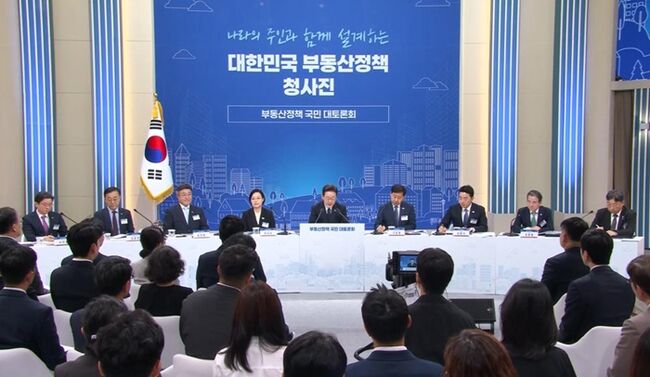 [Liberal Democratic Party Statement] Calling it a Grand Real Estate Debate… It Was Nothing More Than a Private Party Among Themselves
The 'National Grand Debate on Real Estate Policy' held on July 23rd and 27th. [Photo=Yonhap News]The 'National Grand Debate on Real Estate Policy,' hosted by the Lee Jae-myung administration under the
[Liberal Democratic Party Statement] Calling it a Grand Real Estate Debate… It Was Nothing More Than a Private Party Among Themselves
The 'National Grand Debate on Real Estate Policy' held on July 23rd and 27th. [Photo=Yonhap News]The 'National Grand Debate on Real Estate Policy,' hosted by the Lee Jae-myung administration under the
 [Photo] Evidence of Election Fraud Flooding U.S. Media… Trump Had 2.7 Million Votes Stolen
 [Video] U.S. Semiquincentennial Air Show... 'Art in the Sky' streaks across New York
 [Editorial Cartoon] A Draconian Law That Undermines Freedom of Expression

 List
List