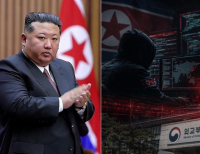
The most covert and powerful threat shaking the foundations of modern liberal democracies is not external enemies, but 'cartels' that parasitize and grow within the system.
The most covert and powerful threat shaking the foundations of modern liberal democracies is not external enemies, but 'cartels' that parasitize and grow within the system.
We often believe that the institutional mechanism of separation of powers prevents the monopoly of power and guarantees citizens' freedom, but in reality, power moves in a much more three-dimensional and organic way than the provisions of formal law codes.
When key figures in the upper echelons of power secretly shake hands for their mutual benefit behind the outward separation of legislature, executive, and judiciary, the cartel is invisibly formed. By what principles does this malignant governance, where a select 0.1% determines the fate of the other 99.9%, operate, and how does it privatize the nation?
There are words that break the natural order and laws. Monopoly and oligopoly are economic cartels that strangle the market's breath, and "dividing and sharing" (nunu-meokgi) and "factional politics" (ppaeggeori jeongchi) are political cartels that distribute profits among themselves. Added to this, terms like 'iron triangle,' 'inner circle,' '5 billion club,' and 'roundabout' symbolize the physiology and structure of interest cartels. Through these terms, we are forced to confront a society where fairness has been paralyzed.
Cartels are closed conspiracies built by a minority of power to monopolize interests
The first driving force behind the formation of cartels stems from the innate human desire to avoid the fear of infinite competition and overcome current disadvantages. Free markets and democratic procedures demand constant innovation and moral tension from participants, which inevitably brings about high fatigue. At this point, those in the upper echelons of power are tempted to eliminate uncertainty by colluding with each other rather than competing.
The moment politicians eliminate competitors and businesses erect barriers to entry, dividing markets and power, they descend from the battlefield of public discourse to become protagonists in comfortable private rooms. While the logic that 'two are stronger than one' and 'three are stronger than two' is about the value of solidarity, the logic of dictatorship and totalitarianism, where one person rules the world, is the principle of cartels.
The 'identity of interests' in the upper structure is the glue that solidifies cartel collusion
Cartel members share similar values and language through specific prestigious educational institutions, blood ties, or closed social gatherings. They communicate not through official documents but through implicit signals, thoroughly excluding those outside their 'us' circle. The motivations within a private organization are vastly different from general motivations.
Even if the separation of powers exists in declaration, if those who make laws, enforce them, and judge them are ultimately bound by the strong ties of academic connections and prior service benefits within an 'iron triangle,' then eradicating corruption and checking power becomes impossible. The 'roundabout personnel appointments,' where yesterday's watchdog becomes today's colleague, act as a key mechanism for maintaining the cartel's interest community and paralyze the system's transparency.
The most fatal weapon of cartels is information asymmetry
Cartel forces erect barriers of jargon and complex administrative procedures to block public access. They constantly produce fragmented information and logic that obscures the essence, preventing ordinary citizens from realizing the system's contradictions. While 99.9% are engrossed in micro-level survival struggles, the 0.1% monopolizes macro-level information and completes the design for generational inheritance of wealth and power.
Cartels can be described as predatory structures that go beyond mere collusion, privatizing knowledge and information to suck the entire society's energy into a few black holes.
The Ill Effects Caused by Cartels
While superficially wearing the guise of democracy, they actually result in a secret, minuscule 0.1% depriving the other 99.9% of their rightful opportunities. This cartel structure paralyzes fairness throughout society and erodes dynamism, the engine of growth. Although invisible to the eyes of the majority of citizens, cartels become an insurmountable 'invisible wall,' destroying social justice.
History remembers the end of all cartels. When the collusion of vested interests obstructs innovation and destroys fairness, that community invariably collapses from within. Modern societal cartels may be elegantly dressed, but their essence is no different from the power-based politics or aristocracy of the past.
For us to break these invisible chains, we must look beyond the outward appearance of institutions and confront the human networks and information flows operating behind them. The power to stop the tragedy of the minuscule 0.1% becoming the tears of the 99.9% begins with a clear-sighted insight that penetrates the cartel's blueprint.
Cartels merely change their form with the times; the grammar of domination has always been the same. From the guild structures that obstructed development in medieval Europe, to the Neo-Confucian cartels of the Joseon Dynasty, the upper power cartel of North Korea that privatized the nation, and today's vested interest cartels and election rigging cartels regardless of political affiliation, their roots lie in the fatal collusion where a minority has seized control of the upper structure. We aim to use the analysis of cartel structures in various fields as an opportunity to eradicate their ill effects.
In the second part, we will dissect the reality of the 'Joseon Dynasty Neo-Confucian Cartel' that suffocated the nation with Neo-Confucian ideology, tracing a history of invisible rule.
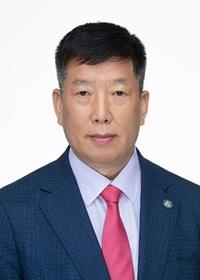
◆ Park Pil-gyu, Committee Member
Editorial Committee Member, Korea-US Daily
40th Class, Korea Military Academy

 [Statement by the Seo-beo-kka Korea Military Academy Save-the-Nation Comrades Association] ㉛ Recount the Votes Publicly, as the Previous Recount Concealed Election Fraud
Tongyeong Mayoral Election Recount [Photo=Yonhap News]South Korea's liberal democracy is dying. The National Election Commission (NEC) and the judiciary, which have plummeted into criminal syndicates
[Statement by the Seo-beo-kka Korea Military Academy Save-the-Nation Comrades Association] ㉛ Recount the Votes Publicly, as the Previous Recount Concealed Election Fraud
Tongyeong Mayoral Election Recount [Photo=Yonhap News]South Korea's liberal democracy is dying. The National Election Commission (NEC) and the judiciary, which have plummeted into criminal syndicates
 What is the significance of the "Trump 2028" red hats that keep making a comeback?
It is noteworthy that President Donald Trump is "intentionally" fueling controversy over whether he can actually run in the 2028 presidential election, even though it is "highly likely he is seriously
What is the significance of the "Trump 2028" red hats that keep making a comeback?
It is noteworthy that President Donald Trump is "intentionally" fueling controversy over whether he can actually run in the 2028 presidential election, even though it is "highly likely he is seriously
 Jin Cummings: “North Korea says it will increase the number of spies, so what is the government doing?”
U.S. political columnist Gene Cummings has publicly questioned the South Korean government, asking, "North Korea is declaring that it will increase its number of spies, so what is the South Kore
Jin Cummings: “North Korea says it will increase the number of spies, so what is the government doing?”
U.S. political columnist Gene Cummings has publicly questioned the South Korean government, asking, "North Korea is declaring that it will increase its number of spies, so what is the South Kore
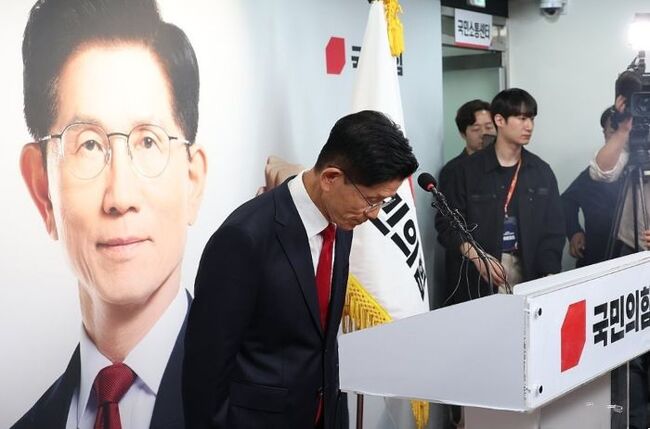 “Too little, too late?…” Kim Moon-soo, who previously conceded his presidential election defeat, now demands a special counsel investigation into ‘allegations of election fraud in the 2025 presidential election’
People Power Party presidential candidate Kim Moon-soo concedes defeat during a press conference at the party headquarters in Yeouido, Seoul, on June 4, 2025. [Joint Press Corps]As allegations emerge
“Too little, too late?…” Kim Moon-soo, who previously conceded his presidential election defeat, now demands a special counsel investigation into ‘allegations of election fraud in the 2025 presidential election’
People Power Party presidential candidate Kim Moon-soo concedes defeat during a press conference at the party headquarters in Yeouido, Seoul, on June 4, 2025. [Joint Press Corps]As allegations emerge
 Stock Market Crash 'Black Tuesday'… KOSPI down 10.8%, KOSDAQ down 7.7%
The KOSPI fell by more than 5% in early trading on the 28th, triggering a sell-side sidecar.On the 28th, the KOSPI plunged by more than 10%.Due to the sharp decline, a sell-side sidecar—a temporary
Stock Market Crash 'Black Tuesday'… KOSPI down 10.8%, KOSDAQ down 7.7%
The KOSPI fell by more than 5% in early trading on the 28th, triggering a sell-side sidecar.On the 28th, the KOSPI plunged by more than 10%.Due to the sharp decline, a sell-side sidecar—a temporary
 [World Heritage Committee] 25 New World Heritage Sites Inscribed in Busan… South Korea Successfully Expands 'Getbol' Listing
The Chairperson of the World Heritage Committee speaks at the plenary session of the 48th session of the World Heritage Committee, held at BEXCO in Busan on the 20th. [Photo: Yonhap News]A total of 25
[World Heritage Committee] 25 New World Heritage Sites Inscribed in Busan… South Korea Successfully Expands 'Getbol' Listing
The Chairperson of the World Heritage Committee speaks at the plenary session of the 48th session of the World Heritage Committee, held at BEXCO in Busan on the 20th. [Photo: Yonhap News]A total of 25
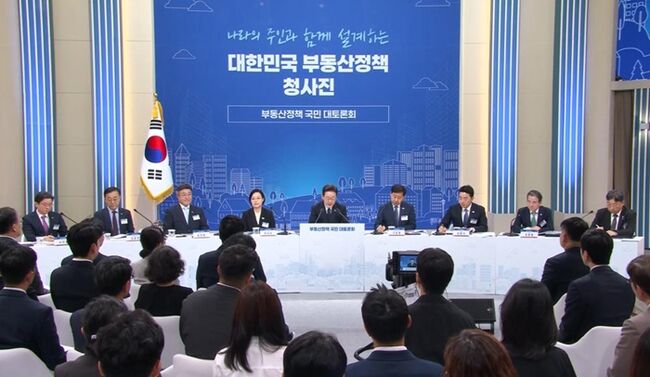 [Liberal Democratic Party Statement] Calling it a Grand Real Estate Debate… It Was Nothing More Than a Private Party Among Themselves
The 'National Grand Debate on Real Estate Policy' held on July 23rd and 27th. [Photo=Yonhap News]The 'National Grand Debate on Real Estate Policy,' hosted by the Lee Jae-myung administration under the
[Liberal Democratic Party Statement] Calling it a Grand Real Estate Debate… It Was Nothing More Than a Private Party Among Themselves
The 'National Grand Debate on Real Estate Policy' held on July 23rd and 27th. [Photo=Yonhap News]The 'National Grand Debate on Real Estate Policy,' hosted by the Lee Jae-myung administration under the
 [Photo] Evidence of Election Fraud Flooding U.S. Media… Trump Had 2.7 Million Votes Stolen
 [Video] U.S. Semiquincentennial Air Show... 'Art in the Sky' streaks across New York
 [Editorial Cartoon] A Draconian Law That Undermines Freedom of Expression

 List
List