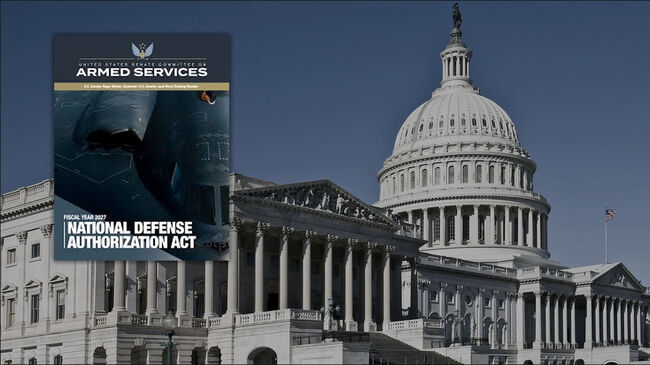
It was confirmed on the 18th that the National Defense Authorization Act for next year, which passed the Senate Armed Services Committee, includes a provision requiring the Secretary of Defense to regularly report a roadmap for the transition of wartime operational control (OPCON).
As the South Korean government accelerates the OPCON transition, the US Congress's intent to more closely scrutinize the transition process is drawing attention to its potential impact on future discussions.
The 'National Defense Authorization Act for Fiscal Year 2027 (NDAA)' passed by the Senate Armed Services Committee on the 11th requires the Secretary of Defense to submit to the relevant standing committees a report on the ROK-US roadmap for the implementation of the 'Conditions-Based OPCON Transition Plan' signed by both countries on October 31, 2018, every 90 days from March 1 of next year until 2030.
This includes an assessment of the ROK military's military capabilities to lead combined defense, its ability to counter North Korea's nuclear and missile threats, and the security environment in the Indo-Pacific region.
These provisions are interpreted as reflecting Congress's intention to continuously oversee the OPCON transition process through regular reporting and evaluation by the executive branch.
Similar to last year, the NDAA that passed the Senate Armed Services Committee this time states that funds allocated through the bill cannot be used for the OPCON transition procedures.
A proviso, identical to last year's, states that budget use will be permitted after 60 days have passed from the submission of a certification and evaluation report by the Department of Defense to Congress, confirming that any reduction in US Forces Korea or OPCON transfer aligns with US national security interests and that appropriate consultations have been held with allies, including those contributing militarily to the ROK-US alliance, the Combined Forces Command, and the UN Command.
The difference this year is that while last year's NDAA specified that this certification process was only necessary if the OPCON transition occurred 'in a manner inconsistent with the agreed-upon plan by both sides,' this year's NDAA omits that phrase and stipulates that funds cannot be used to 'complete the OPCON transition.'
This can be interpreted to mean that even if the ROK and the US proceed with the OPCON transition in accordance with their agreement, certification and reporting procedures to Congress will still be required.
However, last year, the NDAA bill that passed the Senate Armed Services Committee only stipulated that funds could not be used for 'completion of OPCON transition,' but it was later amended during the conference process between the Senate and the House to restrict budget use for completing the OPCON transition 'in a manner inconsistent with the agreed-upon plan by both sides' before its final passage.
The NDAA that passed the Senate Armed Services Committee is now awaiting a vote on the Senate floor.
The NDAA, an annual bill that approves defense-related budget expenditures and policies, is passed separately by the Senate and the House, and then a unified bill is created by including identical provisions and reconciling differing ones before final passage.
The NDAA passed by the House Armed Services Committee on the 4th includes the wording that funds cannot be used to complete the OPCON transfer 'in a manner inconsistent with the agreed-upon plan by both sides,' showing a difference from the Senate's version. The House is scheduled to vote on it on the floor in early next month.
Meanwhile, in its report related to the NDAA, the Senate Armed Services Committee expressed concern over "malign influence activities" conducted by the Chinese Communist Party within South Korea and directed the Secretary of Defense to provide a detailed report by May 1 of next year on its impact on US national security and commercial interests, including those of US Forces Korea.
A report published by the Congressional Research Service on the 9th, titled "The ROK-US Alliance: Issues for Congress," also contained concerns about Chinese influence.
The report noted, "As the threats posed by the People's Republic of China (PRC, hereinafter China), Russia, and North Korea evolve, the United States and South Korea appear ready for South Korea to play a more active role within the alliance and expand its missions. Congress can guide and influence the administration's efforts to modernize the alliance, including strategic flexibility, wartime operational control, burden sharing, extended deterrence, and defense industrial cooperation, through legislation, oversight, and other means."
The report also stated, "'Strategic flexibility' is gaining renewed attention as the second Trump administration has expressed its intent to modernize the ROK-US alliance to deter not only North Korea but also China, and to have South Korea take a leading role in the defense of the Korean Peninsula."
In 2025, both countries pledged to "strengthen the US conventional deterrence posture in preparation for all regional threats to the alliance, including North Korea." Some observers note that the Trump administration appears to be positioning US military assets in preparation for contingencies related to China and Taiwan. For example, the US Air Force deployed MQ-9 Reaper drones to Kunsan Air Base in 2025.
The release of these reports and the passage of the Senate NDAA bill came about a week before the confirmation of Michelle Steele as the US Ambassador to South Korea by the Senate.
Yonhap News, News & Post

 [Focus] Why did the dedicated communication network, checked three times, stop?... Three questions about the "Wi-Fi connection" for early voting
In the broadcast of Lee Young-don TV on the 16th, a current National Election Commission official exposes the reality of the 6.3 local elections based on direct experience. [Photo=Screenshot fr
[Focus] Why did the dedicated communication network, checked three times, stop?... Three questions about the "Wi-Fi connection" for early voting
In the broadcast of Lee Young-don TV on the 16th, a current National Election Commission official exposes the reality of the 6.3 local elections based on direct experience. [Photo=Screenshot fr
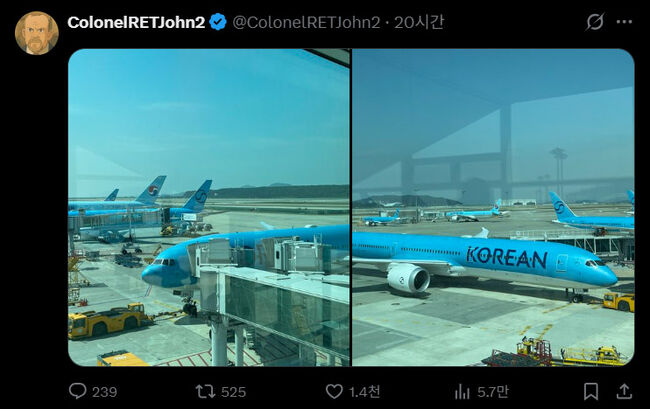 John Mills, Assistant Secretary of State for East Asian and Pacific Affairs, visits Korea?
A photo, believed to be of John R. Mills, Assistant Secretary of State, visiting South Korea, has garnered attention.On Thursday, the 18th, Mills posted two photos on X (formerly Twitter) that appear
John Mills, Assistant Secretary of State for East Asian and Pacific Affairs, visits Korea?
A photo, believed to be of John R. Mills, Assistant Secretary of State, visiting South Korea, has garnered attention.On Thursday, the 18th, Mills posted two photos on X (formerly Twitter) that appear
 Choi Min-ho, Sejong Mayor Who Failed Re-election, Files Election Nullification Appeal with Election Commission
Sejong City Mayor Choi Min-ho announced at a press conference on the 18th that he had filed an appeal with the National Election Commission requesting the nullification of the results of the June 3rd
Choi Min-ho, Sejong Mayor Who Failed Re-election, Files Election Nullification Appeal with Election Commission
Sejong City Mayor Choi Min-ho announced at a press conference on the 18th that he had filed an appeal with the National Election Commission requesting the nullification of the results of the June 3rd
 "Let's go to the special prosecutor!"... A mysterious 'three-year-old ballot' found in the ballot box
Past ballots were discovered belatedly during the vote counting and tabulation process of the 21st presidential election last year. [Photo=Yonhap News]Past ballots used in previous elections were conf
"Let's go to the special prosecutor!"... A mysterious 'three-year-old ballot' found in the ballot box
Past ballots were discovered belatedly during the vote counting and tabulation process of the 21st presidential election last year. [Photo=Yonhap News]Past ballots used in previous elections were conf
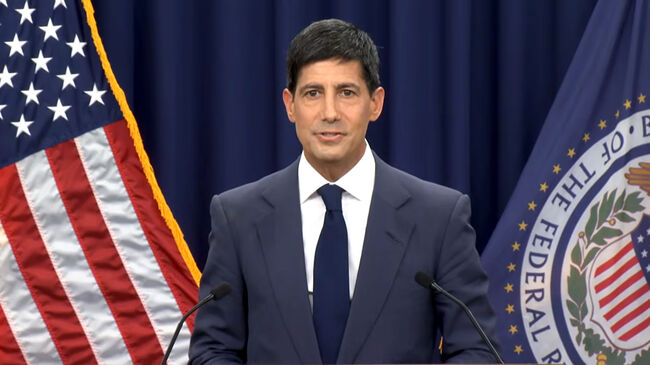 Wash: Fed committed to maintaining 2% inflation target
Federal Reserve (Fed) Chair Jerome Powell stated on Wednesday that the central bank is unanimously committed to bringing inflation down to its 2% target.In his first press conference since taking offi
Wash: Fed committed to maintaining 2% inflation target
Federal Reserve (Fed) Chair Jerome Powell stated on Wednesday that the central bank is unanimously committed to bringing inflation down to its 2% target.In his first press conference since taking offi
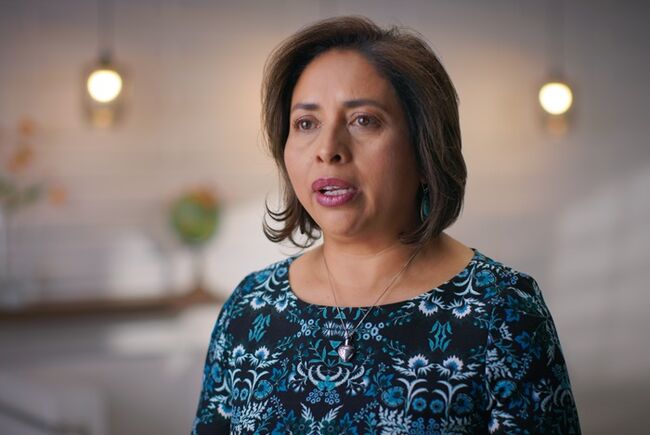 [Photo] Highlights of the 6th Seoul Resper International Film Festival Opening Ceremony on the 18th
The documentary ‘Gender Transformation: The Untold Realities,’ selected as the opening film. [Photo: Luxfer] Lee Jang-ho, Chairman of the Seoul Luxfer International Film Festival Organizing
[Photo] Highlights of the 6th Seoul Resper International Film Festival Opening Ceremony on the 18th
The documentary ‘Gender Transformation: The Untold Realities,’ selected as the opening film. [Photo: Luxfer] Lee Jang-ho, Chairman of the Seoul Luxfer International Film Festival Organizing
 [Photo] Current status of Chairman Hwang Kyo-ahn and lawyer Park Joo-hyun attending the US election fraud fighter summit
Lawyer Park Joo-hyun with lawyer Peter Ticktin, who was pardoned by U.S. President Donald Trump. [Facebook]Hwang Kyo-ahn, leader of the Liberty and Innovation Party (second from left), informing about
[Photo] Current status of Chairman Hwang Kyo-ahn and lawyer Park Joo-hyun attending the US election fraud fighter summit
Lawyer Park Joo-hyun with lawyer Peter Ticktin, who was pardoned by U.S. President Donald Trump. [Facebook]Hwang Kyo-ahn, leader of the Liberty and Innovation Party (second from left), informing about
 [Special Contribution: Matsuyama] When Political Parties Lose Their Way
On the 17th, reporters are intensely interviewing Representative Jang Dong-hyuk at the National Assembly. [Photo=Yonhap News]Many conservative citizens feel frustrated and powerless when they look at
[Special Contribution: Matsuyama] When Political Parties Lose Their Way
On the 17th, reporters are intensely interviewing Representative Jang Dong-hyuk at the National Assembly. [Photo=Yonhap News]Many conservative citizens feel frustrated and powerless when they look at
 [Video] 'Trump's close friend' Lindell "I will inform Trump about South Korea's fraudulent election"
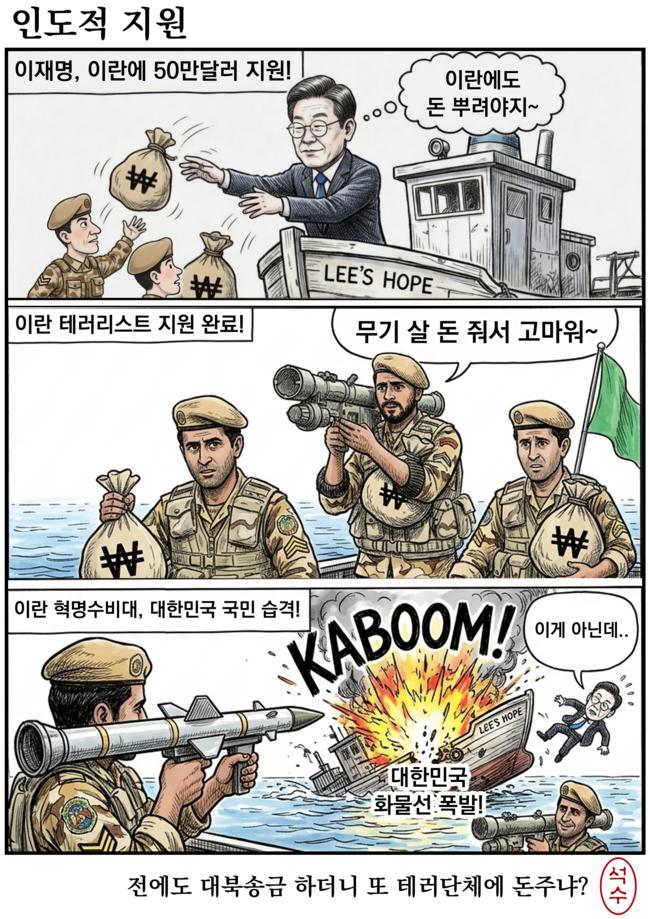 [Editorial Cartoon] Humanitarian Aid

 List
List