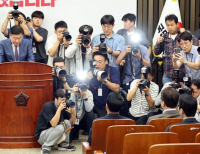
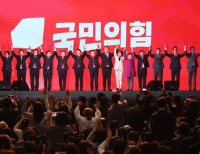
Reporters are intensely interviewing Representative Jang Dong-hyuk at the National Assembly on the 17th. [Photo=Yonhap News]
Many liberal-conservative citizens feel frustrated and powerless when observing today's conservative politics. It's not just because they lost power. It's not solely due to election defeat.
The more fundamental problem lies in the fact that it's becoming increasingly unclear what kind of party it is, where it's heading, and what future it envisions.
A political party is, by nature, an organization that sets the direction for society. It's a place that presents a vision to the public and persuades them on where the nation should go, how to achieve economic growth, how to secure national defense, and what educational and cultural ideals to pursue.
However, today's conservative parties spend most of their energy reacting to various current issues and events rather than fulfilling that role. One day, they are explaining someone's remarks; another day, they are managing internal conflicts; and yet another day, they are formulating positions on controversies that erupt externally. The party is not leading society but is being swept along by society's turmoil.
In reality, the problems South Korea faces today are by no means trivial. The world is reorganizing its industrial order around artificial intelligence and semiconductors. The power struggle between the United States and China is intensifying.
North Korea has not yet abandoned its nuclear armament, and population decline and low birth rates threaten the nation's very sustainability. Japan is concentrating its national capabilities on normalizing its military strength and rebuilding its advanced industries, while the United States is demanding greater roles from its allies.
In such times, conservative parties should, above all, discuss the nation's long-term strategy. They should deliberate on how to reform the labor market, how to enhance corporate competitiveness, how to streamline regulations, the extent to which to develop the ROK-US alliance and ROK-Japan cooperation, and from what perspective to prepare for reunification.
Yet, reality is moving in the opposite direction. Immediate controversies take precedence over the nation's future, tactics are emphasized over strategy, and emotions override vision.
A political party exists to mediate conflicts. Its role is to gather diverse opinions and consolidate them into a single direction. However, if a party abandons this role, conflicts escalate. When differing opinions clash, the leadership should create a forum for discussion and draw conclusions. If this process does not function properly, divisions within the support base only deepen.
For instance, let's consider a debate surrounding an election. A political party should examine the facts, gather expert opinions, listen to the views of party members and supporters, and formulate an official stance. That is responsible politics. However, if these processes are insufficient, only individual claims remain, and the party becomes an object swept up in the controversy rather than a subject leading it.
A more significant problem is the lack of attention to culture and society. Politics may appear to be at the forefront of society, but in reality, it is at the very back. The flow of education, culture, academia, media, and civil society is established first, and politics follows those outcomes.
However, for a long time, Korean conservatism has been overly focused on politics, underestimating the importance of society and culture. They seemed to believe that winning elections would solve everything, and that once they held power, the zeitgeist would naturally follow.
But reality proved otherwise. A political force lacking the accumulated strength in the realms of culture, education, academia, and civil movements is inevitably bound to be swept along by external trends. Society moves politics, not the other way around. Political parties must not forget this fact.
What conservative parties need today is not more slogans. It is not stronger antagonism. What is needed is a long-term vision that can articulate what the nation should look like in 20 or 30 years.
It requires a consistent strategy for economic growth and industrial competitiveness, security and diplomacy, and reunification and national identity. And it requires the ability to explain it in language that the public can understand.
Ultimately, the current chaos is a crisis of leadership. A leader is not someone who follows public opinion but someone who persuades it. A leader is not someone who exploits conflicts but someone who resolves them. A leader is someone who can choose long-term national interests over immediate applause.
The public does not expect a perfect party. Nor do they expect a leader without mistakes. They simply want a party that knows where to go and a leader who can explain what needs to be done. This is precisely what conservative parties have lost today.
If political parties wish to regain public trust, they must stop floundering in the midst of turmoil. They must become parties that set agendas, not parties that chase controversies.
They must become parties that design the future, not parties that react to events. Only then will conservatism be recognized again not as a political force, but as a force that leads the nation.
◆ Songsan
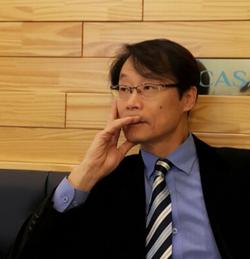
A poet and a researcher of history and philosophy. Former director of the Rhee Syngman Academy. Currently serves as a research advisor for the Korean Modern and Contemporary History Research Association and the representative of the philosophy forum Rikeion. He has published four poetry collections, co-translated "Heroes of Hook Goji," and authored the humanities books "Joseon, a Myth," "Humanities on the Tatami," and "A Liberal's Reading of Gramsci." Songsan is a pen name.

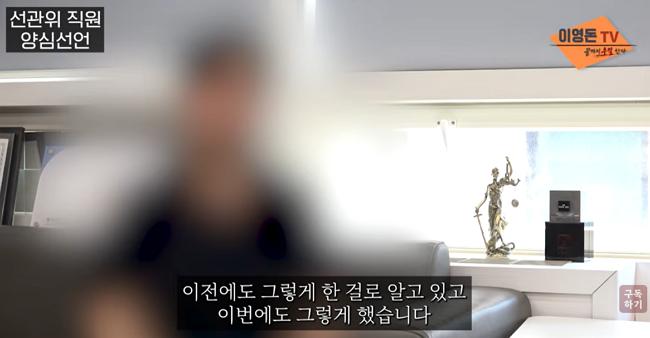 [Focus] Why did the dedicated communication network, checked three times, stop?... Three questions about the "Wi-Fi connection" for early voting
In the broadcast of Lee Young-don TV on the 16th, a current National Election Commission official exposes the reality of the 6.3 local elections based on direct experience. [Photo=Screenshot fr
[Focus] Why did the dedicated communication network, checked three times, stop?... Three questions about the "Wi-Fi connection" for early voting
In the broadcast of Lee Young-don TV on the 16th, a current National Election Commission official exposes the reality of the 6.3 local elections based on direct experience. [Photo=Screenshot fr
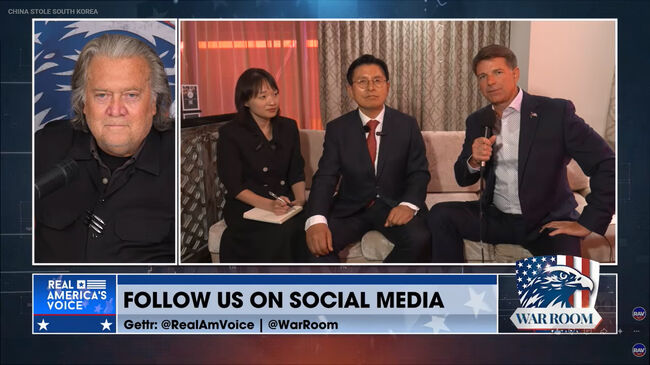 Hwang Kyo-ahn Urges President Trump's "Direct and Decisive Intervention"
Hwang Kyo-ahn, leader of the Liberty and Innovation Party, who is visiting the United States, appeared on Steve Bannon's podcast "War Room," known for its significant influence among the American cons
Hwang Kyo-ahn Urges President Trump's "Direct and Decisive Intervention"
Hwang Kyo-ahn, leader of the Liberty and Innovation Party, who is visiting the United States, appeared on Steve Bannon's podcast "War Room," known for its significant influence among the American cons
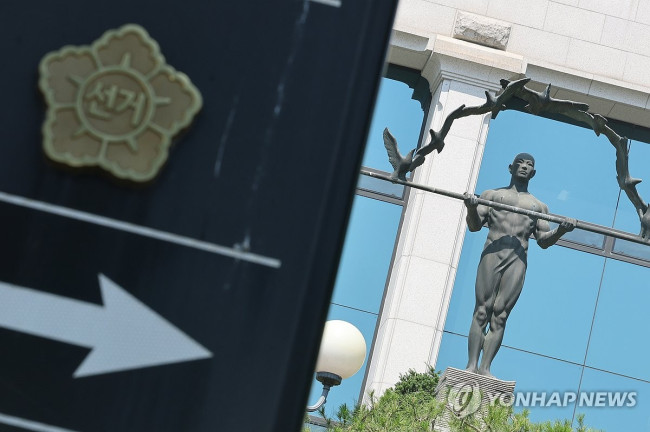 National Election Commission Special Committee for State Audit Officially Launched... State Audit Plan Adopted
  "Let's go to the special prosecutor!"... A mysterious 'three-year-old ballot' found in the ballot box
Past ballots were discovered belatedly during the vote counting and tabulation process of the 21st presidential election last year. [Photo=Yonhap News]Past ballots used in previous elections were conf
"Let's go to the special prosecutor!"... A mysterious 'three-year-old ballot' found in the ballot box
Past ballots were discovered belatedly during the vote counting and tabulation process of the 21st presidential election last year. [Photo=Yonhap News]Past ballots used in previous elections were conf
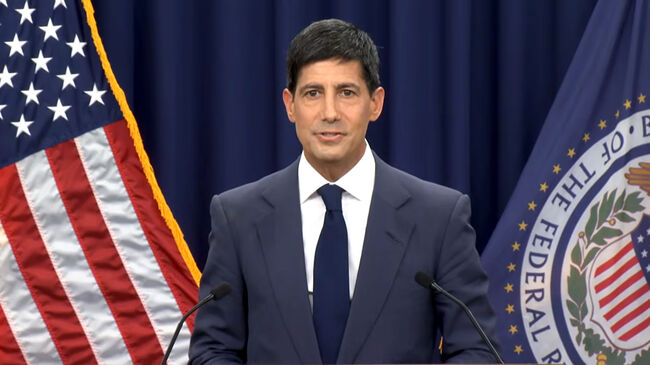 Wash: Fed committed to maintaining 2% inflation target
Federal Reserve (Fed) Chair Jerome Powell stated on Wednesday that the central bank is unanimously committed to bringing inflation down to its 2% target.In his first press conference since taking offi
Wash: Fed committed to maintaining 2% inflation target
Federal Reserve (Fed) Chair Jerome Powell stated on Wednesday that the central bank is unanimously committed to bringing inflation down to its 2% target.In his first press conference since taking offi
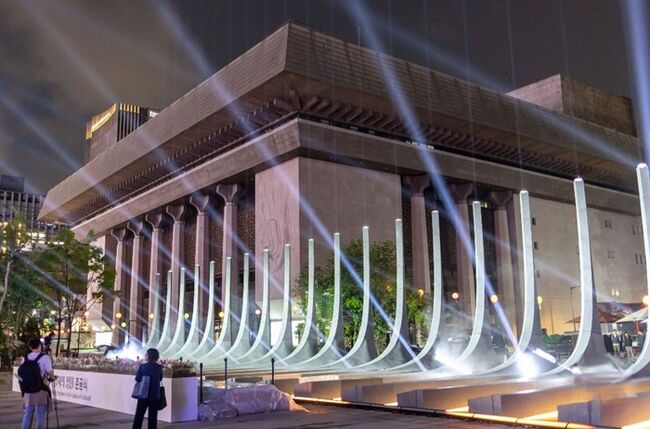 [Patriotism Month Travel Destinations] ② "Freedom is not free"... Gwanghwamun Square 'Garden of Gratitude'
Night view of the Garden of Gratitude [Photo: Yonhap News]Gratitude, beyond mere politeness, bestows positive energy and freedom upon life. On the 12th, a meaningful space was established in Gwan
[Patriotism Month Travel Destinations] ② "Freedom is not free"... Gwanghwamun Square 'Garden of Gratitude'
Night view of the Garden of Gratitude [Photo: Yonhap News]Gratitude, beyond mere politeness, bestows positive energy and freedom upon life. On the 12th, a meaningful space was established in Gwan
 [Photo] Current status of Chairman Hwang Kyo-ahn and lawyer Park Joo-hyun attending the US election fraud fighter summit
Lawyer Park Joo-hyun with lawyer Peter Ticktin, who was pardoned by U.S. President Donald Trump. [Facebook]Hwang Kyo-ahn, leader of the Liberty and Innovation Party (second from left), informing about
[Photo] Current status of Chairman Hwang Kyo-ahn and lawyer Park Joo-hyun attending the US election fraud fighter summit
Lawyer Park Joo-hyun with lawyer Peter Ticktin, who was pardoned by U.S. President Donald Trump. [Facebook]Hwang Kyo-ahn, leader of the Liberty and Innovation Party (second from left), informing about
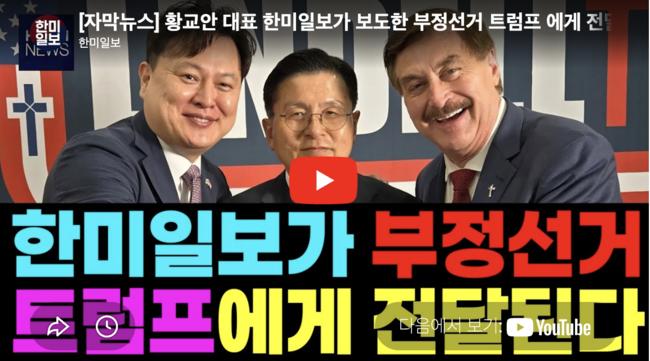 [Video] 'Trump's close friend' Lindell "I will inform Trump about South Korea's fraudulent election"
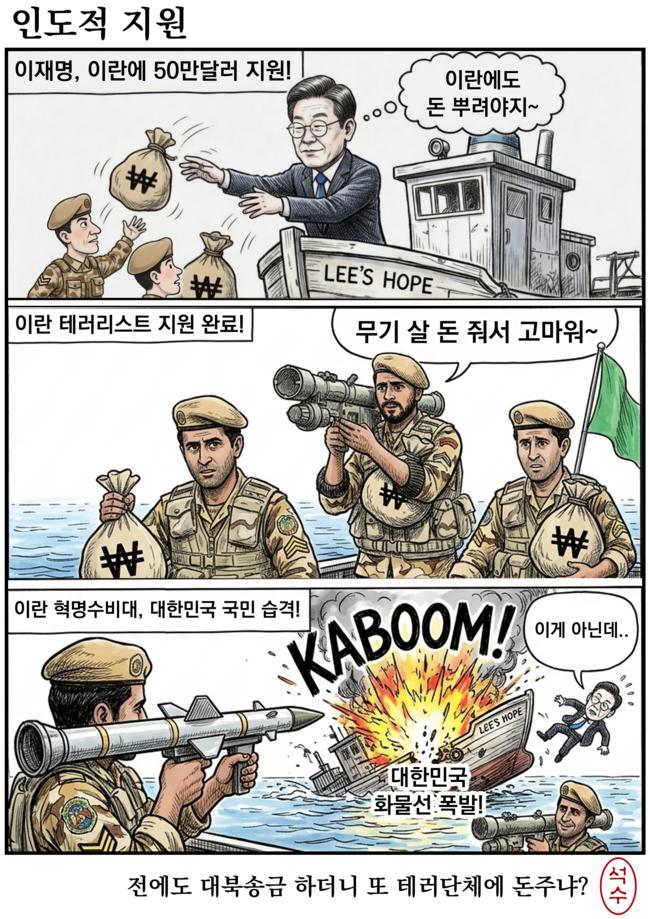 [Editorial Cartoon] Humanitarian Aid

 List
List