Former Justice Minister Park Sung-jae, indicted for involvement in the December 3rd emergency martial law and for allegedly acting on a request from First Lady Kim Keon-hee regarding an investigation, attends the first trial ruling at the Seoul Central District Court in Seocho-gu, Seoul, on the 22nd. [Yonhap News]
Former Justice Minister Park Sung-jae, indicted for alleged involvement in the December 3rd emergency martial law, has been sentenced to a heavy penalty.
The court found him guilty of charges related to rebellion but dismissed the charge of accepting a request from First Lady Kim Keon-hee to suppress an investigation, ruling it was outside the scope of the special prosecutor's investigation into rebellion.
The Seoul Central District Court's Criminal Division 33 (Presiding Judge Lee Jin-kwan) sentenced former Minister Park to 25 years in prison on the 22nd for charges including engaging in important duties related to rebellion and abuse of power. This is 5 years more than the 20 years sought by the special prosecutor's team.
The court ordered the arrest of former Minister Park, who was indicted while on bail, citing concerns that he might destroy evidence.
The court first noted that the act of former President Yoon Suk-yeol declaring emergency martial law on December 3rd, 2024, mobilizing the military, and issuing a proclamation constituted a rebellion intended to disrupt the national constitution, falling under the crime of rebellion in the Criminal Act.
Furthermore, the court determined that former Minister Park was fully aware that the substantive and procedural requirements for emergency martial law were not met and that former President Yoon intended to obstruct the National Assembly's exercise of its powers through coercion as a follow-up measure to the emergency martial law.
In particular, it pointed out that the purpose of former President Yoon's declaration of emergency martial law was to suppress the investigation into the so-called "Myeongtaegyun incident," and that former Minister Park was aware of this.
It was deemed reasonable to believe that former President Yoon summoned former Minister Park to the presidential office shortly before the declaration of emergency martial law, mentioned the Myeongtaegyun incident, and revealed the plan to declare emergency martial law.
Based on this, the court found that former Minister Park had the intention to disrupt the national constitution and was aware of the illegality.
Therefore, the court recognized that former Minister Park's actions, such as convening a meeting of Justice Ministry officials after the declaration of emergency martial law, reviewing the dispatch of prosecutors to the martial law command's joint investigation headquarters, checking the capacity of correctional facilities, and ordering the attendance of officials responsible for exit bans, constituted engaging in important duties related to rebellion.
Former Minister Park's abuse of power charges, stemming from his orders to check the capacity of correctional facilities and to have exit ban officials report for duty, were also found guilty.
The abuse of power charge for ordering the creation of a "document justifying the abuse of authority" containing logic to legitimize the martial law within the Justice Ministry's prosecution division immediately after the lifting of martial law was also found guilty.
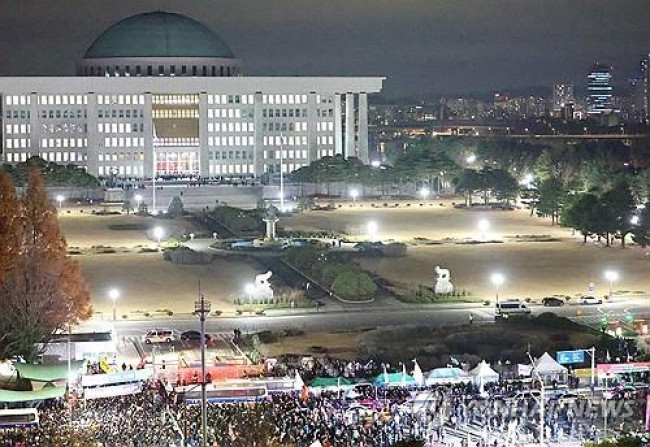 Outside the National Assembly at the time of the emergency martial law declaration [Yonhap News File Photo]
In explaining the sentencing background, the court referred to the December 3rd emergency martial law as "December 3rd Rebellion."
It stated, "The December 3rd Rebellion, by its nature, corresponds to a 'rebellion from above' and is also called a 'praetorian coup.' Because a democratically elected leader disregards and violates the constitution and laws, causing a rebellion, it shakes the people's belief in democracy and the rule of law to its core, making its level of danger incomparable to a 'rebellion from below.'"
The court continued, "As the Minister of Justice, the defendant bore a heavy obligation to comply with and uphold the constitution and laws in performing his duties. Despite this, he ended up turning away from these duties and responsibilities, thinking that the December 3rd Rebellion might succeed, and instead chose to participate as a member of it."
The court pointed out, "In particular, the duties performed by the defendant were essential to achieving the core prerequisite of the December 3rd Rebellion: suppressing Yoon Suk-yeol's political opposition and preventing the National Assembly's demand to lift martial law. Due to the defendant's actions, South Korea could have regressed into a dark past where its basic free democratic order was violated, and it could have been trapped in dictatorial politics for a long time."
It added, "After the rebellion failed, the defendant abused his power to order public officials from the Ministry of Justice to draft related documents, and Yoon Suk-yeol, based on the content prepared by them, argued for the legitimacy and inevitability of the rebellion. The social conflict and division caused by people who agree with this, lightly disregard constitutional values of South Korea, and only push their own political agendas, do not seem easily reconcilable."
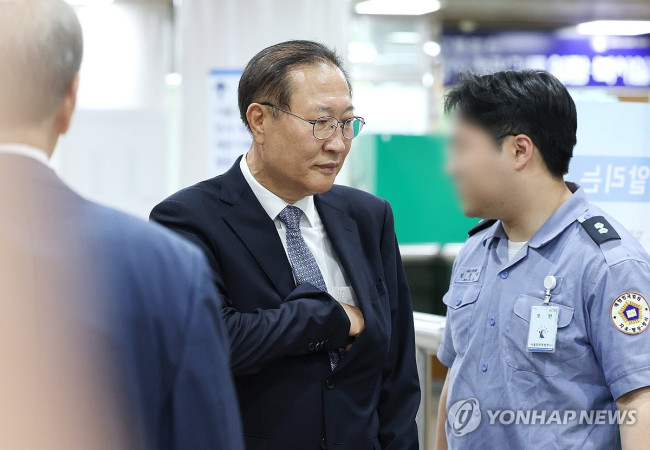 Former Justice Minister Park Sung-jae, indicted for involvement in the December 3rd emergency martial law and for allegedly acting on a request from First Lady Kim Keon-hee regarding an investigation, attends the first trial ruling at the Seoul Central District Court in Seocho-gu, Seoul, on the 22nd. [Yonhap News]
Furthermore, it stated, "The defendant made false statements without hesitation to investigative agencies and in court, and despite objective evidence such as CCTV footage, claimed 'I have no memory of anything.' While he stated in court that he 'feels a great sense of responsibility and is sorry,' given this attitude, it is difficult to acknowledge the sincerity of his words."
Presiding Judge Lee Jin-kwan of Criminal Division 33 had also stated similar sentencing backgrounds when ruling on the case of former Prime Minister Han Duck-soo for engaging in important duties related to rebellion in January, referring to the December 3rd emergency martial law as a "praetorian coup." Former Prime Minister Han was sentenced to 23 years in prison in the first trial.
Former Minister Park was also accused of violating the Act on the Prohibition of Improper Solicitation and Graft by allegedly giving inappropriate instructions to a subordinate after receiving a request from First Lady Kim in May last year to investigate the circumstances under which a special investigation team was formed at the Seoul Central District Prosecutors' Office to handle the luxury bag bribery case. However, the court dismissed this charge.
This is based on the reasoning that the case does not fall under the scope of investigation defined by the special prosecutor law for rebellion.
The court determined that there was no specific connection between the Telegram messages from former Minister Park, which were the starting point of the investigation into this charge, and the crimes of emergency martial law and rebellion/foreign aggression.
The court also dismissed the charge of perjury in violation of the National Assembly Testimony and Evidence Act, for which former Minister of Government Legislation Lee Wan-gyu was jointly indicted. He was accused of testifying in the National Assembly to the effect that there was no discussion regarding martial law at the "secret meeting" held immediately after the lifting of martial law, for the same reason.
However, it added, "For reference, if the dismissal of charges is finalized, unless there are special circumstances, it is possible to re-investigate and prosecute according to legal procedures, thereby promoting harmony between the principle of due process and the ascertainment of substantive truth."
Following today's ruling, former Minister Park's side stated, "We cannot accept the court's findings of fact or legal interpretations and will appeal immediately."
Special Prosecutor Jang Woo-seong commented, "This ruling concerns the responsibility of the Minister of Justice to prevent an unconstitutional and illegal declaration of emergency martial law and to protect the constitutional order. The possibility of appeal seems low."
Regarding the charges against former Minister Lee and former Minister Park for which charges were dismissed, he stated, "We will determine whether they fall under the scope of the second comprehensive special prosecutor's investigation. If they can be transferred to the comprehensive special prosecutor's team, we do not plan to appeal separately."
Yonhap News

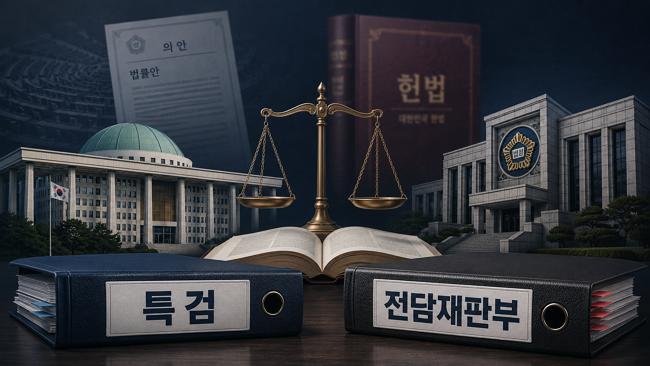 [Special Feature - Disenfranchisement National Assembly Investigation ③] Constitutional Amendment is a Long-term Task, the Law on the Special Court for Insurrection Should Be Applied
Image symbolizing the need for a special prosecutor and dedicated court panels within the existing judicial system to investigate the criminal responsibility for the June 3rd disenfranchisement incide
[Special Feature - Disenfranchisement National Assembly Investigation ③] Constitutional Amendment is a Long-term Task, the Law on the Special Court for Insurrection Should Be Applied
Image symbolizing the need for a special prosecutor and dedicated court panels within the existing judicial system to investigate the criminal responsibility for the June 3rd disenfranchisement incide
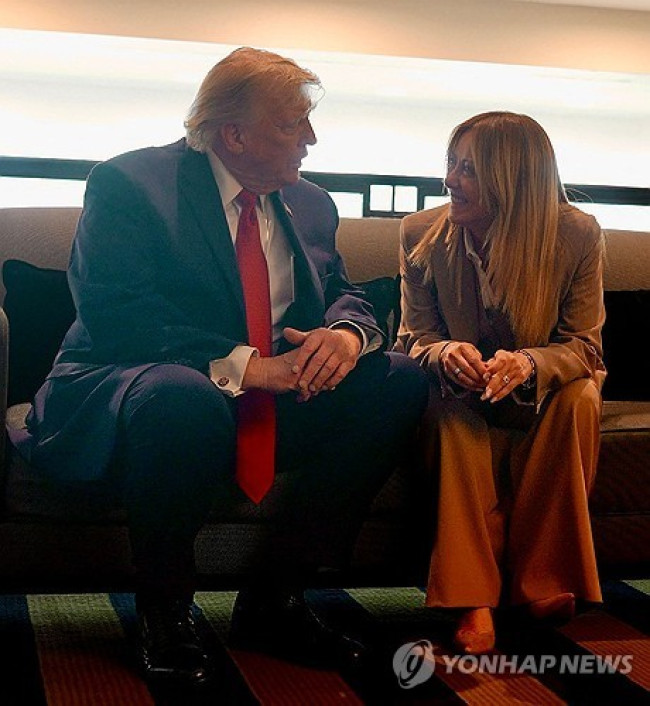 Trump to Italian Prime Minister amid conflict, "We protected you, but you turned away"
U.S. President Donald Trump and Italian Prime Minister Giorgia Meloni converse at the G7 Summit. [AFP=Yonhap News]U.S. President Donald Trump continued his criticism of Italian Prime Minister Gi
Trump to Italian Prime Minister amid conflict, "We protected you, but you turned away"
U.S. President Donald Trump and Italian Prime Minister Giorgia Meloni converse at the G7 Summit. [AFP=Yonhap News]U.S. President Donald Trump continued his criticism of Italian Prime Minister Gi
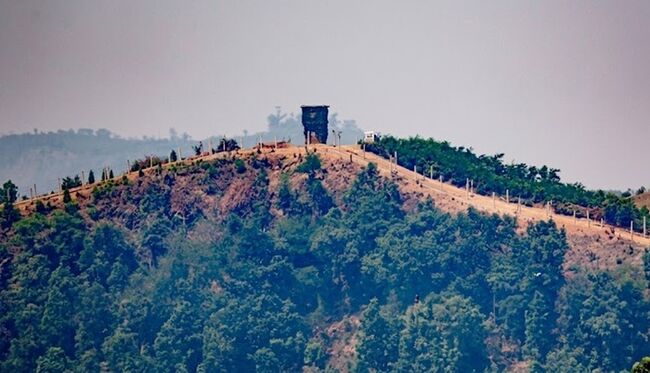 North Korea lays barbed wire and landmines right up to the MDL... JCS "Clear violation of the Armistice Agreement"
A structure believed to be a fence is installed at a North Korean guard post in Kaepung County, viewed from the border area in Paju, Gyeonggi Province. Photographed on the 19th. [Photo=Yonhap News]Nor
North Korea lays barbed wire and landmines right up to the MDL... JCS "Clear violation of the Armistice Agreement"
A structure believed to be a fence is installed at a North Korean guard post in Kaepung County, viewed from the border area in Paju, Gyeonggi Province. Photographed on the 19th. [Photo=Yonhap News]Nor
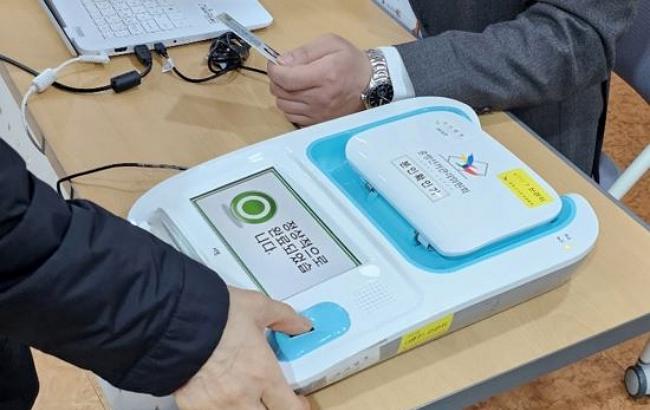 [Analysis] "Identity Verification Devices" as seen in the Daegu Case... Concerns of Voting Rights Infringement "Become Reality"
Identity verification device installed at a prior voting station. [Photo=Yonhap News] The First Gateway to Guaranteeing Voting Rights Has Been Breached The core issue of the prior voting ide
[Analysis] "Identity Verification Devices" as seen in the Daegu Case... Concerns of Voting Rights Infringement "Become Reality"
Identity verification device installed at a prior voting station. [Photo=Yonhap News] The First Gateway to Guaranteeing Voting Rights Has Been Breached The core issue of the prior voting ide
 [HANMI DATA LAB] June Week 3 (15-19) Money Insight
The left side of the screen contrasts growth assets such as AI, semiconductors, automobiles, and industrial equipment, while the right side displays defensive assets like the Federal Reserve, banks, a
[HANMI DATA LAB] June Week 3 (15-19) Money Insight
The left side of the screen contrasts growth assets such as AI, semiconductors, automobiles, and industrial equipment, while the right side displays defensive assets like the Federal Reserve, banks, a
 Democracy Threatens Ruin and Despair... Writer Kim Gyu-na's 'A World Like a Novel' Episode 308
José Saramago's novel "The City of the Blinding"Recently, author Kim Kyu-na introduced a novel perfectly suited to the current political climate on the 308th episode of "A World Like a Novel." K
Democracy Threatens Ruin and Despair... Writer Kim Gyu-na's 'A World Like a Novel' Episode 308
José Saramago's novel "The City of the Blinding"Recently, author Kim Kyu-na introduced a novel perfectly suited to the current political climate on the 308th episode of "A World Like a Novel." K
 [Photo] Freedom High School Alliance installs banner in Gangdong-gu, Seoul: "June 3rd Fraudulent Election Rerun, In-person Voting, On-site Counting"
The Korea High School Union installed a banner in the Gangdong-gu district of Seoul on the 21st with the slogan "June 3rd Fraudulent Election Re-election, Same-Day Vote Count." The banner also states,
[Photo] Freedom High School Alliance installs banner in Gangdong-gu, Seoul: "June 3rd Fraudulent Election Rerun, In-person Voting, On-site Counting"
The Korea High School Union installed a banner in the Gangdong-gu district of Seoul on the 21st with the slogan "June 3rd Fraudulent Election Re-election, Same-Day Vote Count." The banner also states,
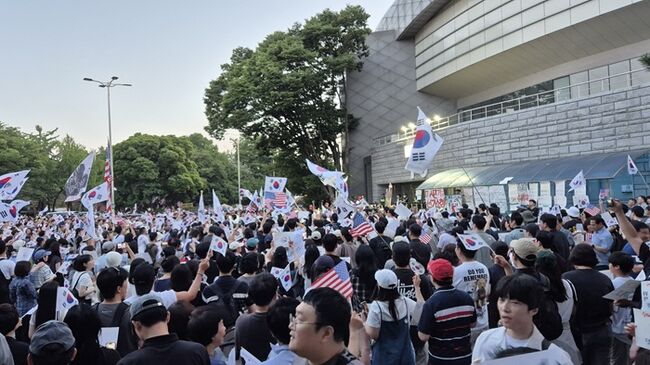 [Dume Poet Column] The Second Han River Miracle That Opened the Floodgates
20s and 30s youth defending the site of alleged election fraud for 20 days, shouting for a rerun and same-day ballot counting! ⒸHanmi IlboIn 1960, the March 15th fraudulent election occurred, leadin
[Dume Poet Column] The Second Han River Miracle That Opened the Floodgates
20s and 30s youth defending the site of alleged election fraud for 20 days, shouting for a rerun and same-day ballot counting! ⒸHanmi IlboIn 1960, the March 15th fraudulent election occurred, leadin
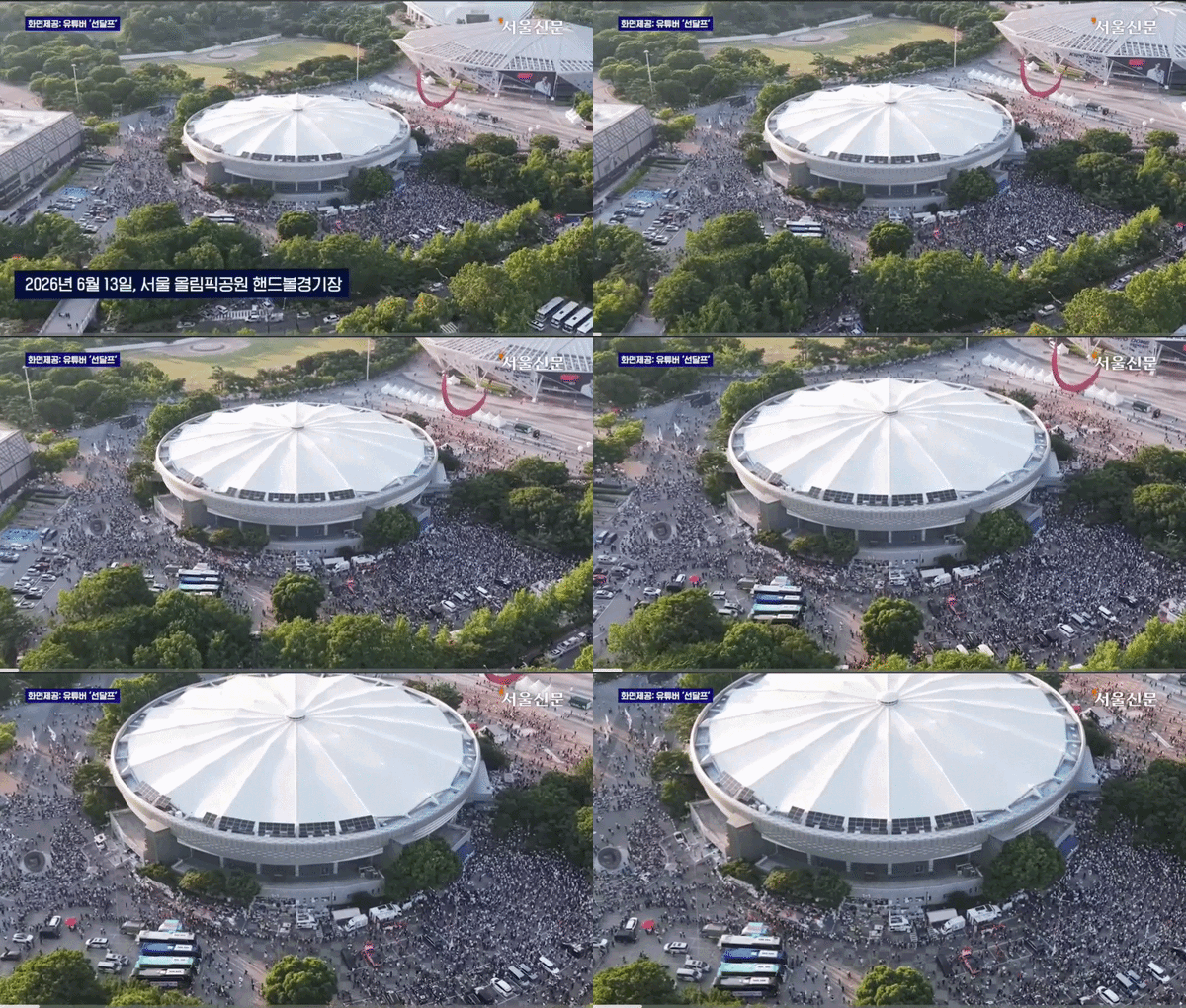 [Video] The Scene of the 'Jamsil Democratization Movement' as Seen from the Sky
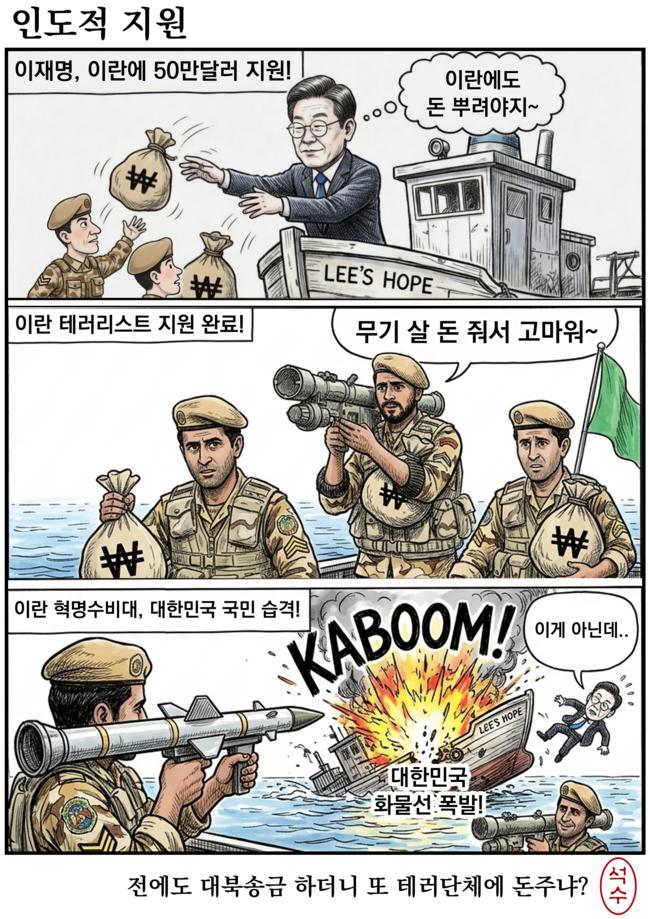 [Editorial Cartoon] Humanitarian Aid

 List
List