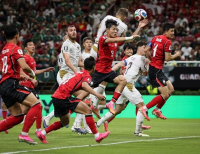
2026 FIFA World Cup Group A match between South Korea and Czech Republic. [Reuters=Yonhap News]If traditional security was the "art of arms" to deter enemy provocations, today's security is an all-out war involving every citizen in their daily lives. Security is no longer the exclusive domain of soldiers or a politician's tale of valor. Security has become our "shield of survival" and a "necessity for public welfare," directly impacting household grocery prices and youth employment.
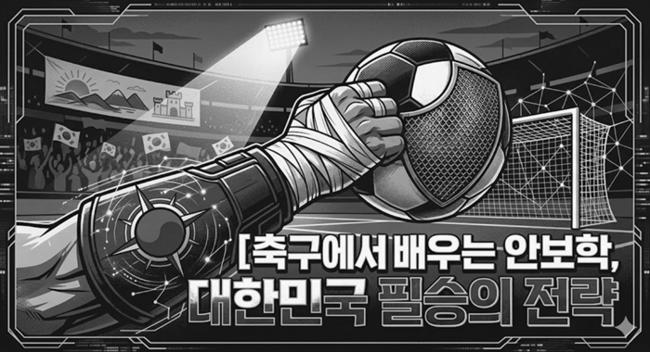
In this essay, we aim to outline the basics of "Football Security Studies" by drawing parallels between the irreversible nature of security failures and the decisive moments in football, where a single mistake can determine the outcome.
1. Principles of Victory in Football and the Three Principles of Security
A strong will to win and mental fortitude are the most fundamental elements that distinguish victory from defeat in both football and security. When analyzing victorious warriors, it is the units that overcame adverse conditions through sheer mental strength that emerged as the ultimate victors. An analysis of successful shots in international matches and the victory factors of winning teams reveals that beyond tactical skill, the coach's motivational leadership, mental strength, and team unity were the hidden keys.
There are commonalities between the factors for victory in football and the principles of national security. Because the ball is round, the outcome of a match is only known at the end. In football, the team that scores more goals through connected passes wins. The principles of security can be summarized as "protecting citizens' lives, maintaining the nation, and preventing war."
However, the current security policy of the Ministry of National Defense has taken a path contrary to common sense, reaching a point where not only citizens but even the lives of soldiers are not guaranteed. The hasty dissolution of the Military Security Command has created an intelligence vacuum, undermining national continuity. The premature push for the transfer of wartime operational control is fracturing the cohesion of the ROK-US alliance, and the extreme conflict is being tolerated in an attempt to close the Korea Military Academy, a sacred ground for national defense.
2. Connected Passes in Football and Strategic Alliance with Allies
Victory in football stems not from brilliant individual skills but from organized defense where all players move as one, flawless ball handling, and accurate passing. Modern security is completed through organic information sharing and strategic solidarity with allied nations.
No nation in the world can maintain its security alone. As seen in the Middle East conflicts in the Strait of Hormuz, complex crises are overcome through organic and "strategic passes" with allies. The reckless push for the transfer of wartime operational control is a self-inflicted wound that severs this "passing game" between allies, eroding trust. It is akin to an attacker losing direction and running towards their own goal, or catching a ball meant to be headed with their hands.
In the recent cabinet reshuffle, retired Lieutenant General Kang Gun-tak, an alumnus of the Korea Military Academy, was appointed as the First Deputy Director of the National Security Office. While he may be tasked with the early completion of wartime operational control, it is hoped that he will exercise courage and wise judgment to pursue South Korea's security policies with close coordination with allies and with the national interest in mind, and not be afraid to say no when necessary.
The Ministry of National Defense and the Ministry of Unification should speak with one voice on North Korea's denuclearization, yet the Ministry of Unification advocates for a nuclear freeze. The Ministers of National Defense and Unification, who have caused many problems, were not included in this cabinet reshuffle. The reasons behind protecting those who pursue contradictory security policies are truly suspicious.
3. Mobile Football and Overcoming China's "Unrestricted Warfare" and Positional Warfare
Mobile football involves maneuvering into gaps and taking shots when the opponent's defense is strong. Security also requires striking the enemy's weak points and asymmetric vulnerabilities. Our security needs strategic mobility to penetrate China's "unrestricted warfare" and Gramsci's positional warfare. We must accurately target the enemy's weaknesses through data-based real-time response systems and psychological warfare that uses AI to instantly block disinformation, causing confusion.
The Ministry of National Defense of Taiwan has announced a plan to invest approximately 9 trillion Korean Won over six years, from 2026 to 2031, to procure a large number of drones and unmanned surface vessels. We too must leverage our "super-gap" advantage in drone semiconductor and AI technology as an asymmetric leverage to neutralize the enemy's strategic intentions and prepare the conditions for victory by penetrating the enemy's positional warfare through agile, technology- and data-driven mobile security.
4. The Twelfth Man in Football: Fan Support and Ensuring Military Political Neutrality by Minimizing Political Intervention
Just as a coach's personal tactics and excessive instructions can harm victory, the nation and military discipline crumble when politicians use security as a political pawn or a tool for partisan conflict. In football, to win, the coach must ignore pressure from outside the field to intervene and focus solely on merit-based player selection and tactics suited to the day's conditions.
The Commander-in-Chief must pursue security policies solely for national survival and war prevention. Just as a football coach employs flanking maneuvers when a frontal assault fails, if peace policies are not effective, new security policies must be implemented.
Fan support is the twelfth man in football. In security policy, public support is the primary consideration for policy implementation. In football, victory is achieved when the team unites around the coach, who protects the players and focuses only on winning. If the public cannot trust the current government's security policies and national system, then changing them is the will of the people in a sovereign democracy.
Through the Middle East wars, we have recognized that security impacts individual lives. We must now choose and support politicians and parties that pledge and implement clear security policies based on national survival and interests.
The Mexico match, lost due to a single mistake, serves as a reminder of the importance of security policy. We wish for a perfect victory without mistakes in the match against South Africa on the 25th. We hope to overcome today's security crisis and protect a free South Korea through an all-out security effort focused on national interest.
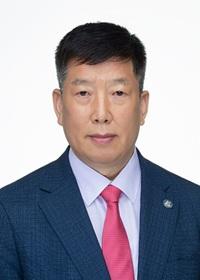
◆ Park Pil-gyu, Committee Member
Editorial Board Member, Hankook Ilbo
Korea Military Academy, Class of '84 (40th graduating class)

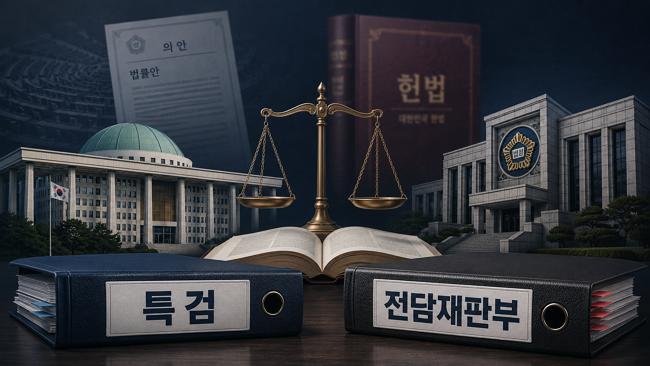 [Special Feature - Disenfranchisement National Assembly Investigation ③] Constitutional Amendment is a Long-term Task, the Law on the Special Court for Insurrection Should Be Applied
Image symbolizing the need for a special prosecutor and dedicated court panels within the existing judicial system to investigate the criminal responsibility for the June 3rd disenfranchisement incide
[Special Feature - Disenfranchisement National Assembly Investigation ③] Constitutional Amendment is a Long-term Task, the Law on the Special Court for Insurrection Should Be Applied
Image symbolizing the need for a special prosecutor and dedicated court panels within the existing judicial system to investigate the criminal responsibility for the June 3rd disenfranchisement incide
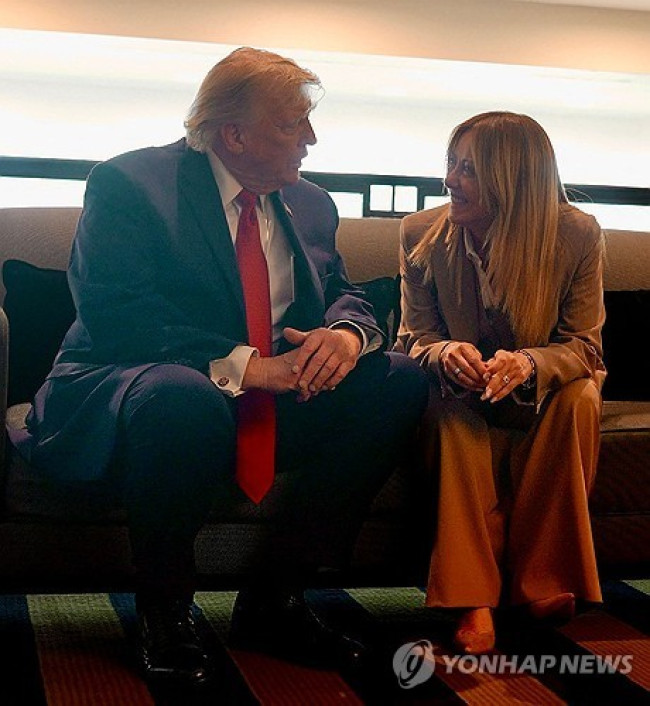 Trump to Italian Prime Minister amid conflict, "We protected you, but you turned away"
U.S. President Donald Trump and Italian Prime Minister Giorgia Meloni converse at the G7 Summit. [AFP=Yonhap News]U.S. President Donald Trump continued his criticism of Italian Prime Minister Gi
Trump to Italian Prime Minister amid conflict, "We protected you, but you turned away"
U.S. President Donald Trump and Italian Prime Minister Giorgia Meloni converse at the G7 Summit. [AFP=Yonhap News]U.S. President Donald Trump continued his criticism of Italian Prime Minister Gi
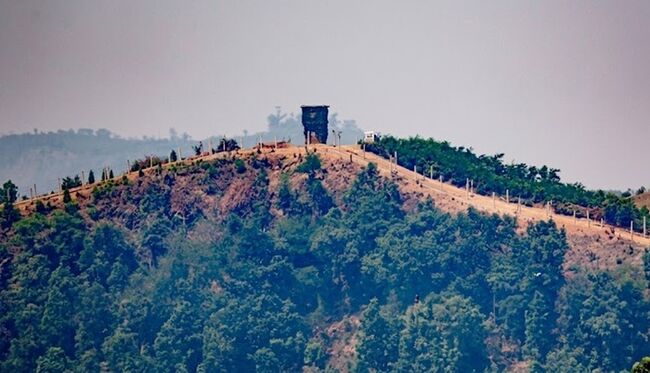 North Korea lays barbed wire and landmines right up to the MDL... JCS "Clear violation of the Armistice Agreement"
A structure believed to be a fence is installed at a North Korean guard post in Kaepung County, viewed from the border area in Paju, Gyeonggi Province. Photographed on the 19th. [Photo=Yonhap News]Nor
North Korea lays barbed wire and landmines right up to the MDL... JCS "Clear violation of the Armistice Agreement"
A structure believed to be a fence is installed at a North Korean guard post in Kaepung County, viewed from the border area in Paju, Gyeonggi Province. Photographed on the 19th. [Photo=Yonhap News]Nor
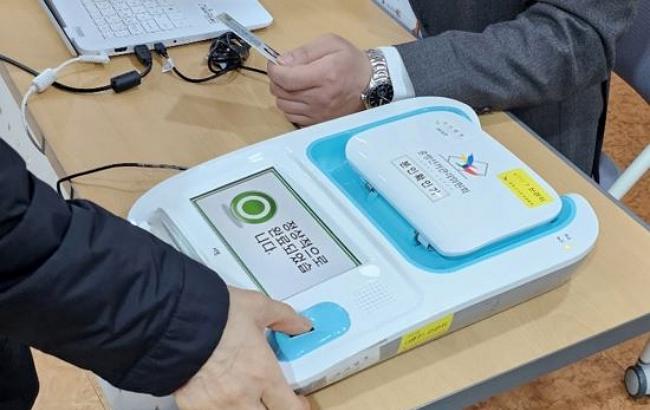 [Analysis] "Identity Verification Devices" as seen in the Daegu Case... Concerns of Voting Rights Infringement "Become Reality"
Identity verification device installed at a prior voting station. [Photo=Yonhap News] The First Gateway to Guaranteeing Voting Rights Has Been Breached The core issue of the prior voting ide
[Analysis] "Identity Verification Devices" as seen in the Daegu Case... Concerns of Voting Rights Infringement "Become Reality"
Identity verification device installed at a prior voting station. [Photo=Yonhap News] The First Gateway to Guaranteeing Voting Rights Has Been Breached The core issue of the prior voting ide
 [HANMI DATA LAB] June Week 3 (15-19) Money Insight
The left side of the screen contrasts growth assets such as AI, semiconductors, automobiles, and industrial equipment, while the right side displays defensive assets like the Federal Reserve, banks, a
[HANMI DATA LAB] June Week 3 (15-19) Money Insight
The left side of the screen contrasts growth assets such as AI, semiconductors, automobiles, and industrial equipment, while the right side displays defensive assets like the Federal Reserve, banks, a
 [Travel Destinations for the Month of National Defense] ③ Walking the Border Area of the Demilitarized Zone... DMZ Peace Trail Goseong Course
'DMZ Peace Road,' where visitors can see the ecological, cultural, and historical resources of the border areas of the Demilitarized Zone and experience the preciousness of peace firsthand. [Photo by
[Travel Destinations for the Month of National Defense] ③ Walking the Border Area of the Demilitarized Zone... DMZ Peace Trail Goseong Course
'DMZ Peace Road,' where visitors can see the ecological, cultural, and historical resources of the border areas of the Demilitarized Zone and experience the preciousness of peace firsthand. [Photo by
 [Photo] Freedom High School Alliance installs banner in Gangdong-gu, Seoul: "June 3rd Fraudulent Election Rerun, In-person Voting, On-site Counting"
The Korea High School Union installed a banner in the Gangdong-gu district of Seoul on the 21st with the slogan "June 3rd Fraudulent Election Re-election, Same-Day Vote Count." The banner also states,
[Photo] Freedom High School Alliance installs banner in Gangdong-gu, Seoul: "June 3rd Fraudulent Election Rerun, In-person Voting, On-site Counting"
The Korea High School Union installed a banner in the Gangdong-gu district of Seoul on the 21st with the slogan "June 3rd Fraudulent Election Re-election, Same-Day Vote Count." The banner also states,
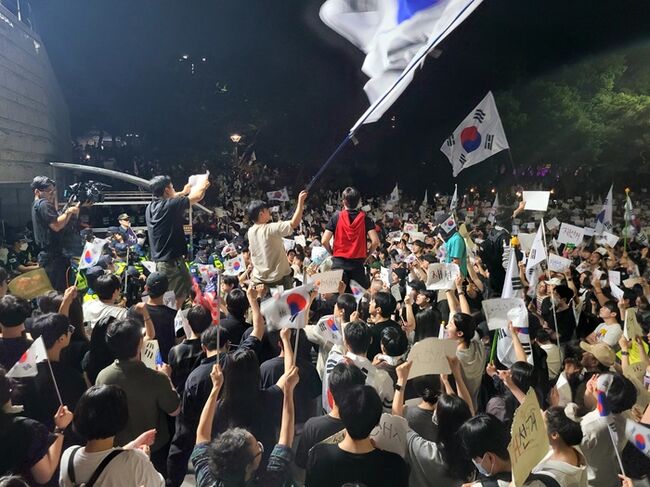 [Kim Jae-soo Column] The Last Chance to Abolish the Election Commission and Achieve Transparent Elections
The Republic of Korea is currently outraged by an unprecedented situation in its history and a globally unparalleled reality of disenfranchisement. ⒸKorea-Japan DailyIs Lee Jae-myung the only one un
[Kim Jae-soo Column] The Last Chance to Abolish the Election Commission and Achieve Transparent Elections
The Republic of Korea is currently outraged by an unprecedented situation in its history and a globally unparalleled reality of disenfranchisement. ⒸKorea-Japan DailyIs Lee Jae-myung the only one un
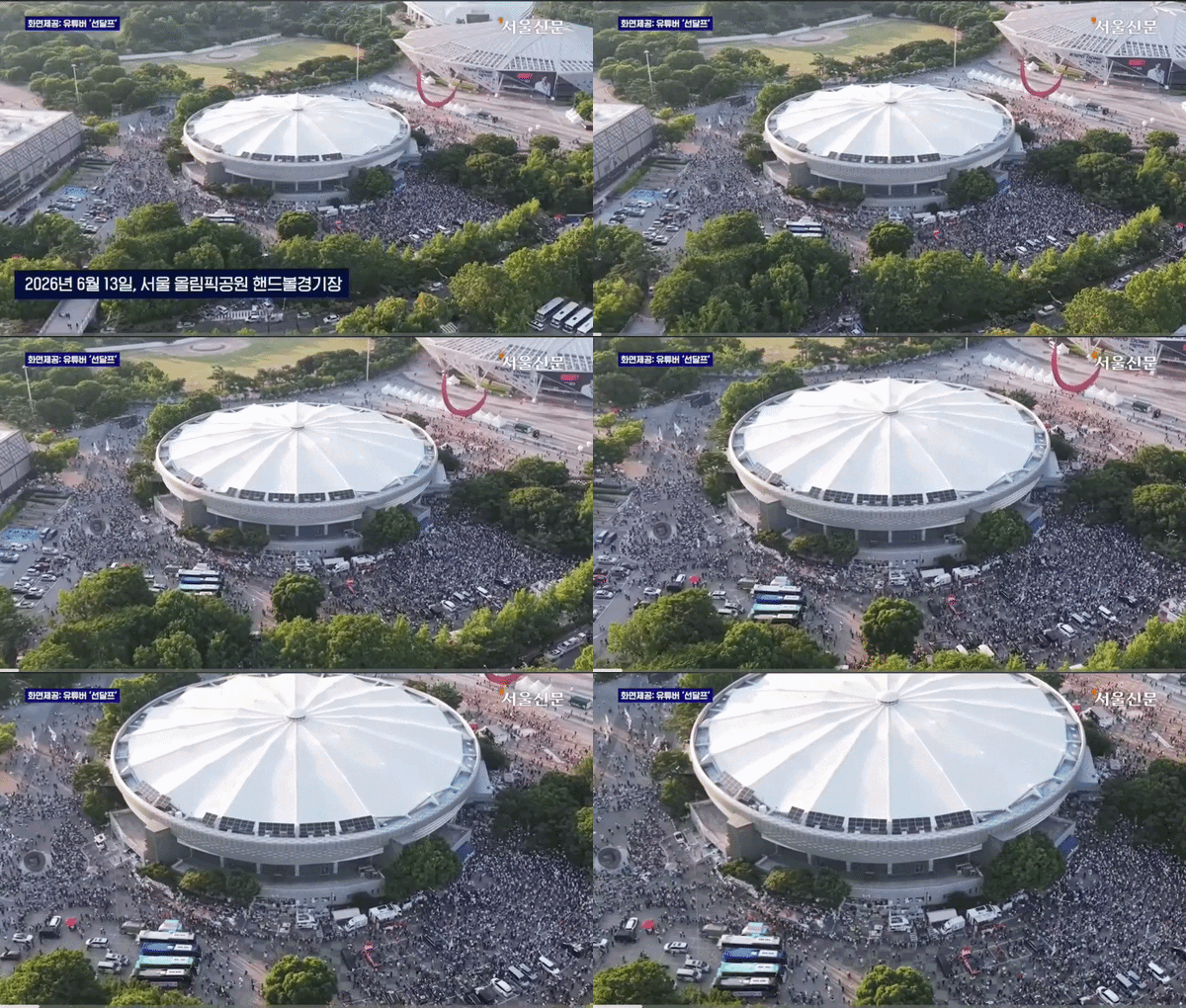 [Video] The Scene of the 'Jamsil Democratization Movement' as Seen from the Sky
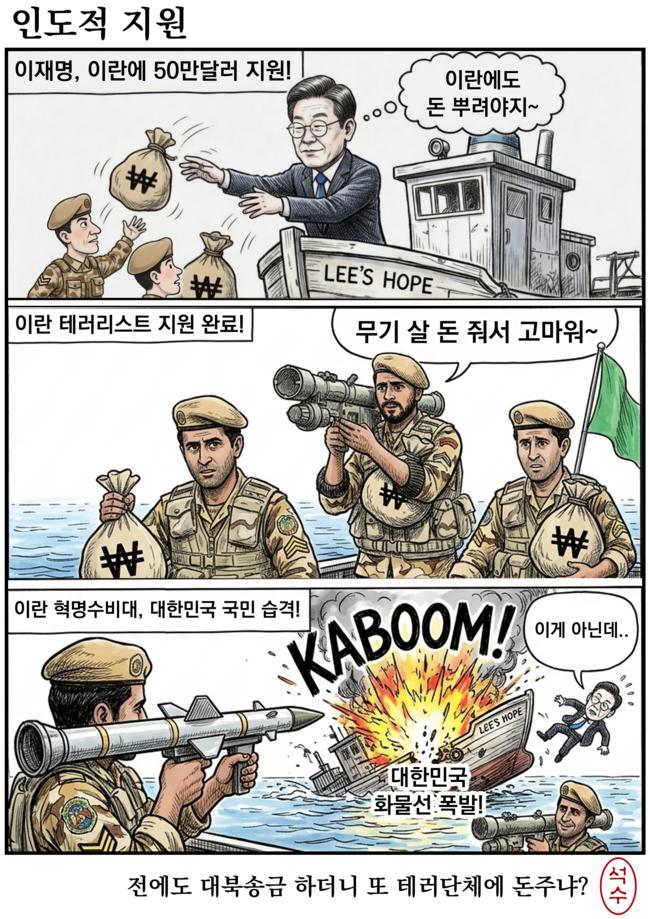 [Editorial Cartoon] Humanitarian Aid

 List
List