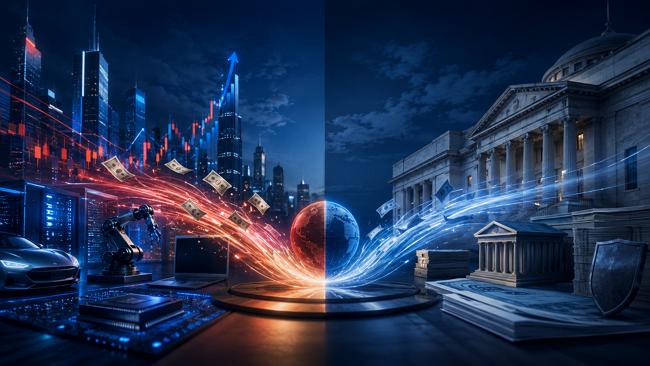
 The left side of the screen contrasts growth assets like AI, semiconductors, automobiles, and industrial equipment, with the right side representing defensive assets such as the Federal Reserve, banks, and cash equivalents. This symbolizes the simultaneous accumulation of offense and defense, as investment funds move into tech stocks while also holding bonds and cash. [Photo = Hanmi Ilbo Graphic]
Money Did Not Abandon Risk; It Purchased Risk Separately
Last week, Money Insight posed the question of whether the rebound after a sharp decline should be viewed as a simple bargain hunt or as confirmation that the AI investment cycle is still alive.
The criteria for judgment were whether money would return to tech stocks after the SpaceX IPO supply-demand dynamics concluded, and whether the US 10-year Treasury yield would once again suppress the stock market rebound.
This week, the market opted for a bull market. However, it did not buy stocks by ignoring all risks.
This week's Money Insight is titled "Simultaneous Accumulation of Offense and Defense."
This week, Money Insight has one question:
"If money is flowing into both stocks and safe-haven assets simultaneously, is the market optimistic or anxious?"
Global equity funds saw an inflow of $55.2 billion over the week, the largest amount in 19 months. U.S. equity funds received $38.4 billion, and tech funds saw an all-time high inflow of $21.5 billion.
The market accepted the end of the US-Iran conflict and the sharp decline in oil prices as a reason to buy risk assets again.
However, during the same period, global bond funds also received $17.2 billion, and money market funds saw an inflow of $40 billion. Money did not leave cash and bonds just because it flowed into stocks.
This means that while new liquidity is entering the market, investors are not betting all their funds on one direction.
Offensive funds headed towards AI and semiconductors. Defensive funds remained in short-term bonds and cash equivalents.
Investors bought into the end of the conflict and falling oil prices, but they did not ignore the possibility of interest rate hikes presented by the FOMC.
In this structure, even as stock prices rise, the divergence between individual stocks widens.
While high prices are paid for semiconductors with clear growth potential and confirmed earnings, funds do not linger in thematic stocks that lack the cash flow to withstand rising interest rates.
Instead of buying the entire stock market, investors are selectively choosing companies that they believe can outperform interest rates.
As a bull market enters its later stages, market money becomes concentrated in narrower areas.
This week, semiconductors, particularly memory and AI infrastructure, have taken on that role. As long as this compression is maintained, the index can rise, but if the earnings of leading stocks or the interest rate assumptions falter, the exit route also narrows.
Next week, both of these premises must be confirmed simultaneously.
Micron's earnings will show whether AI and memory investments are translating into actual profits. PCE inflation will indicate whether inflation is high enough for the Federal Reserve to raise interest rates.
If Micron performs well and PCE is low, the bull market will extend. If Micron underperforms expectations and PCE is also high, the current concentrated funds could quickly revert to cash.
The one-sentence conclusion is as follows:
"Money has not left risk assets; rather, it is being invested in risks that can beat interest rates and risks that cannot, separately."
Next Week's Checkpoints Are Threefold
First, Micron's earnings on the 24th. This is the first test to see if the AI investment competition can continue to support high profit margins for semiconductor companies.
Second, US PCE inflation, final Q1 GDP, and May durable goods orders on the 25th. If inflation is high and the economy is strong, the possibility of interest rate hikes increases. If both inflation and the economy slow down, the market may reflect expectations of easing again.
Third, the direction of fund flows into equity funds and money market funds. If inflows into stocks and cash continue simultaneously, "prepared risk appetite" will persist. If money starts to flow only into money markets, it is a signal that market optimism has shifted to defense.
The formula that will divide the market next week is simple:
"Can semiconductor earnings beat interest rates?"
* This article is for informational purposes, analyzing publicly available market data, and does not constitute investment advice for any specific financial products.

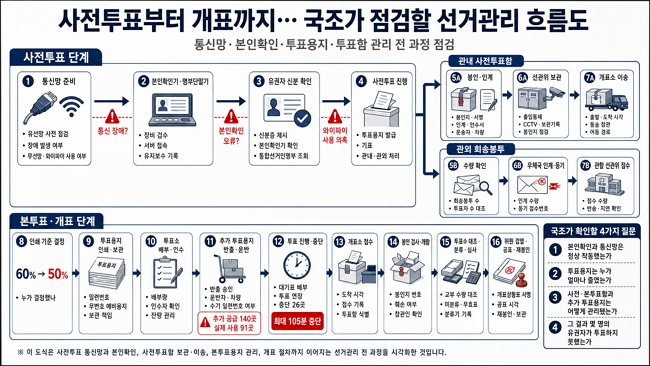 [Special Feature - Deprivation of Political Rights National Investigation ②] The Full Picture of the June 3rd Election Management That the National Investigation Should Reveal
[Photo by Hanmi Ilbo Graphics]Table of Contents① A National Investigation Without Witness Testimony is like a 'Steamed Bun Without the Red Bean Filling'② The Full Story of the June 3rd Election Ma
[Special Feature - Deprivation of Political Rights National Investigation ②] The Full Picture of the June 3rd Election Management That the National Investigation Should Reveal
[Photo by Hanmi Ilbo Graphics]Table of Contents① A National Investigation Without Witness Testimony is like a 'Steamed Bun Without the Red Bean Filling'② The Full Story of the June 3rd Election Ma
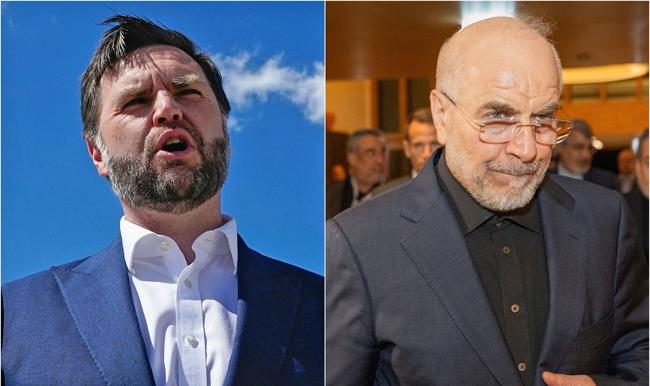 [Outlook] The 111-day war and the shaky end-of-war MOU… US and Iran head to Switzerland
U.S. Vice President Vance (left) departs for Switzerland on the 20th (local time), and Iranian Parliament Speaker Ghalibaf arrives at the Swiss negotiation venue on the 21st (local time). [AP=Yonhap N
[Outlook] The 111-day war and the shaky end-of-war MOU… US and Iran head to Switzerland
U.S. Vice President Vance (left) departs for Switzerland on the 20th (local time), and Iranian Parliament Speaker Ghalibaf arrives at the Swiss negotiation venue on the 21st (local time). [AP=Yonhap N
 Politico "US security role reduction is an opportunity for Korea…K-defense industry rapid growth"
YIDEX 2026, held in Changwon, Gyeongsangnam-do in April [Yonhap News Archive] An analysis suggests that South Korea's defense industry is benefiting from the U.S. stepping back from its role of e
Politico "US security role reduction is an opportunity for Korea…K-defense industry rapid growth"
YIDEX 2026, held in Changwon, Gyeongsangnam-do in April [Yonhap News Archive] An analysis suggests that South Korea's defense industry is benefiting from the U.S. stepping back from its role of e
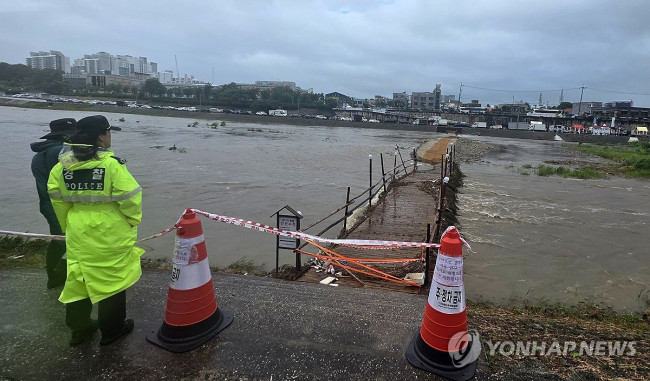 Miryeong 223.0mm heavy rain… Seoraksan is controlled and Gangneung Danoje also faces disruptions.
The Seopdari, a traditional wooden bridge set up for the Gangneung Danoje Festival, is being controlled due to rising water levels in the Namdaecheon River caused by heavy rain in Gangneung, Gangwon P
Miryeong 223.0mm heavy rain… Seoraksan is controlled and Gangneung Danoje also faces disruptions.
The Seopdari, a traditional wooden bridge set up for the Gangneung Danoje Festival, is being controlled due to rising water levels in the Namdaecheon River caused by heavy rain in Gangneung, Gangwon P
 [Travel Destinations for the Month of National Defense] ③ Walking the Border Area of the Demilitarized Zone... DMZ Peace Trail Goseong Course
'DMZ Peace Road,' where visitors can see the ecological, cultural, and historical resources of the border areas of the Demilitarized Zone and experience the preciousness of peace firsthand. [Photo by
[Travel Destinations for the Month of National Defense] ③ Walking the Border Area of the Demilitarized Zone... DMZ Peace Trail Goseong Course
'DMZ Peace Road,' where visitors can see the ecological, cultural, and historical resources of the border areas of the Demilitarized Zone and experience the preciousness of peace firsthand. [Photo by
 [Photo] Current status of Chairman Hwang Kyo-ahn and lawyer Park Joo-hyun attending the US election fraud fighter summit
Lawyer Park Joo-hyun with lawyer Peter Ticktin, who was pardoned by U.S. President Donald Trump. [Facebook]Hwang Kyo-ahn, leader of the Liberty and Innovation Party (second from left), informing about
[Photo] Current status of Chairman Hwang Kyo-ahn and lawyer Park Joo-hyun attending the US election fraud fighter summit
Lawyer Park Joo-hyun with lawyer Peter Ticktin, who was pardoned by U.S. President Donald Trump. [Facebook]Hwang Kyo-ahn, leader of the Liberty and Innovation Party (second from left), informing about
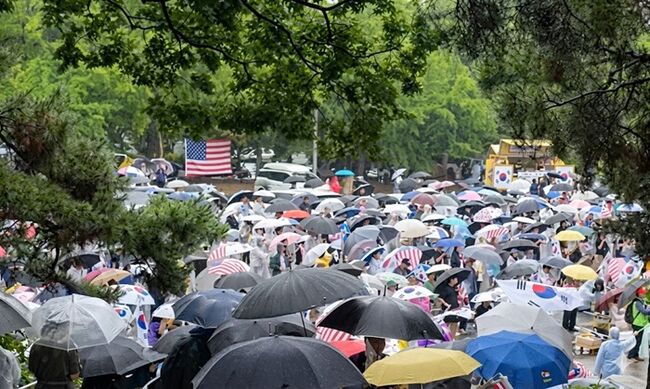 [Cho Yang-kun Column] The reason for the ever-increasing heat at Olympic Park
At noon on the 20th, citizens chanted "Re-election for fraudulent elections, same-day voting and manual counting!" at Olympic Park in Seoul, even amidst heavy rain. ⒸHanmi Ilbo The fervor of th
[Cho Yang-kun Column] The reason for the ever-increasing heat at Olympic Park
At noon on the 20th, citizens chanted "Re-election for fraudulent elections, same-day voting and manual counting!" at Olympic Park in Seoul, even amidst heavy rain. ⒸHanmi Ilbo The fervor of th
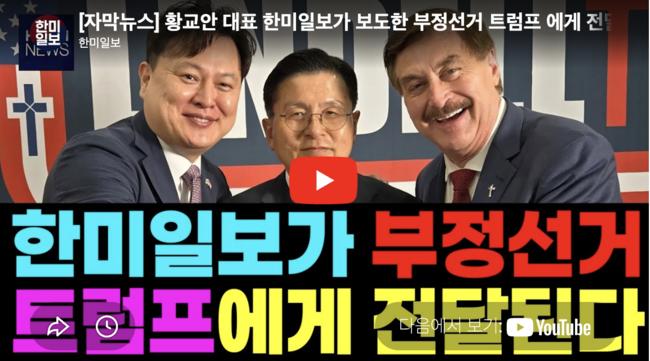 [Video] 'Trump's close friend' Lindell "I will inform Trump about South Korea's fraudulent election"
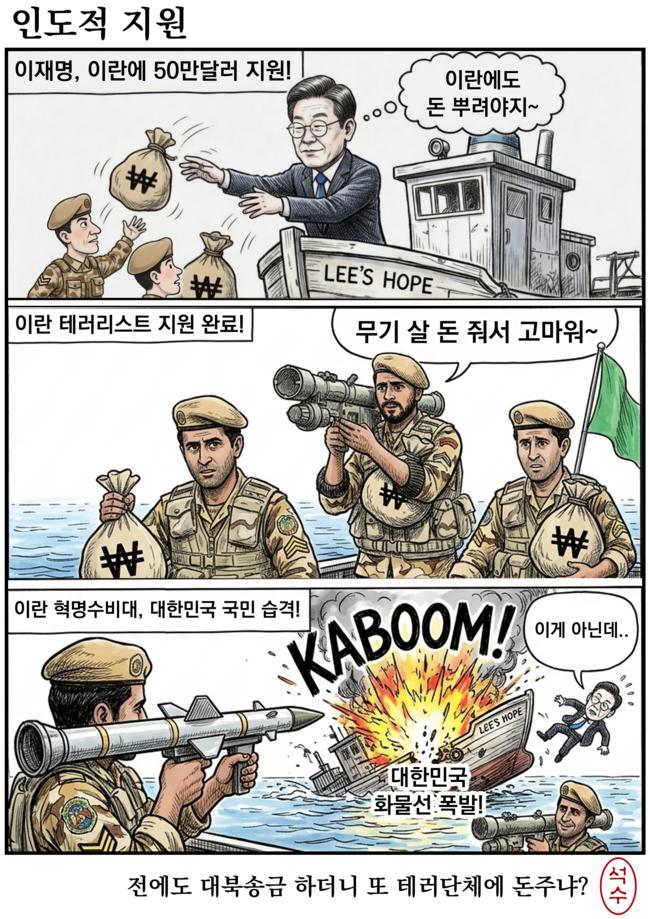 [Editorial Cartoon] Humanitarian Aid

 List
List