Map centered on the Arctic ⒸNational Snow and Ice Data Center
In September, South Korea is poised for a significant test voyage to pioneer the Northern Sea Route (NSR).
Amidst the volatile geopolitical situation in the Middle East, disruptions in the Suez Canal have thrown global energy supply chains into disarray. Concurrently, the melting of polar ice caps, while an environmental catastrophe for humanity, is also drawing attention as a new opportunity that could reshape international logistics and resource development.
South Korea's Push for Arctic Sea Test Voyages and a Paradigm Shift in Logistics
This test voyage is not merely a one-off event to chart unknown waters. It is a crucial test to diversify global supply chains and to gauge South Korea's future position in an era of multipolar maritime territories.
However, we must soberly assess whether a smooth sailing awaits at the end of this journey, or a more formidable geopolitical maelstrom. Without confronting the technical limitations and the complex realities of Arctic security that lie beneath economic expectations, the Arctic Ocean could prove to be an insurmountable challenge.
The anticipation within South Korea's shipping and logistics industries for the Arctic Sea Route is immense. The current standard route for vessels traveling from Korea to Europe passes through the South China Sea and the Indian Ocean, before transiting the Suez Canal. However, with the recent tensions in the Persian Gulf and the increasing uncertainty surrounding the Suez Canal, the Arctic Sea Route could emerge as a definitive game-changer, capable of reshaping the market landscape.
The Complex Calculations of Arctic Stakeholders
Yet, the Arctic Ocean is not an unclaimed, open sea. The interests surrounding this ocean are more intricately and sharply intertwined than in any other territorial dispute area.
△ The Eight Arctic Coastal States
The core rights to the Arctic Ocean are held by the eight full member states of the 'Arctic Council' that share territory and territorial waters with the Arctic Ocean: Russia, the United States, Canada, Denmark (Greenland), Norway, Sweden, Finland, and Iceland. These nations assert sovereign rights and exclusive economic zones, establishing legal and institutional barriers to entry into the Arctic Ocean.
△ Key Stakeholders
Among these eight countries, the primary axis of contention for practical route control and economic interests is divided between the authoritarian bloc centered on Russia and the liberal bloc centered on the United States and Nordic NATO countries.
△ Other Influential Nations and China's Ambitions
Non-coastal states, which do not directly border the Arctic Ocean, are also keenly interested. China, in particular, has designated itself a 'near-Arctic state' and is investing in Arctic infrastructure, capitalizing on Russia's lack of capital. China's expansionism, aiming to broaden its influence in the Arctic through the construction of the so-called 'Ice Silk Road,' is turning the Arctic Ocean into another battlefield for US-China hegemony competition.
The Arctic Ocean: A Treasure Trove of Resources
The fundamental reason the Arctic Ocean has become a geopolitical powder keg is its vast natural resources. It is estimated that approximately 30% of the world's undeveloped natural gas and 13% of its oil are buried within the Arctic Circle.
Russia, possessing the longest Arctic coastline, is a leader in developing natural gas (LNG) and oil fields, particularly around the Yamal Peninsula, using these resources as leverage.
The United States and Canada hold abundant shale oil and mineral resources in Alaska and their northern territories. While they carefully balance environmental protection with resource development, they are determined to maintain their security dominance.
Denmark and Norway are securing their own economic interests based on rare earth elements and oil fields around Greenland, as well as continental shelf resources off the Norwegian coast.
The Interplay Between Independent Icebreaker Development Capabilities and Economic Viability
While South Korea operates research icebreakers like the Araon, its independent capability to develop high-performance, large icebreakers or ice-breaking cargo ships for regular commercial operation on Arctic Sea Routes is still a long way off. Consequently, South Korea is currently structurally dependent on Russia's icebreaker escort services and related technologies.
Technological dependence inevitably leads to political dependence. If South Korea fails to secure its own capabilities for polar navigation and icebreaker construction, the Arctic Sea Route will be like a precarious pipeline that can be shut off at any time.
The economic viability of icebreaker operations also depends on how many months a year the ships can operate. If the route can only be used for a few months during the summer when the ice melts, it will be difficult to justify the immense cost of building icebreakers and the high insurance premiums.
Geopolitical Risks of Bilateral Arctic Route Operations with Russia
In the past, some political and academic circles proposed opening Arctic Sea Routes through bilateral cooperation with Russia, and further connecting them with gas pipelines or railways passing through North Korea. However, this proved to be an unrealistic and dangerous idea that overlooked the harsh realities of international politics and national security.
Historically, Germany built the 'Nord Stream' pipeline relying on Russia's cheap oil and gas. However, when the Russia-Ukraine war broke out, Russia abruptly halted energy supplies, tightening its grip on Eastern Europe and Germany. To propose a partnership with Russia alone, after witnessing its unilateral and autocratic control tactics, is a dangerous proposition.
The current international landscape is characterized by the liberal bloc, led by the United States, strongly counterbalancing Russia and China. Particularly with North Korea demonstrating its blood alliance with Russia by sending troops, and China actively eyeing the Arctic, it is unrealistic for South Korea to pursue Arctic utilization cooperation solely with Russia.
We must also recall historical precedents, such as the 'Triple Intervention' by Russia, Germany, and France that halted Japan's expansionist ambitions after its occupation of the Liaodong Peninsula following the First Sino-Japanese War. Solo actions that go against the tide of international power dynamics will inevitably face pressure from large alliance systems and be unable to advance.
Practical and Desirable Approaches
South Korea's test voyage to the Arctic in September is feasible. However, it must be pursued within a framework of international cooperation, based on new security and technological paradigms, abandoning the bilateral approach that relies on a single country, Russia.
△ Participation in US-Led Multilateral Consultations
South Korea must absolutely avoid acting alone in operating Arctic Sea Routes. It should form a 'Multilateral Arctic Consultation Body,' led by the United States and including like-minded stakeholders such as European nations and Japan, and actively participate as a key partner. The safest and most certain path is to ensure freedom of navigation within the framework of international legal norms and the collective security of the liberal bloc.
△ Avoiding Direct Import of Russian Gas and Establishing Energy Security
To avoid repeating Germany's mistake, energy policies that involve direct imports of or reliance on Russian oil and gas are never advisable. Energy is not merely a commodity; it is national sovereignty. South Korea must not make the mistake of entrusting its vital energy lifeline to a regime that carries inherent geopolitical risks.
△ Securing Competitive Icebreaker Technology Through Joint South Korea-US Development
The shortage of icebreaking technology, South Korea's most significant weakness, must be overcome through technological alliances with friendly nations. Combining South Korea's world-class shipbuilding and manufacturing capabilities with the United States' pioneering polar technology and security assets, a 'Joint South Korea-US Icebreaker Development and Construction Project' should be pursued.
The United States also urgently needs reliable shipbuilding partners to counter Russia and China in the Arctic region. Considering this, South Korea should secure independent and competitive next-generation icebreaking capabilities at an early stage.
The Arctic Ocean is a frozen land of opportunity, but for the unprepared, it is merely a cold trap. Only by advancing with two pillars – technological self-reliance and multilateral value alliances – can South Korea truly emerge as a maritime power that navigates the rough seas of the Arctic.

◆ Dr. Shin Dong-choon
Doctor of Public Administration, Representative of the National Union for Freedom and Unification. After passing the 21st Higher Civil Service Examination, he served in public office before embarking on a diverse career as a corporate CEO, university professor, media contributor, author, and Chairman of the Global Aerospace Industry Association.

 [Special Feature - Disenfranchisement National Assembly Investigation ③] Constitutional Amendment is a Long-term Task, the Law on the Special Court for Insurrection Should Be Applied
Image symbolizing the need for a special prosecutor and dedicated court panels within the existing judicial system to investigate the criminal responsibility for the June 3rd disenfranchisement incide
[Special Feature - Disenfranchisement National Assembly Investigation ③] Constitutional Amendment is a Long-term Task, the Law on the Special Court for Insurrection Should Be Applied
Image symbolizing the need for a special prosecutor and dedicated court panels within the existing judicial system to investigate the criminal responsibility for the June 3rd disenfranchisement incide
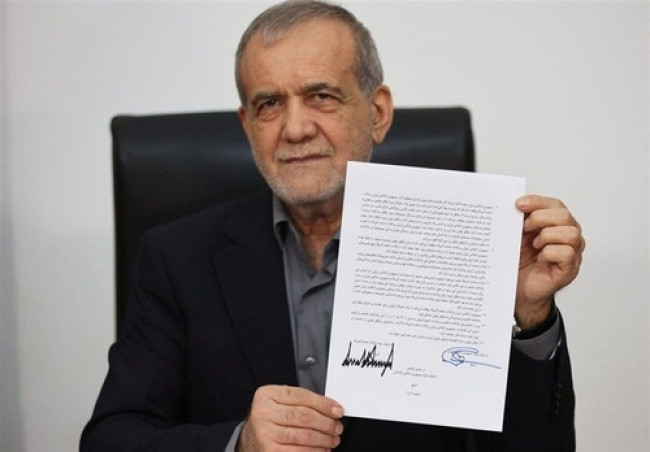 Pakistan "Iranian President to make state visit on the 23rd… discussing post-ceasefire MOU situation"
Iranian President Masoud Pezeshkian signing a ceasefire memorandum of understanding [Captured from IRIB Telegram Channel]The Pakistani Foreign Ministry announced on the 22nd (local time) that Iranian
Pakistan "Iranian President to make state visit on the 23rd… discussing post-ceasefire MOU situation"
Iranian President Masoud Pezeshkian signing a ceasefire memorandum of understanding [Captured from IRIB Telegram Channel]The Pakistani Foreign Ministry announced on the 22nd (local time) that Iranian
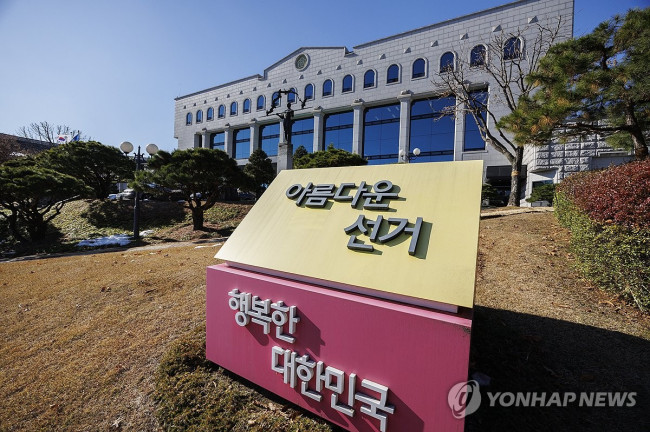 National Election Commission "Heavily accepts the investigation results of the Truth and Reconciliation Committee... fundamental institutional improvement"
Central Election Commission [Yonhap News File Photo]The Central Election Commission (CEC) held a committee meeting on the 22nd and stated that it "heavily accepts the investigation results of the fact
National Election Commission "Heavily accepts the investigation results of the Truth and Reconciliation Committee... fundamental institutional improvement"
Central Election Commission [Yonhap News File Photo]The Central Election Commission (CEC) held a committee meeting on the 22nd and stated that it "heavily accepts the investigation results of the fact
 Chungbuk Election Commission, '124-vote difference' Chungju Mayor election ballot recount
Chungju mayoral candidate Maeng Jeong-seop (second from left) [Yonhap News photo]The Chungju mayoral election ballot, where the outcome was decided by a narrow margin of 124 votes in the 6/3 local ele
Chungbuk Election Commission, '124-vote difference' Chungju Mayor election ballot recount
Chungju mayoral candidate Maeng Jeong-seop (second from left) [Yonhap News photo]The Chungju mayoral election ballot, where the outcome was decided by a narrow margin of 124 votes in the 6/3 local ele
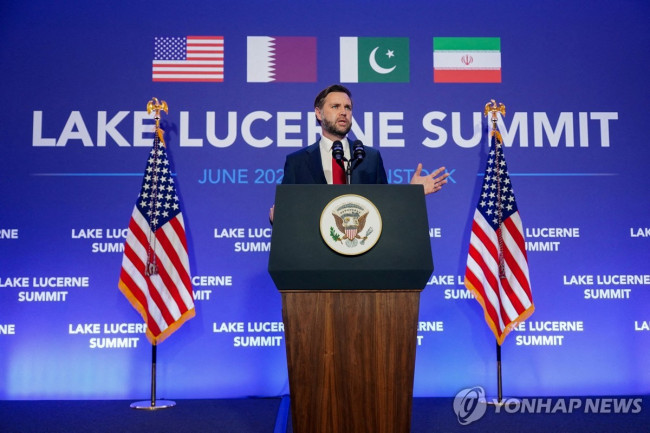 US-Iran Negotiations Progress Lead to Falling Oil Prices… Brent Crude Down 3.3%
U.S. Vice President JD Vance holds a press conference in Switzerland after negotiations with Iran on the 22nd (local time) [Reuters=Yonhap News]International oil prices fell sharply on the 22nd (local
US-Iran Negotiations Progress Lead to Falling Oil Prices… Brent Crude Down 3.3%
U.S. Vice President JD Vance holds a press conference in Switzerland after negotiations with Iran on the 22nd (local time) [Reuters=Yonhap News]International oil prices fell sharply on the 22nd (local
 [On-Site] Universities Revitalize Regions, Embrace the World... Far East University to Hold 'Gammok Festival: Freshly Baked Peaches' in September
Students from the Department of Theater and Acting at Kookje University perform a dynamic 'Samul Fantasy' based on traditional Korean percussion instruments. [Photo by Lim Yo-hee]In an era where regio
[On-Site] Universities Revitalize Regions, Embrace the World... Far East University to Hold 'Gammok Festival: Freshly Baked Peaches' in September
Students from the Department of Theater and Acting at Kookje University perform a dynamic 'Samul Fantasy' based on traditional Korean percussion instruments. [Photo by Lim Yo-hee]In an era where regio
 [Photo] Freedom High School Alliance installs banner in Gangdong-gu, Seoul: "June 3rd Fraudulent Election Rerun, In-person Voting, On-site Counting"
The Korea High School Union installed a banner in the Gangdong-gu district of Seoul on the 21st with the slogan "June 3rd Fraudulent Election Re-election, Same-Day Vote Count." The banner also states,
[Photo] Freedom High School Alliance installs banner in Gangdong-gu, Seoul: "June 3rd Fraudulent Election Rerun, In-person Voting, On-site Counting"
The Korea High School Union installed a banner in the Gangdong-gu district of Seoul on the 21st with the slogan "June 3rd Fraudulent Election Re-election, Same-Day Vote Count." The banner also states,
 [Video] The Scene of the 'Jamsil Democratization Movement' as Seen from the Sky
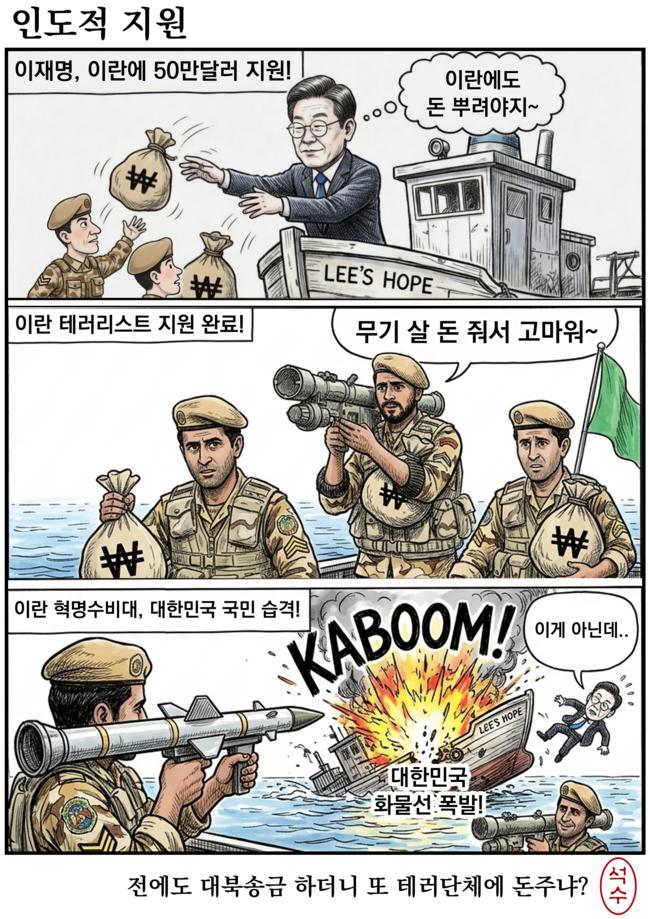 [Editorial Cartoon] Humanitarian Aid

 List
List