"Personalized education is a matter of judgment hidden in convenience."
Changing the Path, Not the Content
Understanding AI education as simply 'computers helping with studies' misses the core point. The AI currently entering the educational field is different from past online lectures or digital textbooks. Past digital education was closer to presenting pre-made content to students. However, AI-based education analyzes what questions students ask, where they repeatedly make mistakes, and which concepts they move on from without fully understanding. Based on this analysis, it automatically presents the next explanation, the next problem, and the next resource.
The first technology in this structure is the generative AI conversational engine. When a student asks a question, the AI does not list search results; it generates a response in sentence form. Search presents various materials and leaves the choice to the user. In contrast, generative AI constructs a single, natural answer based on multiple sources and learned patterns. From the student's perspective, this can feel like an explanation from a teacher or tutor. At this point, AI begins to take on a form of educational authority beyond an information tool.
Learning Analytics Reads a Child's Weaknesses
The second technology is learning analytics and knowledge tracing. AI education platforms do not just look at a student's accuracy rate. They can accumulate data such as problem-solving time, types of repeated errors, number of hint requests, time spent on specific concepts, and review frequency. Through this, the AI attempts detailed diagnoses like, "The student understands the concept of fractions but struggles with proportional conversion," or "Reading comprehension is possible, but there's a weakness in inferential questions."
Educationally, this is a powerful tool. In a reality where it's difficult for teachers to meticulously observe each student, AI can quickly identify learning gaps. For students who cannot afford extensive private tutoring, it can act as a personal tutor. This is why AI education is expected to be a 'technology that reduces educational disparities.'
However, this advantage simultaneously carries risks. The more meticulously a student's learning process is recorded, the broader the scope of educational data becomes. This can include not just simple performance information but also concentration time, reaction speed, repeated mistakes, and the way questions are asked. AI education reads more about a child to help them better. It is precisely at this point that the boundary between convenience and surveillance blurs.
The Hidden Curriculum Recommendation Algorithm
The third technology is recommendation algorithms. AI recommends the next problem to solve, the next explanation to watch, and the next resource to read for a student. Here, recommendations are not just a convenience feature. In education, recommendations become the learning path. Some students might be given more easy problems, others advanced problems, and some might be repeatedly shown explanations from a specific perspective.
In this process, AI can become an invisible curriculum designer. While the formal curriculum is set by the nation and schools, the actual learning experience a student encounters can be dictated by the platform's recommendation structure. Even when learning the same unit, a student's understanding will differ depending on which materials they view first, which explanations they repeatedly hear, and which problems they encounter more frequently.
The fourth technology is Retrieval-Augmented Generation (RAG). This is a method where AI generates answers not just from its own learned content but by connecting to external resources such as textbooks, papers, articles, school documents, and web pages. On the surface, this seems like a technology to improve accuracy. However, in education, *which* resources are connected is crucial. Depending on which materials are prioritized for a historical event, the direction of the explanation can change. While it appears to be a technological issue, it is in reality a matter of resource selection, and resource selection is ultimately a matter of judgment.
Multimodal AI Reads Classrooms More Deeply
The fifth technology is Multimodal AI (Artificial intelligence that processes text, voice, images, etc., together). Future AI education will not stop at answering text-based questions. It will expand to listening to students' voice questions, reading handwritten work, interpreting graphs and charts, and explaining experimental scenes in videos. Furthermore, some technologies may attempt to infer concentration or emotional states through a student's facial expressions, voice tremors, and reaction speed.
At this stage, AI education becomes a system that analyzes not only knowledge delivery but also student behavior and reactions. Under the guise of personalized education, learning data is collected more deeply and broadly. Identifying and compensating for a student's weaknesses is useful. However, the extent to which a student's reactions are read, who stores that data, and for what purpose it will be reused are separate issues.
The core risk of AI education is not a single wrong answer. The greater risk is that AI can quietly adjust the order in which students encounter knowledge, the explanations they repeatedly hear, and the perspectives they accept as natural standards. In education, influence often operates more strongly through repetition and arrangement than through overt coercion.
Transparency is More Important Than Technology Adoption
Topics such as history, ethics, family, gender, citizenship, politics, and social conflicts, in particular, do not end with simple information delivery. In these areas, AI may claim to be a "tool for conveying facts," but the actual answers are influenced by the selection and arrangement of facts, the intensity of expression, the placement of counterarguments, and the boundaries of value judgments. Therefore, the issue in AI education is not "Is AI smart?" The more important questions are: "What materials does AI use as its basis?", "Who set the criteria for selecting those materials?", "Can students and parents know those criteria?", and "Can teachers control that process?"
Parental choice also needs to be redefined within this technological structure. In the past, one could understand the general educational content by reviewing textbooks and lesson plans. However, in AI education, a new platform layer is added between the official curriculum and the actual learning experience. Even if students learn the same subject, the supplementary materials recommended by AI, interactive explanations, automatically generated problems, and additional reading materials can differ. While parents can understand the general educational direction of the school, it is difficult for them to know the actual learning conversations and recommended paths their child has had with AI.
Therefore, the core principle of the AI education era is not technology prohibition. It is to use technology while clearly defining the boundaries of judgment. AI education tools must be able to explain the materials they use to provide answers. Teachers and parents should be able to verify the main recommendation paths and learning materials provided to students. For topics involving sensitive value judgments, human review should take precedence over automatic recommendations. Student learning data and emotional data should also be collected minimally, and their use beyond the intended purpose should be restricted.
Judgment by Humans, Assistance by AI
From ALO's perspective, the conclusion is clear. AI can assist education, but it should not be the primary decision-maker in education. AI can help students find what they don't know faster, detect learning gaps that teachers might miss, and make repetitive learning more efficient. However, *what* to teach, *what* value judgments to reserve, and *on which* topics parental notification and choice are necessary should still be determined by humans.
Education is not just the delivery of knowledge; it is a process of creating a framework for understanding the world. Therefore, the future of AI education depends on a clearer accountability structure rather than more sophisticated algorithms. Convenience is important, but in education, convenience does not always equate to legitimacy. More important than the technology that answers a student's question the fastest is a structure that can explain the materials and criteria from which that answer originated. Every AI involved in a child's learning ultimately faces one question: Is this technology helping the child learn better, or is it quietly instilling someone else's standards? By not overlooking this question, AI can become a true assistant, not a threat to education.
※ This article was published in the 12th issue of Weekly Hankook-Ilbo (first week of June).

 [Fact Check] The National Election Commission's 'Deprivation of Civil Rights Case' from a Legal Perspective
The shortage of ballots that occurred during the main vote of the June 3rd local elections cannot be simply dismissed as a mere on-site confusion. In a briefing on the 5th, the Central Election
[Fact Check] The National Election Commission's 'Deprivation of Civil Rights Case' from a Legal Perspective
The shortage of ballots that occurred during the main vote of the June 3rd local elections cannot be simply dismissed as a mere on-site confusion. In a briefing on the 5th, the Central Election
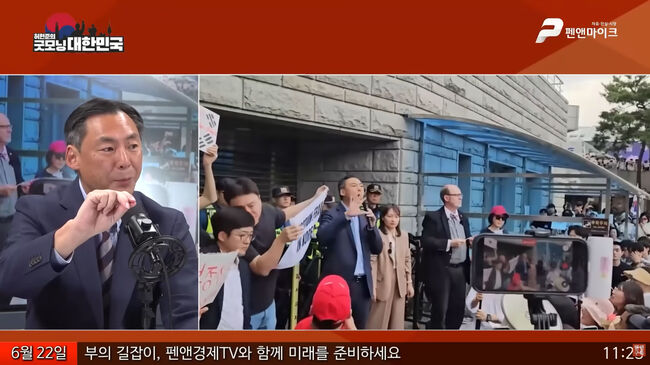 Moss: "Korean people should regain their right to vote and call for Lee Jae-myung's resignation"
Former International Criminal Court Ambassador Moss Tantum stressed on the 23rd (Korean time) during an appearance on PEN&MIKE that the Korean people must fight to regain their right to vote.In an
Moss: "Korean people should regain their right to vote and call for Lee Jae-myung's resignation"
Former International Criminal Court Ambassador Moss Tantum stressed on the 23rd (Korean time) during an appearance on PEN&MIKE that the Korean people must fight to regain their right to vote.In an
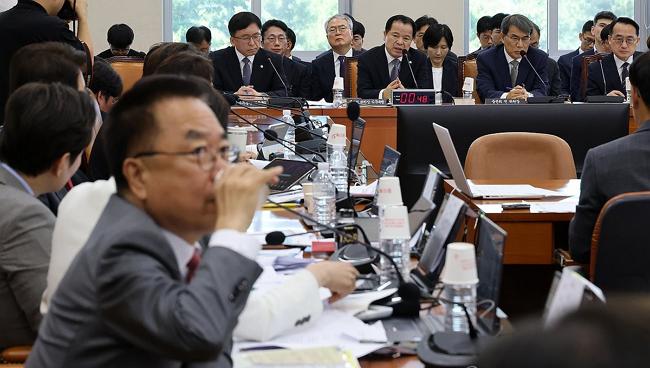 [Focus] Why did the first National Assembly Special Committee receive a failing grade?
Acting Chairman of the National Election Commission, Wi Cheol-hwan, answers questions from lawmakers during a plenary session of the special committee for a parliamentary inquiry into the truth behind
[Focus] Why did the first National Assembly Special Committee receive a failing grade?
Acting Chairman of the National Election Commission, Wi Cheol-hwan, answers questions from lawmakers during a plenary session of the special committee for a parliamentary inquiry into the truth behind
 Lawyer Park Ju-hyun visits the 'dissolution' site, raising suspicion of "intent to completely destroy evidence"
Lawyer Park Ju-hyun visited a company that dissolved election print materials at a polling station in Jamsil on the 23rd. [YouTube GIF]Lawyer Park Ju-hyun visited a dissolution company in Guri,
Lawyer Park Ju-hyun visits the 'dissolution' site, raising suspicion of "intent to completely destroy evidence"
Lawyer Park Ju-hyun visited a company that dissolved election print materials at a polling station in Jamsil on the 23rd. [YouTube GIF]Lawyer Park Ju-hyun visited a dissolution company in Guri,
 Meta Launches First In-House Branded AI Smart Glasses... $299 Low-Cost Model
Meta Launches First Proprietary AI Smart Glasses... Low-Cost $299 ModelSmart glasses 'Starfire' created in collaboration with Kylie Jenner [Provided by Meta]Meta, the top company in the global smart g
Meta Launches First In-House Branded AI Smart Glasses... $299 Low-Cost Model
Meta Launches First Proprietary AI Smart Glasses... Low-Cost $299 ModelSmart glasses 'Starfire' created in collaboration with Kylie Jenner [Provided by Meta]Meta, the top company in the global smart g
 [On-Site] Universities Revitalize Regions, Embrace the World... Far East University to Hold 'Gammok Festival: Freshly Baked Peaches' in September
Students from the Department of Theater and Acting at Kookje University perform a dynamic 'Samul Fantasy' based on traditional Korean percussion instruments. [Photo by Lim Yo-hee]In an era where regio
[On-Site] Universities Revitalize Regions, Embrace the World... Far East University to Hold 'Gammok Festival: Freshly Baked Peaches' in September
Students from the Department of Theater and Acting at Kookje University perform a dynamic 'Samul Fantasy' based on traditional Korean percussion instruments. [Photo by Lim Yo-hee]In an era where regio
 [Photo] Freedom High School Alliance installs banner in Gangdong-gu, Seoul: "June 3rd Fraudulent Election Rerun, In-person Voting, On-site Counting"
The Korea High School Union installed a banner in the Gangdong-gu district of Seoul on the 21st with the slogan "June 3rd Fraudulent Election Re-election, Same-Day Vote Count." The banner also states,
[Photo] Freedom High School Alliance installs banner in Gangdong-gu, Seoul: "June 3rd Fraudulent Election Rerun, In-person Voting, On-site Counting"
The Korea High School Union installed a banner in the Gangdong-gu district of Seoul on the 21st with the slogan "June 3rd Fraudulent Election Re-election, Same-Day Vote Count." The banner also states,
 [Cho Yang-geon Column] Selection and Concentration Should Also Apply to Patriotic Activities
A scene in and around Olympic Park, Jamsil. When middle and high school students, and even elementary school students, are aware of and participating in the struggle, if the older generation is unawar
[Cho Yang-geon Column] Selection and Concentration Should Also Apply to Patriotic Activities
A scene in and around Olympic Park, Jamsil. When middle and high school students, and even elementary school students, are aware of and participating in the struggle, if the older generation is unawar
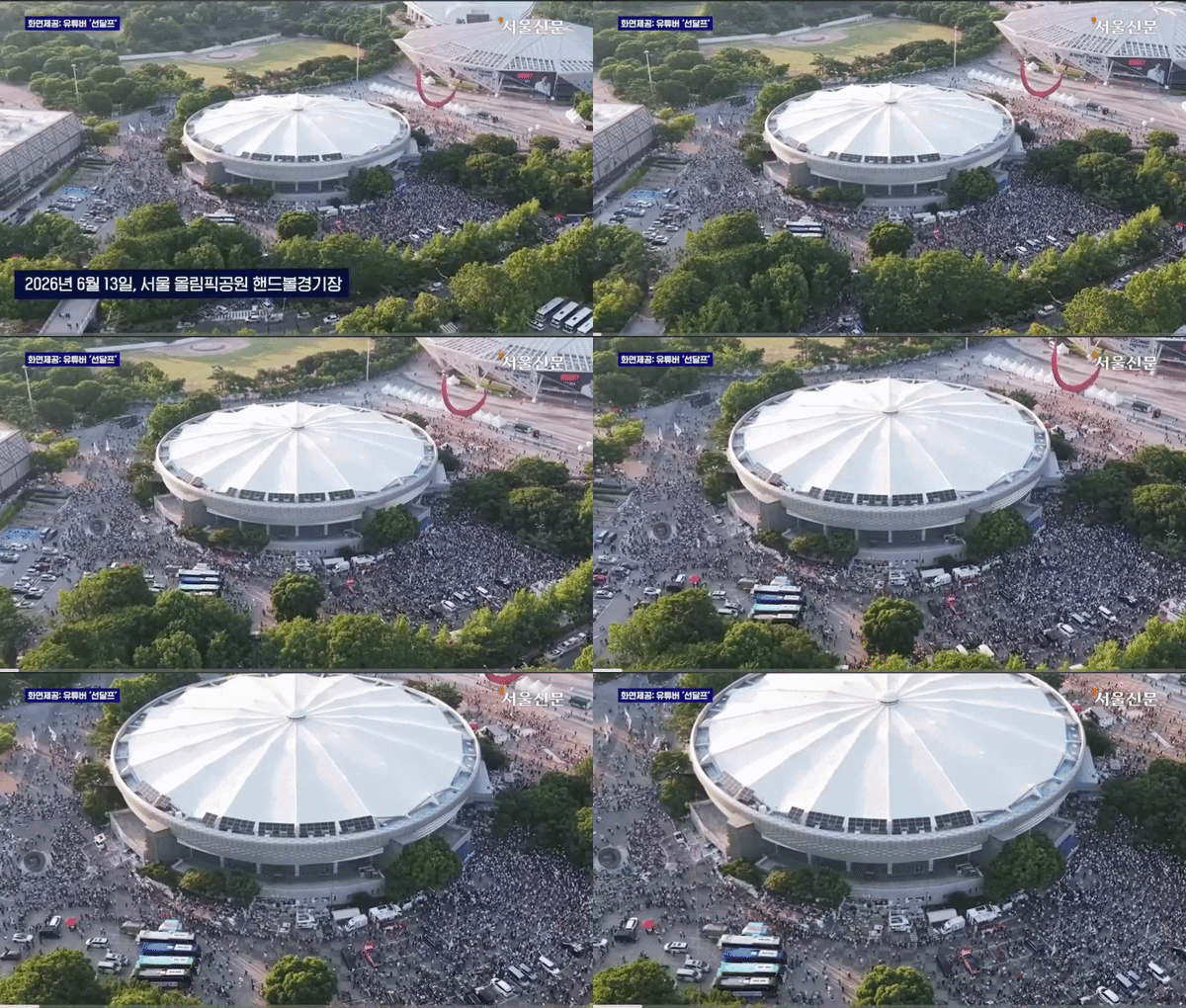 [Video] The Scene of the 'Jamsil Democratization Movement' as Seen from the Sky
 [Editorial Cartoon] Humanitarian Aid

 List
List