Google's parent company, Alphabet, reported Q2 earnings that exceeded market expectations, yet its free cash flow turned negative due to massive investments in artificial intelligence infrastructure. The market has begun to scrutinize not just AI demand, but specifically when invested capital will be recouped. [Photo = Yonhap News Data]
Strong Earnings, Yet Stock Prices Fell
While AI, defense, and nuclear power are all classified as long-term growth industries, the criteria the market uses to evaluate their corporate value differ. For AI, the key is how quickly invested capital can be recovered; for defense, it is whether order backlogs are converted into revenue by established deadlines; and for nuclear power, it is whether policies and partnerships translate into actual equipment contracts.
The standard applied to AI stocks this week was investment efficiency rather than earnings performance.
An analysis by Reuters of London Stock Exchange Group (LSEG) market forecasts indicates that capital expenditures (CAPEX) for five companies—Microsoft, Alphabet, Amazon, Meta, and Oracle—are expected to increase by approximately $534 billion between 2025 and 2027. During the same period, the projected increase in operating cash flow is approximately $340 billion. This represents a structure where $1.57 in CAPEX is required to generate $1 of additional cash flow.
These figures are based on current market forecasts rather than guaranteed outcomes. However, it is clear that the market has begun to prioritize the timing of revenue and cash flow returns over the mere existence of AI demand.
As the capital poured into AI data centers, servers, and networks increases, big tech firms are evolving from the "light software platforms" of the past into capital-intensive entities that own massive physical infrastructure. Rising interest rates further exacerbate the burden of financing investment costs and depreciation.
Intel reported earnings that topped market expectations, yet its share price fell 7.9% on the 24th. The Philadelphia Semiconductor Index also dropped 4.5% that day. Concerns regarding future investment costs and return on investment (ROI) weighed more heavily than the positive earnings report.
The Evaluation Criteria for Defense Stocks are Order Backlogs and Production Capacity.
Hanwha Aerospace recorded 5.751 trillion won in revenue and 638.9 billion won in operating profit in the first quarter of this year. These figures represent a 5% and 21% increase, respectively, compared to the same period last year. With the inclusion of export contracts like the Norwegian Chunmoo deal, its order backlog reached a record high of approximately 39.7 trillion won.
These figures demonstrate the visibility of future revenue secured by defense firms. However, a large order backlog does not mean every contract holds equal value.
Investors must examine whether a deal is a definitive contract or a memorandum of understanding (MOU), the structure of down payments, when production and delivery commence, and the profit margins on export volumes. It is also critical to determine whether the expansion of production facilities accelerates delivery speeds or, conversely, increases the burden of investment costs and working capital.
For Nuclear Power Stocks, Distinguish Between Policy Expectations and Actual Contracts.
Doosan Enerbility was selected as a strategic partner to manufacture key components for Rolls-Royce’s Small Modular Reactor (SMR) project in the UK. While this signifies a foundation for participating in the European SMR supply chain, the selection of a partner is a distinct stage from the final equipment supply contract and revenue recognition.
Conversely, there are setbacks. KB Securities lowered its target price for Doosan Enerbility, citing that equipment orders for Westinghouse’s AP1000 reactors in the US are being delayed due to financing issues. The analysis suggests that regardless of long-term prospects for nuclear power expansion in the US, the actual timing of orders may be pushed to next year or later.
The power demands of AI data centers and energy security concerns enhance the strategic value of nuclear power. However, government announcements, cooperation memos, partner selections, definitive contracts, equipment orders, and revenue recognition are all separate stages.
While AI, defense, and nuclear power are all growth industries, the questions the market asks are different:
For AI, it asks: "When will you recoup the invested capital?"
For defense, it asks: "How efficiently are you converting order backlogs into production with high profit margins by the deadline?"
For nuclear power, it asks: "When will policies and partnerships convert into binding contracts and revenue?"
Therefore, the relative strength of defense and nuclear stocks should not be interpreted merely as a rotation following the tech sector adjustment. Without the backing of actual orders and cash flow, high expectations may be discounted once again.
Last Week’s Checkpoint Results
• Did Big Tech maintain its AI CAPEX plans: Maintained/Expanded
It is not a withdrawal of AI investment, but the fact that the pace of CAPEX growth is outpacing cash flow growth has emerged as a new point of contention.
• Did SK Hynix’s earnings prove the profitability gap between HBM and general memory: Unconfirmed
Since the Q2 earnings release is scheduled for the 29th, it could not be determined this week.
• Did the Philadelphia Semiconductor Index find support at a 20% decline from its peak: Unconfirmed
The index fell 4.5% on the 24th, indicating continued volatility. No clear support line has been established.
Next Week’s Checkpoints
• How Microsoft, Meta, Amazon, and Apple explain the scale of their AI CAPEX and the timeline for return on investment.
• How SK Hynix presents the profitability of HBM versus general DRAM and NAND, and its demand outlook for the second half of the year.
• How Samsung Electronics discloses memory profitability and future CAPEX plans during its earnings call on the 30th. Samsung Electronics is scheduled to hold a Q2 earnings conference call on the 30th.
• Whether defense firms' order backlogs are leading to actual revenue and higher operating profit margins.
• Whether strategic partner selections and MOUs in the nuclear sector are advancing to binding definitive contracts and equipment orders.
Avoid Hasty Conclusions
Just because the stock prices of AI-related companies fell after their earnings reports does not mean their fundamentals have immediately deteriorated. The current phase involves a reassessment of investment costs and payback periods rather than the disappearance of AI demand.
Similarly, one should not assume that defense and nuclear power have become long-term market leaders solely based on geopolitical risks or policy announcements. Order backlogs, definitive contracts, delivery schedules, and operating profit margins must be verified in practice.
※ The companies and stocks mentioned in this article are examples used to explain market trends and industry-specific evaluation criteria. This is not an investment recommendation to buy or sell specific stocks or a suggestion of target prices. Investment decisions and the associated risks remain the responsibility of the investor.

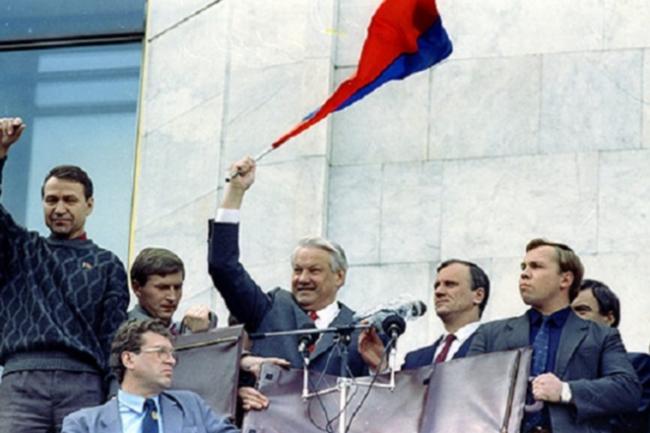 [Songsan Column | 80-Year History of the Pro-North Korean Left] ㉛ 1991: The Dissolution of the Soviet Union
On August 22, 1991, Russian President Boris Yeltsin waves the Russian tricolor flag, calling for resistance against the coup forces. On December 26, 1991, the Soviet Union (USSR), once the world’s m
[Songsan Column | 80-Year History of the Pro-North Korean Left] ㉛ 1991: The Dissolution of the Soviet Union
On August 22, 1991, Russian President Boris Yeltsin waves the Russian tricolor flag, calling for resistance against the coup forces. On December 26, 1991, the Soviet Union (USSR), once the world’s m
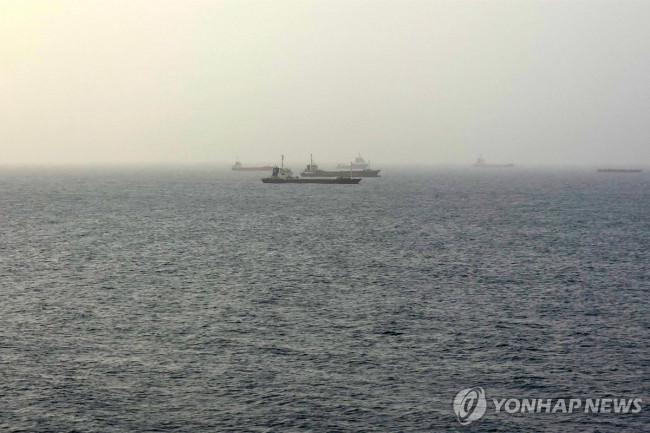 U.S. Military: "Iran maritime blockade remains in effect… 2 vessels neutralized, 12 forced to change course"
Gulf of Oman [AFP=Yonhap News]The U.S. military announced on the 25th (local time) that it is maintaining a full maritime blockade against Iran.U.S. Central Command (CENTCOM), which oversees the Middl
U.S. Military: "Iran maritime blockade remains in effect… 2 vessels neutralized, 12 forced to change course"
Gulf of Oman [AFP=Yonhap News]The U.S. military announced on the 25th (local time) that it is maintaining a full maritime blockade against Iran.U.S. Central Command (CENTCOM), which oversees the Middl
 Jang Dong-hyeok suggests unifying slogans, asking, "Is there anyone left who still denies these were rigged or flawed elections?"
People Power Party Representative Jang Dong-hyeok speaks in Daegu on the 25th. [Maeil Shinmun YouTube Video GIF]As the sweat and tears shed by patriotic citizens on the asphalt over the past decade ha
Jang Dong-hyeok suggests unifying slogans, asking, "Is there anyone left who still denies these were rigged or flawed elections?"
People Power Party Representative Jang Dong-hyeok speaks in Daegu on the 25th. [Maeil Shinmun YouTube Video GIF]As the sweat and tears shed by patriotic citizens on the asphalt over the past decade ha
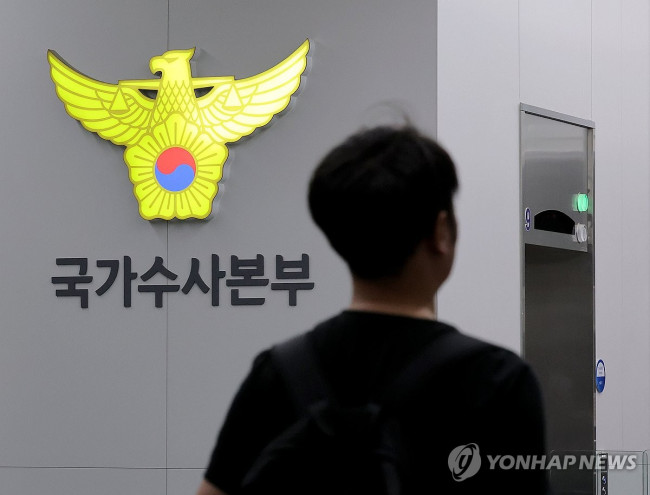 "Cannot Trust Police Investigations": Objections Double in 4 Years… 34,000 Cases in First Half of This Year
Police officials walk past the lobby of the National Office of Investigation (NOI) as the special investigation team looking into the Jang Yoon-gi case conducts a raid at the National Police Agency he
"Cannot Trust Police Investigations": Objections Double in 4 Years… 34,000 Cases in First Half of This Year
Police officials walk past the lobby of the National Office of Investigation (NOI) as the special investigation team looking into the Jang Yoon-gi case conducts a raid at the National Police Agency he
 [Korea-US Data Lab] Money Insight for the 4th Week of July (20th–24th)
Vessels are passing through the Strait of Hormuz, a critical passageway for global crude oil transport. Amid concerns over supply disruptions from the Middle East, Brent crude prices surged past $100
[Korea-US Data Lab] Money Insight for the 4th Week of July (20th–24th)
Vessels are passing through the Strait of Hormuz, a critical passageway for global crude oil transport. Amid concerns over supply disruptions from the Middle East, Brent crude prices surged past $100
 [New Book] Approaching the Truth of Gwangju… ‘The Memory of Two Gunshots, The Tears of Two Gwangjus’
For a long time, the memory of the May 18 Gwangju Democratization Movement has remained fragmented, never converging into a singular meaning. The new book, Memories of Two Gunshots, Tears of Two Gwang
[New Book] Approaching the Truth of Gwangju… ‘The Memory of Two Gunshots, The Tears of Two Gwangjus’
For a long time, the memory of the May 18 Gwangju Democratization Movement has remained fragmented, never converging into a singular meaning. The new book, Memories of Two Gunshots, Tears of Two Gwang
 [Writer Park Joo-hyun’s Column] The ‘Controversy Over Recommended Summer Reading Lists’ Caused by Blind Idolatry
The cover of the full audio recording file of the so-called "sister-in-law profanity" call, released in 2021 by the pro-Moon Jae-in group "Awakened Citizens' Solidarity Party." [Source: Awakened Citiz
[Writer Park Joo-hyun’s Column] The ‘Controversy Over Recommended Summer Reading Lists’ Caused by Blind Idolatry
The cover of the full audio recording file of the so-called "sister-in-law profanity" call, released in 2021 by the pro-Moon Jae-in group "Awakened Citizens' Solidarity Party." [Source: Awakened Citiz
 [Photo] Evidence of Election Fraud Flooding U.S. Media… Trump Had 2.7 Million Votes Stolen
 [Video] U.S. Semiquincentennial Air Show... 'Art in the Sky' streaks across New York
 [Editorial Cartoon] A Draconian Law That Undermines Freedom of Expression

 List
List