Fukutokucho’s rice shochu, Canbasy. A 25% ABV shochu with pineapple-like notes. [Photo=CANBASY]When traveling through Kyushu, one discovers an intriguing fact: the local alcohol changes with even a short distance. In Fukuoka and Saga, sake (seishu) is prominent, while barley shochu is famous in Oita and Iki, Nagasaki.
Kumamoto features rice shochu and akazake (red sake), while the focus shifts to sweet potato shochu as you head down to Miyazaki and Kagoshima. In Amami, you find brown sugar shochu, and in Okinawa, there is awamori.
While alcohol is produced everywhere in Japan, it is rare to find such a diverse liquor culture concentrated in a single region as it is in Kyushu. This diversity is rooted in Kyushu’s geography, climate, crops, water, and long history of foreign exchange.
Where did Japanese alcohol originate?
The history of Japanese alcohol dates back to the Jomon period. While it cannot be definitively stated that people of the Jomon period made alcohol as we know it today, it is possible that they consumed fermented beverages made from wild fruits like grapes or tara vine.
The real transformation occurred during the Yayoi period. One of the key characteristics of Yayoi culture was rice farming, which first took hold in northern Kyushu.
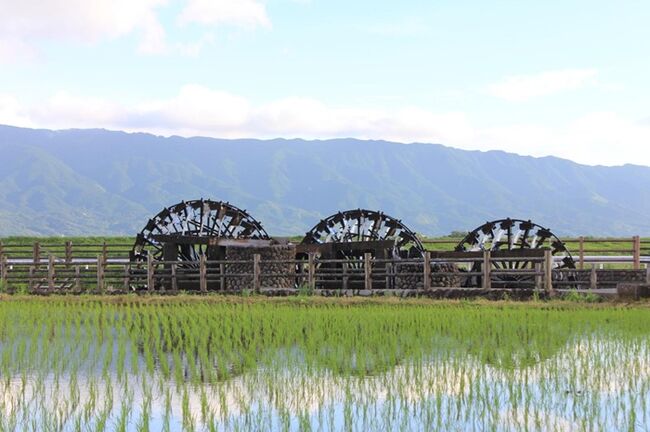 The Triple Water Wheel (Sanren Suisha), a signature sight of the summer landscape in Asakura, known as a rice-producing region. It is the oldest functional large-scale water wheel in Japan. [Photo=Fukuoka Tourism Bureau] With the arrival of rice, the conditions for the development of fermentation and brewing culture were established. Given that the 3rd-century "Records of the Three Kingdoms" (Wajinden) mentions that the Wa people drank, sang, and danced during events such as funerals, alcohol was already deeply embedded in community life by that time.
During the Kofun period, exchanges between the Korean Peninsula and the Japanese archipelago intensified. The "Kojiki" (Records of Ancient Matters) tells the story of Susukori, who is said to have come from Baekje during the reign of Emperor Ojin and brewed sake to offer to the Emperor. This is significant because it shows that ancient Japanese people regarded brewing techniques brought from the Korean Peninsula as an important foreign culture.
Initially, alcohol was primarily produced for rituals and banquets in royal palaces, shrines, and temples. However, as cities and commerce grew during the Muromachi period, professional brewers emerged, and alcohol became a genuine commodity. Alcohol consumption increased further during the Warring States period. It seems that whether then or now, it is a human instinct to soothe the hardships of a chaotic world with a drink.
Fukuoka: The Northern Gateway to Kyushu’s Alcohol
In Fukuoka, Hakata served as an international trade port open to the Korean Peninsula and China. It was a hub for new people, goods, and technologies, and with its established rice farming and high-quality water, a sake culture developed there early on.
Oga Brewery, founded in 1673, is known as the oldest brewery in Fukuoka Prefecture and still operates today in Futsukaichi, Chikushino City. Its signature sake is Tamadeizumi. Traditional breweries also continue to thrive in areas like Kurume, Jojima, and Itoshima.
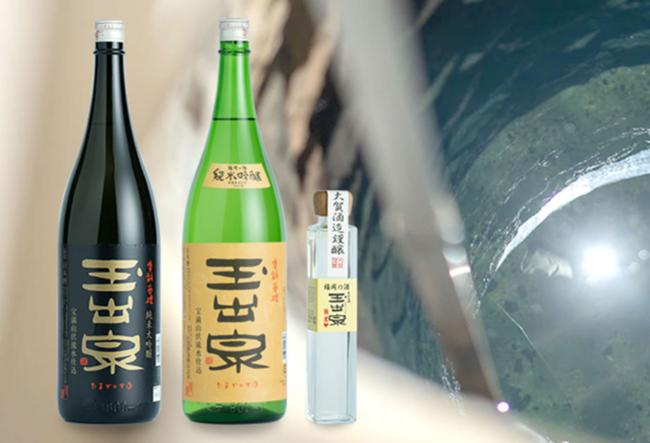 Tamadeizumi, the signature sake of Oga Brewery, established in 1673. [Photo=Oga Brewery]Oita: Brewing with Barley
The quintessential drink of Oita is mugi shochu, or barley shochu. While there was originally a strong sake culture, barley shochu has become the face of Oita today.
Oita has a long-standing tradition of fermentation using barley and barley koji. Against this backdrop, the modern barley shochu industry flourished. A leading example is Nikaido Shuzo in Hiji-machi, which was founded in 1866.
Saga: Sake Born of Rice and Water
Saga is one of the premier granaries in Kyushu. With high-quality rice produced in the vast Saga Plain and excellent water sourced from the Sefuri mountains and the Tenzan area, sake production naturally flourished.
During the Edo period, the brewing industry grew significantly, with many breweries established in Saga City, Kashima, Ureshino, Karatsu, Imari, and Arita. Kashima, in particular, remains famous as a traditional sake-producing region.
Nagasaki: Alcohol Forged by the Sea
To understand Nagasaki’s alcohol, one must look at the sea. Encompassing Tsushima, Iki, and the Goto Islands, Nagasaki has long been a key maritime hub connecting the Korean Peninsula, China, and the East China Sea.
Iki, in particular, is an important home of Japanese barley shochu. Iki shochu differs in taste from Oita’s barley shochu because it uses barley as the main ingredient along with rice koji. The Goto Islands also produce sweet potato shochu. As a result, sake, barley shochu, and sweet potato shochu all coexist in Nagasaki.
Kumamoto: Where Water Defines the Taste
When talking about Kumamoto, one cannot overlook its water. Rain falling around Mount Aso passes through volcanic strata to become groundwater, which bubbles up throughout the region.
 Kuma Shochu, recognized as a Geographical Indication (GI) product. [Photo=Kumamoto Tourism Bureau]Kumamoto also has a unique traditional liquor called akazake. It is a local specialty with a reddish hue and a sweet taste, often used for New Year’s events and in cooking. The yeast and brewing techniques developed and disseminated in Kumamoto had a major influence on the advancement of modern Japanese ginjo-shu.
Moving south to the Hitoyoshi and Kuma regions, rice-distilled Kuma Shochu becomes the star. It is the same rice that makes sake in Saga, but becomes shochu in Kuma.
Miyazaki and Kagoshima: The Land of Sweet Potato Shochu
Heading down to southern Kyushu, the protagonist of the alcohol scene changes to sweet potatoes. With a warm climate and volcanic soil, sweet potato cultivation was vigorous in Miyazaki and Kagoshima, naturally leading to the development of sweet potato shochu.
Representative brands include Kurokirishima and Satsuma Shiranami. Miyazaki produces shochu not only from sweet potatoes but also from various ingredients such as barley, rice, and buckwheat.
Further south, in the Amami Islands, Kokuto Shochu (brown sugar shochu) is made using brown sugar and rice koji.
Okinawa: The World of Awamori
Descending to Okinawa, the alcohol culture changes once again. The representative liquor is Awamori.
It is typically made using Thai Indica rice and black koji mold, and the alcohol content is generally high, ranging from 25% to 40%. The history of Okinawa being a maritime trade hub connecting China and Southeast Asia is reflected in its alcohol.
Why is there so much alcohol in Kyushu?
Unfold the alcohol map of Kyushu, and the answer becomes clear.
There is sake in Fukuoka and Saga; barley shochu in Oita and Iki; akazake and rice shochu in Kumamoto; sweet potato shochu in Miyazaki and Kagoshima; brown sugar shochu in Amami; and awamori in Okinawa.
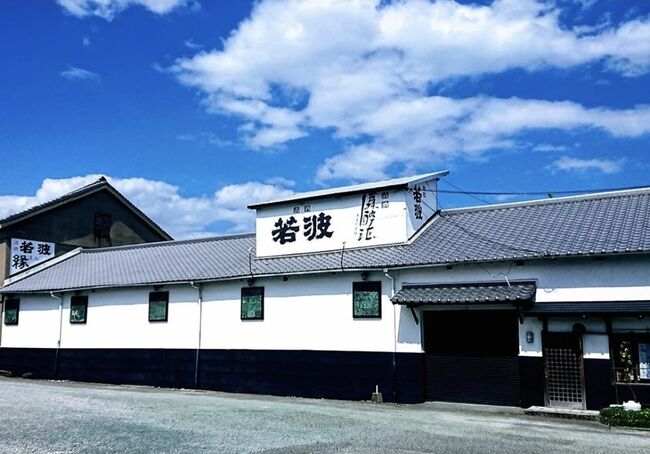
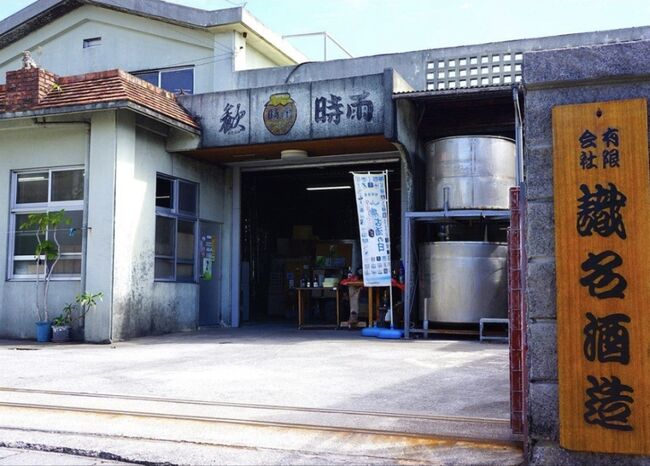
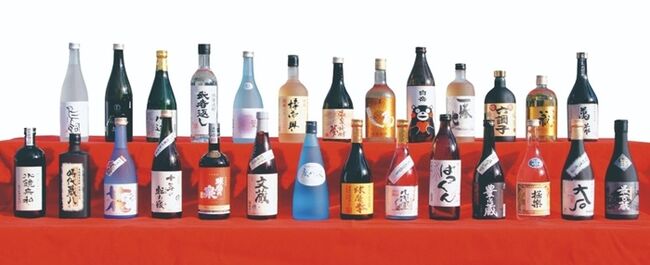
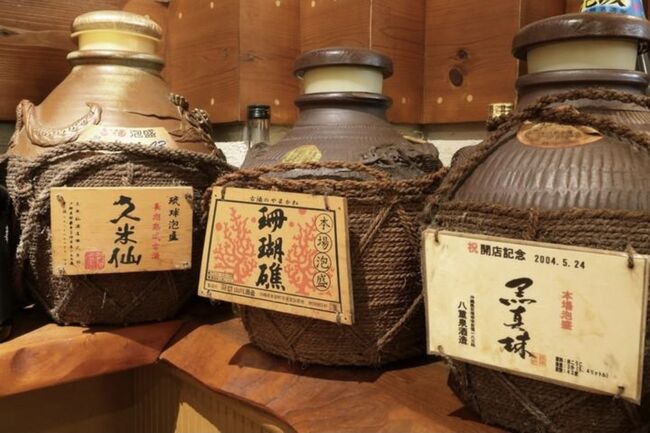 Kyushu’s breweries and regional alcohols. [Photo=Park Myung-mi]The north has plains suitable for rice farming, while the south has a warm climate and volcanic soil. The volcanic zones, including Mt. Aso in the center and Kirishima and Sakurajima in the south, occasionally cause great damage, but they also provide excellent groundwater.
Crops varied by region. Where rice was abundant, sake and rice shochu were made; where barley was plentiful, barley shochu was created; and where sweet potatoes thrived, sweet potato shochu became the staple.
Furthermore, there was the sea. Kyushu is close to the Korean Peninsula and China, and it connects to Southeast Asia via the Ryukyu Islands. Along with people came rice farming, fermentation techniques, koji, distillation methods, and new crops. The people of Kyushu adapted these to their local produce, water, and climate.
Therefore, drinking alcohol in Kyushu is akin to drinking in the history and geography of the region.
Fukuoka’s sake embodies the rice farming of northern Kyushu and the trading history of Hakata; Iki’s barley shochu holds the lives of the islanders. Kumamoto’s rice shochu carries the water of Mt. Aso, and Kagoshima’s sweet potato shochu reflects the volcanic soil of Satsuma. Amami’s brown sugar shochu and Okinawa’s awamori hold traces of the people who traveled across the East China Sea.
In the past, people crossing the seas brought new technologies and cultures to Kyushu. Today, tourists from Korea, China, and Southeast Asia visit Kyushu to taste sake, shochu, and awamori before returning to their home countries.
Being able to enjoy what belongs to others as if it were one’s own, and having others enjoy what is mine as if it were theirs, is only possible in a peaceful world. May this peace long endure.
The taste of alcohol is the taste of the land, the taste of the water, and the history of the people who traversed those places. That is exactly why Kyushu has such a wide variety of spirits.
◆ Author Park Myung-mi
A gourmet travel columnist specializing in Japan. A graduate of Ewha Girls' High School and Kumamoto University Graduate School (majoring in Linguistics) in Japan, she has served as a Korean language instructor at Saga University and Kyushu Sangyo University. She is the co-author of the Korean-Japanese comparative study book "Anata is Korean" (2006).

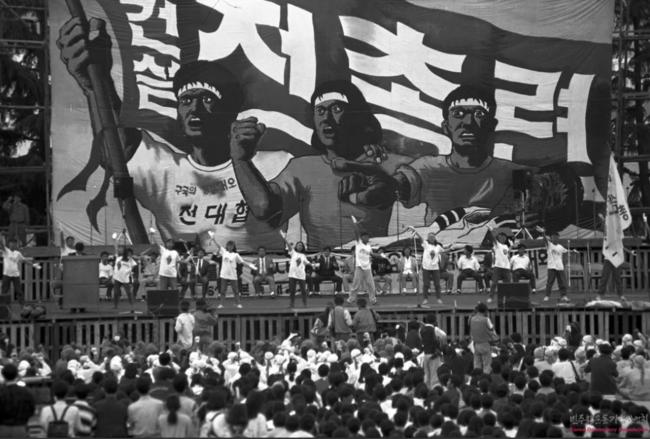 [Songsan Column | An 80-Year History of the Pro-North Left] ㉞ The Persistence of the Juche-Faction in 1990s Universities
Inauguration Ceremony of the 5th Jeondaehyop in 1991 By the 1990s, the university campus was no longer a place where massive protests erupted daily and the streets were filled with shouts, as was
[Songsan Column | An 80-Year History of the Pro-North Left] ㉞ The Persistence of the Juche-Faction in 1990s Universities
Inauguration Ceremony of the 5th Jeondaehyop in 1991 By the 1990s, the university campus was no longer a place where massive protests erupted daily and the streets were filled with shouts, as was
 “'China’s Interference in U.S. Presidential Election': 16 Months of Reports to Trump Ignored”
Declassified documents from the U.S. National Security Agency (NSA) released by the White House Government Transparency Task Force on the 18th (local time). They contain emails among intelligence agen
“'China’s Interference in U.S. Presidential Election': 16 Months of Reports to Trump Ignored”
Declassified documents from the U.S. National Security Agency (NSA) released by the White House Government Transparency Task Force on the 18th (local time). They contain emails among intelligence agen
 [Comprehensive] Kim Yo-jong: "Seoul’s Pitiful Situation, Unable to Play War Games"… Ridicule and Harsh Language
Kim Yo-jong, Vice Department Director of the Workers' Party of North Korea [Yonhap News] Kim Yo-jong, Vice Department Director of the Workers' Party and sister of North Korean leader Kim Jong-un,
[Comprehensive] Kim Yo-jong: "Seoul’s Pitiful Situation, Unable to Play War Games"… Ridicule and Harsh Language
Kim Yo-jong, Vice Department Director of the Workers' Party of North Korea [Yonhap News] Kim Yo-jong, Vice Department Director of the Workers' Party and sister of North Korean leader Kim Jong-un,
 Shim Woo-jung indicted without detention for 'insurrection involvement'... Shim protests, claiming "disregard for evidence and legal principles"
Former Prosecutor General Shim Woo-jung [Yonhap News file photo]Former Prosecutor General Shim Woo-jung has been indicted on charges of participating in the December 3rd martial law insurrection and a
Shim Woo-jung indicted without detention for 'insurrection involvement'... Shim protests, claiming "disregard for evidence and legal principles"
Former Prosecutor General Shim Woo-jung [Yonhap News file photo]Former Prosecutor General Shim Woo-jung has been indicted on charges of participating in the December 3rd martial law insurrection and a
 US Treasury Secretary: "Treasury Buybacks Could Exceed $4 Billion Per Operation… We Have Many Policy Tools"
U.S. Treasury Secretary Scott Bessent [AP=Yonhap News]U.S. Treasury Secretary Scott Bessent stated on the 20th (local time) that the volume of Treasury buybacks could exceed $4 billion (5.58 trillion
US Treasury Secretary: "Treasury Buybacks Could Exceed $4 Billion Per Operation… We Have Many Policy Tools"
U.S. Treasury Secretary Scott Bessent [AP=Yonhap News]U.S. Treasury Secretary Scott Bessent stated on the 20th (local time) that the volume of Treasury buybacks could exceed $4 billion (5.58 trillion
 [Park Myung-mi's Kyushu Travel] ② Kaiseki Cuisine, Eating a Garden in a Bowl
When you first encounter kaiseki cuisine, it can feel like playing house. The dishes are small, yet there are so many of them. When I first came to Japan, the food that truly moved me was a cours
[Park Myung-mi's Kyushu Travel] ② Kaiseki Cuisine, Eating a Garden in a Bowl
When you first encounter kaiseki cuisine, it can feel like playing house. The dishes are small, yet there are so many of them. When I first came to Japan, the food that truly moved me was a cours
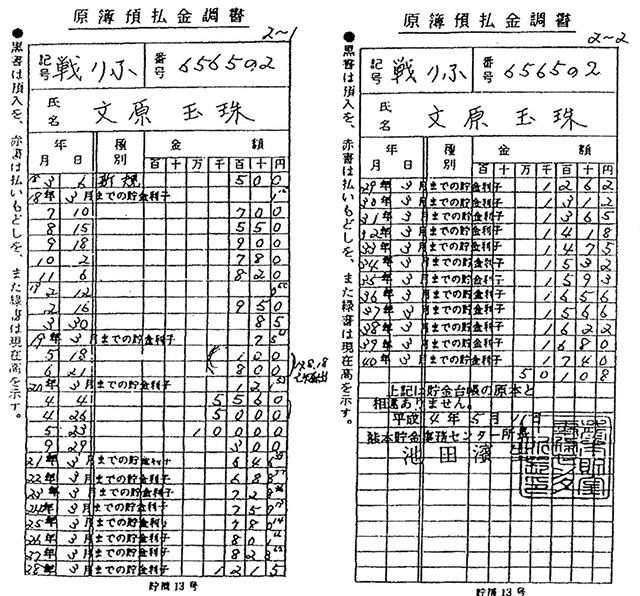 [Special Contribution: Songsan] How much was the 26,000 yen of "comfort woman" Moon Ok-ju worth?
Postal Savings Ledger of Moon Ok-juRecords of approximately 26,000 yen in military postal savings remain for Moon Ok-ju, who served as a "comfort woman" in Burma (present-day Myanmar). Looking at the
[Special Contribution: Songsan] How much was the 26,000 yen of "comfort woman" Moon Ok-ju worth?
Postal Savings Ledger of Moon Ok-juRecords of approximately 26,000 yen in military postal savings remain for Moon Ok-ju, who served as a "comfort woman" in Burma (present-day Myanmar). Looking at the
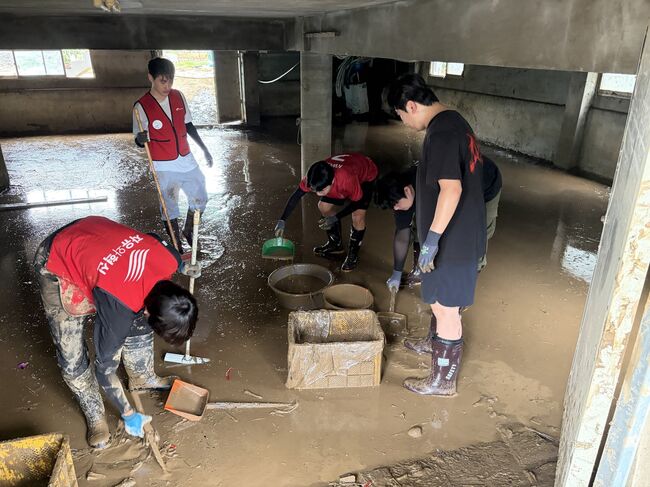 [Photo] Liberty and Innovation Geoje Flood Recovery Support
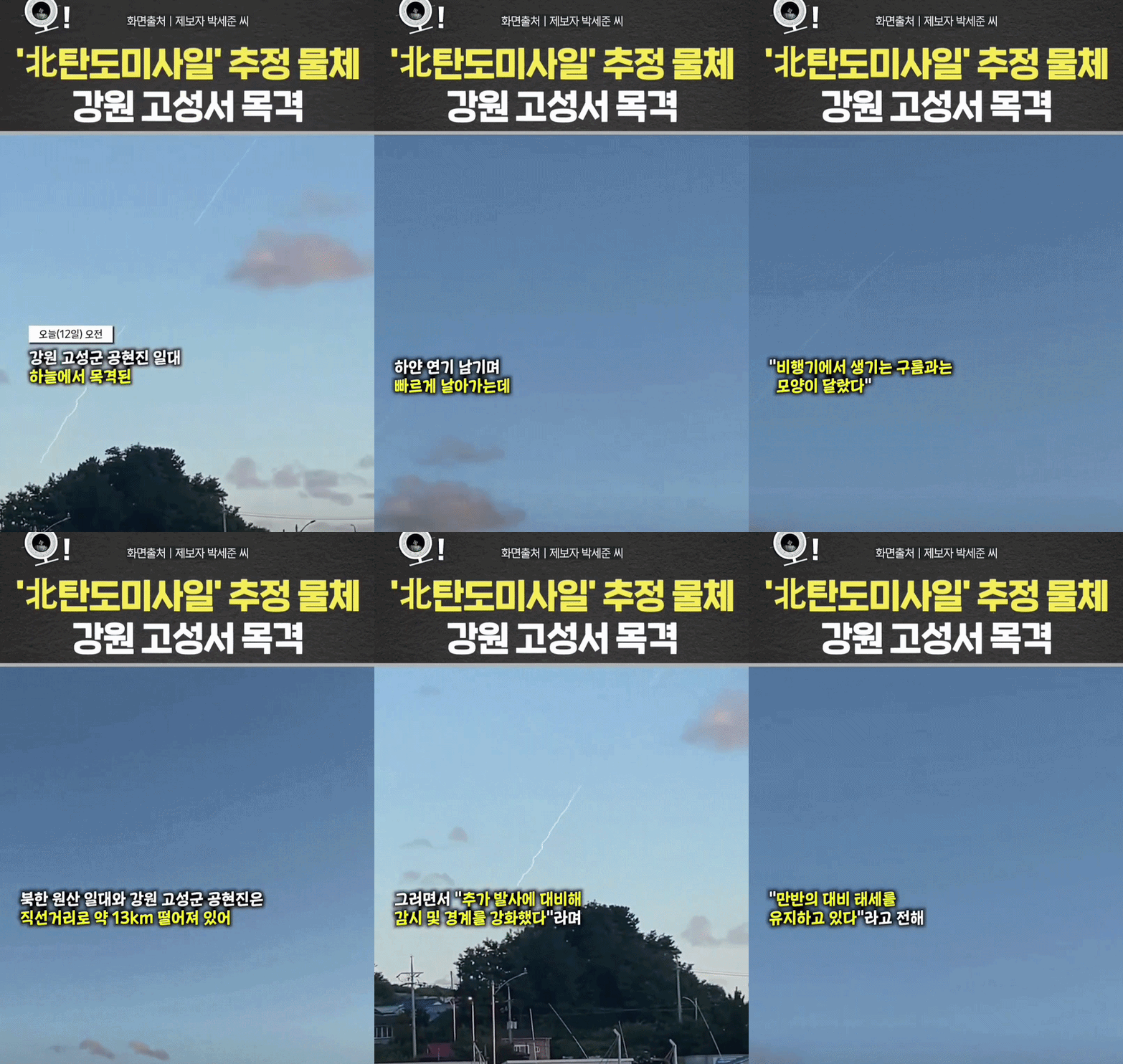 [Video] North Korean ballistic missile filmed by a civilian in Goseong, Gangwon-do
 [Editorial Cartoon] A Draconian Law That Undermines Freedom of Expression

 List
List