The special prosecutor team led by Lee Tae-han, tasked with investigating the overall allegations of the June 3rd election fraud, has finally assembled and entered the full-scale investigation preparation phase. Some remain skeptical regarding the expertise and election investigation capabilities of the appointed assistant special prosecutors, harboring concerns that a team appointed by the Lee Jae-myung administration might grant absolution to those involved by downplaying the election fraud issues. In light of this, is launching the [Old Articles] series, in which we select and re-upload articles previously covered and reported by other media outlets to provide information regarding election fraud. hopes that the special prosecutor team will focus on the fact that election statistics in South Korea have yielded results so mysterious that they would require rewriting mathematics textbooks worldwide, and that they will go beyond merely identifying whether voter turnout was manipulated to fully identifying and judicially processing the entities that artificially manipulated the "vote shares." [Editor's Note]
The following is an article reported on September 26, 2024, three months before the December 3rd martial law declaration.
|
46 People's Power Party Candidates Experienced 'Impossible Losses' - Professor Heo Byeong-gi Raises Issues with the April 10 General Election
According to election data analysis,
137 PPP candidates and 102 Democratic Party candidates should have won.
A mysterious result in terms of probability and statistics.
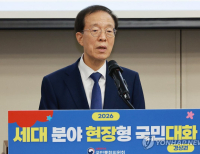
 Professor Emeritus Heo Byeong-gi [Photo by Reporter Heo Gyeom]
Statistical analysis shows that 46 candidates from the People's Power Party (PPP) who lost in the April 10 general election actually should have won.
On the 26th, Heo Byeong-gi (pictured), Professor Emeritus of Engineering at Inha University, presented analysis based on data from the 22nd National Assembly election held in April this year, calculating that the PPP should have won 137 seats and the Democratic Party 102.
However, the National Election Commission announced that the PPP won 91 seats and the Democratic Party won 163.
Consequently, it was analyzed that 46 candidates (137 minus 91) had their win-loss outcomes reversed, losing despite actually having won in the real election.
Professor Emeritus Heo disclosed these academic research findings based on data analyzed over the five months since the general election at a seminar titled "Analysis of the April 10 General Election Results, Diagnosis of Election Litigation Realities, and Alternatives," held at 2:00 PM on the 19th at the Inha University Law School building in Michuhol-gu, Incheon.
He drew attention to the fact that when subtracting the election-day vote share from the early in-person voting share across 3,551 sub-districts (eup/myeon/dong) in 254 constituencies, the PPP showed a positive (+) value in 62 locations, '0' in 2, and negative (-) in the remaining 3,487. In contrast, for the Democratic Party—excluding 10 districts where they did not field candidates—out of 3,404 locations in 244 constituencies, all but one ('0') and 56 negative ones recorded positive values in 3,347 locations.
By metropolitan city/province, he also identified a pattern where, in Seoul, Busan, Daegu, Incheon, Daejeon, Ulsan, Sejong, Gyeonggi, and Jeju, the early in-person vote share minus the election-day vote share was 100% positive (+) for the Democratic Party, while the PPP showed 100% negative (-) values in all areas except Daegu (-96.7%).
Professor Emeritus Heo explained the research findings, stating, "It is a statistical axiom that the election-day vote share and the constituency vote share (election-day + early in-person/absentee vote share) should have 'almost the same value (≒)'," adding, "In terms of probability and statistics, these are absolutely impossible values."
An axiom is a principle in mathematics or logic recognized as a self-evident truth without proof, serving as a premise for proving other propositions.
The study also discovered a pattern in which the difference between the constituency vote share and election-day vote share for both the Democratic Party and the PPP increased or decreased at a constant rate.
Specifically, in the 48 districts of Seoul, Democratic candidates were plus (+) 6.4%, while PPP candidates were minus (-) 6.4%.
Subsequently, in Gyeonggi (Democratic +5%, PPP -5%), Incheon (Democratic +4.5%, PPP -4.5%), Gangwon (Democratic +5.6%, PPP -5.6%), Sejong (Democratic +5.8%, PPP -5.8%), and Busan (Democratic +5.3%, PPP -5.3%), the other side decreased by the exact same proportion that one side increased.
Based on results that deviate significantly from statistical axioms, Professor Emeritus Heo diagnosed, "There are two factors that lead to the conclusion of a planned election."
He emphasized, "First, the fact that the election-day vote share and constituency vote share are different, despite being expected to be almost identical, suggests the possibility of artificial manipulation," adding, "It proves that for a PPP candidate to win, they would need an actual vote share 10% higher than the Democratic candidate."
Professor Emeritus Heo reached the conclusion that early voting was pre-planned through a process involving: △ functional relationships between vote shares for two different samples, △ mathematical mechanisms regarding functional relationships between vote shares, and △ verification of mathematical mechanisms and statistical axioms.
Previously, Professor Emeritus Heo was recognized for digging into the reality of election manipulation through mathematical and statistical analysis in the book "Secret Orders that Moved the April 15, 2020 Election 1 & 2 (Kingdom Books, co-authored with Min Kyung-wook, 818 pages)" published last year.
This is the first time Professor Emeritus Heo has explained the entire analysis process of the 22nd general election at a public seminar.
The seminar was hosted by the Rule of Law and Liberty Democratic Solidarity (NPK, Board Chair Maeng Joo-sung, Professor Emeritus at Hanyang University; Secretary General Kim Mi-young, CEO of VON News). Numerous academics and citizens packed the lecture hall, showing great interest in the presentation.
Also in attendance were former Prime Minister Hwang Kyo-ahn, former lawmaker Min, executives of the Inha University Alumni Association founded by President Syngman Rhee, law school faculty, and executives of civil groups dedicated to the movement to uncover election fraud, such as the Election Fraud and Corruption Prevention Corps.
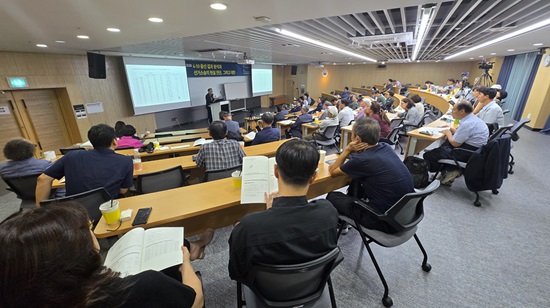 The "Analysis of the April 10 General Election Results, Diagnosis of Election Litigation Realities, and Alternatives" seminar, hosted by the Rule of Law and Liberty Democratic Solidarity (NPK) and organized by the NPK Special Committee for Investigating Election Fraud (Chair Kwon Oh-yong, lawyer), is being held at 2:00 PM on the 19th at the Inha University Law School building in Michuhol-gu, Incheon. Incheon = Reporter Heo Gyeom
Reporter Heo Gyeom
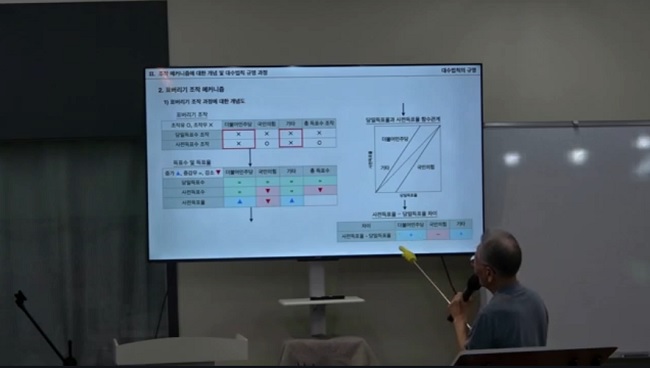 Professor Emeritus Heo Byeong-gi is giving a lecture on the "Law of Large Numbers" at the series of seminars on election fraud held in June 2026, filled with the fervor of the Olympic Park resistance. Professor Heo stood by his previous scholarly view that "the results of South Korean elections yield values that are absolutely impossible when approached from a probabilistic and statistical perspective." [YouTube Channel How Mission video capture]

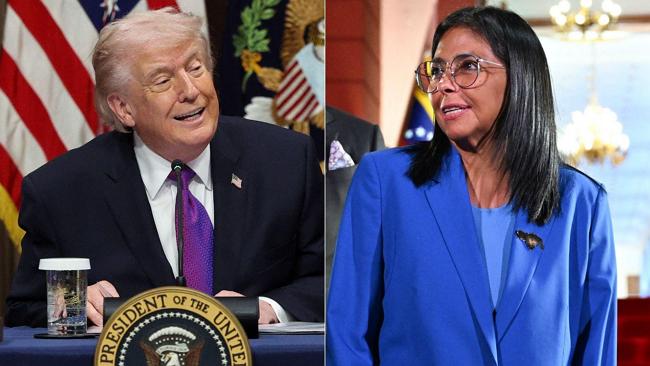 [Analysis] Is a ‘Win-Win’ Possible for the U.S. and Venezuela?
U.S. President Donald Trump and Venezuelan Interim President Delcy Rodríguez. The U.S. government has secured a 35% stake in the parent company of the private oil firm NABEP and the rights to acquire
[Analysis] Is a ‘Win-Win’ Possible for the U.S. and Venezuela?
U.S. President Donald Trump and Venezuelan Interim President Delcy Rodríguez. The U.S. government has secured a 35% stake in the parent company of the private oil firm NABEP and the rights to acquire
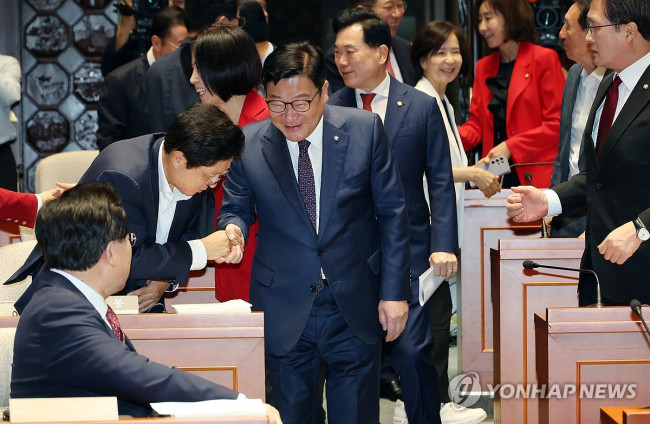 PPP's general meeting fails to adopt 'People's Voting Rights Protection Act' as party platform; agrees to further discussions
Floor Leader Jeong Jeom-sik attending the policy general meeting of lawmakers [Seoul=Yonhap News]On the 3rd, the People Power Party planned to adopt as a party platform a bill to reform the National E
PPP's general meeting fails to adopt 'People's Voting Rights Protection Act' as party platform; agrees to further discussions
Floor Leader Jeong Jeom-sik attending the policy general meeting of lawmakers [Seoul=Yonhap News]On the 3rd, the People Power Party planned to adopt as a party platform a bill to reform the National E
 27 legal professionals from the Seoul National University Law School class of '76: "The Blue House’s demand for the reappointment of Supreme Court Justices is unjust."
The Supreme Court of Korea [Seoul=Yonhap News] Twenty-seven legal professionals from the Seoul National University College of Law's class of '76 issued a joint statement on the 3rd, criticizing P
27 legal professionals from the Seoul National University Law School class of '76: "The Blue House’s demand for the reappointment of Supreme Court Justices is unjust."
The Supreme Court of Korea [Seoul=Yonhap News] Twenty-seven legal professionals from the Seoul National University College of Law's class of '76 issued a joint statement on the 3rd, criticizing P
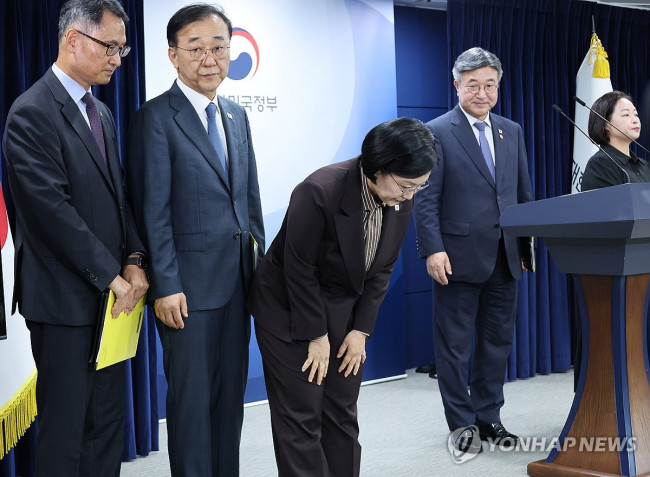 Relocation of Public Institutions to Begin Next Year… "Minimize Retention in Capital Region, Reduce 109 Institutions"
The government will begin the full-scale relocation of administrative and public institutions starting in the first half of next year.It is also launching reforms to reduce the number of public instit
Relocation of Public Institutions to Begin Next Year… "Minimize Retention in Capital Region, Reduce 109 Institutions"
The government will begin the full-scale relocation of administrative and public institutions starting in the first half of next year.It is also launching reforms to reduce the number of public instit
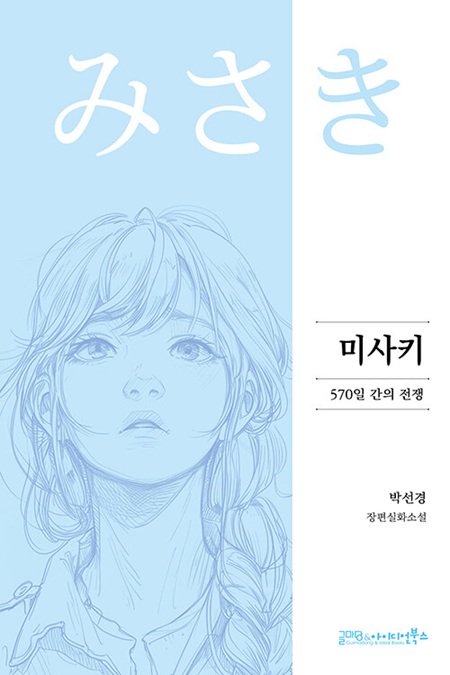 [New Book] The True Face of the Ivory Tower Hidden in the Shadow of Power… Park Sun-kyung’s ‘Misaki’
The university campus, often called a sanctuary of intellect. A new novel has been published that sharply dissects the hypocrisy and absurdity committed within those solid walls of power. &
[New Book] The True Face of the Ivory Tower Hidden in the Shadow of Power… Park Sun-kyung’s ‘Misaki’
The university campus, often called a sanctuary of intellect. A new novel has been published that sharply dissects the hypocrisy and absurdity committed within those solid walls of power. &
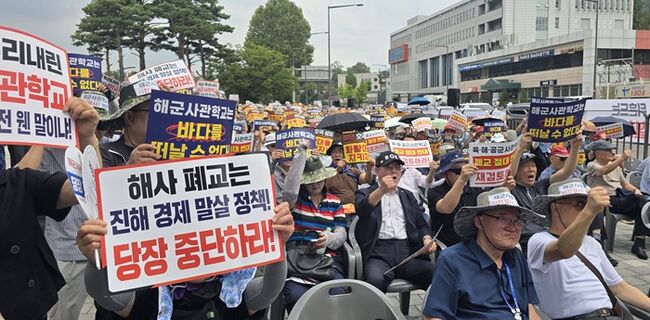 [Photo] “We Oppose the Closing of the Military Academy”… Large-Scale Protest Held in Front of the War Memorial on the 26th
The "National Solidarity for Preventing the Closure of Military Academies" held a rally to protest the closure of military academies at the plaza in front of the War Memorial of Korea in Samgakji, Seo
[Photo] “We Oppose the Closing of the Military Academy”… Large-Scale Protest Held in Front of the War Memorial on the 26th
The "National Solidarity for Preventing the Closure of Military Academies" held a rally to protest the closure of military academies at the plaza in front of the War Memorial of Korea in Samgakji, Seo
 [Trending Destinations] The Leisure of Seoul's Hangang Bus and the Romance of Hong Kong's Star Ferry
Hannam Bridge viewed from the Hangang Bus. [Video = Reporter Lim Yo-hee]With the introduction of the Hangang Bus, Seoul—which previously lacked sufficient water-based public transport—has gained a
[Trending Destinations] The Leisure of Seoul's Hangang Bus and the Romance of Hong Kong's Star Ferry
Hannam Bridge viewed from the Hangang Bus. [Video = Reporter Lim Yo-hee]With the introduction of the Hangang Bus, Seoul—which previously lacked sufficient water-based public transport—has gained a
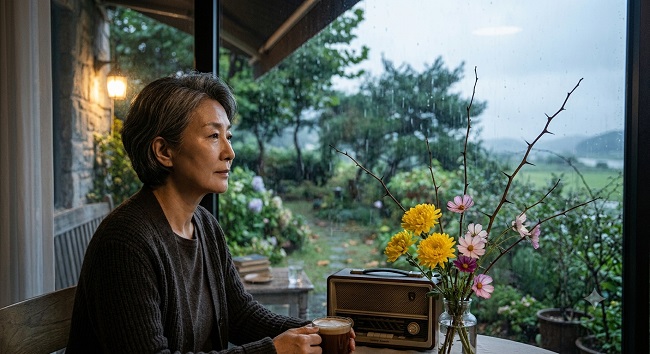 [Jung Jae-hak’s From Jeolla-do] Listening to Patti Kim’s ‘Song of September’
Today, as it has been all day long, the heat wave has been sculpting clouds, and the wind has been gathering them. Thus, from the early evening through the night, the sound of rain persists.&nbs
[Jung Jae-hak’s From Jeolla-do] Listening to Patti Kim’s ‘Song of September’
Today, as it has been all day long, the heat wave has been sculpting clouds, and the wind has been gathering them. Thus, from the early evening through the night, the sound of rain persists.&nbs
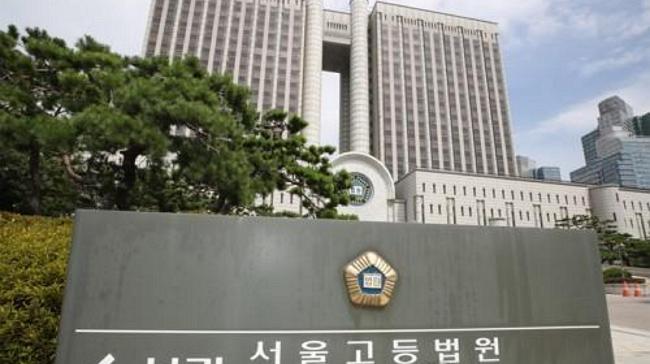 [Issue Commentary] 3 Reasons Why the Lee Jae-myung Trial Must Proceed
 [Editorial Cartoon] A Draconian Law That Undermines Freedom of Expression

 List
List