Flag bearers enter the joint graduation and commissioning ceremony for the Army, Navy, and Air Force academies held at Gyeryongdae, South Chungcheong Province, on February 20. [Blue House Photo Press Corps]
The proposal to abolish the individual Army, Navy, and Air Force academies and establish a single "National Armed Forces Academy" is spiraling into partisan division, extreme conflict, and ideological confrontation.
The government masks the integration of the academies with justifications such as "strengthening jointness to prepare for future warfare" and "breaking up specific military cartels and preventing coups."
However, as history has proven, the approach of completely tearing down physical structures often leads to side effects that prioritize totalitarian uniformity and bureaucratic control while ignoring the resolution of essential problems.
The historical path taken by the Chinese Communist Party—dismantling the diversity of field armies to place the People's Liberation Army firmly under the "stranglehold of the Party"—bears an eerie resemblance to this proposal for the abolition and integration of the military academies. It even reeks of the phantom of Mao Zedong, that specter of dogmatism and obstinacy.
The core of military professionalism lies in diversity and autonomy. The contexts of annihilation in land warfare, dominance in naval warfare, and the technological focus of air and space warfare are each vastly different.
The idea of merging military academies simply because the boundaries of the battlefield have blurred in modern warfare is as dogmatic as arguing that because quantum mechanics exists, all foundational science should be abolished and only quantum mechanics should be taught.
Forcing junior officers into a single crucible from the start of their training to bind them to a uniform set of values and doctrines will not result in "jointness," but rather in the "standardization of thought and narrow homogeneity."
The officer corps of a liberal democratic nation should not be composed of mechanical bureaucrats who blindly execute the directives of the regime.
They must be autonomous military experts capable of speaking their minds based on their expertise, even when faced with unjust political policies on the front lines of national security.
There is also a need for institutional alternatives, such as creating professional military organizations capable of reviewing national security policies and legislation in advance to block political interference, and enshrining these protections in the Constitution.
The notion of framing the unavoidable past actions of certain groups as "coups" based on obstinate historical interpretations—thereby trapping the entire academy system in a framework of political guilt-by-association and constructing a single control network—is a dangerous attempt by politics to undermine the principles of liberal democratic checks and balances and civilian control.
If so, what is the true alternative?
Reform is possible without destroying the physical foundations of the academies, which have built their own unique identities and historical legacies over the past 70 to 80 years.
The most ideal solution is to maintain the current framework of the educational system while performing major surgery on the educational content and cultural software.
If the blurring of military domains due to weapon system advancements is the concern, then "integrated weapon systems" should be made a common subject for all junior officer training processes to internalize "jointness."
As is already being done, we can regularize joint video lectures, joint practical training, and exchange student programs that allow cadets to learn the tactics of other branches and discuss the mechanisms of three-dimensional, joint operations.
Without physical integration, "chemical jointness"—which increases mutual understanding while preserving the independence of each service—can be sufficiently achieved through the organic combination of educational programs.
At the same time, the outdated paternalism and insularity within the academies can be solved by increasing transparency in admissions and personnel matters, raising educational budgets, and strengthening the fairness of evaluation systems. The problem is not the "school" itself, but the privileged culture and secretive personnel structures that have been derived from it.
Educational content should be innovated around high-tech, cutting-edge science—such as artificial intelligence, cyber warfare, and unmanned systems—to meet the demands of future combat. We must also significantly strengthen education on the Constitution and liberal democratic civic awareness to internalize the values of political neutrality and professionalism, and ensure that cadets are taught from their earliest days that expressing an expert opinion does not constitute a violation of political neutrality.
National security, which is directly linked to the lives of the people, is not a laboratory subject or a disposable commodity to be tailored for the convenience of controlling power.
The current push for integrating the military academies is an act of tyranny that uses grand political slogans to extinguish the diversity of each branch and degrade the military into a bureaucratic group tamed to the regime's taste.
This is a time when genuine reform that strengthens the substance of education is needed, rather than a noisy political show that seeks to break the shell.
If we have any insight into North Korea and the current international situation, now is not the time to divide public opinion over a military academy integration plan. The policies that have bankrupted our security and the plan to create a unified "National Armed Forces Academy" should be scrapped immediately, and focus must return to establishing a robust military readiness posture.
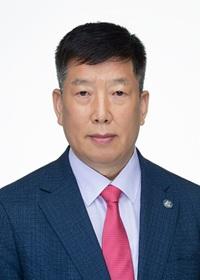
◆ Park Phil-gyu, Committee Member
Editorial Board Member, Hanmi Ilbo
Korea Military Academy, 40th Class

 [Analysis] Is a ‘Win-Win’ Possible for the U.S. and Venezuela?
U.S. President Donald Trump and Venezuelan Interim President Delcy Rodríguez. The U.S. government has secured a 35% stake in the parent company of the private oil firm NABEP and the rights to acquire
[Analysis] Is a ‘Win-Win’ Possible for the U.S. and Venezuela?
U.S. President Donald Trump and Venezuelan Interim President Delcy Rodríguez. The U.S. government has secured a 35% stake in the parent company of the private oil firm NABEP and the rights to acquire
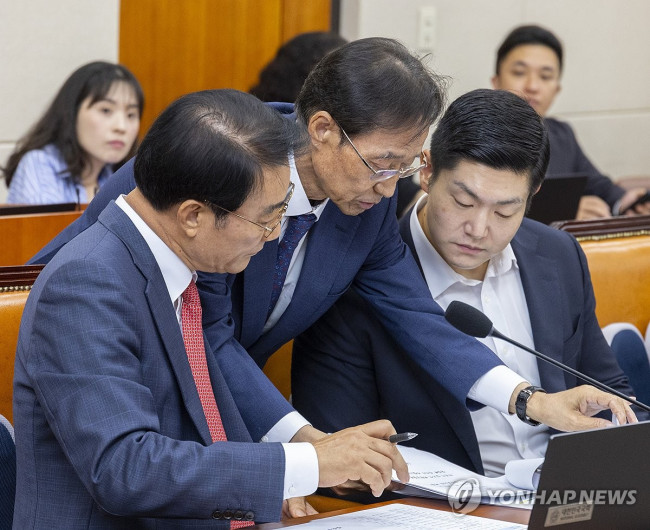 PPP estimates 54 trillion won in losses... to push for parliamentary investigation into leveraged ETFs
Opposition party members and National Policy Committee Chairman Yoo Dong-soo consulting on the processing of proposed bills [Seoul=Yonhap News]On the 3rd, the People Power Party announced, "We will pu
PPP estimates 54 trillion won in losses... to push for parliamentary investigation into leveraged ETFs
Opposition party members and National Policy Committee Chairman Yoo Dong-soo consulting on the processing of proposed bills [Seoul=Yonhap News]On the 3rd, the People Power Party announced, "We will pu
 27 legal professionals from the Seoul National University Law School class of '76: "The Blue House’s demand for the reappointment of Supreme Court Justices is unjust."
The Supreme Court of Korea [Seoul=Yonhap News] Twenty-seven legal professionals from the Seoul National University College of Law's class of '76 issued a joint statement on the 3rd, criticizing P
27 legal professionals from the Seoul National University Law School class of '76: "The Blue House’s demand for the reappointment of Supreme Court Justices is unjust."
The Supreme Court of Korea [Seoul=Yonhap News] Twenty-seven legal professionals from the Seoul National University College of Law's class of '76 issued a joint statement on the 3rd, criticizing P
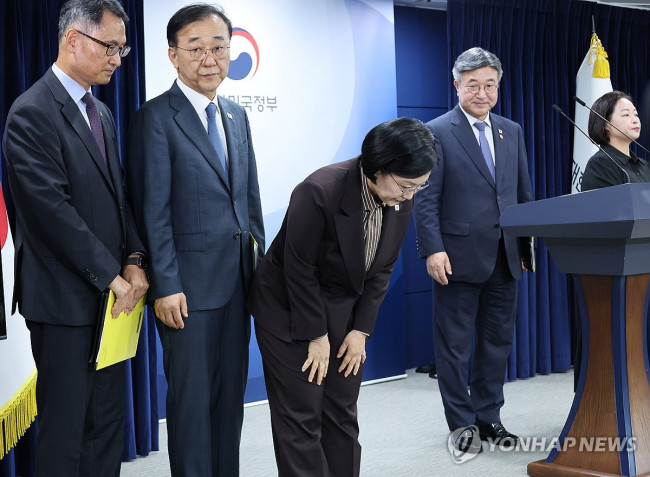 Relocation of Public Institutions to Begin Next Year… "Minimize Retention in Capital Region, Reduce 109 Institutions"
The government will begin the full-scale relocation of administrative and public institutions starting in the first half of next year.It is also launching reforms to reduce the number of public instit
Relocation of Public Institutions to Begin Next Year… "Minimize Retention in Capital Region, Reduce 109 Institutions"
The government will begin the full-scale relocation of administrative and public institutions starting in the first half of next year.It is also launching reforms to reduce the number of public instit
 [New Book] The True Face of the Ivory Tower Hidden in the Shadow of Power… Park Sun-kyung’s ‘Misaki’
The university campus, often called a sanctuary of intellect. A new novel has been published that sharply dissects the hypocrisy and absurdity committed within those solid walls of power. &
[New Book] The True Face of the Ivory Tower Hidden in the Shadow of Power… Park Sun-kyung’s ‘Misaki’
The university campus, often called a sanctuary of intellect. A new novel has been published that sharply dissects the hypocrisy and absurdity committed within those solid walls of power. &
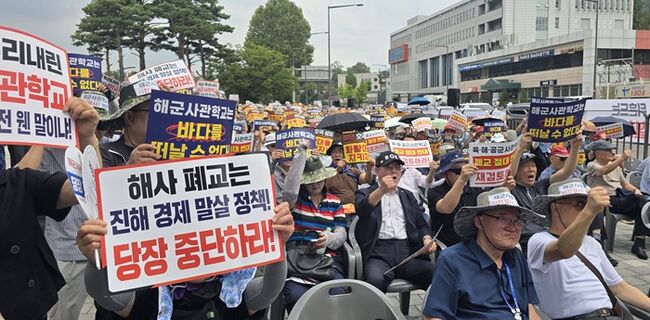 [Photo] “We Oppose the Closing of the Military Academy”… Large-Scale Protest Held in Front of the War Memorial on the 26th
The "National Solidarity for Preventing the Closure of Military Academies" held a rally to protest the closure of military academies at the plaza in front of the War Memorial of Korea in Samgakji, Seo
[Photo] “We Oppose the Closing of the Military Academy”… Large-Scale Protest Held in Front of the War Memorial on the 26th
The "National Solidarity for Preventing the Closure of Military Academies" held a rally to protest the closure of military academies at the plaza in front of the War Memorial of Korea in Samgakji, Seo
 [Trending Destinations] The Leisure of Seoul's Hangang Bus and the Romance of Hong Kong's Star Ferry
Hannam Bridge viewed from the Hangang Bus. [Video = Reporter Lim Yo-hee]With the introduction of the Hangang Bus, Seoul—which previously lacked sufficient water-based public transport—has gained a
[Trending Destinations] The Leisure of Seoul's Hangang Bus and the Romance of Hong Kong's Star Ferry
Hannam Bridge viewed from the Hangang Bus. [Video = Reporter Lim Yo-hee]With the introduction of the Hangang Bus, Seoul—which previously lacked sufficient water-based public transport—has gained a
 [Special Contribution: Songsan] A Cabinet Reshuffle Is Not About Selecting Loyalists
In a liberal democracy, the president is not a monarch, and cabinet ministers are not vassals. Therefore, the criteria for cabinet reshuffles are clear: competence, responsibility, and loyalty to the
[Special Contribution: Songsan] A Cabinet Reshuffle Is Not About Selecting Loyalists
In a liberal democracy, the president is not a monarch, and cabinet ministers are not vassals. Therefore, the criteria for cabinet reshuffles are clear: competence, responsibility, and loyalty to the
 [Issue Commentary] 3 Reasons Why the Lee Jae-myung Trial Must Proceed
 [Editorial Cartoon] A Draconian Law That Undermines Freedom of Expression

 List
List