Mencius
Mencius (孟子), along with Confucius, belonged to Confucianism, one of the numerous schools and philosophers collectively known as the Hundred Schools of Thought (諸子百家) that emerged during China's Spring and Autumn and Warring States periods (6th to 2nd century BC).
China at that time was in a state of constant warfare and social turmoil. This period can be called a 'golden age of philosophy' from which ingenious thinkers emerged to solve this crisis and find answers to 'how to govern the state (治國)' and 'how to live (修身)'.
The philosophies of this era not only became the political, ethical, and cultural roots of modern East Asia but also left a significant mark on the history of human intellect, comparable to ancient Greek philosophy in the West.
A Ruler Who Loses the People's Hearts Is Merely a Commoner
The representative schools of thought among the Hundred Schools of Thought include Confucianism (儒家), Taoism (道家), Legalism (法家), and Mohism (墨家).
Among these, Confucianism emphasized family ethics based on morality and filial piety (孝悌), as well as kingly governance (王道政治).
Mencius argued that human nature is not merely a biological characteristic but a moral law bestowed by heaven, thus advocating the theory of innate goodness (性善說), which posits that human nature is inherently good.
Based on his philosophy that connects human goodness with heavenly principles, Mencius advocated for kingly governance, asserting that rulers should govern by moral influence rather than by force. This aligns with Western concepts of natural law or the divine right of kings.
The "revolution of changing the ruling house" (易姓革命), along with the theory of innate goodness, is a representative Confucian political philosophy of Mencius that was exceptionally revolutionary and modern for its time. 'Changing the ruling house' (易姓), meaning to change the surname, signifies a new family taking over the reins of power in place of a family that has lost the mandate of heaven (天命).
Mencius did not simply teach, "Obey the king," but emphasized the ruler's responsibility with the logic that "a ruler who loses the hearts of the people is no longer a ruler."
In Chapter 8 of the "Book of Mencius: King Hui of Liang II" (梁惠王下), Mencius stated, "It is not killing a monarch, but killing a commoner."
The logic is that if a ruler abandaves benevolence (仁) and righteousness (義), he is no longer a king but merely 'a man' (a commoner). Therefore, replacing such a person is not an act of regicide but an act of removing a wicked ruler and rectifying justice.
∎ When King Xuan of Qi asked: "Did Tang banish Jie, and did King Wu attack Zhou? Were there such events?"
Mencius replied: "The traditions speak of them."
The King asked: "Is it permissible for a subject to kill his ruler?"
Mencius replied: "He who destroys benevolence is called a 'destroyer'; he who destroys righteousness is called a 'brute'. A brute and a destroyer is called 'a mere fellow'."
"I have heard of the execution of the mere fellow Zhou, but I have not heard of the killing of a ruler."
The People Are Most Precious, and the Ruler Is Light
In another passage, 'Complete Mind II' (盡心下), Chapter 14, Mencius clarifies the hierarchy of power that forms the basis for revolution.
"The people are the most precious, the state altars of land and grain come next, and the ruler is the lightest." (民爲貴, 社稷次之, 君爲輕)
At the time of the founding of the Joseon Dynasty, Jeong Do-jeon used this logic of 'revolution of changing the ruling house' as the ideological foundation for overthrowing Goryeo and establishing Joseon. After liberation, the newly established Republic of Korea explicitly stipulated the sovereignty of the people in its first constitution.
Mencius's advocated revolution of changing the ruling house can be seen not as an act of chaotic rebellion, but as a process of 'the transfer of the mandate of heaven' with thorough justification and procedure.
Mencius defined this process not as 'a subject killing his ruler' (弑君), but as 'punishing a wicked individual (獨夫, a lonely monster)' who has fallen to the level of a mere commoner by abandoning benevolence and righteousness. In other words, only when the suffering of the people reaches its peak and the people's will represents the will of heaven does the overthrow of a dynasty by force, 'punishment by chastisement' (放伐), become justified.
The revolution of changing the ruling house is the ultimate judgment that occurs when a ruler destroys the people's 'constant livelihood' (恒産) and causes them to lose their 'constant mind' (恒心). Constant livelihood and constant mind can be considered the most basic principles of governance for the people's welfare that a ruler should practice to prevent such a revolution.
∎ Constant livelihood (恒産): Refers to a stable occupation or property, i.e., a material basis for living.
∎ Constant mind (恒心): Refers to an unchanging moral disposition, i.e., the desire to live righteously.
Ultimately, Mencius's philosophy contains a powerful warning: "A king who cannot feed his people and causes them suffering has no reason to exist, and it is the will of heaven for such a king to be replaced."
The deadly inflation in Venezuela and Iran, the chronic food shortages in North Korea, and the neglect of the civil war in Syria are all consistent with what Mencius called 'deceiving the people and leading them into sin' (罔民). In other words, a state that fails to fulfill its people's right to a decent life loses its legitimacy.
In modern times, regime change often manifests as a 'regime change,' underpinned by the people's right to resist and the concept of defensive democracy. Our constitution also contains explicit provisions and grounds for interpretation. This means that just as a monarch of a dynasty can be overthrown by chastisement when they lose the hearts of the people, ruling powers that have betrayed the trust of the people in modern times can be replaced by popular sovereignty.
First, regarding the right to resist, the preamble of the constitution explicitly states the constitutional legitimacy of the right to resist through the phrase "inheriting the democratic spirit of the April 19th Resistance against injustice." Article 1, Paragraph 2 of the constitution, "The sovereignty of the Republic of Korea shall reside in the people, and all state authority shall emanate from the people," serves as the substantive root of popular sovereignty.
After the Revolution, Politics Must Be Practiced with Love for the People as Parents
The ruler or modern ruling power is merely a conditional delegation from the people.
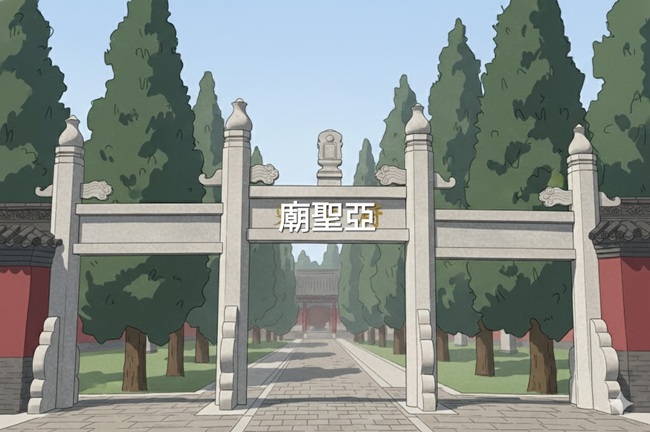 A corner of the Mencius Temple. Yasengmyo (Temple of the Secondary Sage)
In modern democracy, elections are akin to periodic revolutions of changing the ruling house. However, when the electoral system is destroyed or power is privatized (becoming totalitarian), this is the process by which a ruler becomes the 'sole fellow' (獨夫) that Mencius spoke of. At this point, the people's right to resist emerges as a means of re-establishing legitimacy.
Meanwhile, defensive democracy is a 'self-defensive' concept of democracy designed to protect itself from enemies who seek to destroy the liberal democratic system by exploiting the tolerance and freedom of democracy. It is also an answer to the fundamental question, "Should democracy grant democratic freedoms even to its enemies?"
Our constitution, influenced by the German constitution, enshrines elements of defensive democracy. Article 8, Paragraph 4 (Prohibition of Unconstitutional Parties) stipulates that if a party's purpose or activities violate the basic democratic order, the government may petition the Constitutional Court for its dissolution.
Mencius's logic, "A leader who destroys benevolence and righteousness is not entitled to the protection of benevolence and righteousness," can serve as the philosophical basis for modern unconstitutional party dissolution systems and criminal liability.
Modern regime changes are often justified by 'suppression of the people's freedoms and human rights,' prolonged dictatorships, the destruction of the rule of law and fair electoral systems in totalitarian states, and sometimes by threats of nuclear weapons in the name of 'international security.'
The perpetrators can include not only citizens of the country in question but also external forces such as international organizations or other countries (e.g., the removal of Gaddafi in Libya and Hussein in Iraq, the arrest of Maduro in Venezuela).
If Mencius's revolution aimed to establish a 'moral ruler,' modern regime changes focus on the restoration and protection of 'democratic institutions' by recovering publicness and re-establishing broken systems and the rule of law.
Mencius believed that "a regime that has lost the hearts of the people is already finished." Therefore, advocating for 'replacement' of a regime that has plunged the people into misery through prolonged dictatorship can be considered a just argument from the perspective of Confucian people-centered governance.
However, Mencius emphasized that after the revolution, politics that 'loves the people like parents' (爲民政治) must inevitably be established. The key is the transition to a system that can substantively guarantee the people's 'constant livelihood,' not just a change in the masters of power.
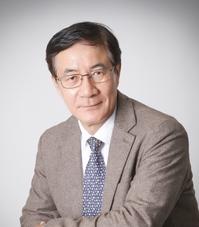
◆ Dr. Shin Dong-choon
Ph.D. in Public Administration, Representative of the National Union for Freedom and Unification. After passing the 21st Higher Civil Service Examination, he had a career in public service, followed by roles as a CEO, university professor, media contributor, author, and President of the Global Aviation and Aerospace Industry Association, among other active engagements.

 [Statement by the Seo-beo-kka Korea Military Academy Save-the-Nation Comrades Association] ㉛ Recount the Votes Publicly, as the Previous Recount Concealed Election Fraud
Tongyeong Mayoral Election Recount [Photo=Yonhap News]South Korea's liberal democracy is dying. The National Election Commission (NEC) and the judiciary, which have plummeted into criminal syndicates
[Statement by the Seo-beo-kka Korea Military Academy Save-the-Nation Comrades Association] ㉛ Recount the Votes Publicly, as the Previous Recount Concealed Election Fraud
Tongyeong Mayoral Election Recount [Photo=Yonhap News]South Korea's liberal democracy is dying. The National Election Commission (NEC) and the judiciary, which have plummeted into criminal syndicates
 What is the significance of the "Trump 2028" red hats that keep making a comeback?
It is noteworthy that President Donald Trump is "intentionally" fueling controversy over whether he can actually run in the 2028 presidential election, even though it is "highly likely he is seriously
What is the significance of the "Trump 2028" red hats that keep making a comeback?
It is noteworthy that President Donald Trump is "intentionally" fueling controversy over whether he can actually run in the 2028 presidential election, even though it is "highly likely he is seriously
 Jin Cummings: "North Korea says it will increase the number of spies, so what is the government doing?"
U.S. political columnist Gene Cummings has publicly questioned the South Korean government, asking, "North Korea is announcing plans to increase its number of spies, yet what is the South Korean
Jin Cummings: "North Korea says it will increase the number of spies, so what is the government doing?"
U.S. political columnist Gene Cummings has publicly questioned the South Korean government, asking, "North Korea is announcing plans to increase its number of spies, yet what is the South Korean
 Attorney Do Tae-woo: “Discrepancies in Voter Count and Improper Sealing Confirmed in Tongyeong Mayoral Recount… Official Request for Further Verification Filed with Gyeongnam Election Commission”
A bundle of out-of-district early voting ballots photographed by attorney Do Tae-woo at the Tongyeong mayoral election recount site. A clear, solid line visible on the side of the ballots raises suspi
Attorney Do Tae-woo: “Discrepancies in Voter Count and Improper Sealing Confirmed in Tongyeong Mayoral Recount… Official Request for Further Verification Filed with Gyeongnam Election Commission”
A bundle of out-of-district early voting ballots photographed by attorney Do Tae-woo at the Tongyeong mayoral election recount site. A clear, solid line visible on the side of the ballots raises suspi
 Stock Market Crash 'Black Tuesday'… KOSPI down 10.8%, KOSDAQ down 7.7%
The KOSPI fell by more than 5% in early trading on the 28th, triggering a sell-side sidecar.On the 28th, the KOSPI plunged by more than 10%.Due to the sharp decline, a sell-side sidecar—a temporary
Stock Market Crash 'Black Tuesday'… KOSPI down 10.8%, KOSDAQ down 7.7%
The KOSPI fell by more than 5% in early trading on the 28th, triggering a sell-side sidecar.On the 28th, the KOSPI plunged by more than 10%.Due to the sharp decline, a sell-side sidecar—a temporary
 [World Heritage Committee] 25 New World Heritage Sites Inscribed in Busan… South Korea Successfully Expands 'Getbol' Listing
The Chairperson of the World Heritage Committee speaks at the plenary session of the 48th session of the World Heritage Committee, held at BEXCO in Busan on the 20th. [Photo: Yonhap News]A total of 25
[World Heritage Committee] 25 New World Heritage Sites Inscribed in Busan… South Korea Successfully Expands 'Getbol' Listing
The Chairperson of the World Heritage Committee speaks at the plenary session of the 48th session of the World Heritage Committee, held at BEXCO in Busan on the 20th. [Photo: Yonhap News]A total of 25
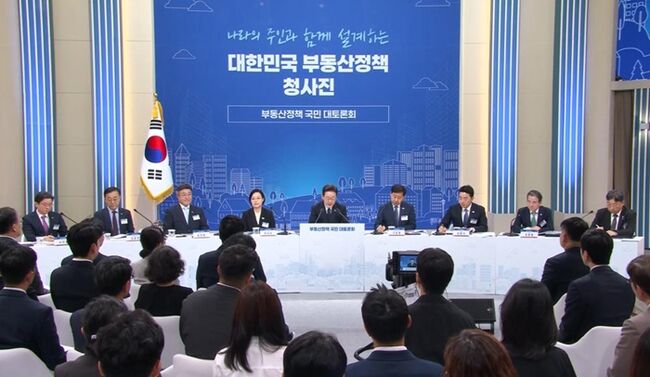 [Liberal Democratic Party Statement] Calling it a Grand Real Estate Debate… It Was Nothing More Than a Private Party Among Themselves
The 'National Grand Debate on Real Estate Policy' held on July 23rd and 27th. [Photo=Yonhap News]The 'National Grand Debate on Real Estate Policy,' hosted by the Lee Jae-myung administration under the
[Liberal Democratic Party Statement] Calling it a Grand Real Estate Debate… It Was Nothing More Than a Private Party Among Themselves
The 'National Grand Debate on Real Estate Policy' held on July 23rd and 27th. [Photo=Yonhap News]The 'National Grand Debate on Real Estate Policy,' hosted by the Lee Jae-myung administration under the
 [Photo] Evidence of Election Fraud Flooding U.S. Media… Trump Had 2.7 Million Votes Stolen
 [Video] U.S. Semiquincentennial Air Show... 'Art in the Sky' streaks across New York
 [Editorial Cartoon] A Draconian Law That Undermines Freedom of Expression

 List
List