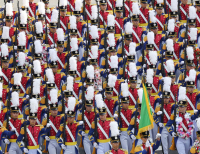
Diaphragmatic breathing activates the parasympathetic nervous system, calming the mind. When hiking, our bodies naturally demand more oxygen, enabling diaphragmatic breathing spontaneously. ⒸHanmi Ilbo
Many people visit mountains for their health. It is a well-known fact that hiking is a high-intensity exercise that burns 400-600 kcal per hour, and is excellent for strengthening lower body muscles and cardiopulmonary function.
However, did you know that hiking can change not only physical health but also one's 'personality'? The key to this lies in 'breathing'.
Does Shallow Breathing Create a Hot Temper?!
Due to a lack of exercise, modern people often forget diaphragmatic breathing and only practice thoracic breathing. 'Thoracic breathing,' which is short and shallow, easily tenses the sympathetic nervous system. The Sympathetic Nervous System (SNS) is a type of autonomic nervous system that puts the body in a 'Fight-or-Flight' response state during stressful situations.
When the sympathetic nervous system is activated, heart rate increases, blood pressure rises, and digestion is suppressed. While this is a natural bodily response to prepare for threats, if shallow breathing becomes a daily habit, it can lead to personality issues such as getting excited over small things or easily becoming angry.
Furthermore, the brain consumes 30% of the body's oxygen, and poor breathing can cause concentration disorders and dementia. People with a lot of visceral fat in their abdomen have their diaphragm's movement obstructed, leading to shorter breaths. If an overweight person tends to be irritable and quick-tempered, they might fall into this category.
In the case of cancer patients, the sympathetic nervous system is often overactive, leading to thoracic breathing. This can cause body fluids to acidify, leading to rouleau formation where red blood cells clump together, further damaging cell health. Just as the saying goes, 'the wicked drive out the good,' when something bad enters, it drives out the good and makes the situation worse.
Conversely, diaphragmatic breathing activates the parasympathetic nervous system, calming the mind. By consciously practicing breathing long and deep, one can experience a reduction in their hasty nature and an improvement in stress management abilities.
Diaphragmatic breathing also supplies oxygen to the cell terminals, activating mitochondria, the energy factories of the cell, and helps to eliminate volatile toxins from the body. This not only increases basal metabolic rate, aiding in the removal of visceral fat, but also delivers oxygen to the microvessels of the brain, improving concentration and helping to prevent dementia.
Hiking is the 'Ultimate Training Ground' for Diaphragmatic Breathing
While diaphragmatic breathing is so beneficial, it is not easy to consciously practice deep breathing in daily life. However, when engaging in exercises like hiking or climbing stairs, our bodies naturally demand more oxygen, enabling diaphragmatic breathing spontaneously.
When breathing, remember to keep your mouth closed and inhale deeply through your nose, which acts as a filter for clean air. Beginners should start with an exhale of 6 seconds and an inhale of 5 seconds, and as they become more proficient, they can increase this to an exhale of 12 seconds and an inhale of 10 seconds. Ideally, breathing slowly with the center of the breath in the lower abdomen, about 5-6 times per minute, is recommended.
If hiking is not feasible, laughing heartily, crying profusely, and chatting with friends can have excellent diaphragmatic breathing effects. Especially for women, conversation and laughter act as powerful catalysts, similar to starting a car engine, in treating 'stress-induced anger' (ulhwa).
'Sighing' is the body's 'last resort' to expel toxins. Instead of sighing, why not try to develop the habit of breathing deeply from your belly through hiking?
Breathing is more than just the act of inhaling oxygen. When considering the basic principles for maintaining health as 'proper breathing,' 'proper eating,' 'water,' 'sunlight,' 'rest,' and 'gratitude,' breathing is the most fundamental. By simply breathing correctly, many everyday health problems can be resolved.
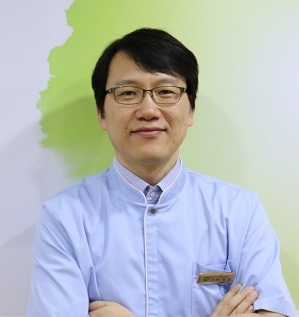
◆ Director Park Chan-young
Director of Eoseongcho Korean Medicine Clinic in Sadang-dong, Seoul. Doctor of Korean Medicine from Dongguk University. He caused a detox sensation in Korea by appearing on health programs such as MBN's 'Eomji Wangbi'. His books include 'Atopy & Acne Healed with Eoseongcho,' 'Seasonings are Medicine,' and 'The Miracle of Detox.'

 [Analysis] JTBC World Cup Broadcast Controversy: “Will It Escalate into an Infringement on Universal Viewing Rights?”
A composite image showing the JTBC/JoongAng Group headquarters alongside a World Cup broadcast screen. The issue of unpaid broadcasting rights during corporate rehabilitation proceedings is evol
[Analysis] JTBC World Cup Broadcast Controversy: “Will It Escalate into an Infringement on Universal Viewing Rights?”
A composite image showing the JTBC/JoongAng Group headquarters alongside a World Cup broadcast screen. The issue of unpaid broadcasting rights during corporate rehabilitation proceedings is evol
 Trump mentions possibility of running again: "I'd like to do that!"
On the 23rd (local time), U.S. President Donald Trump drew attention by making a joking remark about wanting to run for office again, despite being ineligible to do so.Throughout his second term, Trum
Trump mentions possibility of running again: "I'd like to do that!"
On the 23rd (local time), U.S. President Donald Trump drew attention by making a joking remark about wanting to run for office again, despite being ineligible to do so.Throughout his second term, Trum
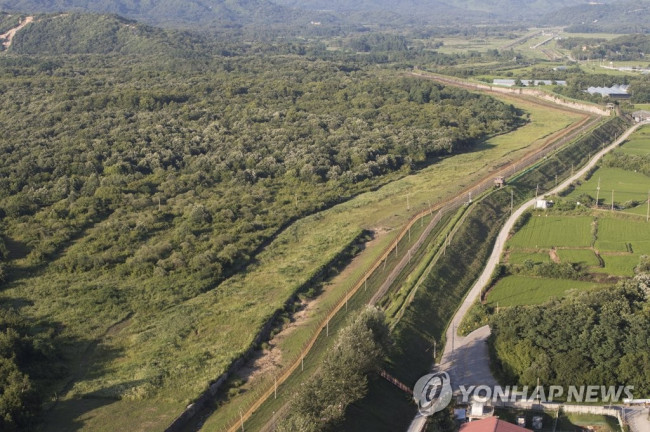 Military secures one North Korean soldier in Cheorwon last night… expresses desire to defect
DMZ on the central front in Cheorwon-gun, Gangwon-do [Yonhap News file photo]The Joint Chiefs of Staff (JCS) announced on the 24th that it had secured custody of one North Korean soldier who crossed t
Military secures one North Korean soldier in Cheorwon last night… expresses desire to defect
DMZ on the central front in Cheorwon-gun, Gangwon-do [Yonhap News file photo]The Joint Chiefs of Staff (JCS) announced on the 24th that it had secured custody of one North Korean soldier who crossed t
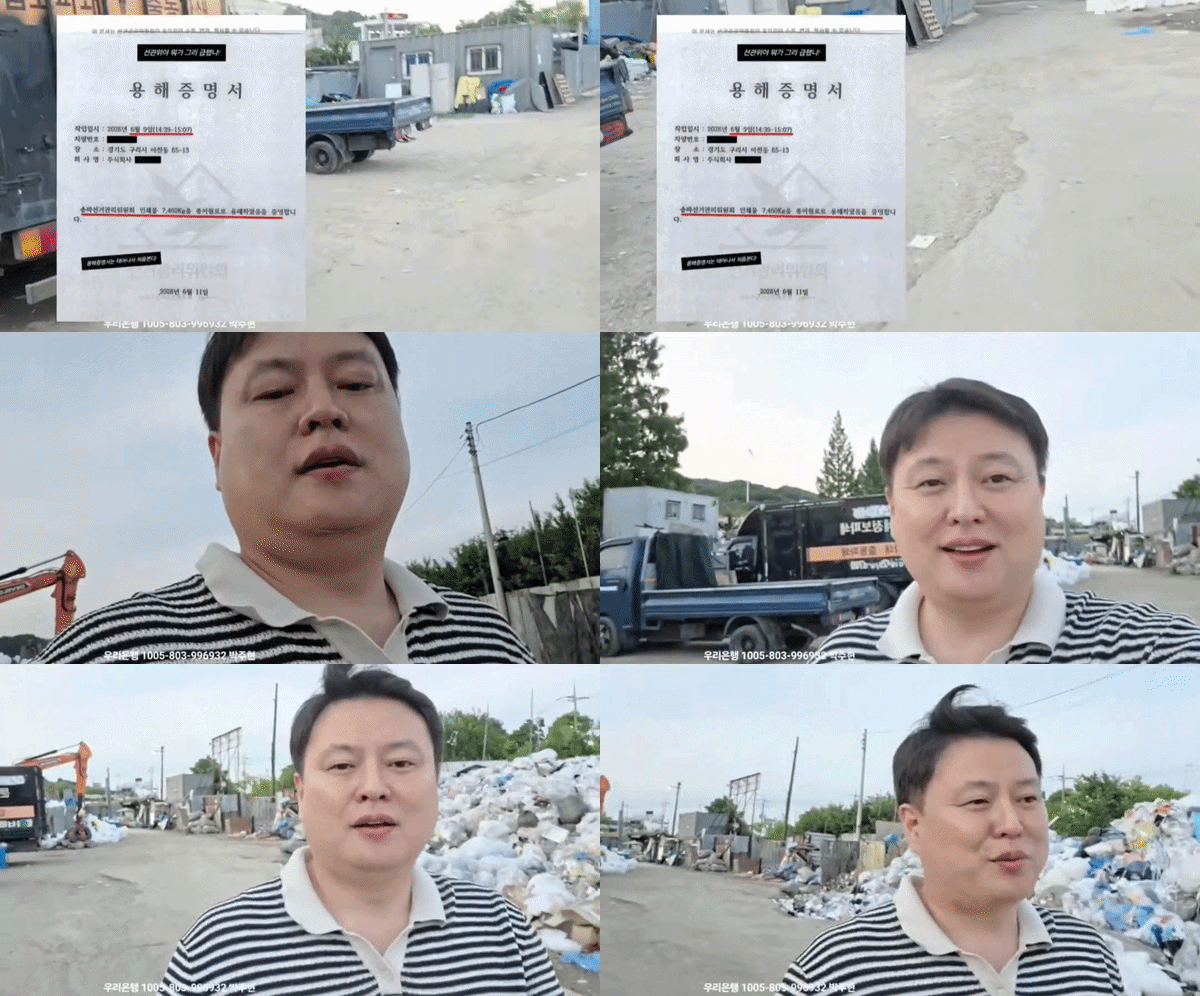 Attorney Park Joo-hyun visits the ‘dissolution’ site, raising suspicions of “an attempt at perfect evidence destruction.”
Attorney Park Joo-hyun visited a company that dissolved election-related printed materials from a Jamsil polling station on the 23rd. [YouTube GIF]Attorney Park Joo-hyun, who visited a paper dis
Attorney Park Joo-hyun visits the ‘dissolution’ site, raising suspicions of “an attempt at perfect evidence destruction.”
Attorney Park Joo-hyun visited a company that dissolved election-related printed materials from a Jamsil polling station on the 23rd. [YouTube GIF]Attorney Park Joo-hyun, who visited a paper dis
 Zuckerberg Eyes $150 Billion Prediction Market; Orders Development of New App 'Arena'
Meta CEO Mark Zuckerberg (left) [AP=Yonhap News file photo]Meta is reportedly planning to enter the prediction market space, similar to Polymarket and Kalshi.The New York Times reported on the 23rd (l
Zuckerberg Eyes $150 Billion Prediction Market; Orders Development of New App 'Arena'
Meta CEO Mark Zuckerberg (left) [AP=Yonhap News file photo]Meta is reportedly planning to enter the prediction market space, similar to Polymarket and Kalshi.The New York Times reported on the 23rd (l
 [Patriotic Month Travel Destinations] Ah, how could we ever forget that day, June 25th… The massive story exhibition hall, the ‘War Memorial of Korea’
The Large Weapons Room at the War Memorial of Korea. [Photo by Reporter Lim Yo-hee]The War Memorial of Korea in Yongsan, Seoul, recently became embroiled in a major controversy after it announced plan
[Patriotic Month Travel Destinations] Ah, how could we ever forget that day, June 25th… The massive story exhibition hall, the ‘War Memorial of Korea’
The Large Weapons Room at the War Memorial of Korea. [Photo by Reporter Lim Yo-hee]The War Memorial of Korea in Yongsan, Seoul, recently became embroiled in a major controversy after it announced plan
 [Photo] Freedom High School Alliance installs banner in Gangdong-gu, Seoul: "June 3rd Fraudulent Election Rerun, In-person Voting, On-site Counting"
The Korea High School Union installed a banner in the Gangdong-gu district of Seoul on the 21st with the slogan "June 3rd Fraudulent Election Re-election, Same-Day Vote Count." The banner also states,
[Photo] Freedom High School Alliance installs banner in Gangdong-gu, Seoul: "June 3rd Fraudulent Election Rerun, In-person Voting, On-site Counting"
The Korea High School Union installed a banner in the Gangdong-gu district of Seoul on the 21st with the slogan "June 3rd Fraudulent Election Re-election, Same-Day Vote Count." The banner also states,
 [Open Letter from Reporter Lee Sang-ro] “Whether you are dragged down or step down on your own, only the choice remains”
[Photo=Yonhap News]To: President Lee Jae-myung You have recently been repeating the statement, “There was no fraud in the June 3 local elections. I will strictly punish fake news.” However, t
[Open Letter from Reporter Lee Sang-ro] “Whether you are dragged down or step down on your own, only the choice remains”
[Photo=Yonhap News]To: President Lee Jae-myung You have recently been repeating the statement, “There was no fraud in the June 3 local elections. I will strictly punish fake news.” However, t
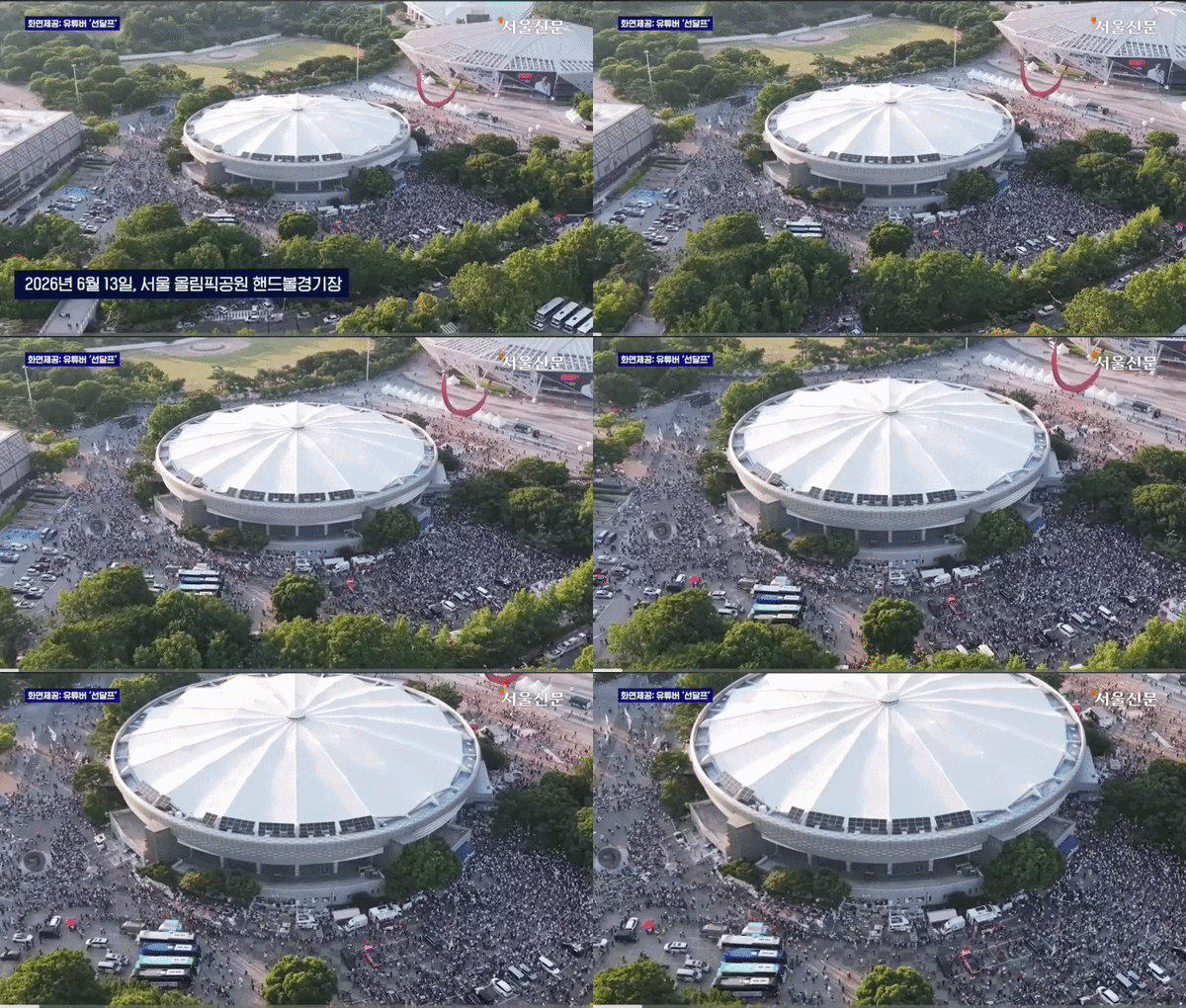 [Video] The Scene of the 'Jamsil Democratization Movement' as Seen from the Sky
 [Editorial Cartoon] Humanitarian Aid

 List
List