In 431 BC, Pericles praises Athenian democracy in his funeral oration for the fallen. A work by Philipp von Foltz from 1842.
Freedom is the value that comes to mind first when explaining democracy. If the people are the masters of power, they must be able to express their thoughts, criticize those in power, and participate in political decision-making.
Without such freedom, it is difficult to call a system a democracy, even if elections exist. However, if freedom is understood simply as "doing whatever one wants," the essence of democracy is lost.
What does freedom in democracy mean? Does it mean there are no restrictions on individual behavior? Or does it mean the right of citizens to participate in politics as masters of their community?
In ancient Athens, freedom first signified the status of a citizen who was not subject to the rule of others. While slaves could not determine their own lives, free citizens could attend the assembly, serve on juries, and hold public office.
Aristotle defined a citizen not merely as one who resides in a city, but as "a person who has the right to participate in deliberation and judicial judgment." Athenian freedom was less about an individual’s right to distance themselves from the state, and more about the citizen's right to directly participate in the common governance. Citizens were not just those being governed; they were those who participated in governing.
Athenian democracy linked freedom with equality. In his Politics, Aristotle cited freedom and equality as the principles of democracy, describing a state where neither the rich nor the poor become rulers of one another, and where citizens participate in governance as broadly as possible.
Here, freedom was a political qualification for participating in public office, the assembly, and the courts. Democracy was not a system where everyone lived as they pleased in their own rooms, but a system where citizens participated equally in public decisions.
The freedom understood by Athenians is also reflected in Pericles' funeral oration as recounted by Thucydides. Pericles stated that Athenian politics was operated for the benefit of the many rather than the few, and that all citizens were treated equally before the law.
He also explained that Athenians did not overly monitor their neighbors in daily life and respected each individual's way of life. However, he immediately emphasized that such privacy did not turn citizens into lawbreakers. It meant that a life of freedom and obedience to the law must coexist.
This passage is crucial to understanding the freedom of democracy. To an Athenian, freedom was not a state without law. Freedom was a state where citizens participated in power and chose their own path in life, while still adhering to the laws established by the community. Thus, freedom and law were not opposing concepts. If the law is applied equally to all citizens, it is not a device that destroys freedom, but one that protects citizens so they do not infringe upon one another's freedom.
However, Athenian freedom had significant limitations. It was the right of adult male citizens, not a universal human right. Women, slaves, and foreign residents were excluded from the assembly and public office.
While Athens achieved a high level of political participation among its citizens, it did not recognize freedom as a universal human right. By today's standards, Athenian democracy was a society of free people, yet one that kept many others outside the bounds of freedom.
Furthermore, while Athenian democracy valued the freedom of political participation, it lacked the institutions to sufficiently protect individual freedom from the decisions of the majority.
The case of Socrates, who was tried by a citizen jury and executed in 399 BC on charges of impiety and corrupting the youth, illustrates this problem. The trial followed democratic procedures, yet democratic procedure does not always guarantee the freedom of thought and speech. A decision is not necessarily "free" simply because it was made by a majority.
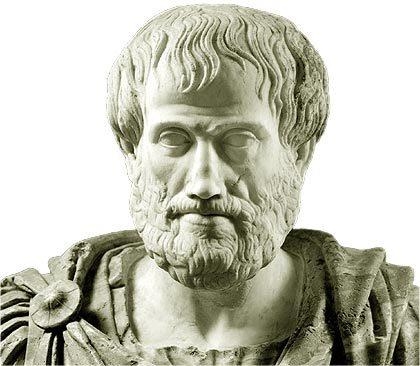 Aristotle criticized the misconception in extreme democracies that freedom is "living as one pleases."
Aristotle also pointed out the danger of democracy misunderstanding freedom. He criticized the notion in extreme democracies that freedom is "living as one pleases." He argued that living according to a constitution and laws should not be viewed as a state of slavery.
This is because if the rule of law disappears, the community may cease to be one of free citizens and instead become a society ruled by those with the strongest desires or the loudest voices.
Modern liberalism sought to correct this very weakness. Modern freedom came to include not only the right of citizens to participate in collective governance but also the personal rights that the state cannot arbitrarily infringe upon.
Article 4 of the 1789 French Declaration of the Rights of Man and of the Citizen defined freedom as the right to do anything that does not harm others. It also declared that the criteria for limiting the exercise of individual rights should be based on ensuring others can enjoy the same rights, and that such limitations must be established by law.
From this principle emerge two conditions for modern freedom.
First, an individual is not free only within the bounds permitted by the state or the majority. Humans are understood as beings who possess freedom from before the existence of the state.
Second, freedom has boundaries. My freedom cannot infringe upon the life, body, property, or reputation of others, nor can it infringe upon their equal freedom. Even when there is a need to limit freedom, it must follow established law and due process, not the whims of those in power or the anger of the crowd.
The principle behind the First Amendment of the U.S. Constitution, which prevents Congress from infringing upon the freedom of religion, speech, press, assembly, and petition, is the same. The 14th Amendment stipulates that state governments cannot deprive any person of life, liberty, or property without due process of law, or deny them the equal protection of the laws.
The freedom of democracy does not end with electing rulers through an election. It extends to establishing a realm of freedom that even an elected power cannot infringe upon.
The Constitution of the Republic of Korea also adopts these principles. It defines basic rights including freedom of the person, freedom of conscience, freedom of religion, freedom of speech, press, assembly, and association, freedom of learning and the arts, and freedom of residence, movement, and choice of occupation.
In particular, Article 12 of the Constitution prevents the government from arresting or searching a citizen's person without legal authority and due process. It defines freedom not as a gift bestowed by the state, but as a right of the people that the state must respect and protect.
The Constitutional Court has also not interpreted the basic democratic order as a mere matter of majority rule. The court has described it as a political order that trusts in the autonomous reason of individuals, acknowledges the existence of diverse political views, excludes arbitrary rule, and respects the minority even while honoring the majority.
It posits that basic rights, the separation of powers, and a multi-party system are essential elements of the democratic order alongside popular sovereignty. While majority decisions must be respected, the majority does not possess all the power of the state.
This is also the reason why the Constitutional Court ruled Emergency Decrees No. 1 and No. 2 unconstitutional. Criticism of the government and demands for constitutional reform are the core of the political freedom held by the people, and these decrees punished such dissent itself.
The judgment was that even if the formal legal procedures of the time were followed, banning the criticism of power and suppressing political expression could not be consistent with the basic democratic order. In a democracy, freedom is tested more clearly in the right to oppose power than in the right to support it.
However, this does not mean that every action can be protected under the name of freedom. Actions that block others' political participation through violence, force silence through threats, or infringe upon property and the body cannot be called freedom.
Yet, when limiting freedom, the purpose must be legitimate, and the scope of the restriction must not exceed what is necessary. While national security and public order are important, simply invoking their names does not justify any and all restrictions.
The Constitutional Court was wary of the broad application of laws to criminalize even expressions unrelated to the survival of the state precisely because freedom of expression and freedom of conscience are the foundations of liberal democracy.
The freedom of democracy possesses three meanings. The first is the freedom of citizens to participate in politics and criticize power. The second is the freedom of each individual to choose their own life and thoughts. The third is the freedom to have one's basic rights protected from the decisions of the state and the majority.
Ancient Athens developed the first type of freedom. Modern liberalism complemented it with the second and third. Contemporary liberal democracy is a system designed to protect all three of these freedoms within the framework of the constitution.
Therefore, freedom and democracy are not synonymous. Democracy asks who decides the power, while freedom asks how far that power can reach.
Even if the people are the masters of power, they cannot grant unlimited power to the majority. Even a political force that has won an election must not arbitrarily infringe upon the people’s conscience, expression, body, or property. Democracy without freedom can turn into the rule of the majority, while freedom without democratic control can turn into the privilege of the powerful.
Then, what kind of equality does democracy promise? Does it make everyone's abilities, property, and results the same? Or does it equally guarantee the qualifications for the law and political participation?

◆ Songsan Jeong Kwang-je
A poet and researcher of history and philosophy. Former director of the Rhee Syngman Institute. Currently serving as a research advisor to the Korean Modern and Contemporary History Research Association and representative of the philosophy forum Lyceum. He has published four volumes of poetry, co-translated "Heroes of Hook Hill," and authored the humanities books "Joseon Become Myth," "Humanities on the Tatami," and "A Liberal Reading Gramsci."

 [Park Chan-young's Diabetes Special] ③ 85% of diabetes patients are taking medication they don't need
The moment people are diagnosed with diabetes at a hospital, they often fall into deep despair. It is common for them to resign themselves to the thought, "I have to take medication for the rest
[Park Chan-young's Diabetes Special] ③ 85% of diabetes patients are taking medication they don't need
The moment people are diagnosed with diabetes at a hospital, they often fall into deep despair. It is common for them to resign themselves to the thought, "I have to take medication for the rest
 U.S. Military: "Iran maritime blockade remains in effect… 2 vessels neutralized, 12 forced to change course"
Gulf of Oman [AFP=Yonhap News]The U.S. military announced on the 25th (local time) that it is maintaining a full maritime blockade against Iran.U.S. Central Command (CENTCOM), which oversees the Middl
U.S. Military: "Iran maritime blockade remains in effect… 2 vessels neutralized, 12 forced to change course"
Gulf of Oman [AFP=Yonhap News]The U.S. military announced on the 25th (local time) that it is maintaining a full maritime blockade against Iran.U.S. Central Command (CENTCOM), which oversees the Middl
 Jang Dong-hyeok suggests unifying slogans, asking, "Is there anyone left who still denies these were rigged or flawed elections?"
People Power Party Representative Jang Dong-hyeok speaks in Daegu on the 25th. [Maeil Shinmun YouTube Video GIF]As the sweat and tears shed by patriotic citizens on the asphalt over the past decade ha
Jang Dong-hyeok suggests unifying slogans, asking, "Is there anyone left who still denies these were rigged or flawed elections?"
People Power Party Representative Jang Dong-hyeok speaks in Daegu on the 25th. [Maeil Shinmun YouTube Video GIF]As the sweat and tears shed by patriotic citizens on the asphalt over the past decade ha
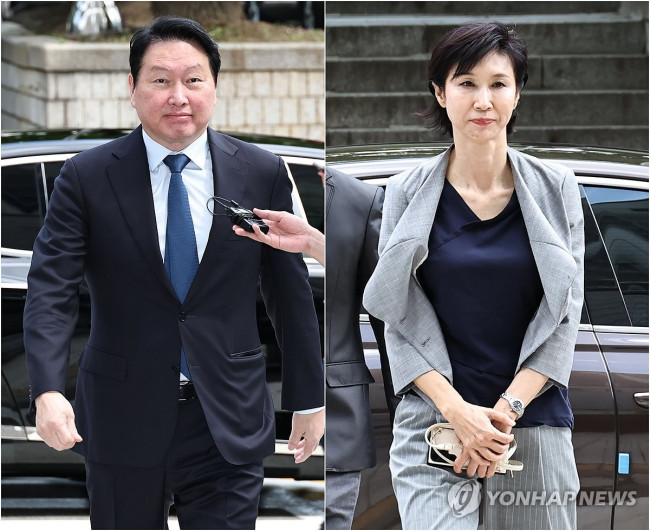 Chey Tae-won's Property Division Set at Record-High 944 Billion Won… Ruling on Kwon Hyuk-bin's '8 Trillion Won' Divorce Suit Due in September
On the 24th, at a remand trial for property division between SK Group Chairman Chey Tae-won (left) and Art Center Nabi Director Roh Soh-yeong held at the Seoul High Court in Seocho-gu, the court ruled
Chey Tae-won's Property Division Set at Record-High 944 Billion Won… Ruling on Kwon Hyuk-bin's '8 Trillion Won' Divorce Suit Due in September
On the 24th, at a remand trial for property division between SK Group Chairman Chey Tae-won (left) and Art Center Nabi Director Roh Soh-yeong held at the Seoul High Court in Seocho-gu, the court ruled
 [Korea-US Data Lab] Money Insight for the 4th Week of July (20th–24th)
Vessels are passing through the Strait of Hormuz, a critical passageway for global crude oil transport. Amid concerns over supply disruptions from the Middle East, Brent crude prices surged past $100
[Korea-US Data Lab] Money Insight for the 4th Week of July (20th–24th)
Vessels are passing through the Strait of Hormuz, a critical passageway for global crude oil transport. Amid concerns over supply disruptions from the Middle East, Brent crude prices surged past $100
 [New Book] Approaching the Truth of Gwangju… ‘The Memory of Two Gunshots, The Tears of Two Gwangjus’
For a long time, memories of the May 18 Gwangju Democratization Movement remained scattered, failing to converge into a single, unified meaning. The new book, "Memories of Two Gunshots, Tears of Two G
[New Book] Approaching the Truth of Gwangju… ‘The Memory of Two Gunshots, The Tears of Two Gwangjus’
For a long time, memories of the May 18 Gwangju Democratization Movement remained scattered, failing to converge into a single, unified meaning. The new book, "Memories of Two Gunshots, Tears of Two G
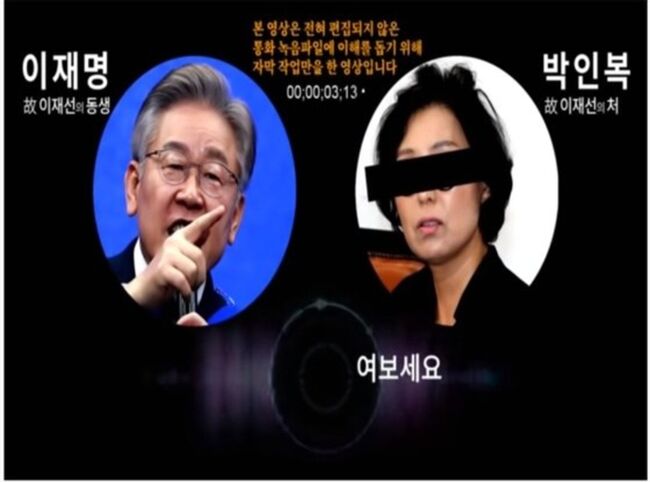 [Writer Park Joo-hyun’s Column] The ‘Controversy Over Recommended Summer Reading Lists’ Caused by Blind Idolatry
The cover of the full audio recording file of the so-called "sister-in-law profanity" call, released in 2021 by the pro-Moon Jae-in group "Awakened Citizens' Solidarity Party." [Source: Awakened Citiz
[Writer Park Joo-hyun’s Column] The ‘Controversy Over Recommended Summer Reading Lists’ Caused by Blind Idolatry
The cover of the full audio recording file of the so-called "sister-in-law profanity" call, released in 2021 by the pro-Moon Jae-in group "Awakened Citizens' Solidarity Party." [Source: Awakened Citiz
 [Photo] Evidence of Election Fraud Flooding U.S. Media… Trump Had 2.7 Million Votes Stolen
 [Video] U.S. Semiquincentennial Air Show... 'Art in the Sky' streaks across New York
 [Editorial Cartoon] A Draconian Law That Undermines Freedom of Expression

 List
List