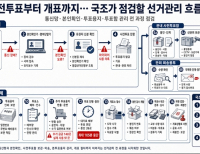
 The image captures rising stock indices, falling international oil prices, and the trends of the US Federal Reserve and Treasury yields against the backdrop of the New York financial market and a world map. It illustrates that while oil prices have declined due to expectations of an end to the US-Iran conflict, the burden of US interest rates remains a key market variable. [Photo=Hanmi Daily Graphic]
War Premium Has Dissipated, But Rate Warning Light Remains
Last week, Money Radar's checkpoints were three-fold:
Whether US-Iran peace negotiations would lead to an actual agreement, whether international oil prices would fall enough to ease inflationary pressures, and whether US 10-year Treasury yields would exceed 4.5% and continue to rise.
The outcome was a partial resolution.
As the US and Iran signed a memorandum of understanding for peace and normalization of passage through the Strait of Hormuz became visible, WTI dropped by 9.8% from $84.88 to $76.60. The risk premium on energy prices, inflated by the conflict, rapidly dissipated.
The theme for this week's trend is "Deconstruction of the War Premium and Persistence of the Rate Premium."
This week, Money Radar has one question:
"If oil prices have fallen, has the burden of interest rates that was weighing down the stock market also disappeared?"
Judging by prices alone, the market chose risk mitigation. The S&P 500 rose by 0.9% weekly, the Nasdaq by 2.4%, and the Dow Jones by 0.7%. The VIX also decreased from 17.68 to 16.40. Although the US stock market was only open for four trading days due to the Juneteenth holiday on the 19th, it managed to sustain its weekly gains solely on the easing of the conflict and strength in semiconductors.
However, the signals from the bond market were different.
US 10-year yields fell by 3 basis points from 4.48% to 4.45%, while 2-year yields rose by 10 basis points from 4.08% to 4.18%.
The decline in long-term yields was influenced by falling oil prices, while the rise in short-term yields reflected the possibility of further interest rate hikes by the Federal Reserve. Consequently, the yield difference between the 10-year and 2-year maturities narrowed significantly from 39.8 basis points to 27.7 basis points.
At the FOMC meeting, chaired for the first time by Chair Jerome Powell, the benchmark interest rate was held steady. However, the median projection for the policy rate by the end of the year was raised from 3.4% to 3.8%. The projection for core personal consumption expenditures (PCE) inflation in 2026 also increased from 2.7% to 3.3%.
This implies that even if oil prices fall, the Fed may still raise rates if service prices, wages, and tariff costs remain elevated.
The dollar also reflected this. The dollar index rose by 1.1% weekly, and the dollar-won exchange rate increased by 1.5% from 1517.22 won to 1540.47 won.
The fact that risk assets rallied while the dollar also strengthened suggests that this rally was not predicated on monetary easing.
The conclusion in one sentence is as follows:
"The oil price shock caused by the war has subsided, but the interest rate shock stemming from a strong economy and high inflation has not yet ended."
Next Week's Checkpoints Are Three-Fold
First, the US May Personal Consumption Expenditures (PCE) price index, due on the 25th. If core PCE rises again, the warning of interest rate hikes from this FOMC could solidify into an actual policy path.
Second, the actual transit volume through the Strait of Hormuz. More important than the 60-day toll exemption are the clearing of mines and the normalization of insurance premiums. If shipping operations do not normalize, oil prices could once again incorporate a geopolitical premium.
Third, US 2-year Treasury yields. If 2-year yields rise faster than 10-year yields, the stock market will reflect the possibility of immediate tightening more significantly than expectations of long-term growth.
※ This article is informational content that analyzes publicly available market data and is not an investment recommendation for any specific financial product.

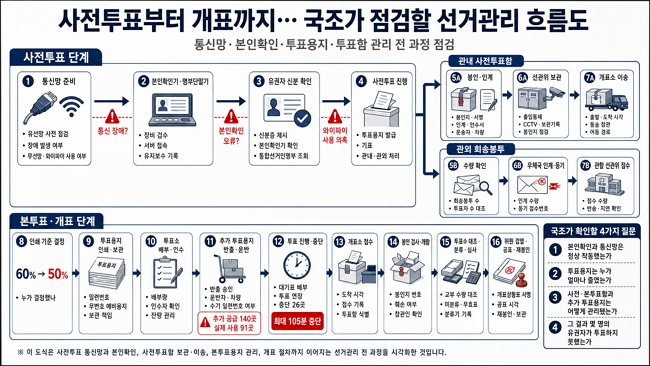 [Special Feature - Deprivation of Political Rights National Investigation ②] The Full Picture of the June 3rd Election Management That the National Investigation Should Reveal
[Photo by Hanmi Ilbo Graphics]Table of Contents① A National Investigation Without Witness Testimony is like a 'Steamed Bun Without the Red Bean Filling'② The Full Story of the June 3rd Election Ma
[Special Feature - Deprivation of Political Rights National Investigation ②] The Full Picture of the June 3rd Election Management That the National Investigation Should Reveal
[Photo by Hanmi Ilbo Graphics]Table of Contents① A National Investigation Without Witness Testimony is like a 'Steamed Bun Without the Red Bean Filling'② The Full Story of the June 3rd Election Ma
 Trump: "Obama gave away billions but didn't get things done... I changed that"
President Trump [EPA=Yonhap News Photo]U.S. President Donald Trump on the 20th (local time) reiterated his criticism of the Iran nuclear deal (Joint Comprehensive Plan of Action, JCPOA) spearheaded by
Trump: "Obama gave away billions but didn't get things done... I changed that"
President Trump [EPA=Yonhap News Photo]U.S. President Donald Trump on the 20th (local time) reiterated his criticism of the Iran nuclear deal (Joint Comprehensive Plan of Action, JCPOA) spearheaded by
 Politico "US security role reduction is an opportunity for Korea…K-defense industry rapid growth"
YIDEX 2026, held in Changwon, Gyeongsangnam-do in April [Yonhap News Archive] An analysis suggests that South Korea's defense industry is benefiting from the U.S. stepping back from its role of e
Politico "US security role reduction is an opportunity for Korea…K-defense industry rapid growth"
YIDEX 2026, held in Changwon, Gyeongsangnam-do in April [Yonhap News Archive] An analysis suggests that South Korea's defense industry is benefiting from the U.S. stepping back from its role of e
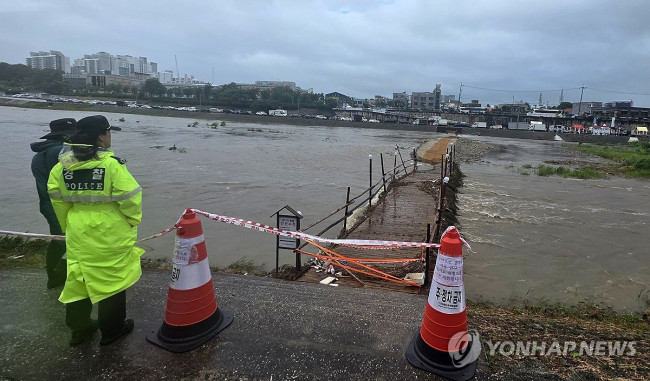 Miryeong 223.0mm heavy rain… Seoraksan is controlled and Gangneung Danoje also faces disruptions.
The Seopdari, a traditional wooden bridge set up for the Gangneung Danoje Festival, is being controlled due to rising water levels in the Namdaecheon River caused by heavy rain in Gangneung, Gangwon P
Miryeong 223.0mm heavy rain… Seoraksan is controlled and Gangneung Danoje also faces disruptions.
The Seopdari, a traditional wooden bridge set up for the Gangneung Danoje Festival, is being controlled due to rising water levels in the Namdaecheon River caused by heavy rain in Gangneung, Gangwon P
 [Travel Destinations for the Month of National Defense] ③ Walking the Border Area of the Demilitarized Zone... DMZ Peace Trail Goseong Course
'DMZ Peace Road,' where visitors can see the ecological, cultural, and historical resources of the border areas of the Demilitarized Zone and experience the preciousness of peace firsthand. [Photo by
[Travel Destinations for the Month of National Defense] ③ Walking the Border Area of the Demilitarized Zone... DMZ Peace Trail Goseong Course
'DMZ Peace Road,' where visitors can see the ecological, cultural, and historical resources of the border areas of the Demilitarized Zone and experience the preciousness of peace firsthand. [Photo by
 [Photo] Current status of Chairman Hwang Kyo-ahn and lawyer Park Joo-hyun attending the US election fraud fighter summit
Lawyer Park Joo-hyun with lawyer Peter Ticktin, who was pardoned by U.S. President Donald Trump. [Facebook]Hwang Kyo-ahn, leader of the Liberty and Innovation Party (second from left), informing about
[Photo] Current status of Chairman Hwang Kyo-ahn and lawyer Park Joo-hyun attending the US election fraud fighter summit
Lawyer Park Joo-hyun with lawyer Peter Ticktin, who was pardoned by U.S. President Donald Trump. [Facebook]Hwang Kyo-ahn, leader of the Liberty and Innovation Party (second from left), informing about
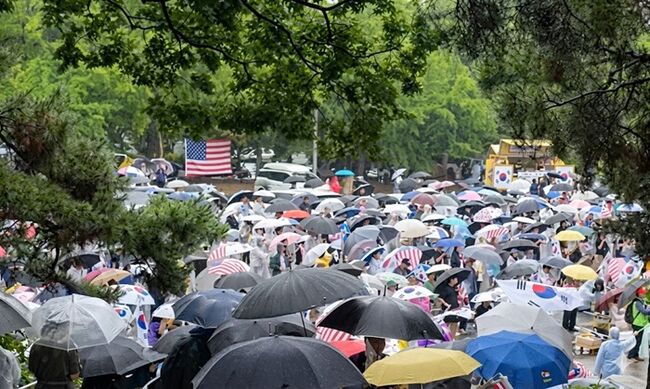 [Cho Yang-kun Column] The reason for the ever-increasing heat at Olympic Park
At noon on the 20th, citizens chanted "Re-election for fraudulent elections, same-day voting and manual counting!" at Olympic Park in Seoul, even amidst heavy rain. ⒸHanmi Ilbo The fervor of th
[Cho Yang-kun Column] The reason for the ever-increasing heat at Olympic Park
At noon on the 20th, citizens chanted "Re-election for fraudulent elections, same-day voting and manual counting!" at Olympic Park in Seoul, even amidst heavy rain. ⒸHanmi Ilbo The fervor of th
 [Video] 'Trump's close friend' Lindell "I will inform Trump about South Korea's fraudulent election"
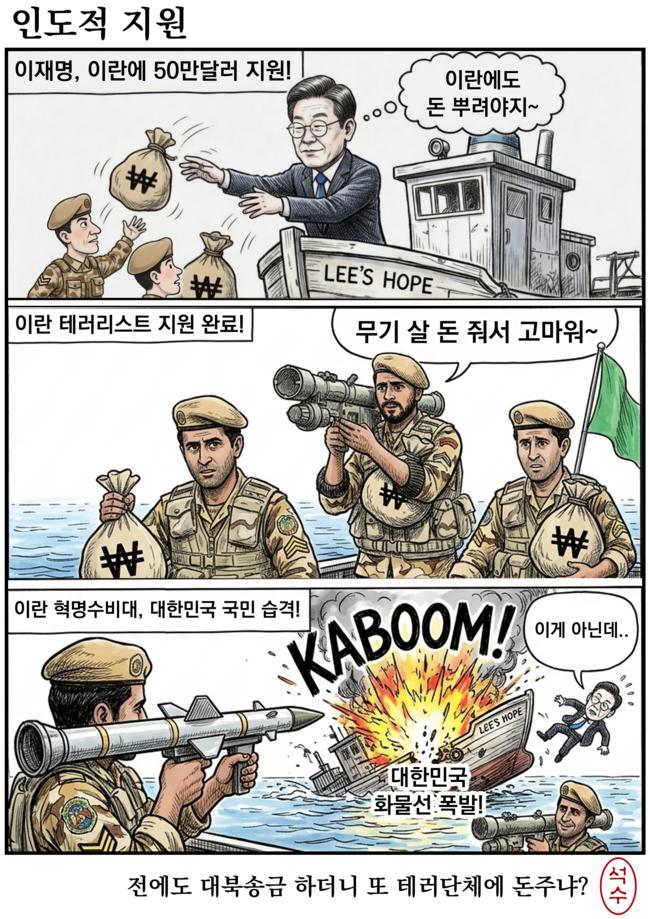 [Editorial Cartoon] Humanitarian Aid

 List
List