This visualization depicts global funds flowing into the Seoul financial market through semiconductor chips as a stream of light. The Seoul downtown area and the rising graph symbolize the capital circulation structure where the global semiconductor rally is amplified by the rise of Korean ETFs and the KOSPI. [Photo = Hanmi Ilbo Graphics]
Korean ETFs Rose Twice as Fast as Emerging Markets
Last week, the Capital Rotation Radar observed the need to confirm where funds exiting ahead of SpaceX's IPO would return after its listing, and whether the rebound in US tech stocks would extend to Korean semiconductors and Korean ETFs.
This week's answer was clear. Funds flowed out of energy and into tech stocks and semiconductors, and this trend was amplified more significantly in Korea and Asia than in the US.
The name for this week's capital rotation is 'The Restart of Korean Beta Through Semiconductors'.
This week's Capital Rotation Radar has one question.
"Is the surge in the Korean stock market a reassessment of Korea itself, or an amplification effect created by the global semiconductor rally?"
This week, global equity funds saw a net inflow of $55.2 billion. US equity funds received $38.4 billion, with tech stock funds attracting a record $21.5 billion.
As the US-Iran MOU eased oil price and inflation concerns, waiting capital first moved into growth stocks.
Korean-related prices moved even more strongly.
EWY, a Korean ETF, rose 11.0% from 197.45 to 219.20. In the same period, EEM, an emerging market ETF, only rose 4.3%. This means Korean ETFs were more than twice as strong as the average emerging market.
The KOSPI also rose approximately 11% weekly, surpassing the 9000 mark for the first time. Leading this surge were major semiconductor stocks such as Samsung Electronics and SK Hynix.
As the US Philadelphia Semiconductor Index surged 6.4% on the last trading day, the Korean market showed a reaction that amplified and reflected the US semiconductor rally.
However, there is one inconsistency in interpreting this directly as a 'reassessment of Korean assets overall'.
During the period of rapid stock appreciation, the dollar-won exchange rate also rose from the 1517 won range to the 1540 won range. Generally, a strong inflow of foreign spot buying should strengthen the won, but this time the dollar's strength overwhelmed it.
This suggests that foreigners likely selectively bought Korean semiconductors, accepting the dollar's strength, rather than buying Korea as a whole country.
The fact that EWY's rise significantly outpaced EEM is due to the same structure.
Among global emerging markets, Korea is one of the markets with the highest proportion of semiconductors and AI hardware. When US tech stocks and memory semiconductors strengthen, Korean ETFs see a larger increase, but during semiconductor adjustments, they also experience a larger decline, making them high-beta assets.
Therefore, this week's capital movement is closer to the Korean market's sensitive reaction to the AI semiconductor cycle, rather than an increased valuation of the Korean economy as a whole.
The one-sentence conclusion is as follows:
“Foreign capital did not buy Korea, but rather bought the world's largest semiconductor exposure within the Korean market.”
Next Week's Checkpoints are Threefold
First, the relative performance of EWY and EEM. If EWY continues to outperform EEM, it indicates that the Korean semiconductor premium is maintained, but if the gap rapidly narrows, it could signify the start of a short-term overheating correction.
Second, the correlation between foreign spot buying and the won. If the won continues to weaken despite stock purchases, the burden of currency depreciation losses could increase, potentially prompting foreign investors to realize profits.
Third, the expansion into sectors beyond semiconductors. For the overall Korean stock market to be considered revalued, trading volume and price increases need to broaden to include finance, automobiles, and industrial goods. If only semiconductors rise, the gap between index gains and perceived economic conditions will widen.
※ This article is content provided for informational purposes based on the analysis of publicly available market data and does not constitute an investment recommendation for any specific financial product.

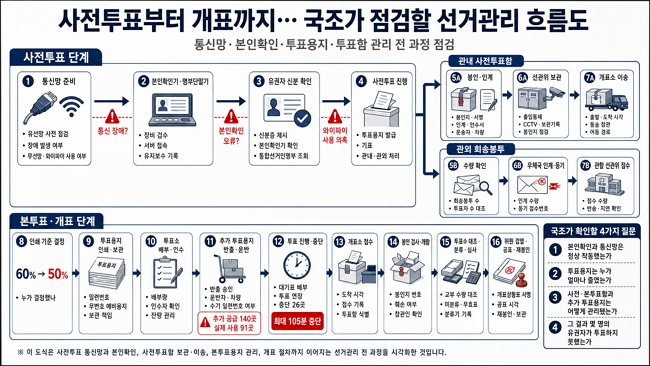 [Special Feature - Deprivation of Political Rights National Investigation ②] The Full Picture of the June 3rd Election Management That the National Investigation Should Reveal
[Photo by Hanmi Ilbo Graphics]Table of Contents① A National Investigation Without Witness Testimony is like a 'Steamed Bun Without the Red Bean Filling'② The Full Story of the June 3rd Election Ma
[Special Feature - Deprivation of Political Rights National Investigation ②] The Full Picture of the June 3rd Election Management That the National Investigation Should Reveal
[Photo by Hanmi Ilbo Graphics]Table of Contents① A National Investigation Without Witness Testimony is like a 'Steamed Bun Without the Red Bean Filling'② The Full Story of the June 3rd Election Ma
 Trump: "Obama gave away billions but didn't get things done... I changed that"
President Trump [EPA=Yonhap News Photo]U.S. President Donald Trump on the 20th (local time) reiterated his criticism of the Iran nuclear deal (Joint Comprehensive Plan of Action, JCPOA) spearheaded by
Trump: "Obama gave away billions but didn't get things done... I changed that"
President Trump [EPA=Yonhap News Photo]U.S. President Donald Trump on the 20th (local time) reiterated his criticism of the Iran nuclear deal (Joint Comprehensive Plan of Action, JCPOA) spearheaded by
 Politico "US security role reduction is an opportunity for Korea…K-defense industry rapid growth"
YIDEX 2026, held in Changwon, Gyeongsangnam-do in April [Yonhap News Archive] An analysis suggests that South Korea's defense industry is benefiting from the U.S. stepping back from its role of e
Politico "US security role reduction is an opportunity for Korea…K-defense industry rapid growth"
YIDEX 2026, held in Changwon, Gyeongsangnam-do in April [Yonhap News Archive] An analysis suggests that South Korea's defense industry is benefiting from the U.S. stepping back from its role of e
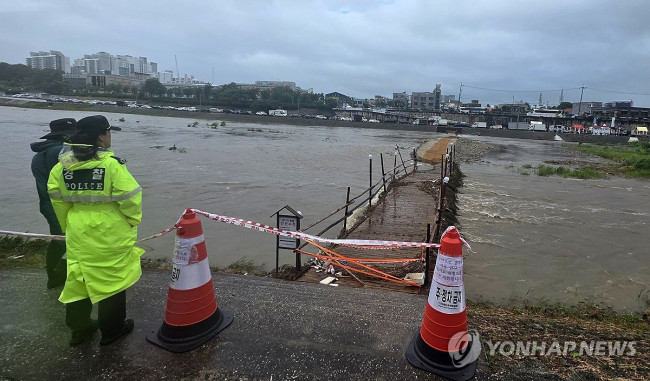 Miryeong 223.0mm heavy rain… Seoraksan is controlled and Gangneung Danoje also faces disruptions.
The Seopdari, a traditional wooden bridge set up for the Gangneung Danoje Festival, is being controlled due to rising water levels in the Namdaecheon River caused by heavy rain in Gangneung, Gangwon P
Miryeong 223.0mm heavy rain… Seoraksan is controlled and Gangneung Danoje also faces disruptions.
The Seopdari, a traditional wooden bridge set up for the Gangneung Danoje Festival, is being controlled due to rising water levels in the Namdaecheon River caused by heavy rain in Gangneung, Gangwon P
 [Hanmi Data Lab] Money Radar, Week 3 of June (15-19)
The image captures rising stock indices, falling international oil prices, and the trends of the US Federal Reserve and Treasury yields against the backdrop of the New York financial market and a worl
[Hanmi Data Lab] Money Radar, Week 3 of June (15-19)
The image captures rising stock indices, falling international oil prices, and the trends of the US Federal Reserve and Treasury yields against the backdrop of the New York financial market and a worl
 [Travel Destinations for the Month of National Defense] ③ Walking the Border Area of the Demilitarized Zone... DMZ Peace Trail Goseong Course
'DMZ Peace Road,' where visitors can see the ecological, cultural, and historical resources of the border areas of the Demilitarized Zone and experience the preciousness of peace firsthand. [Photo by
[Travel Destinations for the Month of National Defense] ③ Walking the Border Area of the Demilitarized Zone... DMZ Peace Trail Goseong Course
'DMZ Peace Road,' where visitors can see the ecological, cultural, and historical resources of the border areas of the Demilitarized Zone and experience the preciousness of peace firsthand. [Photo by
 [Photo] Current status of Chairman Hwang Kyo-ahn and lawyer Park Joo-hyun attending the US election fraud fighter summit
Lawyer Park Joo-hyun with lawyer Peter Ticktin, who was pardoned by U.S. President Donald Trump. [Facebook]Hwang Kyo-ahn, leader of the Liberty and Innovation Party (second from left), informing about
[Photo] Current status of Chairman Hwang Kyo-ahn and lawyer Park Joo-hyun attending the US election fraud fighter summit
Lawyer Park Joo-hyun with lawyer Peter Ticktin, who was pardoned by U.S. President Donald Trump. [Facebook]Hwang Kyo-ahn, leader of the Liberty and Innovation Party (second from left), informing about
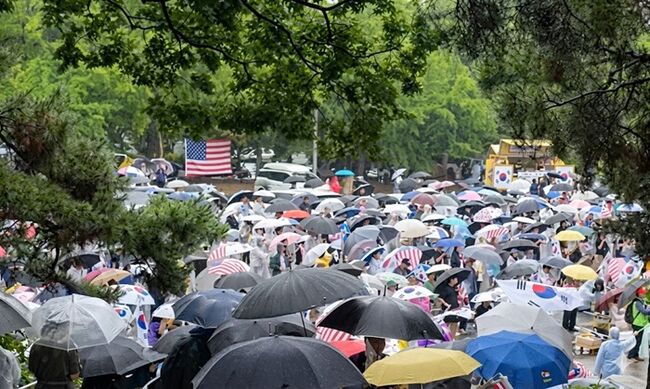 [Cho Yang-kun Column] The reason for the ever-increasing heat at Olympic Park
At noon on the 20th, citizens chanted "Re-election for fraudulent elections, same-day voting and manual counting!" at Olympic Park in Seoul, even amidst heavy rain. ⒸHanmi Ilbo The fervor of th
[Cho Yang-kun Column] The reason for the ever-increasing heat at Olympic Park
At noon on the 20th, citizens chanted "Re-election for fraudulent elections, same-day voting and manual counting!" at Olympic Park in Seoul, even amidst heavy rain. ⒸHanmi Ilbo The fervor of th
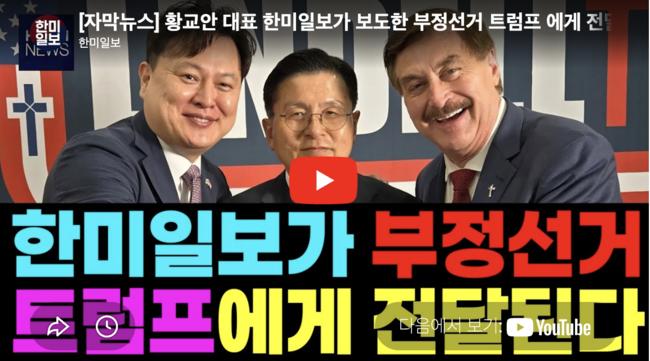 [Video] 'Trump's close friend' Lindell "I will inform Trump about South Korea's fraudulent election"
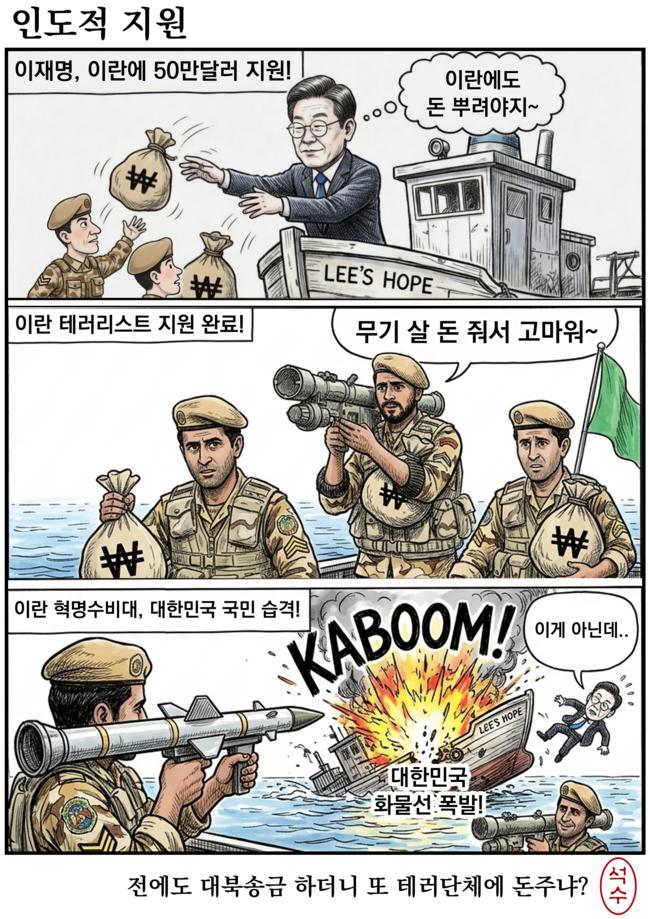 [Editorial Cartoon] Humanitarian Aid

 List
List