Stock charts showing rapid fluctuations centered around semiconductor wafers, AI chips, memory modules, and data center servers. This depicts a situation where memory semiconductors, such as HBM and server DRAM, have regained market leadership amid expanded AI investments. [Photo = Hanmiilbo Graphics]
Semiconductors Wavered, but Memory Regained Leadership
Last week, the key checkpoints for Stock Radar were how long the supply and demand gap caused by SpaceX's IPO would last, and whether AI investment would continue to support the high profit margins of semiconductor companies.
This week, the market has provided an answer to the first question. The movement to sell existing tech stocks to secure cash for SpaceX's IPO has come to a temporary halt with the listing. Following the IPO, funds flowed back into tech stocks, leading to a rapid rebound in the Nasdaq and semiconductor stocks.
An answer to the second question is still pending.
This week's Stock Radar is titled "The Resurgence of Memory Compression Within AI Semiconductors."
This week, Stock Radar has one central question:
"Is the semiconductor rally a sector-wide upswing, or is it an overheating of expectations centered around memory, led by Micron?"
The volatility in semiconductors was extreme this week.
The Philadelphia Semiconductor Index rose 5.5% on the 15th, driven by high expectations, but fell 5.7% the following day. On the day of the FOMC meeting, it rose 1.4% despite a general market downturn, and on the last trading day, it surged another 6.4%.
Even within the same semiconductor sector, there were significant differences in stock performance.
Micron surged 10.8%, then fell 6.2%, followed by consecutive gains of 2.2% and 8.7%. Intel also saw fluctuations, with gains of 6.5%, a fall of 8.5%, a gain of 3.5%, and a gain of 10.6%. Nvidia showed relatively limited movement, rising 3.5% and then falling 2.4%.
This indicates that the capital flowing into semiconductors was not evenly distributed across all companies but was concentrated around two narratives: memory and expansion of domestic production in the US.
Micron is being favored due to expectations of increased demand for HBM and server DRAM driven by the expansion of AI data centers.
SanDisk also saw a surge on expectations of a storage device supply shortage.
Intel's rise was fueled by expectations of collaboration with Apple on semiconductor design and manufacturing within the United States.
Conversely, large software and platform companies bore the full brunt of increased interest rates following the FOMC meeting.
In the Korean market, this trend was reflected in Samsung Electronics and SK Hynix.
Notably, as Micron's stock price strengthens, the market interprets it not as a positive for an individual company, but as a leading indicator for global memory prices and HBM demand.
The problem is that these expectations have already been significantly priced into the stock.
Even if Micron's earnings are strong, if HBM shipment volumes, long-term supply contracts, operating margins, and capital expenditure forecasts fall short of the market's elevated expectations, we could see a "sell after confirming strong earnings" movement.
The conclusion in one sentence is as follows:
"The core of this week's semiconductor rally was memory, which is in the shortest supply for AI investment, rather than chips as a whole."
Next Week's Checkpoints are Threefold
First, Micron's earnings and outlook on the 24th. More critical than revenue and profit are HBM supply volumes, DRAM and NAND prices, long-term contract terms, and the 2027 capital expenditure plan.
Second, the difference in reaction between Samsung Electronics and SK Hynix to Micron's earnings. If HBM demand is the key driver, SK Hynix is likely to perform relatively stronger. If a rise in general memory prices is confirmed, Samsung Electronics may show relative strength.
Third, the correlation between the semiconductor index and the Nasdaq. If only semiconductors rise and the broader Nasdaq does not follow, it signifies that the market's breadth has become too narrow. For the rally to be sustainable, the semiconductor gains need to spread to software, cloud, and power stocks for data centers.
※ This article is content for informational purposes, based on the analysis of publicly available market data, and does not constitute investment advice for any specific financial product.

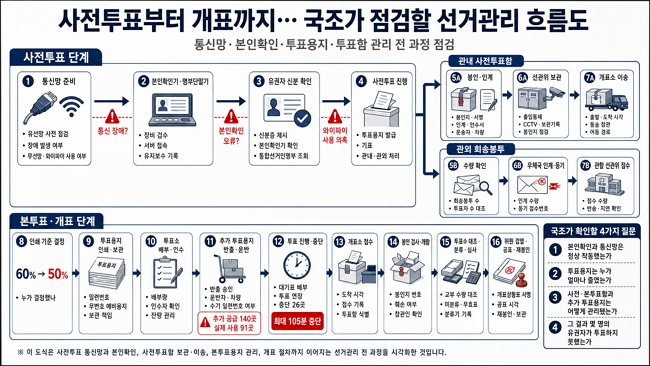 [Special Feature - Deprivation of Political Rights National Investigation ②] The Full Picture of the June 3rd Election Management That the National Investigation Should Reveal
[Photo by Hanmi Ilbo Graphics]Table of Contents① A National Investigation Without Witness Testimony is like a 'Steamed Bun Without the Red Bean Filling'② The Full Story of the June 3rd Election Ma
[Special Feature - Deprivation of Political Rights National Investigation ②] The Full Picture of the June 3rd Election Management That the National Investigation Should Reveal
[Photo by Hanmi Ilbo Graphics]Table of Contents① A National Investigation Without Witness Testimony is like a 'Steamed Bun Without the Red Bean Filling'② The Full Story of the June 3rd Election Ma
 [Outlook] The 111-day war and the shaky end-of-war MOU… US and Iran head to Switzerland
U.S. Vice President Vance (left) departs for Switzerland on the 20th (local time), and Iranian Parliament Speaker Ghalibaf arrives at the Swiss negotiation venue on the 21st (local time). [AP=Yonhap N
[Outlook] The 111-day war and the shaky end-of-war MOU… US and Iran head to Switzerland
U.S. Vice President Vance (left) departs for Switzerland on the 20th (local time), and Iranian Parliament Speaker Ghalibaf arrives at the Swiss negotiation venue on the 21st (local time). [AP=Yonhap N
 Politico "US security role reduction is an opportunity for Korea…K-defense industry rapid growth"
YIDEX 2026, held in Changwon, Gyeongsangnam-do in April [Yonhap News Archive] An analysis suggests that South Korea's defense industry is benefiting from the U.S. stepping back from its role of e
Politico "US security role reduction is an opportunity for Korea…K-defense industry rapid growth"
YIDEX 2026, held in Changwon, Gyeongsangnam-do in April [Yonhap News Archive] An analysis suggests that South Korea's defense industry is benefiting from the U.S. stepping back from its role of e
 Miryeong 223.0mm heavy rain… Seoraksan is controlled and Gangneung Danoje also faces disruptions.
The Seopdari, a traditional wooden bridge set up for the Gangneung Danoje Festival, is being controlled due to rising water levels in the Namdaecheon River caused by heavy rain in Gangneung, Gangwon P
Miryeong 223.0mm heavy rain… Seoraksan is controlled and Gangneung Danoje also faces disruptions.
The Seopdari, a traditional wooden bridge set up for the Gangneung Danoje Festival, is being controlled due to rising water levels in the Namdaecheon River caused by heavy rain in Gangneung, Gangwon P
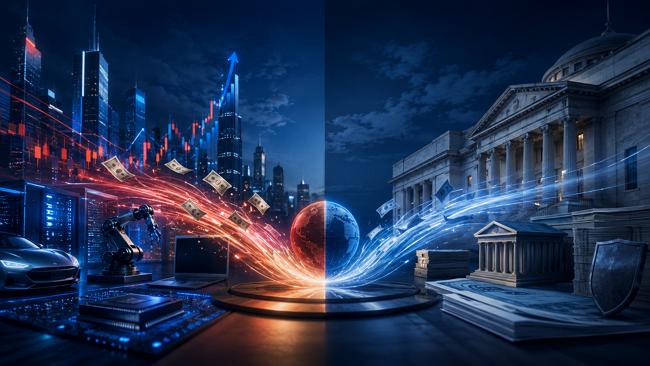 [Hanmi Data Lab] 3rd Week of June (June 15-19) Money Insight
The left side of the screen contrasts growth assets like AI, semiconductors, automobiles, and industrial equipment, with the right side representing defensive assets such as the Federal Reserve, banks
[Hanmi Data Lab] 3rd Week of June (June 15-19) Money Insight
The left side of the screen contrasts growth assets like AI, semiconductors, automobiles, and industrial equipment, with the right side representing defensive assets such as the Federal Reserve, banks
 [Travel Destinations for the Month of National Defense] ③ Walking the Border Area of the Demilitarized Zone... DMZ Peace Trail Goseong Course
'DMZ Peace Road,' where visitors can see the ecological, cultural, and historical resources of the border areas of the Demilitarized Zone and experience the preciousness of peace firsthand. [Photo by
[Travel Destinations for the Month of National Defense] ③ Walking the Border Area of the Demilitarized Zone... DMZ Peace Trail Goseong Course
'DMZ Peace Road,' where visitors can see the ecological, cultural, and historical resources of the border areas of the Demilitarized Zone and experience the preciousness of peace firsthand. [Photo by
 [Photo] Current status of Chairman Hwang Kyo-ahn and lawyer Park Joo-hyun attending the US election fraud fighter summit
Lawyer Park Joo-hyun with lawyer Peter Ticktin, who was pardoned by U.S. President Donald Trump. [Facebook]Hwang Kyo-ahn, leader of the Liberty and Innovation Party (second from left), informing about
[Photo] Current status of Chairman Hwang Kyo-ahn and lawyer Park Joo-hyun attending the US election fraud fighter summit
Lawyer Park Joo-hyun with lawyer Peter Ticktin, who was pardoned by U.S. President Donald Trump. [Facebook]Hwang Kyo-ahn, leader of the Liberty and Innovation Party (second from left), informing about
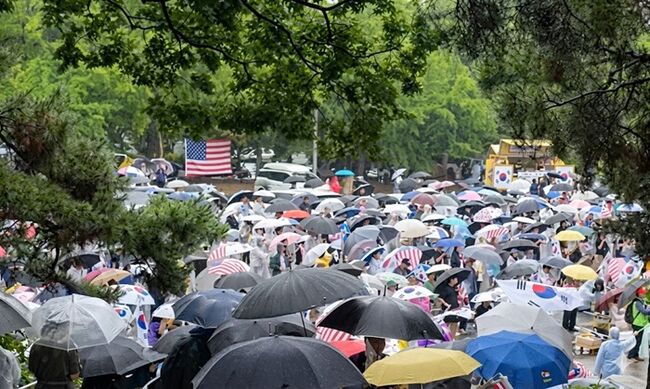 [Cho Yang-kun Column] The reason for the ever-increasing heat at Olympic Park
At noon on the 20th, citizens chanted "Re-election for fraudulent elections, same-day voting and manual counting!" at Olympic Park in Seoul, even amidst heavy rain. ⒸHanmi Ilbo The fervor of th
[Cho Yang-kun Column] The reason for the ever-increasing heat at Olympic Park
At noon on the 20th, citizens chanted "Re-election for fraudulent elections, same-day voting and manual counting!" at Olympic Park in Seoul, even amidst heavy rain. ⒸHanmi Ilbo The fervor of th
 [Video] 'Trump's close friend' Lindell "I will inform Trump about South Korea's fraudulent election"
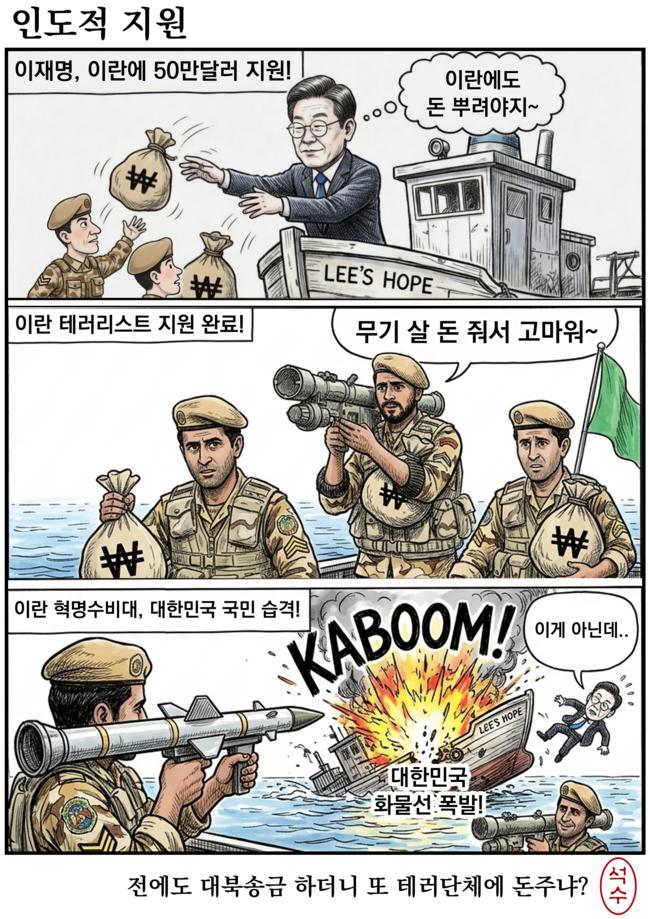 [Editorial Cartoon] Humanitarian Aid

 List
List